Five hours, and Istanbul feels organized. This walking tour strings together major landmarks with clear, human explanations, so the city stops being a blur and starts making sense. I especially love the built-in focus on Hagia Sophia and the way the guide brings the Blue Mosque to life with the details you’d miss wandering on your own.
One thing to watch: several entry admissions are not included, so budget extra for places like Hagia Sophia, Topkapi Palace, and Galata Tower.
In This Review
- Key highlights worth planning around
- A 5-hour Istanbul walk that actually works
- Where you start and where you finish (and why it’s smart)
- Hagia Sophia and the Sultanahmet power zone
- Topkapi Palace and Hippodrome: empires in short bursts
- Blue Mosque and Corlulu Ali Paşa Medresesi: architecture plus people-watching
- Grand Bazaar, Spice Market, and the arcade stops that feel like time travel
- St. Antuan Kilisesi and Galata: finishing with a different Istanbul view
- Price and value: what you’re really paying for
- Pace, planning, and the one reality check
- Who this tour fits best
- Should you book this Istanbul walking tour?
- FAQ
- How long is the Istanbul walking tour?
- Is the tour offered in English?
- What’s included in the tour price?
- Which admissions are included or not included?
- Where do I meet the guide?
- Where does the tour end?
- Is this tour private?
- Can I cancel for a full refund?
- Is there a mobile ticket?
Key highlights worth planning around
- A true greatest-hits route in about 5 hours from Sultanahmet landmarks toward Galata
- Professional guide storytelling (I’ve seen guides like Rose and Elif praised for making the city’s layers click)
- Blue Mosque + Hippodrome admissions are included, while a few other big stops require extra tickets
- Bazaars and covered arcades fit right in, including Grand Bazaar, Spice Market, and mirrored passages
- A strong ending point at Galata Tower, so you can keep exploring afterward in Beyoğlu
A 5-hour Istanbul walk that actually works
Istanbul can feel like it’s made of shortcuts and surprises. This tour helps you pick the right ones. In one morning-or-afternoon-style walk, you get the kind of skyline and street-level variety that usually takes multiple days and a lot of transport. The flow is built around big names, but it’s not only about posing for photos. It’s about getting the context for what you’re seeing as you go.
You’ll start in the historic core area near Sultanahmet and end in the Galata/Beyoğlu zone near Galata Tower. That matters because Istanbul’s neighborhoods each have their own mood, architecture, and pedestrian rhythm. If you have limited time, this route gives you a fast sense of where to return later.
Also: the pacing is tight enough to cover a lot, but not so rushed that you’re staring at one wall for five hours. Stops range from around 5 minutes to about 30 minutes, with the longer time carved out for the major monuments and markets.
You can also read our reviews of more walking tours in Istanbul



Where you start and where you finish (and why it’s smart)
The tour meets at the German Fountain at Binbirdirek in At Meydanı (Fatih/İstanbul). That’s a practical starting point because you’re in an area that’s not isolated from public transport. You’re not trekking to some far-off edge just to begin your tour.
It ends at Galata Tower, at Bereketzade in Beyoğlu. Ending there is more than convenience. It’s a good psychological finish line. When your tour hands you off at Galata Tower, you’re positioned to keep exploring immediately—without having to backtrack across town.
It’s also a private activity for your group. That usually means your guide can keep your pace consistent and handle timing around your needs a bit better than a large shared tour.
Hagia Sophia and the Sultanahmet power zone
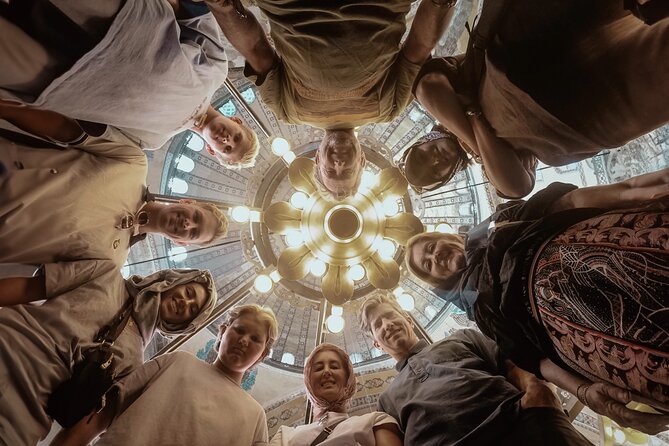
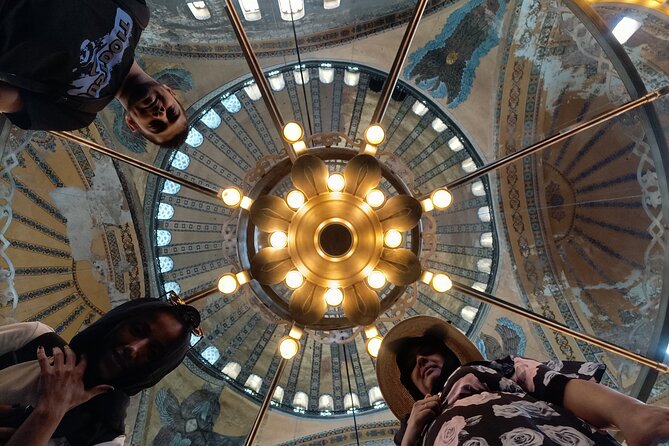
You begin with Hagia Sophia Grand Mosque—the huge, older-than-1,500-years landmark that anchors the whole Sultanahmet scene. The stop is about 30 minutes, and admission isn’t included in the tour price. That’s a common setup for Istanbul big-ticket sights: the tour covers guidance, but you bring your entry ticket (or buy it separately).
What I like here is that the guide’s job is to translate scale and meaning. Hagia Sophia isn’t just impressive because it’s big. It’s impressive because it represents multiple eras in one building: empire, religion, and politics all stacked up into architecture. If you show up without context, you may admire it and still feel like you’re looking at a museum label. With a guide, you’re noticing why certain parts look the way they do and what that tells you about the past.
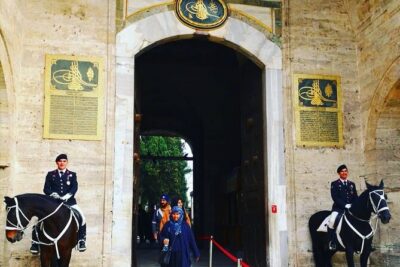
From there, the route includes the Fountain of Sultan Ahmed III (III. Ahmet Çeşmesi) in the square in front of the Imperial Gate. You don’t need to read it like a textbook. You just need to notice that Istanbul’s monumental spaces often include “small” civic pieces—fountains, gates, courtyards—that signal how public life worked.
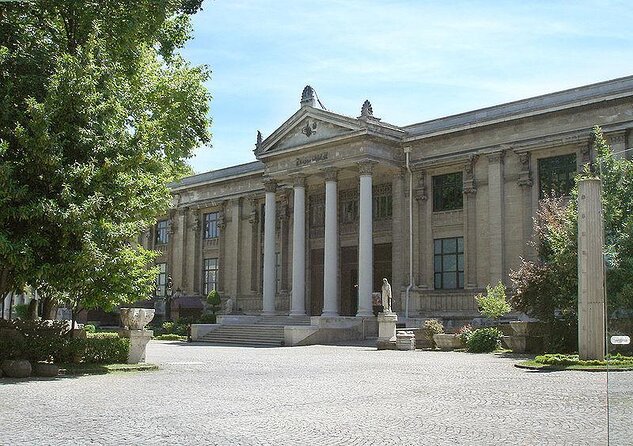
You also visit the Hagia Irene Museum, located in the outer courtyard of Topkapı Palace. It’s noted as one of the churches in Istanbul that has not been converted into a mosque. That kind of detail matters because it shows you how uneven religious and political changes have been across the city. You get the big contrast without the stop turning into a lecture.
Topkapi Palace and Hippodrome: empires in short bursts
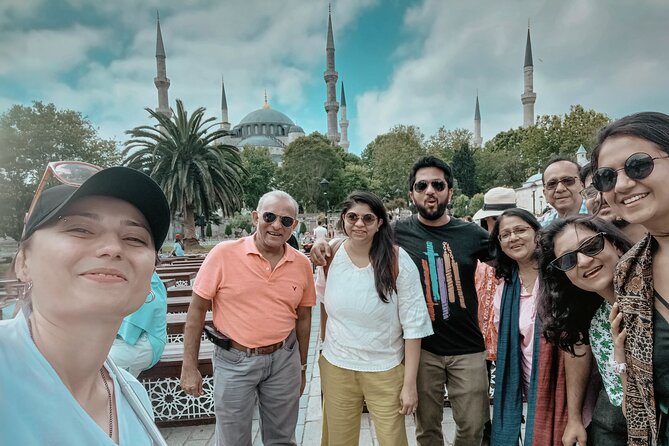
Topkapı Palace is the next major stop. It’s listed as one of the most visited museums in İstanbul, with a stop time around 15 minutes, and admission is not included. Again, expect to pay separately for entry. The good news is that even in a short visit, a guide can point you to the parts that make Topkapı different—especially the way the palace story is tied to the city’s power, trade connections, and court culture.
One thing you should keep realistic expectations about: 15 minutes is not for a full palace museum tour. It’s for orientation, meaning, and the “what to look for next” moments. If you fall in love with the place, you’ll know where to focus on a return visit.
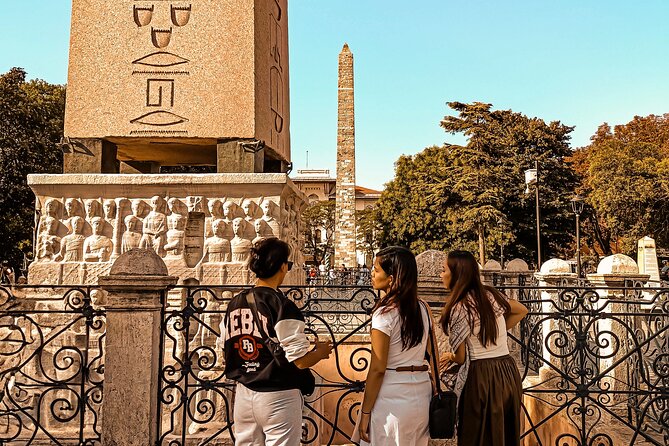
Right after that comes the Hippodrome area. This is a favorite type of stop for me because it teaches you how to read ruins. You’re not just seeing leftover stone. You’re seeing what used to be the clamoring focal point of Constantinople, where chariot races and even gladiator-style spectacle happened. The remaining elements include the Obelisk of Theodosius, the Column of Constantine, and the German Fountain of Kaiser Wilhelm.
Here, admission is included. That’s a nice value boost at mid-tour, and it helps you stay on schedule. Around 20 minutes is enough to grasp the big idea: Istanbul’s “legendary” sites often share one thing—they were designed for crowds and public drama.
Blue Mosque and Corlulu Ali Paşa Medresesi: architecture plus people-watching

The Blue Mosque is next, with about 30 minutes and admission included. It gets its name from 20,000 blue, deliberately amassed handmade ceramic tiles. That’s the kind of detail that makes the building feel less like a postcard and more like a controlled design project.
When you’re standing inside, the point isn’t only to admire the color. It’s to notice the planning: materials, surfaces, and how light interacts with ornament. A guide helps you understand why those tiles exist in such large number—and what that says about ambition and devotion.
Then you shift to Corlulu Ali Paşa Medresesi, a smaller stop (about 15 minutes) with admission included. The value here is that it breaks the pattern of mega-monument after mega-monument. This medresesi is described as a great place to people-watch and meet locals who speak many languages.
That’s one of the best reasons to like walking tours like this: you get a small window into day-to-day social texture between the landmark stops. Even if you don’t stay long, you leave with a better feel for where locals move through the city, not only where tourists line up.





Grand Bazaar, Spice Market, and the arcade stops that feel like time travel
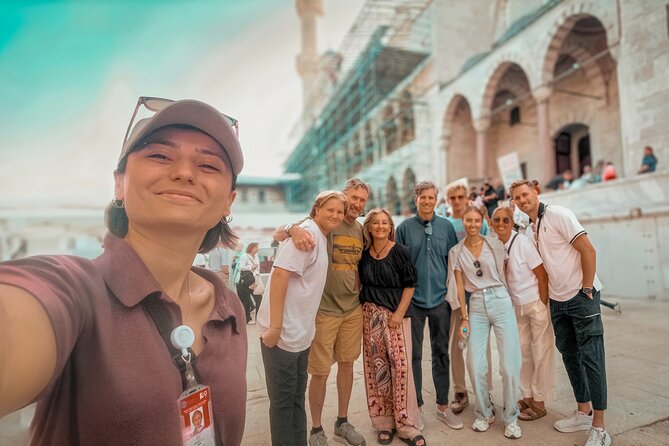
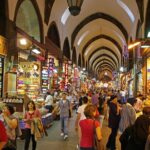
Now you get to the markets and passages—where Istanbul turns sensory. The Grand Bazaar gets a 40-minute stop and is listed as free (no admission ticket needed). “Free” here is a practical win: you can spend that time bargaining, comparing goods, and just soaking in the atmosphere without worrying that you’ve hit a paid-entry deadline.
The route then moves to Misir Çarşısı (Spice Market) for about 20 minutes, with admission included. Spices, dried fruits, nuts, and seeds are among the treasures you’ll find. This is the kind of stop where you’ll either love it immediately or it’ll feel chaotic. If you like flavors and want to understand what people buy and cook with, this is one of the best places on the list to connect Istanbul’s market life to everyday food culture.
Between bazaars, you also hit Avrupa Pasaji, known as the passage with mirrors, for about 5 minutes with admission included. Then there’s Çiçek Pasaji, originally called the Cité de Péra, for about 10 minutes, also with admission included. These passage stops are short on purpose. They help you experience Istanbul as layered design—covered walkways, storefront architecture, and that slightly old-world feeling you don’t get in open-air streets.
If you’re the type who enjoys small details, these short indoor segments are a good palate cleanser between crowds and outdoor heat.
St. Antuan Kilisesi and Galata: finishing with a different Istanbul view
The route brings you to St. Antuan Kilisesi, also known as Anthony of Padua Church. The stop is about 15 minutes and admission is included. It’s a great shift in tone: after mosques and palace spaces, you get a church that reminds you Istanbul has always been a crossroads of faiths and communities.
Then you’ll see Galata Bridge, which spans the Golden Horn. The notes here focus on location and presence in Istanbul imagery, but the practical takeaway is simple: it gives you a view corridor across a key waterway. The Golden Horn is a defining feature of the city’s geography, so having it on your walking map makes everything else feel less random.
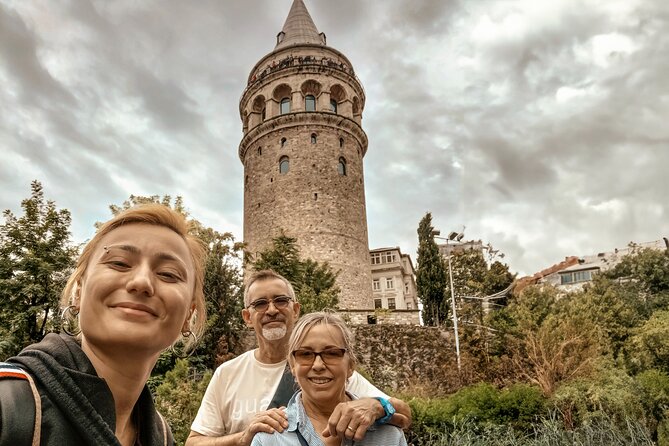
Finally, you reach Galata Tower (about 30 minutes). Admission is not included. That final note matters because it affects your total out-of-pocket cost. But even if you’re not paying for the top, arriving at the tower lets you orient yourself in Beyoğlu. It’s a strong place to continue on your own afterward, whether you want a longer walk, a coffee stop, or a view-focused detour.
Price and value: what you’re really paying for
The price is $57.23 per person, for around 5 hours, in English. There are group discounts, and you get a mobile ticket. On average, it’s booked about 17 days in advance, which suggests it’s a popular “I need the highlights fast” option.
Here’s how I think about value with this tour: the guidance is included, and local taxes are included. The big monuments and market stops cover the main reason you’d hire a guide—so you can spend less time guessing and more time understanding.
But admissions are a mixed bag:
- Not included: Hagia Sophia, Topkapı Palace, and Galata Tower
- Included: Hippodrome, Blue Mosque, Corlulu Ali Paşa Medresesi, Spice Market, Avrupa Pasaji, Çiçek Pasaji, and St. Antuan Kilisesi
- Free: Grand Bazaar
So your budget can swing depending on what you already planned to visit. If you were planning to see the biggest names anyway, the included admissions help you keep costs down. If you had only one or two paid sights on your list, you’ll likely pay more total here—but you also get more locations and a tighter route.
Tips are not included, so plan to decide on that separately.
Pace, planning, and the one reality check
This is a walking tour, and it’s built to fit many stops into a 5-hour window. That means you’ll need to stay flexible. Some sights get a quick orientation visit rather than a slow museum-style stroll. It’s a smart approach if your goal is overview and direction.
I also recommend treating this as a “set your bearings fast” day. It’s not the only way to experience Istanbul, and it’s not meant to replace slower time in the places you care about most. The tour gives you the map in your head. Then you decide what deserves a longer return.
One more practical point: since multiple entries are not included, check your plan before you go. You don’t want to arrive at Hagia Sophia, Topkapı, or Galata Tower and realize you didn’t budget for the extra ticket step.
Who this tour fits best
This tour suits you if:
- You have limited time and want the main landmarks in one day
- You like architecture and city layers, and you want explanations while you walk
- You’d rather let a guide manage the order than build your own route across neighborhoods
- You want a market stop that goes beyond just browsing
It may not fit as well if:
- You want long, quiet museum time at Topkapı or a full Hagia Sophia deep read
- You hate the idea of managing separate entry tickets for some stops
Should you book this Istanbul walking tour?
Yes, if you want a well-structured highlights route with professional guidance and you’re okay topping up a few separate admissions. The strongest reason to book is simple: the tour’s mix of monuments, ruins, markets, and arcades gives you a broad Istanbul feel without requiring a full day of planning.
It’s especially appealing for first-timers who want to understand what they’re seeing. And if you end at Galata Tower, you’re set up to keep exploring in Beyoğlu right after the tour wraps.
Just go in with the right expectation: this is an overview-focused walk. Bring comfy shoes, and plan extra for any entries that aren’t included.
FAQ
How long is the Istanbul walking tour?
It runs for about 5 hours.
Is the tour offered in English?
Yes, the tour is offered in English.
What’s included in the tour price?
Professional guidance and all local taxes are included. You also receive a mobile ticket. Group discounts are mentioned as a feature.
Which admissions are included or not included?
Entry admissions are not included for Hagia Sophia Grand Mosque, Topkapı Palace, and Galata Tower. Admission tickets are included for Hippodrome, Blue Mosque, Corlulu Ali Paşa Medresesi, Misir Çarşısı (Spice Market), Avrupa Pasaji, Çiçek Pasaji, and St. Antuan Kilisesi. Grand Bazaar is listed as free.
Where do I meet the guide?
The meeting point is the German Fountain at Binbirdirek, At Meydanı Cd, 34122 Fatih/İstanbul.
Where does the tour end?
The tour ends at Galata Tower, Bereketzade, 34421 Beyoğlu/İstanbul.
Is this tour private?
Yes. It’s listed as a private tour/activity, so only your group participates.
Can I cancel for a full refund?
Yes. Free cancellation is available up to 24 hours in advance for a full refund.
Is there a mobile ticket?
Yes. A mobile ticket is provided.