REVIEW · 2-DAY EXPERIENCES
2 Day Ephesus and Pamukkale Tour From Istanbul
Book on Viator →Operated by Travel Store Turkey · Bookable on Viator
Ephesus and Pamukkale in just two days sounds wild, but the setup is actually smart. I like the guided history at the big ruins, and I like that you get an overnight stop in Selçuk or Kuşadası instead of doing an all-day dash. The main drawback is time: you’re on the move a long time, with an early Istanbul pickup and a late return, so you’ll want to be okay with travel heavy days.
This is a small-group tour (max 15 travelers) with hotel pickup in Istanbul City Center, English-speaking guidance, and entrance fees plus lunch handled for you. You’ll fly from Istanbul to the Aegean region, then work your way through Ephesus, nearby sights, and a full Pamukkale/Hierapolis day—ending with time at Cleopatra’s Pool.
In This Review
- The Most Interesting Parts at a Glance
- Flying From Istanbul: The Trip Starts Before the Ruins
- Day 1 Around Selçuk: Ephesus First, Then the Nearby Icons
- Ephesus Ruins: Where the Guide Changes the Experience
- Temple of Artemis and the Virgin Mary House: Time Well Spent or a Religious Detour?
- İsa Bey Mosque and Şirince: A Human Stop Between Big Ruins
- Day 2 Pamukkale and Hierapolis: Travertines Plus Roman Ruins
- Cleopatra’s Pool Reality Check: Beautiful, Crowded, and Not a Swim Party
- Value for $843: What You Pay For (and What You Still Need to Think About)
- The Small-Group Promise: Comfort Is Real, But Timing Can Still Slip
- Who This Two-Day Ephesus + Pamukkale Tour Fits Best
- Should You Book This Tour, or DIY It?
- FAQ
- How long is the Ephesus and Pamukkale tour?
- Is the tour guided in English?
- How many people are in the group?
- What’s included in the price?
- What is not included?
- What is the cancellation policy?
The Most Interesting Parts at a Glance
- Small group pace (max 15), which helps keep the day from feeling like cattle herding
- Flights + transfers: you’re not relying on long-distance bus schedules from Istanbul
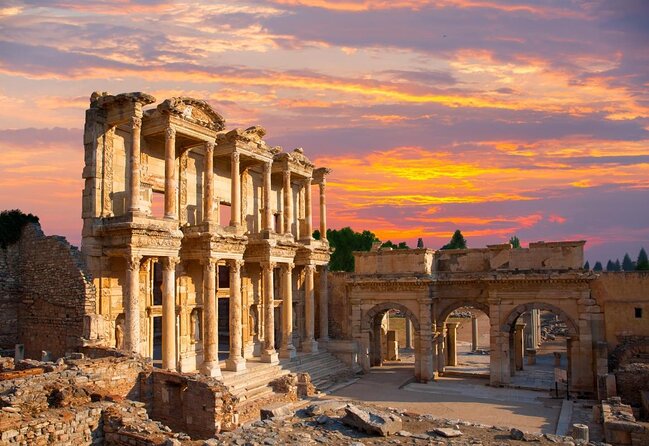
- Ephesus highlights included: Celsus-area sights, theaters, and the major landmarks you came for
- Pamukkale terraces + Hierapolis ruins on the same day, so you don’t have to choose
- Cleopatra’s Pool time as a concrete, on-the-ground experience—not just a photo stop
- Two included lunches, which matters when you’re moving from site to site in heat
Flying From Istanbul: The Trip Starts Before the Ruins
The real start of this tour happens in Istanbul, not at Ephesus. You’re picked up from any hotel in the Istanbul City Center area, and the schedule can be very early—one review mentioned a pickup around 4am, with a late return near midnight. That’s the trade: you save the headache of arranging your own multi-leg transport, but you pay with hours.
The payoff is that flights and airport transfers are bundled in. You also get a mobile ticket setup and a guided plan, which cuts down on the common stress of figuring out timetables, baggage limits, and site entry logistics while traveling solo or in a pair.
If you hate long travel days, this might test your patience. But if you want one organized package that strings together Ephesus + Pamukkale without you micromanaging flights and hotel logistics, it’s built for that.
You can also read our reviews of more tours and experiences in Istanbul


Day 1 Around Selçuk: Ephesus First, Then the Nearby Icons
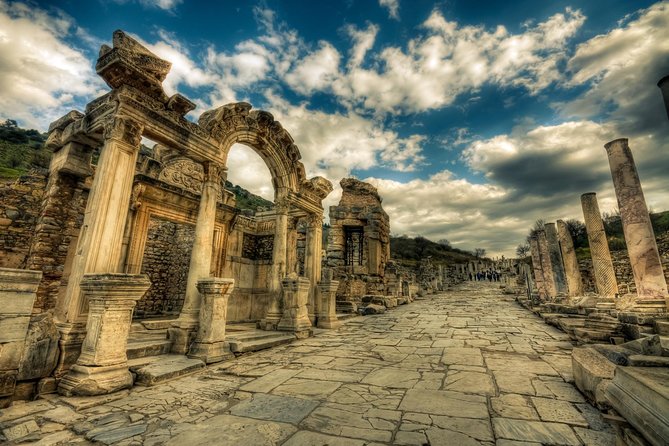
Day 1 is all about Ephesus and the sites you can reach from Selçuk. The anchor is the Ancient City of Ephesus, a UNESCO World Heritage Site and one of the best-preserved ancient cities in the region. You’ll see the famous marble-street feel of the place and major monuments like the Library of Celsus, the Great Theatre, and other prominent ruins that still give you that wow-how-did-they-do-this energy.
What makes the guide part worthwhile here is context. Ephesus is famous for being big, but the real magic is connecting what you see—Roman civic power, Greek roots, religion in the streets—to why those structures mattered. With an English guide in a small group, you’re more likely to understand what you’re looking at while you’re actually standing in front of it.
Then the day keeps moving to the most recognizable nearby stops:
- The Temple of Artemis (linked to one of the Seven Wonders of the ancient world)
- Meryemana / the House of the Virgin Mary, a Christian pilgrimage site by tradition
- The İsa Bey Mosque, a striking example of Seljuk architecture from the 1300s
- And Şirince, a hillside village known for charm and fruit-wine culture
The upside: you get a full “Ephesus region” taste in one go. The downside: once you’ve seen a few ruins back-to-back, your energy can dip. Bring a water bottle when permitted, sunscreen, and good walking shoes.
Ephesus Ruins: Where the Guide Changes the Experience
Ephesus is one of those places where you can either wander without a plan—or understand it. I love it when a guide points out how key spaces line up and what each building signaled in its time. Even if today’s structures are partially ruined, the layout still reads like a real city, not a theme park.
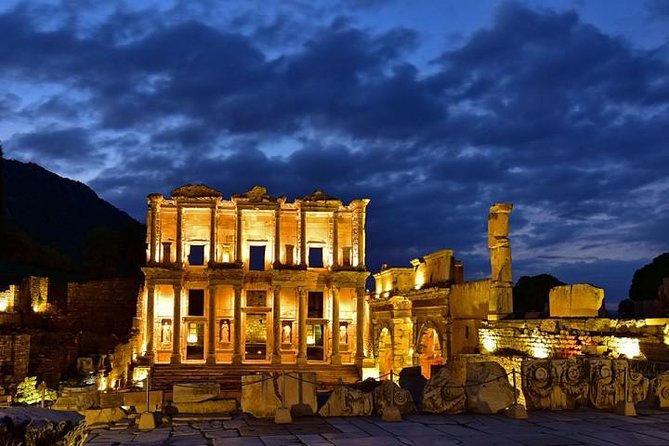
This stop is also the part you’ll probably talk about afterward. The Library of Celsus area is visually satisfying even on a short timeframe, and the Great Theatre gives you scale fast. You also get the sense of why Ephesus mattered commercially and religiously as the Greek world shifted into Roman rule.
One practical consideration: heat. Ephesus can be brutally warm in summer, and if your tour timing starts late, you’ll feel it. One review mentioned July heat and losing time due to waiting around at the start. If you’re sensitive to sun, plan to arrive wearing breathable layers, and pace yourself on the stone.
Temple of Artemis and the Virgin Mary House: Time Well Spent or a Religious Detour?
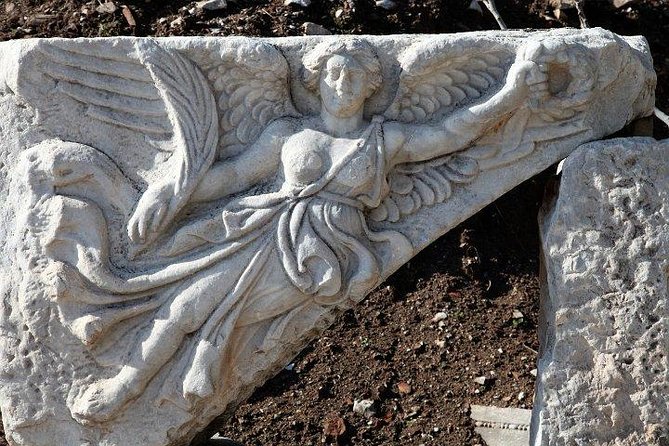
These two stops are quick, and that matters. The Temple of Artemis is historically famous, but most of what you’ll see now is limited remnants—so you’re going for significance more than for a fully intact monument. It’s still a good “you were here” stop if you want the connection to the ancient Seven Wonders story.
Then comes Meryemana (House of the Virgin Mary), which has a different feel. It’s smaller and more spiritual than the big archaeological zone. If you care about Christian pilgrimage sites—or you like that mix of faith, legend, and local tradition—you’ll probably enjoy it. If you don’t, you may see it as optional.
I think the best way to decide is simple: do you enjoy religious sites even when they are not your top interest? If yes, you’ll likely appreciate the gardens and the peaceful setting. If not, expect it to be more about tradition than monumental ruins.
İsa Bey Mosque and Şirince: A Human Stop Between Big Ruins
Not every part of Day 1 feels like marble and columns. The İsa Bey Mosque is a welcome shift. It’s 14th-century Seljuk architecture, and the details—stonework, domes in the courtyard, and the general look—are the kind of things that slow you down in a good way. Even if you’re not a “mosque architecture” person, the stop helps break up the day so you don’t feel like you’re only rushing through ancient power.
Then you get Şirince, a village that’s basically built for lingering. You’ll walk cobblestone streets, see whitewashed buildings with traditional character, and have the chance to taste local fruit wines. This is also where the day stops feeling like a checklist and starts feeling like a place.
Practical note: villages mean uneven walking. Take your time and wear shoes you trust on old stone. And if you love photos, Şirince’s hillside views can be better than you expect after the intensity of Ephesus.




Day 2 Pamukkale and Hierapolis: Travertines Plus Roman Ruins
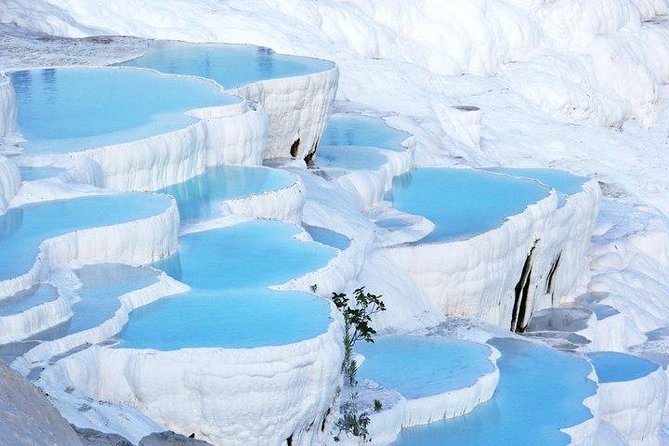
Day 2 is the big nature-meets-history day. The headline is Pamukkale, the white travertine terraces formed by calcium-rich thermal waters flowing down the hillside. It looks unreal. I love that it isn’t just one view—you get layers, angles, and a sense of how the terraces behave in different light.
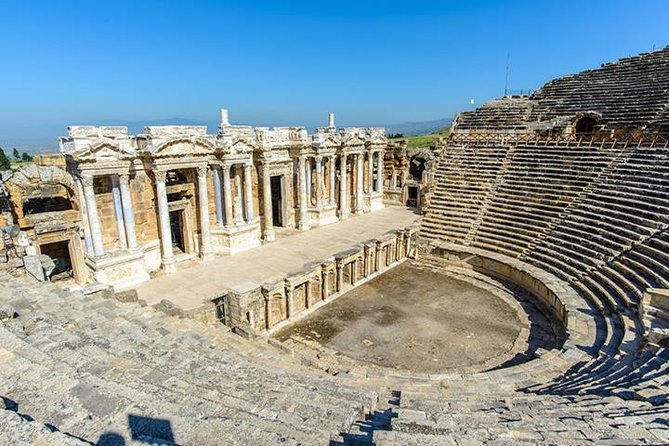
Right next to Pamukkale is Hierapolis, a UNESCO site with Roman ruins tied to the area’s spa reputation. You’ll see major elements like the Roman theatre, temples, necropolis sections, and other ruins that help you understand why people traveled here. If Ephesus gives you a city feeling, Hierapolis gives you a healing-and-religion feeling.
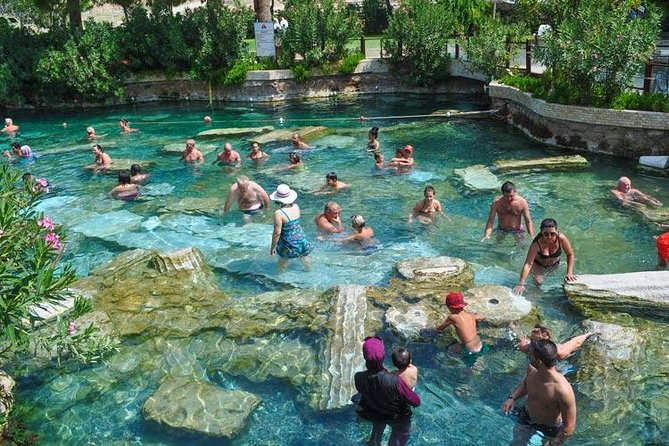
The day includes time that feels more interactive than Ephesus: Cleopatra’s Pool. You’re dealing with warm mineral water around 36°C / 96°F, so the body feels the place as much as the eyes do. There’s also the famous story element linked to Mark Antony and Cleopatra, plus submerged marble column fragments that came from an ancient earthquake legend.
Cleopatra’s Pool Reality Check: Beautiful, Crowded, and Not a Swim Party
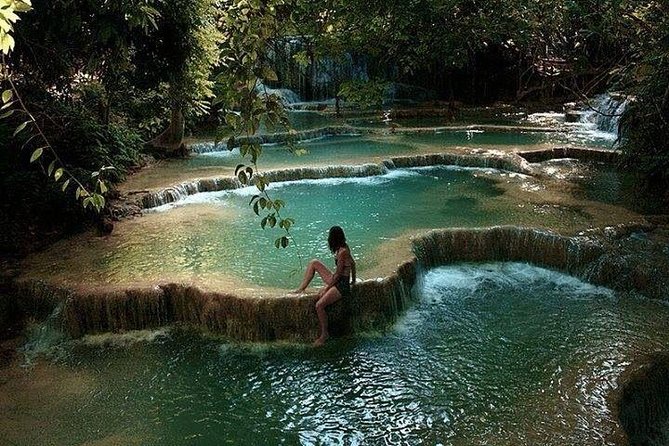
This is where I’d give you a reality check. Pamukkale is famous online, and you should expect crowds. One review noted it’s often very slippery and shallow, with limited ability to swim. That matches the kind of place travertine and pool-entry areas typically are: it’s about soaking in the moment, not doing laps.
So how should you plan your expectations? Think of Cleopatra’s Pool as:
- a warm-water break
- a photo-ready historical water setting
- a short, careful soak
- not a true swimming experience
If you want to swim, you might be disappointed. If you want to relax, feel the warmth, and enjoy the scenery, you’ll probably be happy.
Bring flip-flops or water shoes if you have them, because the ground can be slick. And if you have balance issues, slow down. It’s not the time to rush for the perfect shot.
Value for $843: What You Pay For (and What You Still Need to Think About)
At $843.35 per person, this isn’t a “cheap day tour” price. You’re paying for two big categories of value:
- Transport from Istanbul including flights and multiple airport/ground transfers
- A guided, organized two-day package with entrance fees and lunches
This price can make sense if you’d otherwise spend time stitching together flights, hotels, and site admissions yourself—especially if you want a single English guide and a small group.
But you still need to know what’s not included:
- Breakfast is not included
- Drinks are not included (and alcoholic drinks are extra)
A couple reviews complained specifically about missing breakfast and limited drink availability like water. Even if the food is fine, you should plan to buy your own water and basic drinks when necessary.
Also consider the opportunity cost of time. If you live for hours-in-museum time, you might feel the schedule is tight. If you’re the type who wants to tick major icons off in a structured way, the package is easier than DIY.
The Small-Group Promise: Comfort Is Real, But Timing Can Still Slip
This tour limits group size to 15 travelers, which usually helps with comfort and getting questions answered. One review praised clear communication and made it feel organized and friendly, and another praised punctual transport and comfortable stays.
On the flip side, other reviews raised red flags about efficiency—waiting time at airports, delayed departures, and in one case a van seating issue that made the guide stand and travel uncomfortable. That’s not the “ruins experience” you’re paying for, and it’s the kind of thing you’ll feel more when you’re traveling very early and very late.
So my practical advice is: treat this as an efficient logistics package, not a guarantee of perfect timing down to the minute. Build in patience, and protect your energy with hydration and snacks if you can.
Who This Two-Day Ephesus + Pamukkale Tour Fits Best
This works well if you want a first-time Turkey taste that combines two major regions without planning headaches. I’d especially recommend it if:
- you’re short on time and want Ephesus + Pamukkale together
- you like having a guide explain what you’re seeing
- you prefer overnight logistics over day-long buses
- you’re okay with early pickups and late returns
It may not fit as well if:
- you hate long travel days and want a slow pace
- you mainly want to spend extra hours inside each site
- you’re very sensitive to crowds and slippery surfaces at Pamukkale
For couples and solo travelers, the small group can feel like a social buffer. For families, you’d want to consider stamina and the early start, because two days can still feel like a sprint.
Should You Book This Tour, or DIY It?
My take: book it if you value convenience and guided structure more than you value long, unhurried time at each site. The bundled flights + transfers + guide + entrance fees + lunches reduce a lot of the friction that hits when you try to build this trip yourself.
Skip or at least rethink it if your priority is maximum time on-site. Reviews show real differences in schedule tightness, and Pamukkale can be crowded and slippery—so you’ll want to be comfortable with that reality.
If you’re deciding between this tour and planning your own, ask yourself one question: would you rather pay for the package to do the heavy lifting, or pay with your time and effort to control every piece? If you pick convenience, this tour is a reasonable way to get both UNESCO hits in one shot.
FAQ
How long is the Ephesus and Pamukkale tour?
It runs for approximately 2 days, with flights and ground transfers included. Pickup is arranged from hotels in Istanbul City Center.
Is the tour guided in English?
Yes. The tour is offered in English.
How many people are in the group?
The tour has a maximum of 15 travelers.
What’s included in the price?
Included are an overnight stay, Istanbul airport transfers, round-trip flights with specified baggage limits, two days with a guide plus transport, entrance fees, and two lunch meals. Pamukkale-related and Izmir airport transfers are also included.
What is not included?
Breakfast is not included, and drinks (including water) are not included. Alcoholic drinks are available for purchase.
What is the cancellation policy?
You can cancel for a full refund up to 24 hours in advance. If you cancel less than 24 hours before the start time, the amount paid is not refunded. The experience requires good weather, and if it’s canceled due to poor weather you’re offered a different date or a full refund.