REVIEW · EVENING EXPERIENCES
Istanbul Haunted Night Tour
Book on Viator →Operated by Istanbul's Haunted Walking Tour · Bookable on Viator
Ghost stories in Istanbul have good bones. This tour ties together Byzantine power plays and Ottoman legends at real, dark landmarks around Sultanahmet and Topkapi.
What I like most is the way the walk stays structured: short stops that each connect to a specific event, execution, or legend. I also like the hands-on angle with the provided ghost-hunting kit—EMF detectors, dowsing rods, a green laser tool, and an EVP recorder—so you’re not just listening.
One drawback to consider: this is not a guarantee of paranormal proof. You’ll use the tools, but the experience still leans heavily on history and atmosphere, so if you expect clear answers on demand, you may find it more story-driven than scientific.
In This Review
- Quick hits before you go
- Following the trail: Constantinople’s shadows and Topkapi’s main gate
- What you’re doing here: ghost tools as a storytelling layer
- Stop-by-stop: 11 locations and why each one hits
- 1) Forum of Constantine (Column of Constantine)
- 2) Ahmet Tevfik Pasa Mezari
- 3) Sphendone remains (south side of the Hippodrome)
- 4) Hippodrome (the big social engine)
- 5) Kucuk Ayasofya – Gazi Suleyman Pasa Mosque
- 6) Sphendone remains (the back side)
- 7) Serpent Column
- 8) German Fountain
- 9) Sultan Ahmet Tomb
- 10) Sultanahmet Square
- 11) Imperial Gate Bab-i-Humayun (Bab-ı Hümayun)
- Price and value: what $48.06 gets you
- The guides, the tone, and how to enjoy it
- Weather and timing: an 8:00 pm plan that depends on the sky
- Should you book Istanbul’s Haunted Night Tour?
- FAQ
- How long is the Istanbul Haunted Night Tour?
- What time does the tour start?
- Where do I meet for the tour?
- Where does the tour end?
- Is the tour offered in English?
- How much does it cost?
- What ghost-hunting equipment is included?
- Are admission tickets included?
- Is there free cancellation?
- Is good weather required?
Quick hits before you go
- 8:00 pm start with an end at Bab-ı Hümayun, near Topkapi’s main gate
- Small group max 20 for a night walk that doesn’t feel chaotic
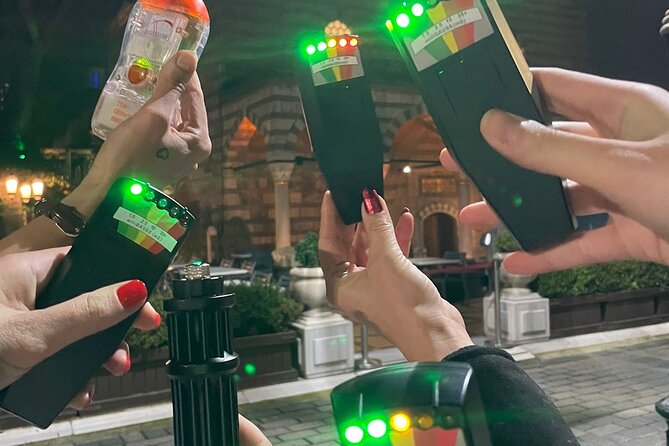
- Included ghost-hunting gear: EMF detectors, Maddusa’s Web green laser, dowsing rods, and an EVP recorder
- 11 major stops concentrated in the Sultanahmet area and surrounding streets
- Most admission tickets are free, with one stop that includes admission
- English-guided, with mobile ticket delivery and confirmation at booking time
Following the trail: Constantinople’s shadows and Topkapi’s main gate
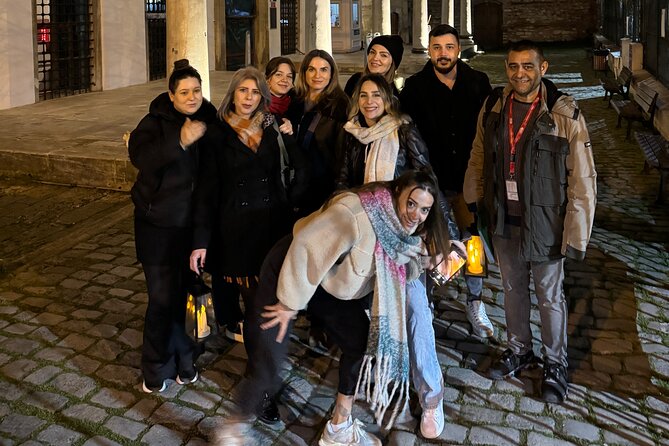
You start at the Column of Constantine (Molla Fenari, Vezirhan Cd. No:16 D:18, 34120 Fatih/İstanbul). From there, you’ll wind your way through the same streets that shaped imperial life—sports crowds, palace intrigue, and public punishment—now lit by evening light and guided storytelling.
The end point is Bab-ı Hümayun (Bab-ı Hümayun), the imperial gate to the Topkapi Palace. It’s behind and to the side of the Hagia Sophia, and the guide walks you back close to the start again afterward so you can navigate onward however you like. Expect about 2 hours total; the stop times add up to just under that, plus walking between them.
Because it’s a night tour, plan for cooler air and darker paths. If you’re the type who likes to “see it for yourself” instead of staring at your screen, this route works well. The locations are close enough that the story momentum doesn’t die, but spaced enough that each stop feels like its own mini scene.
You can also read our reviews of more evening experiences in Istanbul



What you’re doing here: ghost tools as a storytelling layer
This tour is marketed as haunted, but it’s really a mash-up of three things: place-based history, morbid legend, and interactive ghost-hunting tools.
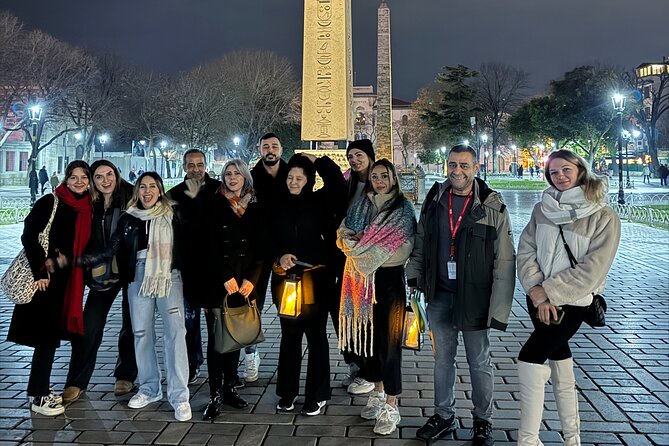
You’re provided with EMF detectors, dowsing rods, and an EVP recorder, plus Maddusa’s Web using a green laser. You’ll use the equipment during the walk rather than just carrying it. That matters for your experience because it keeps you actively participating in the “mood,” even when the main content is historical.
Here’s the balanced way to think about it: the guide ties each spooky moment to a real setting—columns, gates, mausoleums, and the Hippodrome’s remains—then you get to react with the tools. If you’re into history, you’ll enjoy the connections. If you’re into the paranormal vibe, you’ll enjoy the hands-on element. If you want scientific certainty, you’ll probably leave thinking more about the past than about proof.
Stop-by-stop: 11 locations and why each one hits
The itinerary is tight and efficient. Each stop is around 8 to 20 minutes, so you get enough time to look, listen, and absorb without feeling trapped at one spot.
1) Forum of Constantine (Column of Constantine)
You begin at a place tied to the Roman Empire’s shift. The guide frames it around Constantine moving the empire’s capital to Constantinople in 330, and the Column of Constantine as the centerpiece. The story angle here is dark: secrets from the past and terror tied to what surrounded the forum.
This is a strong opener because it gives you the “rule of the game.” After this, you understand the theme: power changes hands, public fear spreads fast, and the city keeps receipts in stone.
2) Ahmet Tevfik Pasa Mezari
Next you’ll visit the graveyard of a 19th-century sultan and his advisors, with emphasis on betrayal and assassination. This stop shifts the mood from Roman imperial power to Ottoman-era court danger.
It’s a good mid-walk adjustment. Grave sites tend to slow people down, and the tour uses that to deepen the emotional tone instead of racing forward.



3) Sphendone remains (south side of the Hippodrome)
Now you’re at the vaulted remnants of the south side of the Hippodrome, with the guide pointing out the outside of an ancient prison once used for holding wild animals. Then the tour turns to torture methods and how disfiguration was practiced.
This is one of the stops that might feel intense if you prefer lighter stories. Still, it’s also where the tour feels most “grounded” in built structures—what you see outside becomes the anchor for what happened inside.
4) Hippodrome (the big social engine)
The Hippodrome is the sporting and social center of Constantinople for over 1,000 years. The guide connects it to chariot races and rival factions, while also pointing out it was where public executions happened. The Hippodrome is also framed as a place where citizens could see the emperor face-to-face—and where one of the most horrific massacres took place.
This is your major set-piece. Even if you’re not a “Roman ruins” person, it’s the kind of site that helps you picture the old city as a live arena of politics and spectacle.
5) Kucuk Ayasofya – Gazi Suleyman Pasa Mosque
You’ll visit the Little Hagia Sophia Mosque, a space with a layered identity: once the Church of Saints Sergius and Baccus, later renamed under Ottoman rule. The guide also brings in the 6th-century context, including a palace connection tied to Justinian before he became emperor.
The story gets personal with a 16th-century episode involving a high-ranking eunuch who was embezzling money and evading taxes, then was found and executed. The guide uses this as a reminder that “religious buildings” also served as stages for administrative cruelty.
One practical detail: admission is included at this stop.
6) Sphendone remains (the back side)
You return to the Sphendone remains for the “best seats” angle—how positions in the arena could become survival bets. The guide also describes death accumulating over centuries and a successful coup de tat that dethroned a powerful emperor, plus the fate of him and his sons above the walls.
This works well right after the Hippodrome because your mind already has the shape of the arena. Now you’re reading the space for consequences.
7) Serpent Column
The Serpent Column is next, and the tour frames it through spoils of war and the execution of a Byzantine emperor. This stop is short but pointed: a single monument tied to propaganda, conquest, and killing.
It’s the kind of stop you’ll remember because it’s so specific: an object you can locate instantly, paired with an event you can’t ignore.
8) German Fountain
At the German Fountain, the guide briefly links it to chariot-race starting gates in the Hippodrome. Then the story shifts to the 17th century: Ottoman soldiers returning home weren’t paid, and the situation led to a deadly event at this location where an old tree once stood.
This stop gives you a break from purely imperial machinations. It’s about ordinary human desperation colliding with institutional failure—still dark, but more grounded in basic survival.
9) Sultan Ahmet Tomb
You’ll stop at the Sultan Ahmet Tomb, where the guide brings up the Ottoman law of fratricide—the idea that sultans could kill brothers and children who threatened their throne. The story then ties those killings to haunting ideas around the mausoleum.
This is another emotionally heavy stop. If you’re sensitive to family-history violence, pace yourself at the tomb and keep an eye on the group so you don’t get separated in the evening dark.
10) Sultanahmet Square
A quick, sharp story at Sultanahmet Square: in the early 17th century, coffee was banned for public drinking and the consequences were literally deadly.
This is one of those “wait, really?” moments that makes the whole tour feel less abstract. The city’s strictness wasn’t just about law—it reached daily habits.
11) Imperial Gate Bab-i-Humayun (Bab-ı Hümayun)
You finish at the imperial gate to the Topkapi Palace: grand, intended to scare and intimidate. The guide includes an additional story about a head gardener of the palace gardens with a special race that was described as a matter of life and death.
It’s a fitting closer. You end where power is on display—and where the tour’s theme clicks: fear, spectacle, and control are built into the design of the city itself.
Price and value: what $48.06 gets you
At $48.06 per person for about 2 hours, the value hinges on two things: (1) the density of major sites you cover, and (2) what’s included beyond the guide.
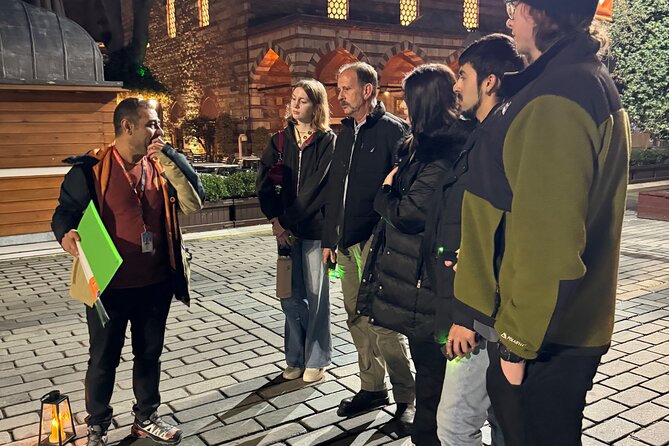
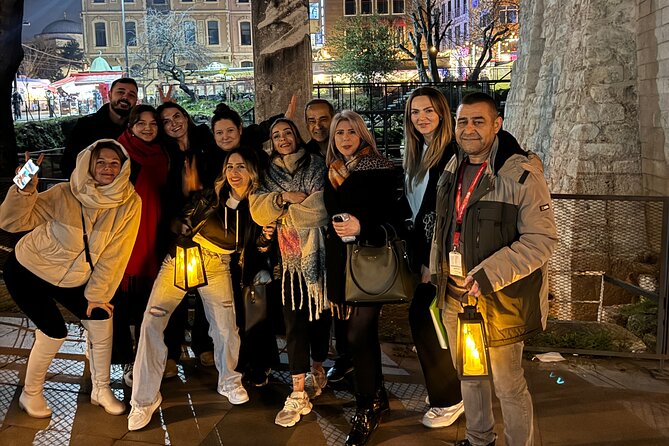
You get an English-speaking guide, a focused route through key historical points, and a smaller group size (up to 20). Add the provided gear—EMF detectors, Maddusa’s Web green laser, dowsing rods, and an EVP recorder—and this feels more like an activity than a standard walking tour.
You also get an itinerary where most admission tickets are free, with one stop that includes admission. That’s a quiet money-saver if you’d otherwise be paying entry fees while trying to keep the walk efficient at night.
If you’re deciding between a classic “haunted stories only” tour and one that mixes tools and historical stops, this one clearly leans toward the mix.
The guides, the tone, and how to enjoy it
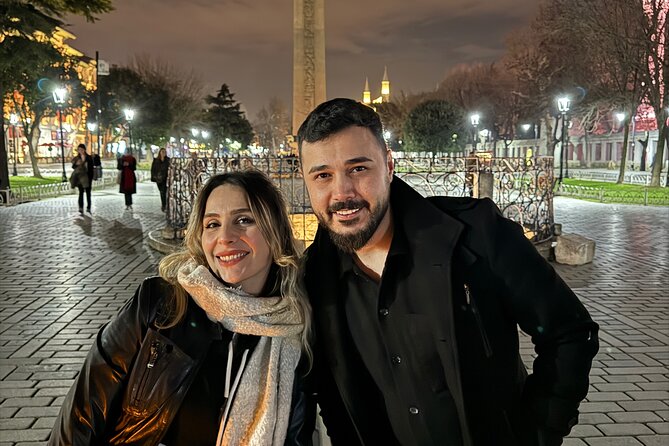
This tour’s best moments tend to come from the guide’s energy and research depth. In particular, I’ve seen strong praise for guides such as Sara, Brent, and Mehmet, especially for connecting the spooky lines to real events and for keeping the group moving through the city’s lesser-noticed corners at night.
The tone is dark, but it’s also structured. Short stops mean the guide can change gears: from Roman politics to Ottoman court intrigue to arena brutality—without losing you.
Practical tip for your comfort: bring a charged phone even though you’ll have a mobile ticket. You may want maps once you end near Topkapi’s main gate, since you’ll be navigating in the evening.
Weather and timing: an 8:00 pm plan that depends on the sky
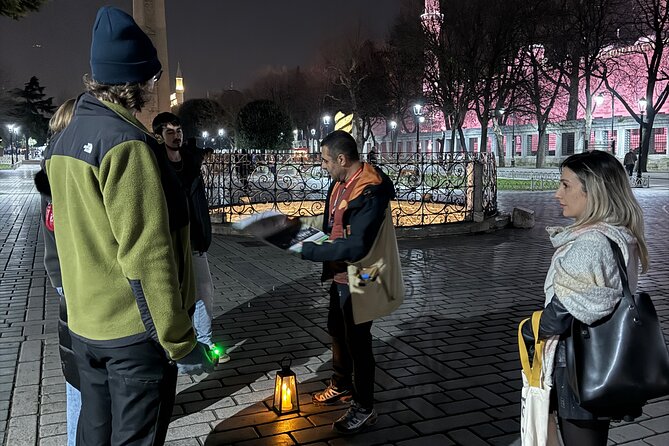
This experience requires good weather. If it’s canceled due to poor conditions, you’ll be offered a different date or a full refund.
Because the tour starts at 8:00 pm, it’s smart to plan for late-night walking time and some waiting before the group departs. If you’re doing other Sultanahmet sights that day, build in a buffer so you’re not sprinting across town right before the start.
And yes—this is a night tour. If you hate cold or prefer brighter daytime routes, you might find it more comfortable to layer up and keep your pacing steady.
Should you book Istanbul’s Haunted Night Tour?
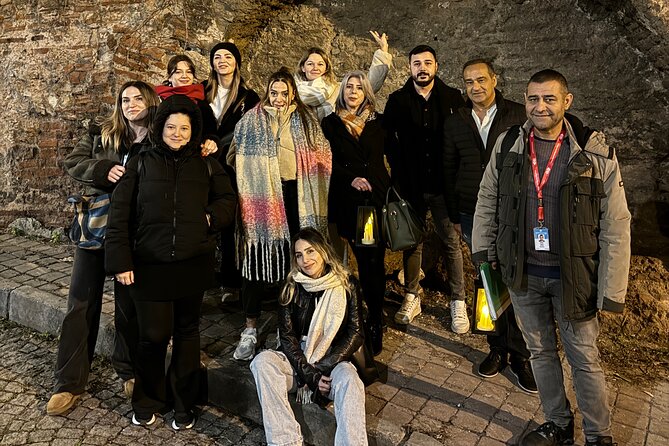
Book it if you want a nighttime Istanbul walk that gives you real places tied to power, punishment, and legend—plus the chance to use EMF/EVP-style tools during the story moments. It’s especially a good fit if you like history but don’t want a museum vibe.
Skip it if your top priority is paranormal proof. This tour’s design is built around storytelling and atmosphere, with tools used as part of the experience rather than a promise of evidence.
My take: for the price, it’s a high-stop, guided, hands-on evening that turns Sultanahmet and the Topkapi surroundings into a single moving story.
FAQ
How long is the Istanbul Haunted Night Tour?
It runs for about 2 hours.
What time does the tour start?
The start time is 8:00 pm.
Where do I meet for the tour?
You meet at the Column of Constantine, Molla Fenari, Vezirhan Cd. No:16 D:18, 34120 Fatih/İstanbul.
Where does the tour end?
It ends at Bab-ı Hümayun, Topkapı Sarayı, 34122 Fatih/İstanbul, near Topkapi Palace’s main gate.
Is the tour offered in English?
Yes, it’s offered in English.
How much does it cost?
The price is $48.06 per person.
What ghost-hunting equipment is included?
You get EMF detectors, Maddusa’s Web green laser, dowsing rods, and an EVP recorder.
Are admission tickets included?
Most stops list admission ticket free, and admission is included at Kucuk Ayasofya – Gazi Suleyman Pasa Mosque.
Is there free cancellation?
Yes. You can cancel up to 24 hours in advance for a full refund.
Is good weather required?
Yes, the tour requires good weather. If it’s canceled due to poor weather, you’ll be offered another date or a full refund.
If you want, tell me when you’re traveling (month is fine) and what you usually like—history-heavy, spooky-only, or hands-on fun—and I’ll help you decide if this fits your Istanbul plan.