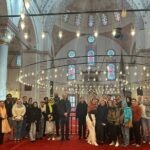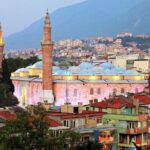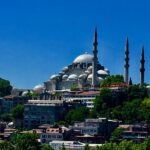
Fener and Balat feel like another Istanbul. This half-day walking tour threads through Fener and Balat with a guide who connects old buildings to present-day street life. You’ll go from a major Greek Orthodox patriarchal site to synagogues and churches in the same walk, with plenty of time for photos of the area’s famous colorful streets.
I especially like two things: first, the way the route brings multiple faiths into one compact neighborhood circuit, so you’re not just ticking off sites. Second, the tour has built-in photo time—rainbow stairs, colorful facades, and even a ruined-church moment—so you can capture the look of the district without rushing.
One thing to plan for: it’s a hilly walk with moderate fitness needs, so expect stairs and uneven stretches, even if the tour is only around 3 hours.
In This Review
- Key highlights you’ll care about
- Why Fener-Balat beats the usual Istanbul route
- Price and time: is $20.39 worth it?
- Small-group walking tour logistics that matter
- The 3-hour route, stop by stop
- Stop 1: Fener Rum Patrikhanesi (Greek Orthodox Patriarchate)
- Stop 2: Ozel Merkez Rum Lisesi (Greek Orthodox High School)
- Stop 3: Church of St. Mary of the Mongols
- Stop 4: Colorful Stairs (rainbow photo moment)
- Stop 5: Dimitrie Cantemir House
- Stop 6: Balat’s Panagia Paramythia Church
- Stop 7: A Jewish presence tied to a small storefront
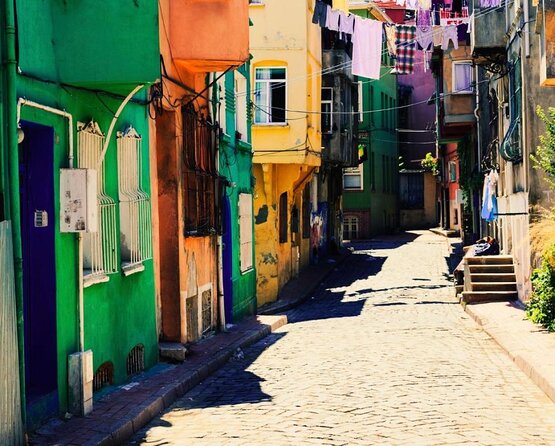
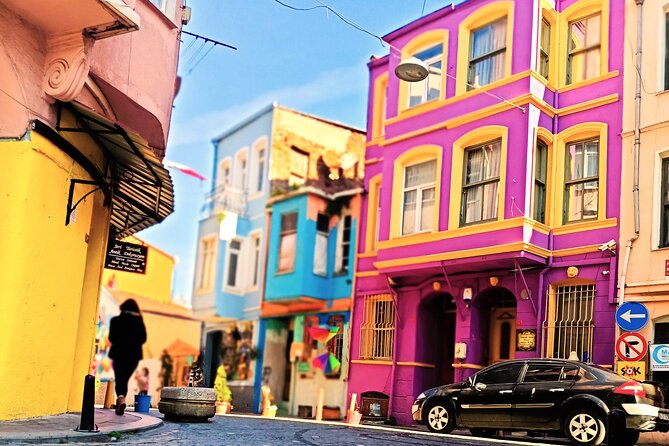
- Stop 8: Kiremit Caddesi (colorful houses)
- Stop 9: Ahrida Synagogue
- Stop 10: Bulgarian Orthodox Church (Sveti Stefan Church)
- What the best guides do for you (and why it shows)
- Photo strategy: get the shots without losing the day
- Who should book this tour (and who might not)
- Should you book? My practical verdict
- FAQ
- How long is the Half day Fener-Balat Walking Tour?
- How much does the tour cost?
- Where does the tour start and end?
- Is the tour in English?
- Are there any dress rules for any stop?
- What is the cancellation policy?
Key highlights you’ll care about
- A small group (max 20) means the guide can manage pacing on narrow streets and around churches
- Photo stops designed for the colorful streets keep you from feeling like you’re sprinting for views
- Multi-faith, side-by-side sights: mosques aren’t the only spiritual landmarks here—synagogues and churches are part of the story
- Entrance included for key sites (Greek Orthodox Patriarchate and the Bulgarian Orthodox church)
- English-speaking guide with stories that link places to the people who lived around them
- Private tour upgrade available if you want this route exclusive to your group
Why Fener-Balat beats the usual Istanbul route
Most first-time Istanbul days cluster around the big-ticket landmarks. This tour takes a different approach. You’re walking through districts that feel local, layered, and still in use—where daily life sits right next to centuries-old religious buildings.
What makes it work is the balance. You get short, focused stops that build a clear picture of how these communities formed and shifted over time. And you’re not stuck in long museum-style waits. The whole idea is a half-day “street historian” walk.
This is also a good choice if you’ve already done Sultanahmet and want a change of pace. The vibe here is less about constant crowds and more about wandering with purpose, stopping at key corners, and seeing how neighborhoods actually look on an ordinary day.
You can also read our reviews of more walking tours in Istanbul



Price and time: is $20.39 worth it?

At $20.39 per person for about 3 hours, the value is mostly in three places: a guide to explain what you’re seeing, included entrance fees for some main stops, and a route that strings together multiple landmarks efficiently.
Here’s what’s included versus not, in practical terms:
- Included: entrance for the Greek Orthodox Patriarchate and the Bulgarian Orthodox church, plus all fees and taxes
- Not included: lunch, tips, and private transportation
If you’re the type who hates paying just to stand in a line, the structure helps. Many of the stops are short, with admission listed as free for most locations, so you’re not burning your budget on ticketed sites. And the finish back at the meeting point makes it easier to plan your own post-tour lunch.
Small-group walking tour logistics that matter
This is a walking tour, and the company calls out moderate physical fitness. In real life, that usually translates to stairs, uneven sidewalks, and some uphill stretches—plus time spent stopping and starting. If you’re sensitive to hills, plan for slower moments and keep water in mind.
A few other logistics you should know:
- Language: English
- Group size: maximum 20 travelers
- Ticket: mobile ticket
- Service animals: allowed
- Location: near public transportation
- Start/end: it begins at FenerBalat, 34087 Fatih/İstanbul and ends back there
One more tip: the meeting spot is in the Fener-Balat area, which can be a maze of side streets. If you’re cutting it close, you’ll feel it. I’d rather arrive a few minutes early than play phone-tag with your guide.
The 3-hour route, stop by stop
The tour is built as a chain of short visits. That sounds simple, but it changes the experience. Instead of spending one long block somewhere, you keep momentum and the neighborhood stays “alive” the whole time.
Stop 1: Fener Rum Patrikhanesi (Greek Orthodox Patriarchate)
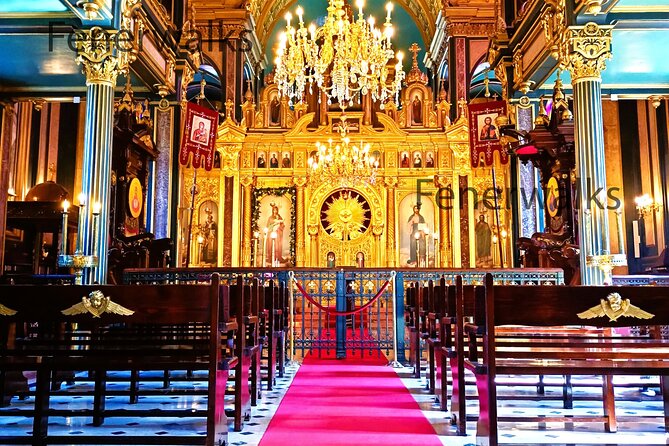
The tour starts at Fener Rum Patrikhanesi, the Greek Orthodox Patriarchate. The time here is about 45 minutes, and the admission is listed as free.
This place carries weight in a very specific way. The tour notes that the Patriarchate’s history dates back to Hagia Sophia and that it moved to this new location after many stops. That “history of movement” matters when you’re trying to understand why Istanbul’s religious map looks the way it does.
Important: there’s a clothing regulation for entry. You can be turned away for mini shirts and skirts, sleeveless tops, or tank tops (for both men and women). If you show up dressed for beach weather, bring a cover-up mindset.





Stop 2: Ozel Merkez Rum Lisesi (Greek Orthodox High School)
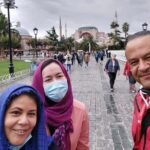
Next is Ozel Merkez Rum Lisesi, the Greek Orthodox high school. Expect around 30 minutes.
The tour description frames it as sitting on top of Fener like an eagle—so it’s not just an institution, it’s a viewpoint in the district. Even if you only get a short visit, this stop helps you see that education and community life were part of how these neighborhoods survived and adapted.
Stop 3: Church of St. Mary of the Mongols
After that, you head to the Church of St. Mary of the Mongols for about 20 minutes.
This stop is memorable because the story attached to it sounds like a character in the neighborhood. The tour mentions a tale of a brave woman sent from Constantinople to the lord of steps, Mongolia. That kind of narrative is exactly why guided walking tours work—suddenly the building isn’t just old stone. It becomes a footnote to a bigger world.
Stop 4: Colorful Stairs (rainbow photo moment)
Now you hit the famous Colorful Stairs. Time here is short—around 10 minutes.
This is one of the stops designed for quick satisfaction: photos, angles, and that immediate sense of place. If you’re not rushing, you can get more than one good shot. If you are rushing, you’ll just feel crowded. The fix is simple: treat this like your reset. Take your pictures, then move on while the rest of the day is still calm.
Stop 5: Dimitrie Cantemir House
The route includes a stop at the Dimitrie Cantemir House of Romanian Prince and Lord of Bogdan (Moldovia).
Even with limited time, this is a helpful punctuation mark. It broadens the story beyond just the major faith landmarks into the wider political and cultural connections that ran through Ottoman-era Istanbul.
Stop 6: Balat’s Panagia Paramythia Church
Then you enter Balat and the tour stops at Panagia Paramythia Church. Plan on about 5 minutes.
The tour frames this church as being in its last days—something about to vanish from history before its last visitors see it. That makes this stop feel urgent but also tender. It’s a reminder that preservation isn’t abstract. When buildings decline, history declines with them.
If you want photos, you’ll want to be quick and respectful. Short stop means you should decide your shot fast and move with the group.
Stop 7: A Jewish presence tied to a small storefront
Right after that, the tour points out Jewish essence within an alcohol seller store—a location described as once being a hot place for many rich and young people.
This is the kind of stop that wouldn’t be on your radar if you were just hunting landmarks. It’s also a reminder that neighborhoods change uses over time. A shop today can still hold yesterday’s social memory.
The practical takeaway: use your guide’s context. Look at what’s there now, but listen for what the place used to mean.
Stop 8: Kiremit Caddesi (colorful houses)
Next comes Kiremit Caddesi, with colorful houses and another photo stop (about 10 minutes).
This section is where the district’s look becomes the main attraction. Think of it as the visual payoff after all the history talk. If you keep your pace steady, you’ll get the feel of Balat’s streets instead of just a single photo corner.
Stop 9: Ahrida Synagogue
After Kiremit Caddesi, you visit Ahrida Synagogue for around 15 minutes.
The tour highlights it as the biggest synagogue of Balat and notes a special praying area. What I find useful about a guided stop like this is how the guide ties the architecture and layout to migration: the tour description points to Jewish people coming from Spain to Ottoman lands. That detail helps you read the building as part of a long movement of people, not just as a static relic.
Stop 10: Bulgarian Orthodox Church (Sveti Stefan Church)
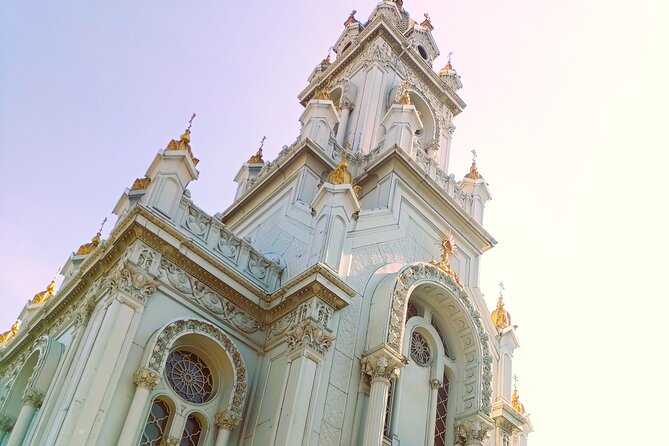
The final major stop is the Bulgarian Orthodox Church, also called Sveti Stefan Church, for about 20 minutes.
This stop is described as a Bulgarian masterpiece, including secrets behind building their own church in front of the Greek Patriarchate. That contrast—visibility, identity, and place—lands well at the end of the route because by now you’ve seen how tightly these communities sit together in the same city blocks.
What the best guides do for you (and why it shows)
Names you may hear: Kübra, Yunus, and Janus. Across different runs, the common theme is storytelling with momentum.
In plain terms, the guides seem to do two things extremely well:
- They explain what you’re looking at in short bursts, then give you time to look for yourself.
- They connect facts to everyday life in Fener-Balat, so the neighborhood doesn’t feel like a lecture.
This is especially helpful if you’re bringing teenagers or you have a mixed group energy. The tour also gets praised for keeping young people engaged, which tells me the pacing and story delivery usually work even when attention spans vary.
Photo strategy: get the shots without losing the day
This route is designed for photos, but it’s still a walking tour of living neighborhoods. Here’s how to make it pay off:
- Use Colorful Stairs and Kiremit Caddesi for your main photos. They’re scheduled with time for it.
- Think of the religious sites as context first, photos second. The Patriarchate has a clothing rule—plan your fit early so you don’t lose time at the door.
- When a stop is only 5 minutes, treat it as “capture and move.” Don’t let one photo stop hijack your whole afternoon.
If you love street photography, this tour gives you variety: stairs, facades, church exteriors, and small-window details tied to bigger stories.
Who should book this tour (and who might not)

This is a great fit if you want:
- A half-day plan that shows a different side of Istanbul beyond the headline monuments
- A guided walk that connects churches, synagogues, and community history
- A small group experience in neighborhood streets where you can actually look around
You might rethink it if:
- Hills and stairs are a problem for you. The tour calls for moderate physical fitness
- You’re going to arrive with clothing that doesn’t meet the Patriarchate entry rules
- You need long seated time. This is short-stop walking, not a sit-and-stare itinerary
Should you book? My practical verdict

If you want Istanbul that feels lived-in, this tour is an easy yes. The price is low enough that you won’t feel like you’re paying only for access to a couple sites, and the route gives you a strong neighborhood snapshot in about three hours.
Book it especially if you’re curious about how different communities shaped the same city blocks. The best part is the way the tour stitches those places together into one coherent walk, not a random set of photos.
If you hate hills or you’re traveling with limited mobility, you may find the walking pace tough. For everyone else, bring clothing that passes the Patriarchate rules and come ready to walk. This is the kind of tour that makes you look at streets differently after you leave them.
FAQ
How long is the Half day Fener-Balat Walking Tour?
It lasts about 3 hours.
How much does the tour cost?
The price is $20.39 per person.
Where does the tour start and end?
It starts at FenerBalat, 34087 Fatih/İstanbul, Türkiye and ends back at the same meeting point.
Is the tour in English?
Yes, it is offered in English.
Are there any dress rules for any stop?
Yes. For entry to the Greek Orthodox Patriarchate, there are clothing rules. Mini shirts and skirts, sleeveless tops, and tank tops are not allowed for both men and women.
What is the cancellation policy?
You can cancel for a full refund if you do so at least 24 hours before the start time. If you cancel less than 24 hours before, the amount paid is not refunded.