REVIEW · HALF-DAY
Crossroads of Humanity: Istanbul Half-Day Tour
Book on GetYourGuide →Operated by Gray Line Turkey · Bookable on GetYourGuide
Four hours of Byzantine Christianity? It’s surprisingly smooth. This private half-day strings together Orthodox and Byzantine Istanbul through real places, not just slogans, starting at the Patriarchate at Fener and ending with architecture you can photograph and recognize later.
I love the on-the-spot storytelling at Patriarchate at Fener, especially how Constantine the Great’s Christian decree helped reshape the empire’s religious center. I also love seeing the art up close at St. Savior in Chora (Kariye Museum), where preserved mosaics and frescoes make the Byzantine style feel close-up and personal. The main drawback is timing: St. Chora is closed on Wednesdays, so plan around that if your dates fall midweek.
In This Review
- Key highlights worth your attention
- Why this half-day hits hard in Istanbul
- The Patriarchate at Fener: Orthodox Christianity’s starting point
- Panagia of Blachernae and the Hagiasma healing legend
- St. Savior in Chora (Kariye Museum): mosaics and frescoes that hold up
- Pantocrator (Zeyrek): the Byzantine complex that feels like a city
- Fethiye and St. Mary Pammacaristos ruins: refinement in an older shell
- Balıklı’s Zoodochos Pege: the underground cistern and the gold fishes
- St. Sergius and Bacchus: a miniature Hagia Sophia comparison
- Transport, timing, and the feel of a private tour
- Price and value: what you’re really paying for
- Practical tips so your day runs smoothly
- Who should book this tour
- Should you book Crossroads of Humanity in Istanbul?
- FAQ
- FAQ
- How long is the Crossroads of Humanity: Istanbul Half-Day Tour?
- Is this tour private, and what language is it offered in?
- What sites are included on the tour?
- Are there any days when a stop may not be available?
- Does the price include admission and transportation?
- Do I need to bring any identification?
Key highlights worth your attention
- Patriarchate at Fener to Constantine’s decision: You connect an imperial policy to a real neighborhood shift.
- Hagiasma at Panagia of Blachernae: A holy-water story that includes emperor-era cleansing.
- St. Savior in Chora (Kariye Museum) mosaics: One of the tour’s visual payoffs, when open.
- Zeyrek Pantocrator complex: Churches, funerary chapels, baths, and care facilities all in one warren.
- Balıklı’s underground cistern and gold fishes: A miracle-linked detail you can point out immediately.
- St. Sergius and Bacchus: Byzantine architecture that looks like a smaller preview of Hagia Sophia.
Why this half-day hits hard in Istanbul
Istanbul is famous for being layered. What I like about this tour is that it makes that layering practical: you don’t just see buildings, you learn the thread tying each stop to Christianity’s early centuries and the Byzantine era that followed.
It’s also a smart length. In four hours, you get enough stops to feel like you’re walking through history’s timeline, without turning the day into a marathon.
You can also read our reviews of more tours and experiences in Istanbul

The Patriarchate at Fener: Orthodox Christianity’s starting point
Most itineraries say Istanbul is the crossroads of cultures. This one gets specific by beginning at the Patriarchate at Fener, a key place for Orthodox Christianity.
Your guide explains why Constantine the Great’s declaration that Christianity became the religion of the Roman Empire mattered. The big idea is simple: once Christianity gained official power, the church’s center of gravity shifted too—and Istanbul benefited from that pull.
Even if you’ve seen photos of Istanbul’s historic religious sites, this stop helps you understand them as a system, not a collection. You’re learning how an empire’s decision could change where spiritual authority lived.
Panagia of Blachernae and the Hagiasma healing legend
Next up is the Church of Panagia of Blachernae, and it comes with a very human kind of story: the Hagiasma, a fountain of holy water, is said to cure health problems. The tour includes the detail that even an emperor visited for cleansing.
I like stops like this because they make the city’s religious history feel lived-in. People didn’t just build churches. They built routines around healing beliefs, pilgrimage, and hope.
Also, visually, this is a good transition stop: you move from the political weight of Constantine-era context into a more personal, devotional world.
St. Savior in Chora (Kariye Museum): mosaics and frescoes that hold up
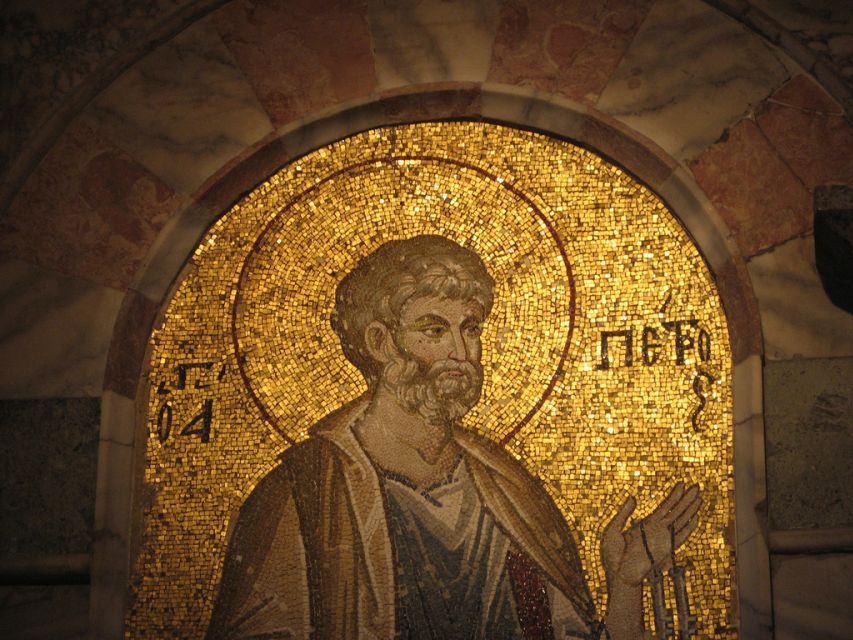
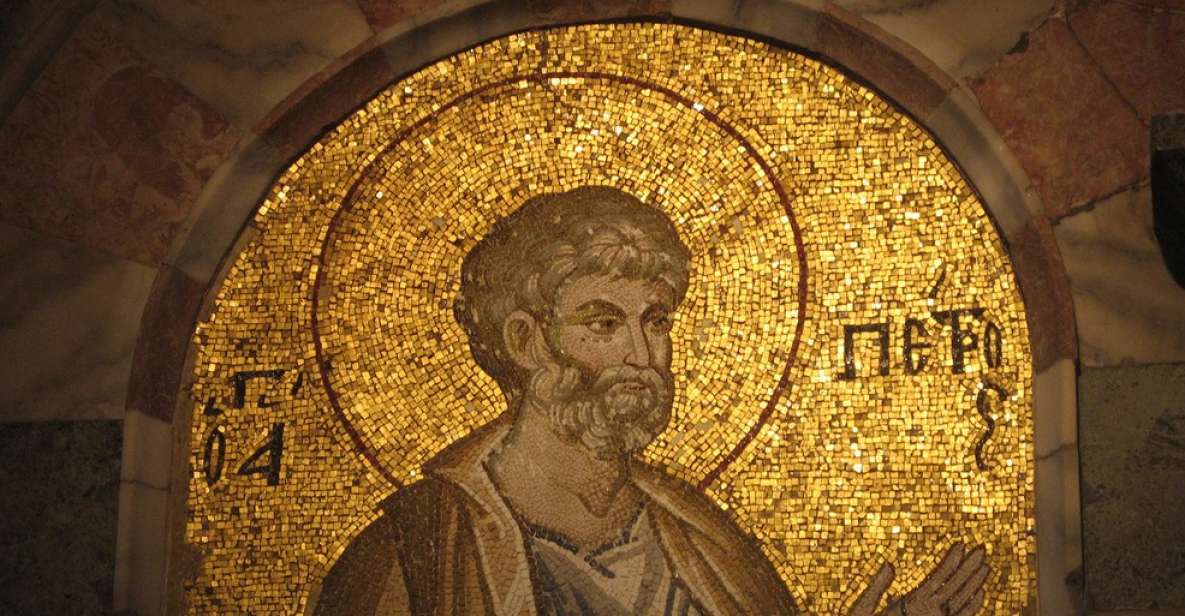
St. Savior in Chora—better known today as the Kariye Museum—is where the tour becomes very easy to remember later. This was once a Byzantine monastery dedicated to Jesus, and the emphasis here is on the surviving mosaics and frescoes.
What I like most is the way the guide connects art to meaning. Instead of treating the decorations like museum wallpaper, you learn how Byzantine craftsmen and patrons used visual storytelling to reinforce faith and identity.
One important practical note: St. Chora is closed on Wednesdays. If your travel dates land there, I’d plan your week carefully or ask the provider what adjustments are possible, because this is one of the tour’s biggest visual anchors.
Pantocrator (Zeyrek): the Byzantine complex that feels like a city
The next stop is Pantocrator (Zeyrek), described as a labyrinthine complex. That word matters. You’re not just looking at one church. You’re moving through a site that once supported multiple functions.
Here you’ll find churches, funerary chapels, baths, hospice for the aged, and even a hostel for travelers arriving in modern times (as the site still connects to travel life). It’s a reminder that Byzantine religion wasn’t separated from daily needs. It included care, hospitality, and rites of passage too.
Photography-wise, this is a place where wide shots and details both pay off. Tight angles can show the sense of layered space, while broader views help you understand the scale of what was built.




Fethiye and St. Mary Pammacaristos ruins: refinement in an older shell
Then you move toward the water for the remains of the Church of St. Mary Pammacaristos (Fethiye). These are 11th-century ruins, and the tour highlights them as showing the aesthetic refinement of the Paleologan Age.
Ruins can be tough on guided tours because you risk seeing “less.” In this case, you’re not meant to think small. You’re meant to notice what still survives: proportions, craftsmanship cues, and the way the site connects to a later ecclesiastical role.
The tour also points out that this place was home to the Patriarchate after the conquests. That’s a big storyline shift—showing that even damaged or repurposed spaces stayed central to religious leadership.
Balıklı’s Zoodochos Pege: the underground cistern and the gold fishes
At Zoodochos Pege at Balıklı, the standout detail is the underground cistern filled with gold fishes. The tour ties this setting to a miracle story associated with the fishes, turning a specific physical feature into a memorable narrative clue.
I find that this stop works especially well if you like learning how stories attach to geography. The cistern gives you a concrete anchor: you can picture the miracle not as abstract legend, but as something that happens in a very specific spot.
Balıklı also connects you onward to another architecture-focused payoff, setting up the next stop like a historical bridge.
St. Sergius and Bacchus: a miniature Hagia Sophia comparison
The tour then includes St. Sergius and Bacchus, and you may notice the comparison the guide suggests: it looks like a miniature Hagia Sophia. That’s not just a casual remark. It frames how Byzantine architecture evolved and how later masterpieces built on earlier designs.
This is a great stop for photos because the building’s features help you see patterns. Even from a short visit, you’ll likely spot what makes Byzantine church design recognizable: form, rhythm of surfaces, and the overall sense of structured harmony.
If you’ve already seen Hagia Sophia elsewhere in your trip, this stop can also help you understand it in context. You’re getting the earlier blueprint, not just the final flagship.
Transport, timing, and the feel of a private tour
This experience uses private A/C transportation and private guiding in English or Spanish. That matters because you’re moving between sites with different vibes and sometimes different access rules.
It’s also set up to reduce friction. Museum entrance fees are included, and there’s skip-the-ticket-line access. Donations to churches are included too, which is one less thing you have to decide on the fly.
You should plan for a tight half-day rhythm. Four hours is enough for these seven stops only if you keep a steady pace and show up ready. The upside is focus; the downside is that there’s not much buffer if a site is unavailable.
Price and value: what you’re really paying for
At $354 per person for a 4-hour private tour, the price is not “cheap.” It is, however, fairly understandable when you look at what’s wrapped in.
Your fee covers:
- Private guiding in your language
- Private A/C transport
- Museum entrance fee
- Donations to churches
- VAT (18%)
- Parking
- Free pick-up/drop-off from central hotels
- Skip-the-ticket-line
If you were to book separately—guide time, transport, and entry costs—you’d likely spend in the same neighborhood or higher. The value is strongest if you want a clean narrative from stop to stop and prefer not to coordinate entry timing yourself.
Practical tips so your day runs smoothly
A few things to know before you go:
- Bring a passport or ID card.
- No smoking and no pets are allowed.
- Expect the tour to connect religious stories to architecture, so give the guide your attention instead of trying to multitask on your phone.
Also, plan your week carefully. St. Chora is closed on Wednesdays, and that can affect the balance of the stops since Chora’s mosaics are one of the highlights of the whole route.
Finally, after booking, you need to contact the local supplier to confirm the exact time and shuttle availability. This tour includes free shuttle pick-up windows (either 08:00–09:00 or 13:00–14:00, depending on morning vs. afternoon timing), and the ride can take 45 to 60 minutes. In plain terms: your day starts earlier than you might expect.
Who should book this tour
This is a great fit if you:
- Want a Christian heritage and Byzantine architecture tour without guessing what you’re looking at.
- Prefer private guiding so you can ask questions at the places that matter.
- Like short, story-driven tours that end before your feet get too tired.
It’s less ideal if you hate missing sites when opening hours don’t cooperate. One past experience described visits becoming impossible due to closures and the tour ending sooner than expected, which is the risk whenever religious and museum schedules shift. You can reduce that risk by choosing dates that avoid St. Chora’s Wednesday closure.
Should you book Crossroads of Humanity in Istanbul?
If you want an efficient, well-timed route through some of Istanbul’s most important Byzantine-Christian landmarks, I’d book this. The tour’s biggest strength is that it turns architecture into storyline: Constantine’s decision at Fener, the Hagiasma healing legend at Blachernae, and the visual punch of Chora’s mosaics when open.
Choose it confidently if you’re the type of traveler who enjoys religious history as a human story tied to buildings. If your trip depends on one specific day (especially Wednesday) or you’re expecting a relaxed schedule with lots of spare time, you’ll need to plan a little more carefully.
If you do book, I’d also ask the guide early on how they’ll adapt if any site is unavailable that day. In a half-day format, good course correction makes all the difference.
FAQ
FAQ
How long is the Crossroads of Humanity: Istanbul Half-Day Tour?
It lasts 4 hours.
Is this tour private, and what language is it offered in?
Yes, it includes private guiding. The tour is offered in English and Spanish.
What sites are included on the tour?
The stops include Patriarchate at Fener, Church of Panagia of Blachernae, St. Savior in Chora (Kariye Museum), Pantocrator (Zeyrek), Church of St. Mary Pammacaristos (Fethiye), Zoodochos Pege at Balıklı, and St. Sergius and Bacchus.
Are there any days when a stop may not be available?
St. Chora is closed on Wednesdays.
Does the price include admission and transportation?
Yes. It includes private A/C transportation, museum entrance fee, and donations to churches, plus VAT and parking.
Do I need to bring any identification?
You should bring a passport or ID card. Smoking and pets are not allowed.