REVIEW · CITY TOURS
Istanbul City Walk: Colors, Culture & History Fener Balat Tour
Book on Viator →Operated by Tourmania · Bookable on Viator
Istanbul can feel huge. This walk makes it human. You’ll stitch together Fener and Balat as living layers of Jewish, Byzantine, Ottoman, and Orthodox life—on streets you can actually stand on, not just read about.
I like two things most. First, the colorful streets and stairways that make quick photo stops feel like mini landmarks. Second, the guided explanations around Greek and Bulgarian Orthodox institutions in the Phanar/Fener area, including the Ecumenical Patriarchate.
One thing to plan for: this is a real walking tour with time spent on uneven streets and steps, so you’ll want a moderate fitness level. Also, city closures or weather can affect timing, so keep a little flexibility in your day.
In This Review
- Key highlights to look for
- Why This 2-Hour Fener and Balat Walk Feels Like Real Istanbul
- Meeting Point at Balat Merkez Şekercisi and the Pace You’ll Likely Feel
- Balat’s Colorful Quarter: Jewish History, Old Streets, and Quick Stops
- The colorful stairs en route to Galata Tower
- Fener’s Greek Orthodox Core: High Schools, Community Life, and the Phanar Area
- Patriarchate of Constantinople: what you’re actually looking at
- Bonus: Fener Rum Patrikhanesi stop
- Churches You Can Still Visit: St. Stephen’s Bulgarian Iron Church
- Dimitrie Cantemir Museum Café: A Short Break That Helps the Walk Make Sense
- Shopping and Photos: Using Fener and Balat as Your Istanbul Detour
- Price and Value: Is $30.17 Worth It?
- Who This Tour Suits Best (and Who Might Want Something Else)
- Should You Book the Istanbul City Walk: Colors, Culture & History Fener Balat Tour?
- FAQ
- How long is the Fener and Balat walking tour?
- How much does the tour cost?
- What language is the tour offered in?
- What group size should I expect?
- What is included in the price?
- Is there a mobile ticket?
- Where does the tour start and end?
- Do I need a high level of fitness?
- What if the weather is poor?
- Can I cancel, and what if I arrive late?
Key highlights to look for
- Photo-ready stairways in Fener/Balat that locals use as shortcuts and visitors use as backgrounds
- Greek Orthodox landmarks tied to centuries of schooling and community life
- The Ecumenical Patriarchate of Constantinople in the heart of Phanar/Fener
- Churches still in use, including St. Stephen’s Bulgarian Orthodox Church
- A focused 2-hour route that covers a lot without feeling like a race
Why This 2-Hour Fener and Balat Walk Feels Like Real Istanbul
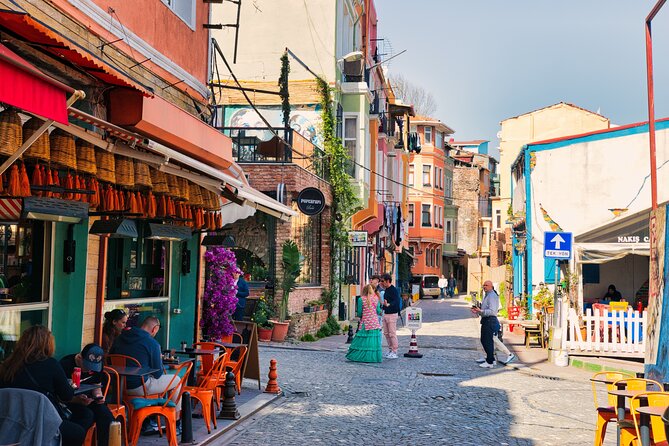
Fener and Balat are the kind of neighborhoods that teach you how cities work. Not from a museum placard—right from the street scene. You’ll see how communities built their lives into the architecture: houses with bold colors, old religious buildings that still matter today, and stone steps that turn a simple stroll into a sequence of viewpoints.
The real win here is the structure. In about two hours, you get a curated walk through the areas people usually lump together as historical. With a guide, those names start to click: where Greek Orthodox life centered, where Jewish history appears in the streetscape, and how Ottoman-era and later periods overlap.
And yes, it’s fun. This isn’t one of those tours where you spend most of your time looking at a map. You’re on the ground, moving block by block, with plenty of pauses to absorb details.
You can also read our reviews of more walking tours in Istanbul



Meeting Point at Balat Merkez Şekercisi and the Pace You’ll Likely Feel
You meet at Balat Merkez Şekercisi in the Ayvansaray area (Leblebiciler Sk. No: 33, 34087 Fatih/İstanbul). The tour runs about 2 hours and ends back at the same meeting point, so you’re not left figuring out transportation afterward.
There’s also a small-group feel. The tour caps at 15 travelers, so the pace stays manageable and questions don’t vanish into the crowd. That matters in these neighborhoods, because you’ll pass working streets and active community areas where your guide needs to time stops well.
Timing is strict in a practical way. You’re expected to arrive on time, and if you’re more than 5 minutes late, the guide can’t wait. Once the walk starts, the guide focuses on the group and can’t stop to deal with latecomers. So if you’re coming by transit, build in a buffer—especially on busy days.
Balat’s Colorful Quarter: Jewish History, Old Streets, and Quick Stops
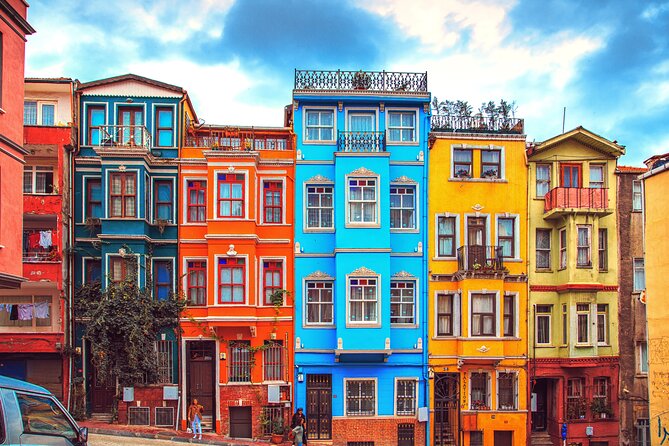
Your first moments set the tone. You start in the Balat neighborhood near the Muhtarlığı area. This is the historic Jewish quarter context, anchored by the immediate visual clue of Balat: colorful houses packed close together.
Then you shift into the classic Balat/Fener street experience—the kind of lanes where the city looks like it grew organically, one building at a time. A guide-led walk matters here. Without context, it’s mostly pretty walls and clever angles. With context, you start noticing how Byzantine, Ottoman, and more modern layers sit side by side, and how different communities occupied the same geography across time.
One practical tip: keep your camera ready but don’t turn it into a full-time job. This neighborhood is best when you alternate between looking up and looking ahead. You’ll notice stairways, doorways, and small architectural details that don’t show up in photos.
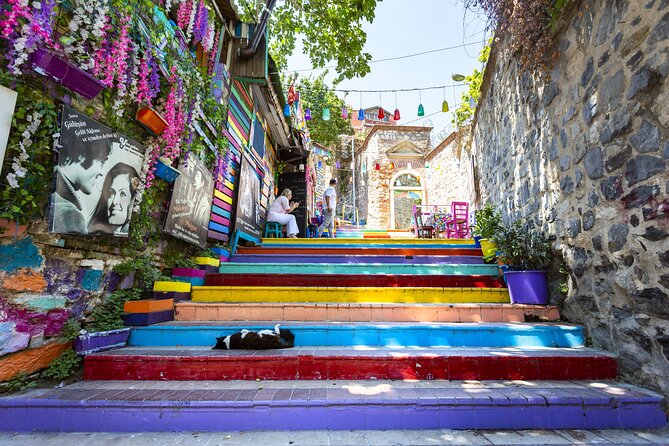
The colorful stairs en route to Galata Tower
Later, you’ll hit another set of famous 19th-century art nouveau stairs. These are popular because they deliver a dramatic, patterned step-and-street view that’s great for photos. The tour frames them as part of a route that makes sense visually—so even though you’re walking in the neighborhood, you’re also getting those citywide reference points.
If you’re the type who likes to plan shots, these stairs are a good place to pause and take a few angles. If you’re not, they’re still worth it because the design is part of the story of how people moved through these districts.
Fener’s Greek Orthodox Core: High Schools, Community Life, and the Phanar Area
Fener is where the walk turns from “pretty streets” into “why this place matters.” The area has long been associated with the Greek Orthodox community, and you’ll spend time understanding that connection through the institutions that shaped education and leadership.
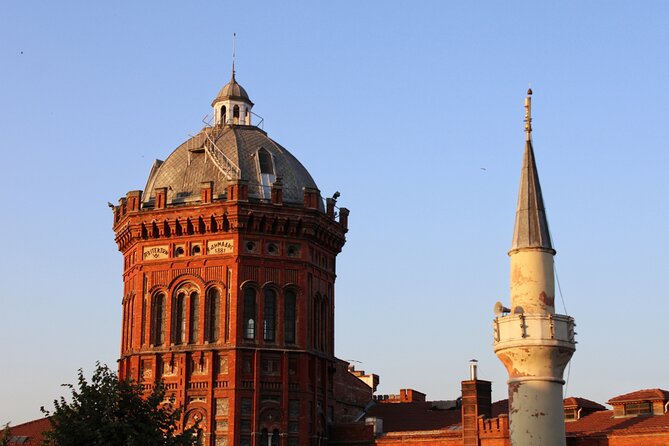
One highlight is the stop at the Private Fener Greek High School area. The tour notes a school operating for 560 years, described as crucial to ancient Greek language, philosophy, and history, and also as an Orthodox legacy. It’s also flagged as being at risk of closing. That gives the visit extra weight: you’re not just seeing an old building; you’re seeing a living educational mission facing modern pressures.
Another key thread is religion as a community system, not just a building. In Fener, you get the sense that schools, churches, and religious leadership were the glue holding cultural continuity together. The guide helps you connect those dots as you walk.
You can also read our reviews of more city tours in Istanbul






Patriarchate of Constantinople: what you’re actually looking at
You’ll also stop at the Patriarchate of Constantinople, the Ecumenical Patriarchate. The tour explains its position in Eastern Orthodox Christianity: it’s headed by the Ecumenical Patriarch of Constantinople, described as first among equals within the Orthodox Church hierarchy (currently Bartholomew).
Even if you’re not deep into church governance, this stop lands because it’s specific. You’re hearing what the Patriarchate is, where it sits, and why it has been based in the Phanar/Fener district since the late 16th century. That timeframe helps you understand why the neighborhood is so tightly linked to this role.
Bonus: Fener Rum Patrikhanesi stop
You’ll also visit the Fener Rum Patrikhanesi area. Think of it as the additional anchor point that ties the Patriarchate idea to the surrounding neighborhood geography. It’s the kind of stop that makes the whole route feel like one coherent story instead of random checkpoints.
Churches You Can Still Visit: St. Stephen’s Bulgarian Iron Church
Saint Stephen’s Bulgarian Orthodox Church is another standout because it’s described as both lovely and still in use. It’s also known as the Bulgarian Iron Church, and the tour gives you a reason to care beyond the exterior.
This is a place where you can sense the overlap of communities in Istanbul. In a city where many groups share space and history, religious buildings act like markers of identity. You’ll likely walk away with a better sense of how Orthodox traditions appear in different national forms—Greek, Bulgarian, and more.
A practical note: churches often have rules about where you can pause and how you should behave. The tour being guided helps here, because you’ll know when to slow down and what to focus on. Keep your shoulders covered if you want to be safe, and be ready to follow the guide’s cues.
Dimitrie Cantemir Museum Café: A Short Break That Helps the Walk Make Sense
Midway through, you’ll reach the Dimitrie Cantemir House / Museum area with a museum café stop. This break is useful in a practical way: it gives your brain a reset so you can keep absorbing religious and historical context afterward.
The best part of a stop like this is pacing. A two-hour walk can start to feel like nonstop information if every minute is a lecture. A café moment—however brief—lets you breathe, look around, and absorb the neighborhood atmosphere without pressure.
And if you enjoy asking questions, this is the moment where a good guide can turn the tour into something more personal. In one example shared from past participants, the guide named Furkan was praised for explaining history and religion clearly and helping with small on-the-ground details like where to find Turkish coffee experiences. You may not get the same guide, but it’s a useful signal: you’re not only there to see buildings; you’re there to understand them.
Shopping and Photos: Using Fener and Balat as Your Istanbul Detour
One of the most practical reasons people love this walk is the side effect: it’s a strong neighborhood for small shopping. You’ll pass a lot of small shops, and the vibe is different from the big-ticket tourist lanes.
I like treating Fener and Balat like a warm-up to bigger markets. You might notice prices that feel friendlier than at famous mega-bazaars later, and you’ll often find smaller, more personal items. Even if you’re not shopping, it’s still useful because these streets give you better context for how the neighborhood lives beyond sightseeing.
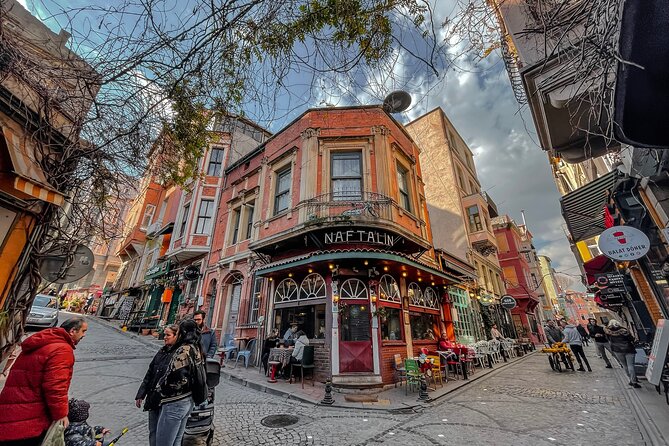
For photos, you’re covered. Between the colorful streets and the art nouveau stair stop, you’ll have multiple chances to get images that look like Istanbul, not like a generic city backdrop.
Price and Value: Is $30.17 Worth It?
At $30.17 per person for an about-2-hour guided city walk, this is priced like a budget-friendly cultural tour—especially in a city where guided time and entrance access can add up fast.
Here’s the value equation that matters:
- Guided walking tour is included, which is the main driver of quality in neighborhoods like this.
- Entrance fees are included, even though many stops are ticket-free. In practice, that means you don’t waste time sorting out what costs what.
- The route is short enough to keep energy up, and you’re not paying for a long transit-heavy day.
What can reduce value slightly is that transfer is not included. You’ll handle your own getting to the start point (and you’ll likely find public transport nearby helps). If you’re planning to combine this with other areas of Istanbul, factor in the time to reach Balat Merkez Şekercisi and get there on time.
Also, keep in mind that the tour uses a small-group model (max 15). That’s usually a value boost, because your guide can actually manage the route and keep stops from turning into chaos.
Who This Tour Suits Best (and Who Might Want Something Else)
This tour fits best if you want:
- A walkable history and culture route focused on neighborhoods rather than museum halls
- A guide who can connect buildings to communities (Greek Orthodox, Bulgarian Orthodox, and Jewish quarter context)
- Quick, high-impact photo stops without spending your whole time hunting angles
- A short plan you can fit into a day
You might want to consider something different if you:
- Don’t like walking on uneven streets or stairs
- Need a highly flexible schedule due to tightly packed sightseeing plans (weather or disruptions can affect timing)
For most people, though, Fener and Balat is one of those Istanbul experiences where the walking itself becomes part of the reward.
Should You Book the Istanbul City Walk: Colors, Culture & History Fener Balat Tour?
I think this is a smart booking if you’re aiming for an authentic neighborhood taste of Istanbul in a manageable time window. The mix of colorful street scenes, still-used religious sites, and the Patriarchate stop gives you both visual payoff and context you can actually use.
Book it if you want a guided route that keeps the city legible. Skip it if you want a totally laid-back stroll with no emphasis on historical explanation or if you’re not comfortable with stairs and uneven pavement.
FAQ
How long is the Fener and Balat walking tour?
It runs for about 2 hours.
How much does the tour cost?
The price is $30.17 per person.
What language is the tour offered in?
The tour is offered in English.
What group size should I expect?
The tour has a maximum of 15 travelers.
What is included in the price?
A guided walking tour is included, along with entrance fees.
Is there a mobile ticket?
Yes, this experience offers a mobile ticket.
Where does the tour start and end?
It starts at Balat Merkez Şekercisi (Leblebiciler Sk. No: 33, 34087 Fatih/İstanbul) and ends back at the meeting point.
Do I need a high level of fitness?
No special training is required, but you should have a moderate physical fitness level because it is a walking tour.
What if the weather is poor?
The tour requires good weather. If it is canceled due to poor weather, you’ll be offered a different date or a full refund.
Can I cancel, and what if I arrive late?
You can cancel up to 24 hours in advance for a full refund. If you arrive more than 5 minutes late, the guide will not be able to wait and latecomers can’t join once the tour has started.