REVIEW · ISTANBUL CITY HIGHLIGHTS & PRIVATE TOURS
ISTANBUL BEST: Iconic Landmarks Full Day PRIVATE Guided City Tour
Book on Viator →Operated by Istanbultourmatt · Bookable on Viator
Five icons, one organized day, zero guesswork. You’ll move through old Istanbul with a private guide, hitting the big landmarks—Hagia Sophia, the Blue Mosque, Topkapi Palace, Basilica Cistern, and the Grand Bazaar—without spending your day stuck in planning mode.
I like how the day blends standout architecture with Ottoman power and daily-market life. I especially love the Topkapi Palace courtyards and treasure rooms, and I also love the time in the Grand Bazaar area for browsing crafts, carpets, spices, and leather.
One thing to plan around: museum entrances for several stops are not included, and the handcraft shopping parts may feel sales-forward if you prefer pure sightseeing.
In This Review
- Key things to know before you go
- Meeting Your Guide in Istanbul: where pickup actually matters
- Hagia Sophia Grand Mosque: the dome that explains two empires
- Blue Mosque in 30 minutes: fast, photogenic, and free to enter
- Hippodrome of Constantinople: stop for monuments, not long lines
- Topkapi Palace treasures in two hours: the Ottoman empire in rooms
- Basilica Cistern (Yerebatan Sarayı): underground cool air and marble columns
- Sultanahmet handcraft time: carpets, leather, ceramics, and how to avoid regret
- Grand Bazaar (or Spice Market on Sundays): browsing with a guide’s guardrails
- Timing, walking, and how long this really feels
- Price and value: what $80 covers, and what you still pay on top
- A good match for this tour (and who should choose something else)
- Should you book this private Istanbul highlights tour?
- FAQ
- What’s included in the private tour?
- Are museum entrance fees included?
- Where does the guide meet me for pickup?
- How long is the tour?
- What happens if I’m going on a Tuesday?
- What happens if I’m going on a Sunday?
- Do I need a head covering?
Key things to know before you go
- A true private tour: only your group, plus a guide who can adjust pace to your interests.
- Pickup choices that match your lodging: hotel/Airbnb in the center, cruise port at Galataport, or options with transfers/vehicle.
- Major monuments, but ticket rules vary: Blue Mosque and the Hippodrome are free; Hagia Sophia, Topkapi, and the Basilica Cistern are not included.
- Day-of-week swaps: Topkapi is closed Tuesdays (a replacement is offered) and the Grand Bazaar is closed Sundays (Spice Market can replace it).
- A shopping stop is part of the flow: carpets, leathers, ceramics—so set your shopping expectations early.
Meeting Your Guide in Istanbul: where pickup actually matters
This is built for convenience in a city where transit can eat time. Your guide meets you at central Istanbul hotels, Airbnb locations, or at the cruise port area (Galataport, Sali Pazari side), depending on the pickup option you select.
There are three pickup approaches. You can book a private tour with the guide meeting you where you’re staying, choose one with transfers (pickup and drop-off included), or go for a full-day vehicle option (noted as including a spice market) that’s often best for major hotels and longer-distance areas on both sides of the water.
If you’re trying to get your day started fast, I’d pick the option that minimizes waiting. Then you can use that energy on the sites instead of buffering time between neighborhoods.
You can also read our reviews of more guided tours in Istanbul


Hagia Sophia Grand Mosque: the dome that explains two empires
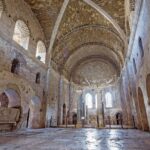
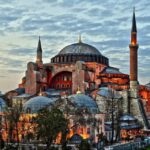
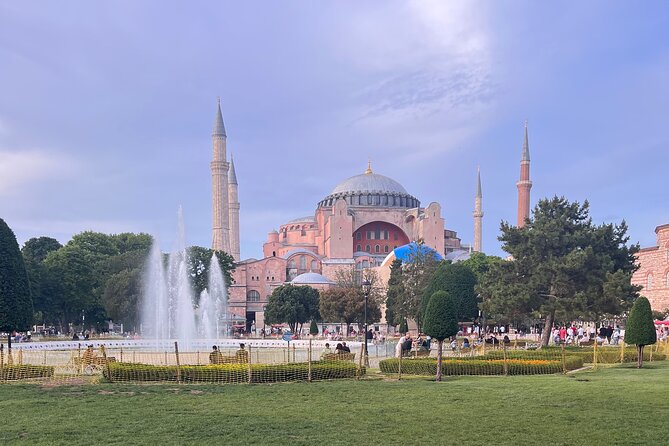
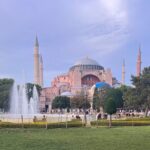
Your day starts at Hagia Sophia (Ayasofya). This is one of those buildings that changes meaning depending on which century you’re in, because it’s Byzantine in origin and Ottoman in use. It was built in the 6th century as a major cathedral, later converted into a mosque, turned into a museum in 1935, and reconverted into a mosque in 2020.
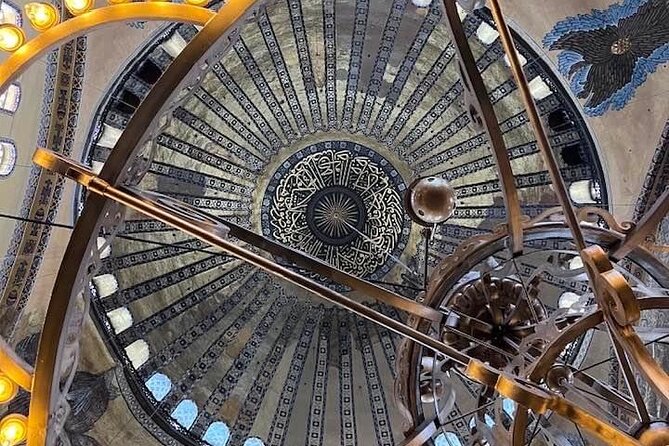
What makes this stop special is how the space reads like a history lesson. You’ll see the scale of the dome and the visual language of mosaics and architecture that reflect that long transition between cultures, and it’s a UNESCO World Heritage site.
A practical note: plan for a little patience here. The stop is about one hour, and the entrance timing can affect how much you can really take in before moving on.
Blue Mosque in 30 minutes: fast, photogenic, and free to enter
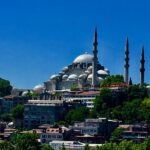
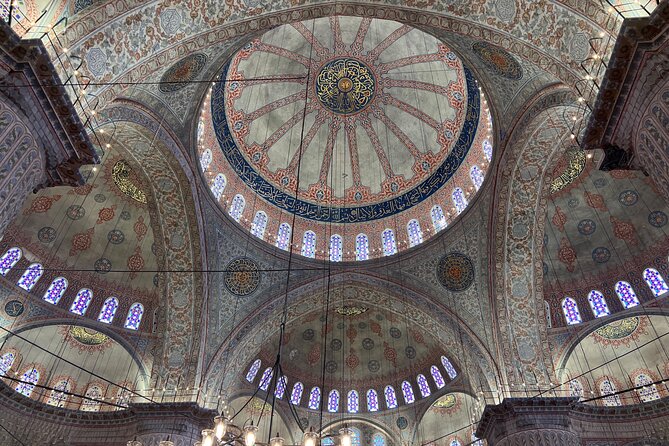
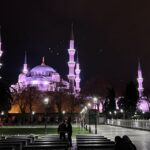
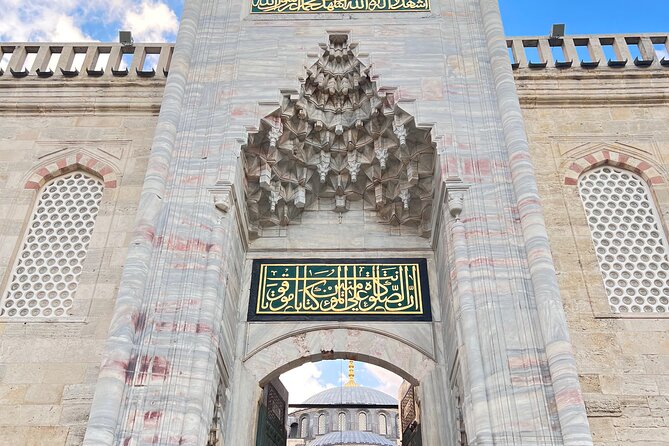
Next comes the Sultan Ahmed Mosque, often called the Blue Mosque. It was built between 1609 and 1616 under Sultan Ahmed I, and it’s famous for its six minarets and the blue-tiled interior that earns it the nickname.
This stop is short on purpose—around 30 minutes. The advantage is that you can hit the main sight without burning half a day, and the entrance is listed as free.
One consideration: this is a place where modest dress matters. If you’re visiting as a woman, bring a scarf so you can cover your head if needed.
Hippodrome of Constantinople: stop for monuments, not long lines
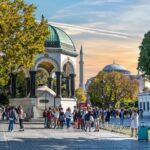
You’ll then pass through Sultanahmet Square, the area tied to the ancient Hippodrome of Constantinople. In Byzantine times, it was a chariot racing and public events center, and today you’ll mostly see remnants and monuments around the square.
Look for the Obelisk of Theodosius, the Serpent Column, and the Column of Constantine. These are important because they connect the Byzantine storyline to earlier Roman and regional layers of power, and they’re the kind of details that make Istanbul feel like a city built on top of itself.
This is a quick hit too—about 30 minutes—with free entry. If you want more, you can always linger on your own after the guide moves you onward.
Topkapi Palace treasures in two hours: the Ottoman empire in rooms
Topkapi Palace is where the tour shifts from architecture spectacle to Ottoman administration and luxury. The palace served as the primary residence and administrative headquarters of the sultans for nearly 400 years, and it’s structured as connected courtyards and buildings.
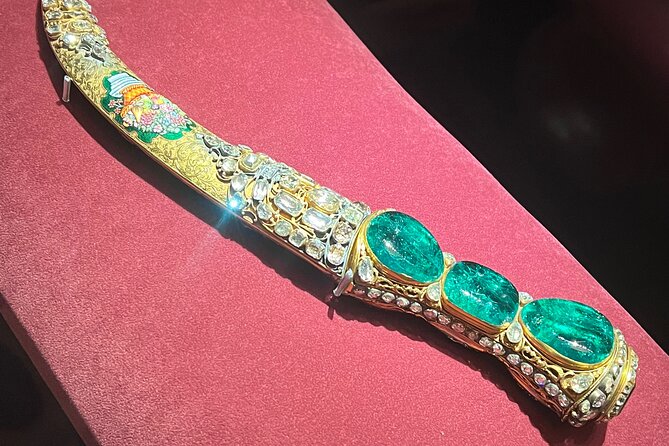
You’ll get a couple of hours here, and the biggest draw is the variety inside. The Imperial Harem is part of the complex, and the Treasury is known for standout collections like the Spoonmaker’s Diamond and the Topkapi Dagger.
Two practical tips help with this stop. First, museum entrance tickets are not included, so expect a paid entry cost on the day. Second, note the schedule reality: Topkapi is closed on Tuesdays, and the operator will swap it for alternatives.
You can also read our reviews of more city tours in Istanbul



Basilica Cistern (Yerebatan Sarayı): underground cool air and marble columns
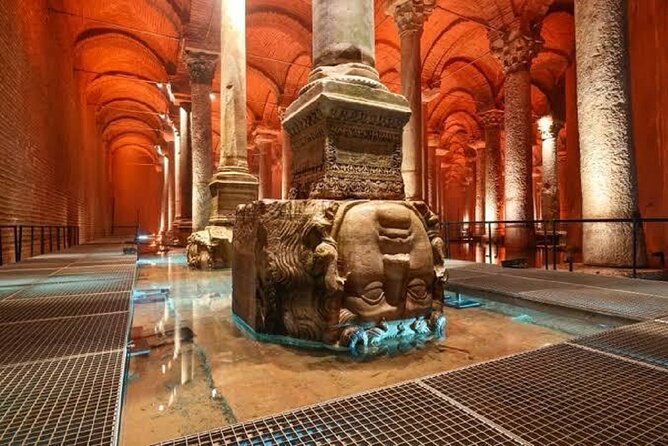
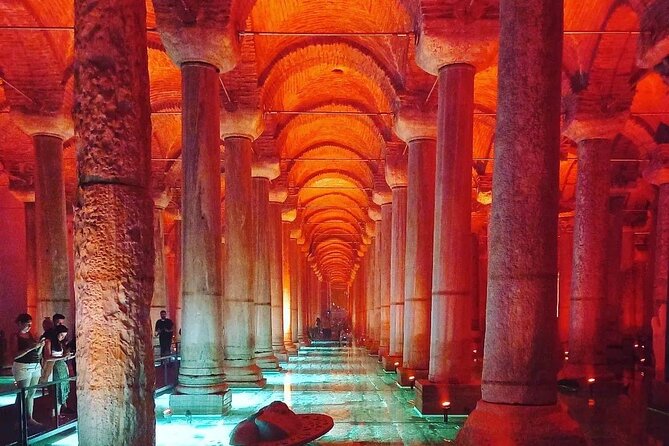
Basilica Cistern is the classic Istanbul “what is this place?” moment. It’s an underground water storage structure built by Eastern Roman Emperor Justinian I in the 6th century, and it’s nicknamed Yerebatan Sarayı (Sunken Palace) because of the marble columns rising from the water.
You’ll hear it also called Basilica Cistern or Bazilika Sarnıcı, and that name hints at what was there before. It was built on the site of the former Stoa Basilica, so even the location has a backstory.
This stop runs about 30 minutes. It’s also listed as a UNESCO World Heritage site, but keep your expectations practical: tickets are not included, and you’ll want to move at the pace your guide sets to avoid ending the day rushed.
Sultanahmet handcraft time: carpets, leather, ceramics, and how to avoid regret
One of the day’s built-in cultural stops is time for Turkish handcrafts—carpets, leathers, ceramics—often tied to a traditional arts gallery and local shopping opportunities. This is your chance to see materials up close and compare quality in person.
I find this works best if you go in with a plan. Decide what you’re actually looking for—something small like spice blends or tea, or a bigger purchase like a carpet or leather piece. If you have no shopping intent, treat this portion like a tour inside how goods are made and displayed, then be clear you’re just browsing.
A heads-up from people who have taken this day: some guides are more aggressive in taking you into sales-heavy shops than others. That doesn’t mean the experience is bad, but it does mean you should set your boundaries early, especially if you prefer quick stops over extended negotiation.
Grand Bazaar (or Spice Market on Sundays): browsing with a guide’s guardrails
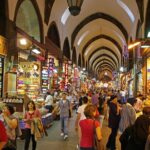
The day’s final big “wandering” segment is the Grand Bazaar, one of the world’s oldest covered markets. It’s a maze of streets and alleys with more than 4,000 shops and stalls, and it’s where you’ll see jewelry, carpets, textiles, ceramics, spices, leather goods, and other Turkish crafts.
This part of the tour is around two hours, and it’s listed as free to enter. The market’s coverage and layout is a big part of the experience, so having a guide matters—you get someone who knows where the good passages are and how to keep you from spinning in circles.
There’s also a timing rule you should know. The Grand Bazaar is closed on Sundays, and the plan can switch to the Spice Market instead. That’s not a downgrade if you like smells, tasting, and browsing, but it’s still good to know before you build your expectations for bazaar time.
Timing, walking, and how long this really feels
This is a 6 to 8 hour day on average, and it’s designed to be active. The tour includes multiple major sites spread across the Sultanahmet area, so expect walking between stops even if you’re picked up and dropped off nearby.
Start time affects the length. If your tour starts at 12:00, the duration is listed as about 6 hours, so the schedule can feel tighter. If you’re aiming for extra photos or slower browsing, I’d rather do it at an earlier start if that’s an option.
Lunch isn’t included, and gratuities aren’t included either. I’d plan a realistic meal strategy: either grab something small during breaks or ask your guide for a nearby place to eat so you’re not hunting while everyone else is moving.
Weather matters too. The operator notes the experience requires good weather, and if conditions are poor you’ll be offered a different date or a refund.
Price and value: what $80 covers, and what you still pay on top
At $80 per person, you’re paying for a guided day built around Istanbul’s most famous stops. The value is that you get a guide working the day as one plan—meeting you, moving you between sites, and keeping the itinerary from turning into a DIY scramble.
Here’s the cost reality: museum entrance fees are not included for Hagia Sophia, Topkapi Palace, and the Basilica Cistern. The Blue Mosque is listed as free, and the Hippodrome and Grand Bazaar are listed as free to enter.
So, the smartest way to judge value is to think like this: you’re mostly paying for coordination, interpretation, and timing. If you already know you’ll pay ticket fees anyway, then the guide portion becomes easy to justify—especially for a first visit.
Also consider what kind of guide you’ll get. Names that come up in the guide experience include Zel, Musa, Volkan, Mehmet, Sam, Kemal, Sabit Kara, and Kazim. Across these examples, the consistent themes are clear English, strong historical explanations, photo stop know-how, and schedule adjustments when weather or timing doesn’t cooperate.
A good match for this tour (and who should choose something else)
This tour is a strong fit if you want a first-time, big-hit Istanbul day. You’ll see the main icons in a logical circuit, and you’ll get enough context to understand what you’re looking at instead of just taking photos.
It also works well if you like having a guide who can tailor. Some guide experiences mention customization to interests, adding an extra activity when conditions change (like a Bosphorus boat option in one case), and adjusting pace for family needs or mobility.
If you hate shopping stops or you want a slow, neighborhood-style day with lots of unscheduled wandering, you may find the handcraft gallery and bazaar flow too structured. In that case, it might be better to pick a more pure walking-and-sightseeing focus.
Should you book this private Istanbul highlights tour?
Yes, if you have limited time and you want Istanbul’s top landmarks in one well-managed day. The private format, pickup options, and the mix of Hagia Sophia, Blue Mosque, Topkapi, Basilica Cistern, and bazaar wandering is exactly how you get your bearings fast.
Book it especially if you care about understanding what you’re seeing, not just checking boxes. A good guide can make the monuments click, from the Hagia Sophia’s Byzantine-to-Ottoman story to Topkapi’s sultan-world details and Basilica Cistern’s underground geometry.
If your priority is pure sightseeing with zero shopping energy, message the operator ahead of time about your preferences and ask how the handcraft portion will be handled. Then you can enjoy the icons without feeling trapped in the sales rhythm.
FAQ
What’s included in the private tour?
The tour includes a private tour with a professional guide, pickup from central Istanbul hotels/Airbnb/cruise port as described, and a dedicated time to discover Turkish handcrafts and a traditional arts gallery. Lunch and gratuities are not included.
Are museum entrance fees included?
No. Museum entrance fees are not included for Hagia Sophia, Topkapi Palace, and the Basilica Cistern. The Blue Mosque is listed as free, and the Hippodrome and Grand Bazaar are listed as free to enter.
Where does the guide meet me for pickup?
Your guide meets you at central Istanbul hotels, Airbnb locations, or at the Istanbul cruise port Galataport (Sali Pazari side), depending on the pickup option you choose.
How long is the tour?
It’s listed as about 6 to 8 hours. If the tour starts at 12:00, the duration is listed as 6 hours.
What happens if I’m going on a Tuesday?
Topkapi Palace is closed on Tuesdays, and it can be replaced with alternatives.
What happens if I’m going on a Sunday?
The Grand Bazaar is closed on Sundays, and it can be replaced with the Spice Market.
Do I need a head covering?
If you’re a woman, the tour information asks you to bring a scarf to cover your head as needed.