You’re walking above buried water. This Ghost City Istanbul Walking Tour strings together Istanbul’s underground cistern world with famous surface landmarks, in a tight 2 to 3 hour route. What makes it especially fun is the way the guide, Rose, connects sites to stories you do not usually hear—my favorite part was her talk tying together myths like Medusa and the evil eye, plus a Turkey-based snake queen legend.
I love the stop mix: Theodosius Cistern gives you a quieter sense of Byzantine engineering before you hit the bigger showpiece, Basilica Cistern. I also like the pacing—short segments, clear wayfinding, and time to actually look around in the dim spaces instead of just marching through.
One thing to consider: cistern entry tickets are not included for Theodosius Cistern and Basilica Cistern, so your final cost will be a bit higher than the listed $64.46.
In This Review
- Key highlights you’ll feel right away
- Why this “ghost city” route works better than a random cistern stop
- Meeting at German Fountain: get your bearings fast
- Serpent Column at the Hippodrome: a quick start with deep clues
- Theodosius Cistern: calm underground Byzantium for about 30 minutes
- Çemberlitaş Column (Burnt Column): a short pause for Constantine’s message
- Basilica Cistern by Hagia Sophia: the big room with 336 columns
- Gülhane Park and the former aquarium layout: a breather after the cisterns
- Price and value: what $64.46 really covers
- Group size and pace: comfortable, not crowded
- Who should book this tour
- Should you book the Ghost City Istanbul Walking Tour?
- FAQ
- How long is the Ghost City Istanbul walking tour?
- What language is the tour offered in?
- Where do I meet the tour guide?
- Is the mobile ticket included?
- Are cistern tickets included in the price?
- How big is the group?
- What is the cancellation policy?
Key highlights you’ll feel right away
- Rose’s myth-and-history style that turns stone details into memorable stories
- Theodosius Cistern for a more calm, “other Istanbul” atmosphere
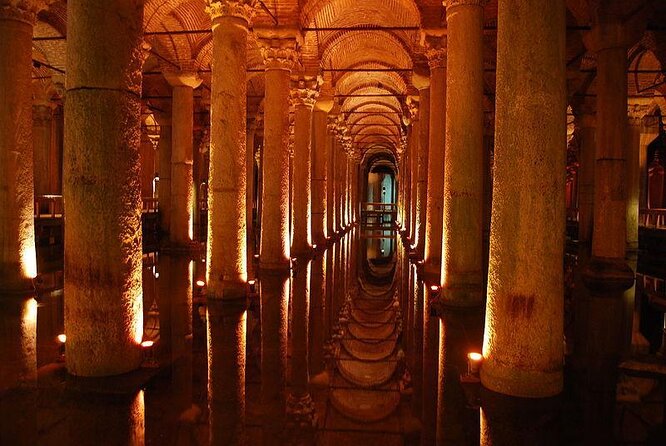
- Basilica Cistern to see the scale: 336 marble columns in an underground hall
- Serpent Column as a fast, meaningful start tied to the Hippodrome of Constantinople
- Constantine’s column moment with Çemberlitaş Column (built in 330)
- Small group size (up to 15) so questions don’t get swallowed
Why this “ghost city” route works better than a random cistern stop
If you’re short on time in Istanbul, one cistern visit can feel like a single neat photo. This tour makes it feel like a theme. You start in the open at the Hippodrome area, then you move into underground water vaults, then you cap it with another landmark column—so your brain keeps stacking connections.
I also like that it’s built for real attention. The plan spends about 10 minutes at the surface landmarks and about 30 minutes at each cistern. That’s the difference between seeing cisterns as dark rooms and actually noticing what makes each one feel different.
And yes, the name Ghost City fits. Not because anything spooky happens, but because the underground spaces give you that sense of walking into a world Istanbul built to survive on.
You can also read our reviews of more walking tours in Istanbul



Meeting at German Fountain: get your bearings fast
You’ll start at the German Fountain (German Fountain, Binbirdirek, At Meydanı Cd, 34122 Fatih/İstanbul). That’s a helpful anchor point because it’s right at the start of the story arc: the Hippodrome of Constantinople area.
From the first minutes, your guide keeps the group moving while still giving you context before you walk. If you like understanding what you’re looking at before you look, this format clicks.
The tour ends at Basilica Cistern (Alemdar, Yerebatan Cd. 1/3, 34110 Fatih/İstanbul). That’s convenient because you can plan your next stop nearby—especially if you want to keep exploring the Hagia Sophia area.
Serpent Column at the Hippodrome: a quick start with deep clues
The first stop is the Serpent Column, an ancient bronze monument at the Hippodrome of Constantinople. It’s also known by several names—Τrikarenos Οphis (Three-headed Serpent), the Serpentine Column, the Plataean Tripod, and the Delphi Tripod.
Even with only about 10 minutes here, this is a smart opener. The Hippodrome was a major stage for public life in Constantinople, and the guide’s framing helps you see the column as more than a sculpture you pass by. You’re learning how power and myth get built into city spaces.
Also, the entry ticket is free for this stop. So you can focus on absorbing the story without thinking about costs yet.
Theodosius Cistern: calm underground Byzantium for about 30 minutes
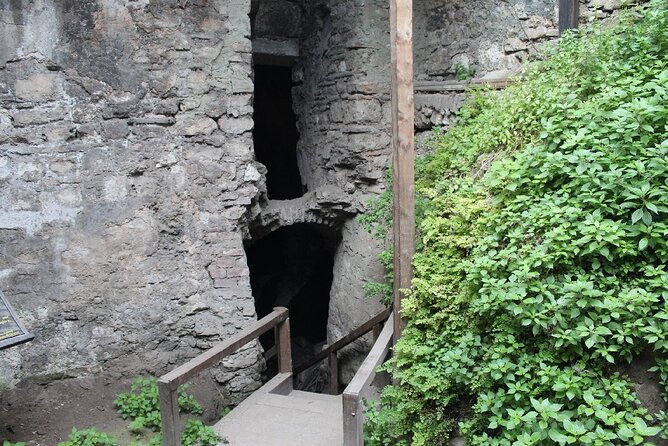
Next comes Theodosius Cistern, a visit to a hidden-under-the-streets Byzantine water reservoir. This stop is about 30 minutes, and you’ll need to budget for entry because tickets are not included.
Here’s what you should expect, in plain terms: you walk down into a dim underground chamber where the architecture does a lot of work. The guide points out elements like the elegantly arched columns and the pool-like setting. It’s the kind of atmosphere where you’ll naturally slow down—because the space encourages it.
I like this cistern early in the tour because it sets the tone before the big crowds of the most famous cistern stop. Even if you’ve seen photos online, being under the stone changes the feel. Sound gets softer. Light gets more dramatic. Details show up slowly as your eyes adjust.
If you’re the type who hates feeling rushed, you’ll appreciate the guide pacing here.
Çemberlitaş Column (Burnt Column): a short pause for Constantine’s message
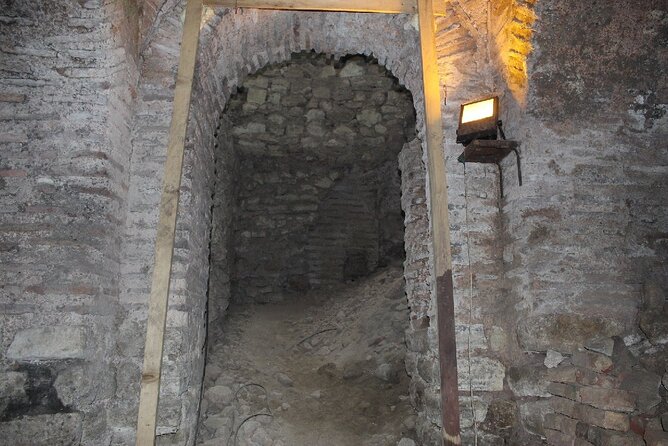
Then you get Çemberlitaş Column, also called the Burnt Column or Column of Constantine, built in 330 in honor of Emperor Constantine I.
This is a classic “brief but meaningful” stop. You’re not spending long here, but it helps connect the underground water story to the broader Constantinople timeline. Columns like this were public statements. When your guide ties Constantine to the later Byzantine world you’re seeing in the cisterns, it makes the route feel more coherent.
This part also helps break up the day. After a dim underground visit, you get a brighter, more open moment to reset.
You can also read our reviews of more city tours in Istanbul






Basilica Cistern by Hagia Sophia: the big room with 336 columns
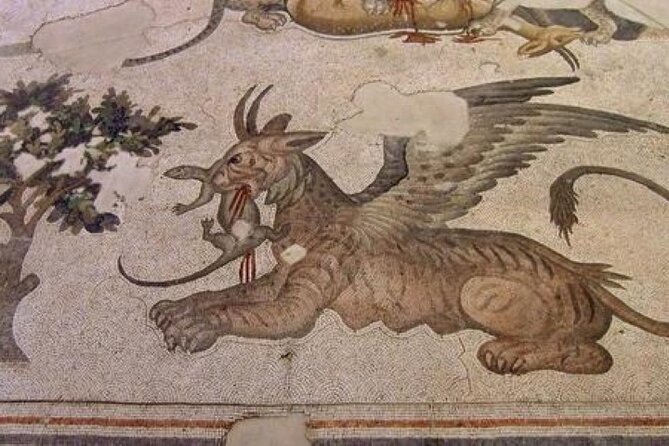
The final major interior stop is Basilica Cistern, located near Hagia Sophia. This is the one most people recognize, and it’s also the one where the scale hits you.
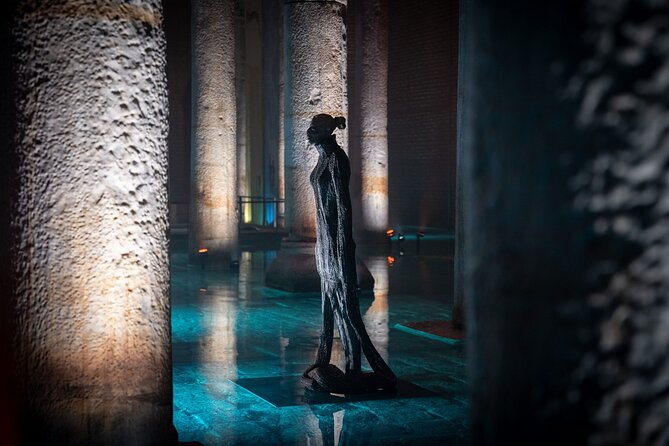
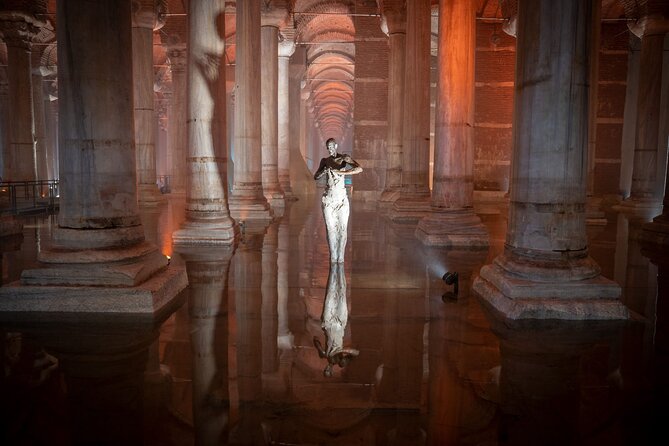
You’ll spend about 30 minutes here, and entry tickets are not included. Once you step inside, you’re in a refurbished, dimly lit underground space with rows of columns rising from the water.
The detail that matters most: 336 marble columns. Even if you only take in a few before you move on, that number gives you a sense of why this place feels unreal. It’s not just “a cistern.” It’s an engineered hall designed to hold water and handle the optics of power.
This is also where Rose’s storytelling style really shines. In my experience with her approach, she doesn’t just describe what’s in front of you. She adds meaning—my favorite examples from her explanations included myth links like Medusa and the evil eye, plus stories connected to a Turkey-based queen of snakes. Whether you see those as legend or symbolism, they make the space feel human, not just historical.
Gülhane Park and the former aquarium layout: a breather after the cisterns
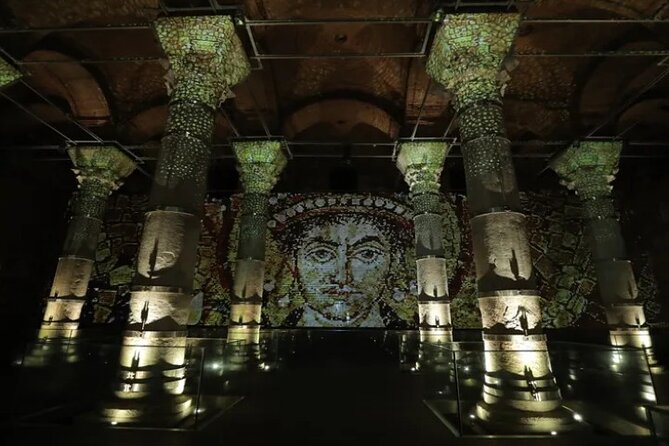
After the cisterns, the tour takes you to Gülhane Park and the nearby Sarnıç area (the stop is described in connection with a former aquarium). It’s about 10 minutes, and entry is free.
What I like about this stop is the contrast. After hours underground and among monuments, this is your quick palate cleanser—more open air, more casual walking.
The key detail is that it was once used as an aquarium, and that earlier use partly explains the current configuration. That means you’re not just ticking a box—you’re getting a small lesson in how Istanbul’s spaces get reused over time.
Price and value: what $64.46 really covers
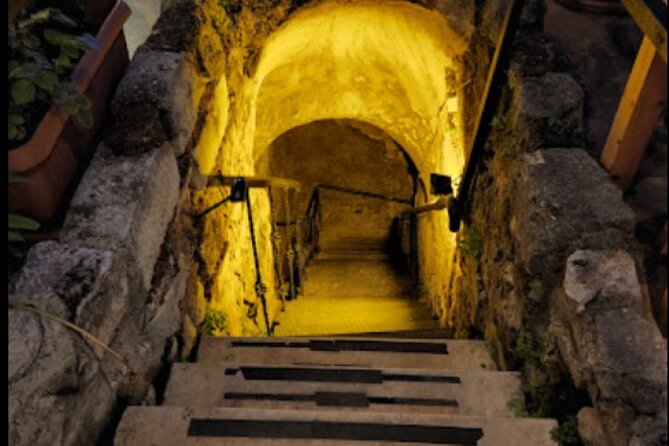
The tour price is $64.46 per person for about 2 to 3 hours, in a group up to 15 people, offered in English.
What’s included:
- Professional guidance
- All local taxes
What’s not included:
- Tickets / entry admissions
- Tips
So the value is really about the guide and the route logic. You’re paying for someone to connect the surface monuments to the underground cistern systems, plus someone who keeps the experience moving at a pace that still allows you to look.
Because cistern entry tickets are not included, I think about it like this: your best comparison is not to a “self-guided map.” It’s to a guided day where you want context quickly. For the money, you’re getting that context—especially with a guide like Rose, who was praised for being enthusiastic, warm, and patient with questions.
One practical tip: if you want to avoid last-minute sticker shock, look up entry costs ahead of time and treat them as separate add-ons.
Group size and pace: comfortable, not crowded
This is capped at 15 travelers, which is a sweet spot for a walking tour. You get a real group dynamic, but you’re not stuck behind a pack.
The pacing is also intentionally uneven: shorter time at the surface stops, longer time inside the cisterns. That matters because cistern spaces take longer visually. Your eyes adjust. You slow down. You read details. If the plan were rushed, the cisterns would feel like a drive-by.
Your guide’s job here is to keep you oriented while giving you enough quiet time to enjoy the underground atmosphere.
Also, the tour is near public transportation, so getting to the meeting point is simpler than it would be in a remote area.
Who should book this tour
This tour is a great fit if:
- you like short, high-impact walks rather than all-day museum marathons
- you enjoy myth-and-history explanations, not just dates
- you want both a quieter cistern experience and the bigger famous one
- you’re comfortable with a few hours of walking and time in dim indoor spaces
If you only want one cistern and don’t care about columns, streetside landmarks, or story links, you might feel it’s more than you need. But if you like the feeling of discovering how Constantinople worked—above and below—this route makes sense.
Should you book the Ghost City Istanbul Walking Tour?
I think you should book it if your goal is to understand what you’re seeing fast and leave with stories that stick. The strong points are the combination of sites and the guide style—Rose stands out for enthusiasm, patience, and the way she connects myths like Medusa and the evil eye to what you’re looking at.
The only real caution is cost creep: entry tickets for two of the stops are not included, so check total pricing before you commit. If you’re okay with that, you’ll get a compact, satisfying Istanbul experience—one that feels like you uncovered a second city under the first.
FAQ
How long is the Ghost City Istanbul walking tour?
The duration is about 2 to 3 hours.
What language is the tour offered in?
The tour is offered in English.
Where do I meet the tour guide?
Meet at the German Fountain, Binbirdirek, At Meydanı Cd, 34122 Fatih/İstanbul.
Is the mobile ticket included?
Yes, the tour uses a mobile ticket.
Are cistern tickets included in the price?
No. Tickets and entry admissions are not included. The Serpent Column and the Gülhane Park/Sarnıç stop are listed as free, but Theodosius Cistern and Basilica Cistern are not included.
How big is the group?
The tour has a maximum of 15 travelers.
What is the cancellation policy?
Free cancellation is available up to 24 hours in advance for a full refund. If you cancel less than 24 hours before the start time, you do not get a refund.