REVIEW · 3-DAY EXPERIENCES
3 Days Ephesus, Pamukkale, Priene, Miletus and Didyma Tour from Istanbul
Book on Viator →Operated by Puerto Travel Turkey · Bookable on Viator
One trip, five ancient stops, and zero wasted time. Ephesus starts early, then you move through quieter Aegean sites before ending at Pamukkale’s white terraces. This tour works because it mixes big names with lesser-known ruins, so you don’t just collect photos—you build a real sense of the region’s past.
What I like most is the attention to timing and pacing. You start at Ephesus from the Upper Gate (walking downhill), and you also get the House of the Virgin Mary before the crowds swell. Second, you’re not stuck on one site: you also cover Priene, Miletus, and Didyma, which gives you the wider Ionian picture, not just the loudest highlight.
The one thing to consider is how much walking (and stairs) you’ll do across the ruins. You’ll have a moderate fitness requirement, plus the Terrace Houses in Ephesus involve steps inside the structure, and Pamukkale includes a barefoot walk on hot, mineral terraces.
In This Review
- Key highlights you should care about
- What You Really Get (and Why the Price Can Make Sense)
- From Istanbul to Izmir to Selçuk: The “Settle In” Start
- Virgin Mary’s House at Mt. Koressos: Quiet time before the ruins
- Ephesus from the Upper Gate: A downhill day that feels easier
- Ephesus Terrace Houses: The private Roman life angle
- Ephesus Experience Museum: When you want the ruins explained
- Selçuk to Kuşadası: Turkish food break and seaside reset
- Priene: Anatolia’s quieter grid streets
- Miletus: Maritime power and philosophy roots
- Didyma and the Temple of Apollo: scale you feel in your chest
- Kusadası to Pamukkale: Meander Valley views on the way
- Hierapolis: Necropolis first, then terraces and artifacts
- Cleopatra Pools: free entrance, optional swimming ticket
- Pamukkale Thermal Terraces: barefoot time you’ll remember
- Lunch in Pamukkale and the finish back to Istanbul
- Food, breaks, and small comforts that matter
- What style of guide and pace you can expect
- When this tour is a great match for you
- When you should think twice
- Should you book this 3-day Ephesus-Pamukkale circuit?
- FAQ
- How long is the tour?
- What’s included in the price?
- Are lunch and dinner included?
- Do I need to buy entrance tickets for the Terrace Houses and Cleopatra Pools?
- Are domestic flights included from Istanbul?
- Is the walking easy on this tour?
Key highlights you should care about
- Early starts that help you beat the heaviest crowds at Ephesus and around Selçuk
- A smart Ephesus route, with major stops plus the Terrace Houses under a protective roof
- Priene and Miletus as the quieter, more human-sized cousins to Ephesus
- Didyma’s Temple of Apollo, with its huge scale and the inner sanctuary tunnels
- Hierapolis + Pamukkale in one day, so you get necropolis ruins and the Cotton Castle in the same circuit
- Small group size (max 15), which keeps the day from feeling like a cattle-car history lesson
What You Really Get (and Why the Price Can Make Sense)
This costs $1,017.48 per person for about three days, and the big value is what’s bundled. You’re not just buying a guide name—you’re paying for air-conditioned transfers, included site and museum entrance fees, and hotel stays in the region with breakfast included (2 breakfasts total).
You will still need to budget for what’s not included: lunch, dinner, and drinks, tips and personal expenses, the Ephesus Terrace Houses ticket, swimming at Cleopatra Pools (entrance is free, but swimming needs an extra ticket), and domestic flights. That sounds like a lot, but it also means the base tour price covers the logistics-heavy parts—especially the multi-site route that would be a headache to piece together yourself.
Also, this is English-guided and keeps the group to 15 people maximum, which usually makes questions easier and stops less rushed than larger buses.
You can also read our reviews of more tours and experiences in Istanbul

From Istanbul to Izmir to Selçuk: The “Settle In” Start
Your day begins with a hotel-to-airport private transfer in Istanbul. The schedule expects you at your hotel lobby at least 3 hours before your flight, which is one of those underrated details that keeps the stress level low when airports get chaotic.
Once you land in Izmir, you look for the driver holding your name at the exit gate, then you transfer about 60 minutes to Selçuk. This transition matters because you’re not wasting your first day fighting public transport or waiting in long lines with luggage.
Then you meet your guide and start the real content with a spiritual stop before the archaeology. If you’re the type who appreciates a calmer start before you hit crowds and columns, this pacing works.
Virgin Mary’s House at Mt. Koressos: Quiet time before the ruins
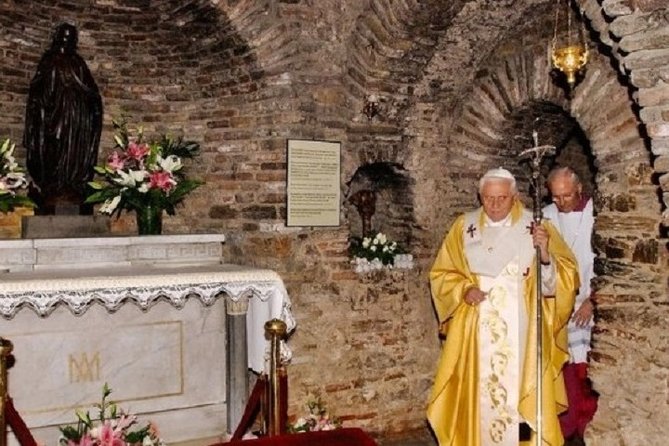
The House of the Virgin Mary visit is built for calm. You drive up to Mt. Koressos and spend about 45 minutes here with admission included.
What’s practical: this is time to slow down before you start walking ancient stone all day. You also get free time for a personal moment—lighting a candle and leaving a note on the Wishing Wall. If you’ve visited other major religious sites, you’ll recognize the tone: simple, reflective, and not about spectacle.
The only consideration is that this is still a stop with basic visitor flow and walking on-site. If you’re sensitive to steep or uneven paths, wear shoes that don’t punish you later.
Ephesus from the Upper Gate: A downhill day that feels easier
You head to Ephesus, often seen as the best-preserved classical city of the Eastern Mediterranean. The tour starts you from the Upper Gate and walks downhill along marble streets, which is a comfort factor you’ll feel by midday.
Admission is included for major segments, and the route hits the headline monuments in a logical order:
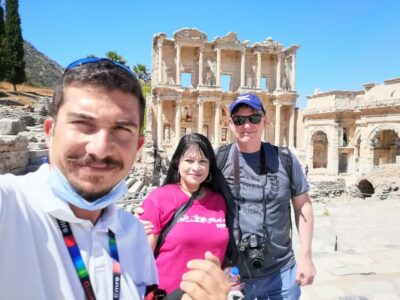
- Celsus Library (you’ll want time here for photos)
- Temple of Hadrian
- Great Theatre, tied to early Christian history and where St. Paul once preached
You get about 3 hours at this core area, which is a good amount. Ephesus is huge and detailed—3 hours is enough to enjoy it without racing through it like a checklist.
Crowds can still happen, but starting from the morning approach plus the guided structure tends to reduce the worst “where do I even look?” moments.
Ephesus Terrace Houses: The private Roman life angle
This stop is short and specific: about 45 minutes, and you’ll need to buy the ticket separately (it’s not included in the tour price). The Terrace Houses sit under protective roofing, so weather is less of a factor than it is outdoors.
The big draw is perspective. You walk on glass walkways and look down over mosaic floors, well-preserved frescoes, and even private heating systems. It’s called the Museum within a Museum for a reason: the ruins aren’t just walls; they’re rooms that show daily life.
The drawback is movement. The structure includes walking up steps inside, so if you’re already tiring from Ephesus, go at a steady pace and use your good sense with stairs.




Ephesus Experience Museum: When you want the ruins explained
After walking through open-air remains, you’ll likely appreciate the Ephesus Experience Museum as a bridge. It’s about 30 minutes with admission included, and it uses 360-degree screens, 3D audio, and sensory effects to help you picture what the city looked like in its Golden Age.
This is useful if you’ve ever stared at ruins and thought, I get the shape, but I can’t place the life. The museum helps you connect the dots so what you saw doesn’t fade right after you leave.
If you dislike modern audio-visual setups, this might feel like a break from the “real thing,” but it’s short enough that it rarely hurts the day.
Selçuk to Kuşadası: Turkish food break and seaside reset
Lunch isn’t included on the tour, but you do get a selected local restaurant break (about 1 hour) in Selçuk with admission free. This is where you refuel with Turkish staples—cold appetizers (meze), hot mains, and local desserts.
Then you drive to Kuşadası and check into your hotel. You’ll have the evening free, which is important because you’ll be walking a lot by day’s end. If you want an easy win, use the promenade for a casual stroll and skip trying to cram in another major sight.
Priene: Anatolia’s quieter grid streets
The next day begins with the drive to Priene. It’s often called the Pompeii of Anatolia, but the feeling here is different: it’s calmer, set with pine trees and steep slopes around Mount Mycale.
You get about 1.5 hours and admission included. The walk is organized on the city’s ancient grid streets—plus you’ll visit:
- Bouleuterion (Senate House)
- Temple of Athena
- and you’ll see a big view over the Meander Plain from the area
Value-wise, Priene helps you understand how Greek cities were planned. Ephesus can feel overwhelming because it’s so packed with Roman-era scale; Priene brings order.
Miletus: Maritime power and philosophy roots
From Priene, you move to Miletus, where you’ll see why it was once a major maritime force and a home base for Western philosophy.
You get about 1 hour with admission included. Highlights include:
- The massive Grand Theatre
- Baths of Faustina
- and the history link to St. Paul’s farewell speech (Acts 20)
This site is less crowded than Ephesus, which helps you slow down and actually read the space. If you like thinking about ancient trade routes and the way ideas traveled, Miletus pays off.
Didyma and the Temple of Apollo: scale you feel in your chest
Then comes a lunch break in Didim (about 1 hour, admission free). This is meant for energy and options. The region is known for seafood, and you can also choose familiar Turkish dishes like pide or kebab.
After the meal, you see the centerpiece: the Temple of Apollo in Didyma. This is a sacred oracle center second only to Delphi in ancient times, and the temple ruins are massive. You get about 1 hour with admission included.
A couple details make it memorable:
- you walk through dark tunnels to reach the inner sanctuary
- you see the famous Head of Medusa sculpture
That tunnel-to-sanctuary shift is more than theatrics. It changes how you experience the site—from open ruins to a feeling of arriving at a focal space.
Kusadası to Pamukkale: Meander Valley views on the way
On day three, you leave Kuşadası for Pamukkale. The drive takes about 2.5 to 3 hours, and it’s described as scenic through the Meander Valley with cotton fields, fig orchards, and villages. There’s also a guide briefing as you approach the “Cotton Castle.”
This transfer is one of those times when you can actually rest a bit. When you’re doing three major days of history, the car ride is not filler—it’s recovery time.
Hierapolis: Necropolis first, then terraces and artifacts
You arrive at Hierapolis, also called the Holy City. You start with the Necropolis (City of the Dead), which is one of the largest ancient cemeteries in Anatolia.
You get about 2 hours total for Hierapolis with admission included, including:
- the Frontinus Gate
- a well-preserved theater with a panoramic view over the white terraces
Then you visit the Hierapolis Archaeology Museum (about 30 minutes, admission included). It’s inside restored Roman baths and includes sarcophagi, statues, and friezes from Hierapolis and nearby areas like Laodicea. The Hall of Statues is the listed highlight.
This museum time is valuable because Pamukkale can steal the whole show. The museum reminds you that these white terraces sit on top of a living ancient city system, not just a natural feature.
Cleopatra Pools: free entrance, optional swimming ticket
Next up is the Cleopatra Pools area (about 45 minutes). The entrance to the pool area is free, but swimming requires an extra ticket, which the tour does not include.
The story attached to this spot says Cleopatra swam here, and the pool includes submerged ancient marble columns. The practical takeaway: you can visit and enjoy the setting without committing to the swimming ticket, and you can decide based on how you feel in the moment.
Pamukkale Thermal Terraces: barefoot time you’ll remember
Then you hit the main event. Pamukkale means Cotton Castle, and the white terraces come from mineral-rich thermal springs over millennia. You walk on warm terraces barefoot, which is part of the point, and you’ll get about 45 minutes here with admission included.
Expect photos everywhere—because the shape of the terraces makes you want to stop again and again. But also expect a sensory experience: warm water feel, mineral texture, and that surreal white color that doesn’t look real.
The only consideration is your comfort level. You’re on bare feet on limestone terraces, so if you have foot issues or strong sensitivity, think ahead. Bring shoes you can easily put back on fast after.
Lunch in Pamukkale and the finish back to Istanbul
After the terraces, you get time for a lunch break at a selected local restaurant in Pamukkale (about 1 hour, admission free). Lunch isn’t included, but this stop helps you avoid scrambling for food after a busy morning.
Then you drive about 1 hour to Denizli Cardak Airport (DNZ) for your flight back to Istanbul. Once you land, you get a private transfer from the meeting point outside the terminal to your hotel door.
This ending is practical because it removes the last-day stress. You don’t need to figure out buses or taxis right after travel.
Food, breaks, and small comforts that matter
A lot of tours include food as an afterthought. Here, you at least get scheduled pauses:
- a restaurant stop with Turkish cuisine in Selçuk
- lunch time in Didim
- a lunch stop in Pamukkale
That helps you keep your energy level steady, especially on a day that mixes multiple ruins and museums.
Also, the group size stays at 15, which makes it more realistic to move at a pace that matches your group’s rhythm. In past experiences with guides such as Güfte (and her husband Oğün) and Yavuz, the focus seems to be on explaining what you’re seeing while still letting the day breathe—like adding a bit of local flavor or small detours when time allows.
What style of guide and pace you can expect
This isn’t presented as a silent walk through monuments. It’s built around a professional guide and the English language option, plus a small group that can handle questions without feeling lost.
From guide patterns shown in prior experiences, I’d expect a mix of historical explanation and practical pacing. Names that come up in the guide stories are Güfte, Oğün, and Yavuz, and they’re associated with flexible day flow—like adjusting stops for interests, with an emphasis on getting you to the right parts of each site without turning the day into a sprint.
When this tour is a great match for you
You’ll likely enjoy this if you want:
- big-name ancient sites without only seeing one location
- a guided route that connects monuments to context
- a structure that includes museums and breaks, not just “walk and hope”
This is also a good fit for history-minded travelers who don’t want to plan transportation across three different kinds of terrain—coastal Selçuk/Kuşadası area, interior ruins (Priene, Miletus), and thermal Pamukkale/Hierapolis.
When you should think twice
Consider skipping or adjusting expectations if:
- you don’t handle stairs well (Terrace Houses include steps)
- you’re uncomfortable with barefoot walking on thermal terraces
- you prefer fully independent travel with total control over timing
Also, since domestic flights aren’t included, you’ll need to line up your airfare dates with the tour’s Istanbul-to-Izmir and DNZ-to-Istanbul pattern.
Should you book this 3-day Ephesus-Pamukkale circuit?
I’d book this if you want a smart mix of famous and less-famous Aegean sites, with guided context and enough built-in time to enjoy stops rather than just stamp a passport. The price is steep, but the bundle—hotel stays, transfers, included entrances, and a guide—helps justify it, especially if you’d otherwise have to pay to arrange all that yourself.
But if you’re on a tight budget for food and extra tickets, or you hate the idea of barefoot terrace walking, you’ll feel the friction. If you’re comfortable with moderate walking and you can handle splitting costs for a couple add-ons, this is a strong way to see a lot of Turkey’s western ancient world in one clean package.
FAQ
How long is the tour?
It runs for approximately 3 days.
What’s included in the price?
The tour includes accommodation in local hotels, all transfers with air-conditioned vehicles, entrance fees to sites and museums, a professional tour guide, and breakfast (2 breakfasts).
Are lunch and dinner included?
No. Lunch, dinner, and drinks are not included.
Do I need to buy entrance tickets for the Terrace Houses and Cleopatra Pools?
Yes for the Terrace Houses in Ephesus. For Cleopatra Pools, entrance to the pool area is free, but swimming requires an extra ticket.
Are domestic flights included from Istanbul?
No. Domestic flight tickets are not included, and the provider can help you book appropriate flights based on the schedule.
Is the walking easy on this tour?
It lists a moderate physical fitness level. You should be ready for walking through archaeological sites, and the Ephesus Terrace Houses include stairs inside the structure.