REVIEW · BOSPHORUS SUNSET & YACHT CRUISES
Afternoon Bosphorus Cruise Luxury Yacht with Professional Guide
Book on Viator →Operated by Yacht Cruises: Bosphorus · Bookable on Viator
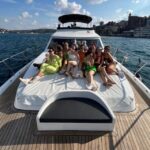
A Bosphorus cruise that feels like a private lesson. You get sweeping views of the strait that separates Asia and Europe, plus a pro guide who turns famous shorelines into something you can actually picture. I also love the onboard touches: restroom on the yacht, plus homemade lemonade with fresh mint and a fruit-and-dessert spread. One drawback to consider: this is a boat outing on moving water, and it’s not recommended if you’re sensitive to vertigo or seasickness.
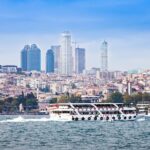
In two hours, you’ll float past palace fronts, Ottoman fortresses, and iconic skyline landmarks. The route is built around the most photogenic sections of Istanbul’s waterfront, so you’re not spending time grinding through crowds. The guide’s job is to help you spot what you’re seeing, not just name it.
In This Review
- Key highlights you’ll feel on the water
- Why a 2-hour Bosphorus cruise is such good value
- The Bosphorus: the whole point of Istanbul
- Dolmabahçe Palace: where the Bosphorus becomes a royal frontage
- Çırağan Palace: marble, exile, and a second life as a hotel
- Ortaköy, the Bosphorus Bridge, and the view that feels like Istanbul in motion
- Rumeli Hisarı: a fortress built fast, placed perfectly
- Anadolu Hisarı on the Asian side: the matching piece to Rumeli
- Küçüksu Pavilion and the calmer side of the Bosphorus
- Beylerbeyi Palace under the bridge: classic Ottoman showmanship
- Maiden’s Tower: legend you can actually see
- Galata Bridge and Galata Tower: adding the Golden Horn to your Bosphorus loop
- On-board comfort: drinks, snacks, and a guide who ties it together
- Price, timing, and who should book
- Should you book this Bosphorus luxury yacht cruise?
- FAQ
- How long is the Afternoon Bosphorus Cruise?
- What is included in the price?
- Are alcoholic beverages included?
- Is the guide available in English?
- Where does the cruise meet?
- What time does it start?
- Is this cruise recommended if I get seasick or have vertigo?
- What happens if the weather is poor?
Key highlights you’ll feel on the water
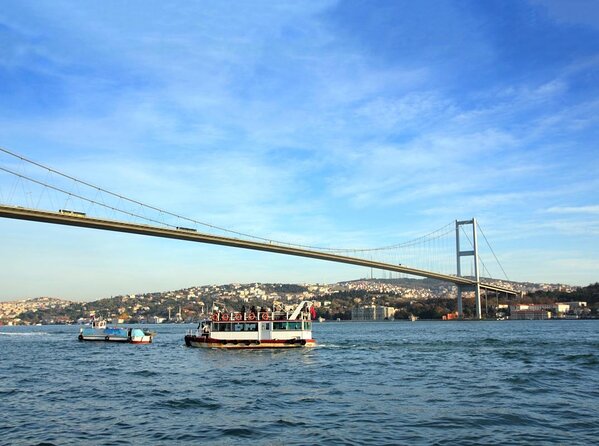
- Asia-Europe views from the Bosphorus strait, with great photo angles throughout the ride
- Dolmabahçe Palace and Çırağan Palace seen from the waterline, where their waterfront setting makes sense
- Ortaköy and the Bosphorus Bridge at the point where the scenery turns into a moving cityscape
- Rumeli Hisarı and Anadolu Hisarı at the narrowest crossing, where the Ottoman defensive story is easy to grasp
- Maiden’s Tower and Beylerbeyi Palace under the bridge area, a classic skyline pairing
- A guide-led, English-language narrative, with onboard snacks and drinks included
Why a 2-hour Bosphorus cruise is such good value
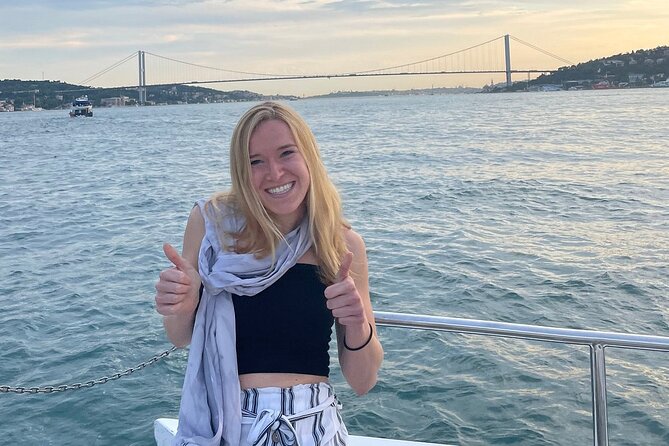
For $25.74 per person, you’re buying a rare combo in Istanbul: time on the water and interpretation by a professional guide. Most boat trips either focus on scenery with almost no context, or they feel more like a transfer than an experience. Here, you’re doing both—cruise first, learn what you’re looking at second.
The other quiet win is group size. This outing caps at 30 people, which keeps the vibe calm enough for questions and photos. And you get a restroom onboard, which matters more than you think on a 2-hour sailing.
You can also read our reviews of more boat tours in Istanbul
The Bosphorus: the whole point of Istanbul
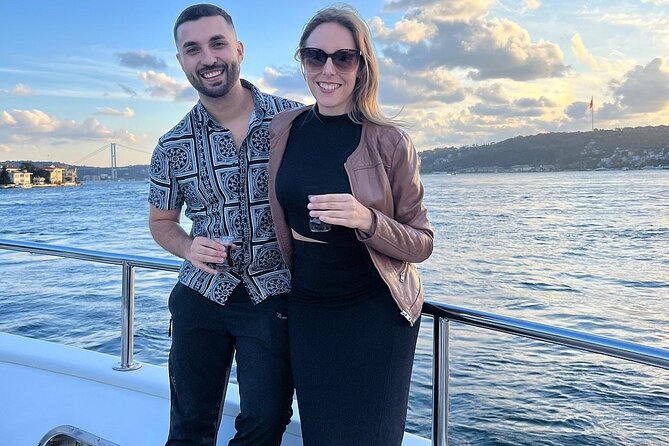
The Bosphorus (Bosphorus/Bosporus) is an international waterway that literally divides Istanbul into the European Side and the Anatolian Side. It stretches roughly 30 kilometers northeast to southwest, connecting the Sea of Marmara to the Black Sea. It’s also deep—about 60 meters on average, with the deepest point reaching around 120 meters.
What’s cool (and practical) is that the Bosphorus has layers of movement: surface currents generally flow from the Black Sea toward the Marmara, while underwater currents go the other way. If you look closely while you’re sailing, you can sometimes feel how the water behaves differently than a calm bay. That’s why this area looks so alive even when the skyline is still.
From your yacht, you’ll use the shoreline like a map. One bank gives you a clear view of European-side landmarks; the other bank helps you orient to the Anatolian skyline. The guide’s commentary helps you connect the geography to what built these neighborhoods—palaces, fortresses, and ferry-linked city life.
Tip for you: bring sunglasses and plan for glare off the water. Afternoon light can be gorgeous, but the shine will fight your camera settings unless you’re ready.
Dolmabahçe Palace: where the Bosphorus becomes a royal frontage
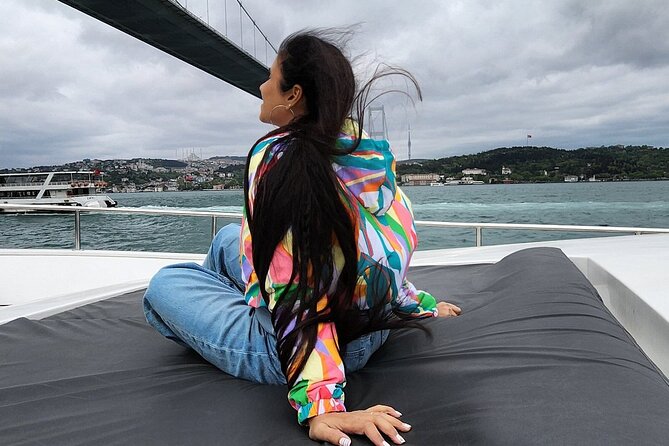
Dolmabahçe Palace sits on a large area along the Bosphorus in Beşiktaş, between Dolmabahçe Street (Kabataş to Beşiktaş) and the water. The key detail is location: it’s on the left bank at the entrance to the Bosphorus from the Sea of Marmara, opposite Üsküdar and Kuzguncuk.
Why this stop matters from the cruise: from land, palace views can feel like you’re looking at buildings from a distance. From the Bosphorus, the palace feels like part of the shoreline story. You’re seeing how the sultanate chose this spot to live with the water as a constant presence.
The palace area itself is huge—described here as about 250,000 square meters. That scale changes how you read the waterfront. It’s not just a landmark. It’s a whole statement of power positioned at a gateway between two seas and two continents.
Çırağan Palace: marble, exile, and a second life as a hotel
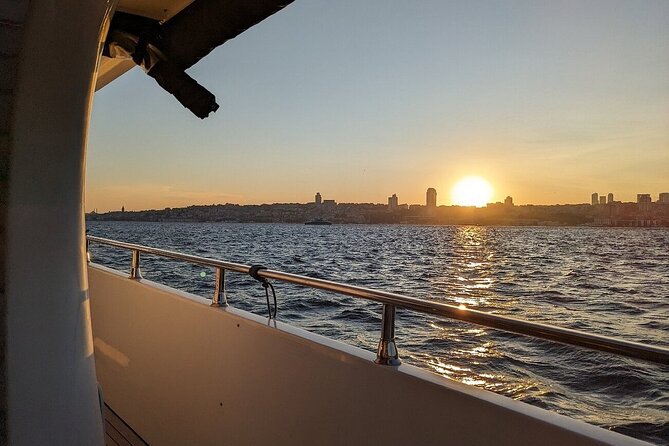
Çırağan Palace was commissioned by Sultan Abdulaziz and designed by architect Sarkis Balyan. It replaced an earlier wooden summer palace built by Selim III in 1800. During construction, the wooden structure and the nearby Besiktas Mevlevihane were destroyed.
The palace was completed in 1871 and is built of marble across about 80,000 square meters. The dramatic part is what happened afterward. After Abdulaziz was deposed, he was imprisoned there for years with his family. Later, after Murat V was deposed, he was also imprisoned here with his family for about 29 years.
Then the palace shifted roles again. After the Second Constitutional Monarchy in 1908, it was used as the House of Parliament, but a fire in 1910 damaged it. Later, the grounds moved into sports use for a while, before restoration in the early 1990s reopened it as a luxury hotel.
From your yacht, you get the visual effect of all these layers at once: a grand waterfront building that now functions as hospitality, while its backstory includes imprisonment and political change. That contrast is exactly what makes a Bosphorus cruise better than a quick photo stop.
Ortaköy, the Bosphorus Bridge, and the view that feels like Istanbul in motion
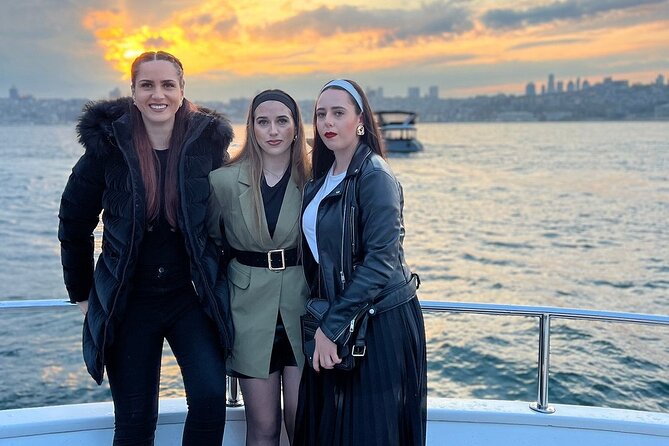
Ortaköy is on the European side in Beşiktaş. It’s a coastal neighborhood built on slopes around a valley opening to the water. The Ortaköy Bazaar area is lively through the day, with souvenir shops and cafes and bars along with market stalls.
The time you go matters. This cruise departs at 1:00 pm, so you’re catching Ortaköy after the late morning lift-off—when foot traffic and activity are typically better.
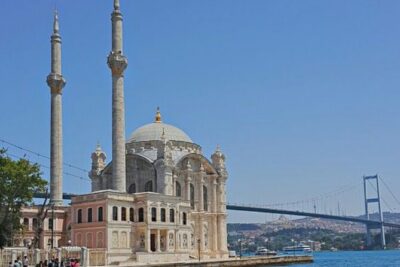
Then comes the Bosphorus Bridge. You’ll see its feet on both sides: Ortaköy on the European side and Beylerbeyi on the Anatolian side. This bridge was the first built on the Bosphorus. Construction began in 1970 and it opened on 29 October 1973, tied to the 50th anniversary of the Republic.
Practical why-it’s-cool: bridges are easier to photograph from a moving boat because the skyline changes behind them. You also see how the bridge links the city’s sides beyond the romantic idea of continents separated by water. In Istanbul, this is infrastructure you live with every day.
And if you’re curious about why Istanbul keeps turning big landmarks into big events: the bridge is an important crossing point of the Istanbul Eurasian Marathon.
You can also read our reviews of more guided tours in Istanbul


Rumeli Hisarı: a fortress built fast, placed perfectly
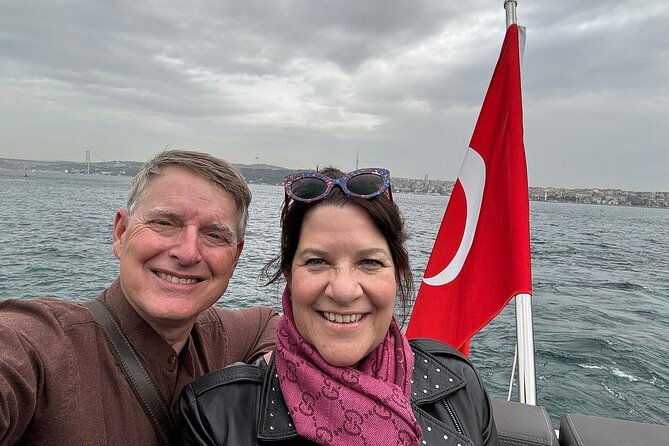
Rumeli Fortress (Rumeli Hisarı) sits in Sariyer, directly across from Anadolu Hisarı. Construction began in 1453 under Sultan Mehmed the Conqueror, placed at the narrowest point of the Bosphorus. It was completed in about three months, which is astonishing when you think about how fast fortresses like this had to be built to matter in a siege-and-control era.
Before the conquest of Istanbul, it helped protect against naval attacks. After the conquest, it became an inspection point for maritime traffic on the Bosphorus—so it wasn’t just about fighting, it was about monitoring movement through this chokepoint.
Today, the fortress area has a different vibe. Over centuries it filled with small wooden houses, but restoration work in 1953 removed those houses. After restoration, Rumeli Hisarı became known for concerts in summer months and now functions as an open-air theater and museum.
On the cruise, the value is that you can see the fortress in relation to the waterway. It’s not an isolated monument. It’s a strategic machine aimed at a narrow passage.
Anadolu Hisarı on the Asian side: the matching piece to Rumeli
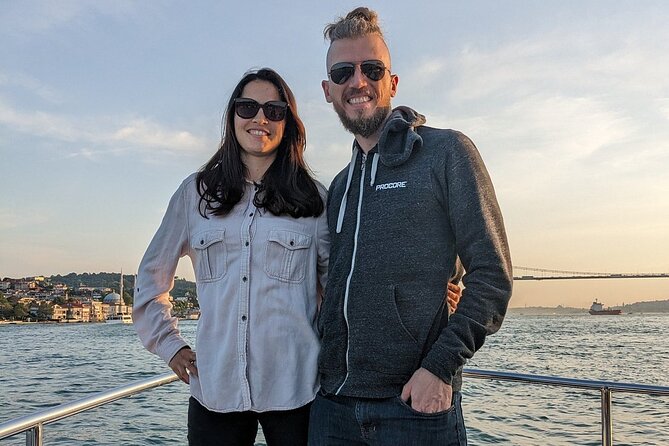
Anadolu Hisarı is on the Asian side in Beykoz, again at the narrowest point of the Bosphorus. It was built in 1395 by Beyazıt I and includes a citadel plus exterior castle walls.
After Istanbul’s conquest, its strategic importance dropped. The area then became a military hospital, and over time, waterfront houses and old mansions grew around the castle ruins.
There was restoration work from 1991 to 1993, and the site was converted into a museum—but it isn’t open to the public in the same way as some other attractions. What you can visit is described as an open-air museum where only the outer walls are accessible, and the road passes through.
From your yacht perspective, Anadolu Hisarı works like a companion to Rumeli Hisarı. Seeing them paired helps you understand why Ottoman power was so tied to control of this stretch of water. The guide’s explanation is what turns two fortress silhouettes into a coherent story about chokepoints and timing.
Küçüksu Pavilion and the calmer side of the Bosphorus
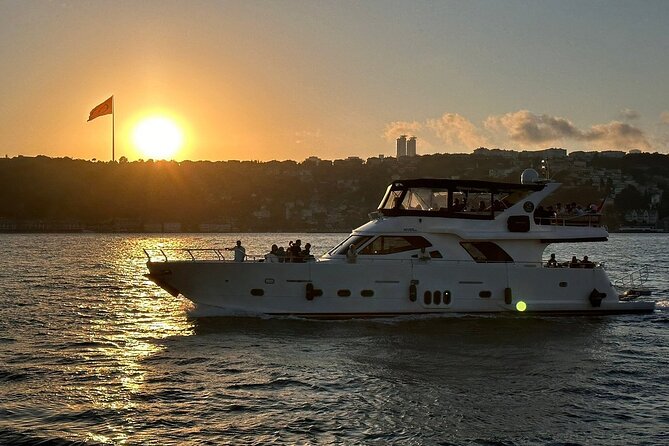
Küçüksu Pavilion appears as a museum stop on the cruise route, with a theme that’s different from fortresses and palaces. Many Ottoman emperors used Küçüksu Pavilion as a summer palace and hunting lodge.
That detail matters because it reframes this part of the water. You’re not only looking at defense and politics. You’re also seeing leisure and seasonal life—the way rulers used the Bosphorus as a working ecosystem and a retreat.
If you like architecture, this is the kind of stop where the guide’s pointing really helps. Even when you can’t get close, you can still learn what to look for—setting, waterfront placement, and why emperors wanted this specific atmosphere.
Beylerbeyi Palace under the bridge: classic Ottoman showmanship
Beylerbeyi Palace means Lord of Lords, and it’s a Bosphorus shore palace complex built in the 1860s. It sits right under the Bosphorus Bridge today. The architect credited here is Sarkis Balyan, the same name tied to Çırağan Palace, which gives you a neat pattern to notice.
The palace is described as combining elements of renaissance, baroque, and other styles from both the East and the West. The main building is a two-store structure made of stone on a high basement. It sits on about 2,500 square meters of land and includes a rectangular floor area.
Inside the split planning, the south side was organized as the Imperial Mabeyn and the north side as the Valide Sultan’s Apartment. The complex is described as having 6 halls, 24 rooms, plus a hamam and a bathroom across the two floors. Don’t miss the grounds: it’s noted for a lily pond and large garden, which gives the waterfront scene more texture than a plain stone facade.
From the cruise, you’ll appreciate how the bridge frames the palace area. It’s one of those views where modern infrastructure and Ottoman grandeur share the same composition.
Maiden’s Tower: legend you can actually see
Maiden’s Tower (Kız Kulesi) is one of the most recognizable silhouettes along the Bosphorus skyline. The tower sits on a tiny island about 200 meters from the shore of Üsküdar.
The popular legend goes like this: an oracle prophesied that a sultan’s daughter would die from a snake bite on her 18th birthday. The sultan had the tower built in the middle of the Bosphorus so his daughter could live in secrecy and protection. On her 18th birthday, she received a basket of fruits as a gift, but the snake hiding inside the basket bit her, and she died.
Whether or not you care about legends, the view is cinematic because the tower sits alone. It gives you a clear landmark to anchor your photos and your mental map of the Bosphorus.
For you: if you get motion sickness easily, you might want to take photos while facing a bit toward the open sightline and keep your gaze steady. Short bursts help.
Galata Bridge and Galata Tower: adding the Golden Horn to your Bosphorus loop
Some Bosphorus cruises focus only on the straight line of palaces and forts. This one includes skyline highlights tied to the Golden Horn too, such as Galata Bridge and Galata Tower.
Galata Bridge (Galata Koprusu) spans the Golden Horn. Its story begins in 1845. Over time, it changed several times, and the most recent replacement happened after a fire in 1992. The old bridge was moved to Halic, and a new bridge was built.
What you’ll notice from the water and around the area: Galata Bridge is a daily-life stage. Below, restaurants and cafes and hookah lounges line the scene. Above, you’ve got tramway and pedestrian traffic. It’s also tied to pictures—especially in the evening—because the bridge becomes a framing device for the city behind it.
Then there’s Galata Tower. Built by Genoese in 1348, it rises to 66.90 meters and was the tallest building in Istanbul at the time. In the Ottoman era, it served as a fire observatory and even a jail at points in its long career. One famous moment: Hezarfen Ahmet Çelebi glided across the Bosphorus to Üsküdar in 1632 using self-constructed wings.
The tower’s roof story also has drama. During a storm in 1875, the conic roof was destroyed and was not restored in the Ottoman period. In the 1960s, the conical cap was restored and the wooden interior was replaced by concrete. Today, it’s open to the public, with a restaurant and café on the upper floor—making it both a skyline landmark and a place people plan a stop around.
Even if you don’t leave the boat for a tower visit, you’ll get the sense of how Galata fits into Istanbul’s skyline. Seeing it from your cruise line helps you connect the Bosphorus with the inner-city geography.
On-board comfort: drinks, snacks, and a guide who ties it together
This cruise is designed to keep you comfortable so you can focus on the sights. There’s a restroom onboard, and the company includes complimentary drinks: homemade lemonade with fresh mint, water, tea, and coffee.
Food matters on boat trips, and this one doesn’t treat snacks like a bonus afterthought. You’ll also get a daily prepared fresh season fruits plate plus cookies and baklava served aboard. It’s the kind of simple spread that makes the trip feel more like a hosted experience than a ticketed ride.
Alcoholic beverages are not included, so if you want wine or beer, plan on paying separately elsewhere.
The professional guide is a big part of the quality. In past experiences, one guide name that comes up with strong praise is Celil, recognized for being kind and for turning the landmarks into something that feels clear and meaningful. That’s exactly what you want when your view changes every few minutes. Names are easy. Context is the real value.
Also, English is the language offered, and you’ll get a mobile ticket. The meeting point is in Beyoğlu near Türkiye Petrolleri Ömer Avni at Meclis-i Mebusan Cd. No:34, with the activity ending back at the same place.
Price, timing, and who should book
Price is where this cruise gets interesting. At $25.74 per person for roughly two hours, you’re paying for: a luxury yacht outing, an English-speaking guide, included drinks, and a fruit-and-dessert service. When you compare that to Istanbul boat trips that only offer a seat and a view, the included food and drinks make the math feel more reasonable.
The departure time is 1:00 pm, which is a sweet spot if you want daylight views but don’t want a full day commitment. It’s also practical if you’re already sightseeing in Beyoğlu or nearby.
This experience is a strong match for:
- People who want a focused overview of the Bosphorus without planning multiple stops
- First-timers who need a clear sense of where everything sits
- Anyone who likes architecture and wants it interpreted through location, not only dates
It’s not the right choice for:
- Anyone who struggles with vertigo or seasickness
Should you book this Bosphorus luxury yacht cruise?
If you want a short Istanbul experience that delivers real payoff—palaces, fortresses, bridge views, and skyline icons—this is an easy yes. The best reason to book is the pairing of water time and guide-led context, plus included lemonade, tea/coffee, fruit, and sweets without extra hassle.
I’d skip it only if you’re sensitive to boat motion. Otherwise, the $25.74 price point makes it hard to justify passing when you’re already dreaming of the Bosphorus views.
FAQ
How long is the Afternoon Bosphorus Cruise?
The cruise lasts about 2 hours.
What is included in the price?
The tour includes a 2-hour luxury yacht cruise, a restroom on board, complimentary drinks (homemade lemonade with fresh mint, water, tea, and coffee), and a fresh season fruits plate plus cookies and baklava served aboard.
Are alcoholic beverages included?
No. Alcoholic beverages are not included.
Is the guide available in English?
Yes, the tour is offered in English.
Where does the cruise meet?
The meeting point is Türkiye Petrolleri Ömer Avni, Meclis-i Mebusan Cd. No:34, 34427 Beyoğlu, Istanbul, Turkey.
What time does it start?
Start time is 1:00 pm.
Is this cruise recommended if I get seasick or have vertigo?
No, it is not recommended for vertigo and seasickness.
What happens if the weather is poor?
If the tour is canceled due to poor weather, you’ll be offered a different date or a full refund.