REVIEW · 3-HOUR EXPERIENCES
Bosphorus Boat Tour 3 Hour with Asian Side Stop in Istanbul
Book on Viator →Operated by IMCA TOURISM · Bookable on Viator
The strait feels like a shortcut to wonder. On this Bosphorus boat tour, you glide past Istanbul’s most famous landmarks, including a pass under the Bosphorus Bridge, with an English guide and onboard Wi‑Fi.
I love how the cruise mixes big-name sights with quick, readable explanations, so even short stops feel connected. I also like the Asian-side Beylerbeyi window, which gives you more than just a one-shore photo run.
My only caution: the timing can feel tight, and if you’re sensitive to cold or sound, plan for that (the lower boat level can get chilly, and narration can be hard to hear from far back).
In This Review
- Key highlights to look for on this Bosphorus tour
- Where the cruise starts: Sarıdemir and your first Bosphorus views
- The early run under Galata Bridge: Karaköy angles without the crowds
- Galata Tower and the Istanbul Painting Museum: history with a curveball
- Dolmabahçe Mosque and Dolmabahçe Palace: the Ottoman-era spectacle
- Ortaköy from the water: mosque photos and real neighborhood life
- The signature moment: sailing under the Bosphorus Bridge
- Bebek, Hidiv Kasrı, and the quiet-lush contrasts on the Bosphorus
- Rumeli Hisarı and the Fatih Sultan Mehmet Bridge: fortifications and power
- Turning toward the Asian side: Anadolu Hisarı and the oldest stone on the water
- Küçüksu Kasrı, Kuleli Military High School: more than just palaces
- The Asian-side stop in Beylerbeyi: what you actually get with your hour
- Kız Kulesi, Topkapı, and the Golden Horn edge: Istanbul’s icons from the water
- Süleymaniye Mosque as a finale: a skyline that feels close
- Price and value: why $12.09 can work for the right kind of traveler
- Comfort tips that actually matter on this boat
- Is this the right tour for you?
- FAQ
- FAQ
- How long is the Bosphorus boat tour?
- Is the tour guided, and what language is it in?
- Where do I meet, and where does the tour end?
- Is Wi‑Fi available onboard?
- Is there an Asian-side stop?
- What should I bring for comfort?
- Are food and drinks included?
- Can I bring a service animal?
- What if the weather is bad?
- Should you book this Bosphorus tour?
Key highlights to look for on this Bosphorus tour
- Pass under the Bosphorus Bridge and get that Europe-to-Asia sensation from the water
- Pick the left side of the boat if you want the best overall views during the ride
- Asian-side stop in Beylerbeyi with a chance to see Beylerbeyi Palace (time permitting)
- Dolmabahçe Palace and Ortaköy viewpoints that make great photos without changing trains
- Fortress and school stops like Rumeli Hisarı and Kuleli Military High School for less-crowded angles
- Wrap-up views from the water toward Topkapı, Yeni Camii, and Süleymaniye
Where the cruise starts: Sarıdemir and your first Bosphorus views
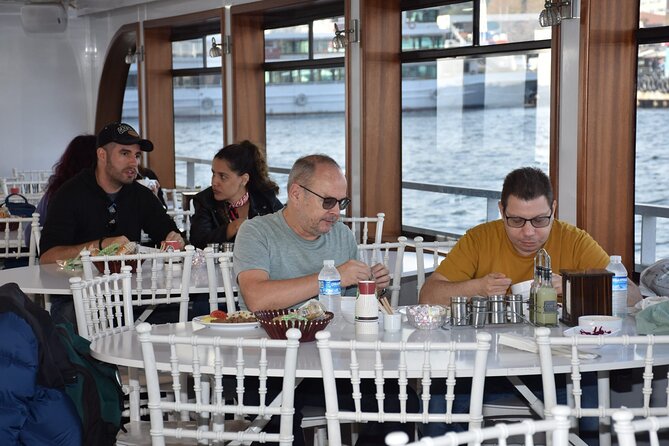
The tour begins and ends at Sarıdemir, at Ragıp Gümüşpala Cd. No:36 in Fatih. Since there’s no hotel pickup, you’ll want to plan your arrival like you would for a ferry departure: get there early enough to find the right boarding area and settle in before the boat leaves.
This is a short cruise by design—most days you’re looking at about 3 hours (give or take around 30 minutes due to wind currents). That means you’re not going to park yourself for long walks at every stop. Instead, the value is in stacking view after view from the water, while the guide connects the dots as you move.
One practical win: the boat has Wi‑Fi, and you’ll also get mobile ticket access. That’s helpful when you’re juggling phones, photos, and last-minute timing in Istanbul.
You can also read our reviews of more boat tours in Istanbul

The early run under Galata Bridge: Karaköy angles without the crowds
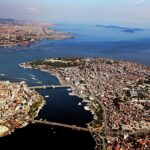
Right after departure, you sail under the Galata Bridge. This is the moment where the whole route starts to make sense: Istanbul’s “old meets new” story is visible instantly, with the bridge linking the historic peninsula side to Karaköy.
This section works well if you like seeing how the city functions, not just how it looks. You’ll spot people fishing and local life happening right along the waterfront, and you get wide city views that are hard to reproduce from street level.
If you’re a camera person, this is a good time to test your settings. The light changes quickly on the water, and early on you’ll learn where the boat positions itself for the best angles.
Galata Tower and the Istanbul Painting Museum: history with a curveball
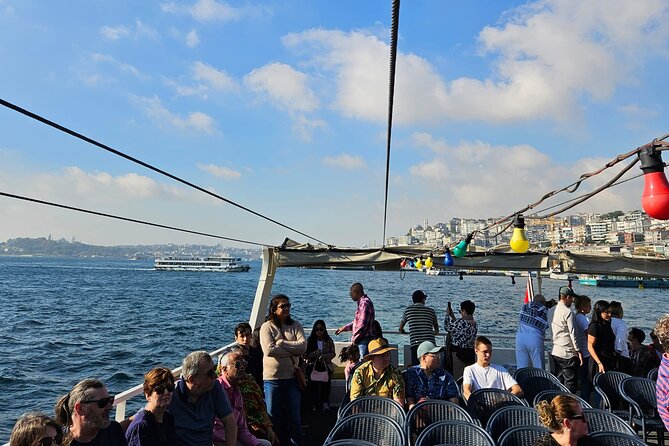
From the water, you’ll see Galata Tower rising above the Galata area. It’s easy to treat it like just another skyline landmark, but the guide’s narration adds layers: it was built in the 14th century, and it served multiple roles over time, including a prison and even an observatory. There’s also a famous legend tied to Hezarfen Ahmet Çelebi and his story of flying across the Bosphorus with artificial wings in the 17th century.
A nice twist in the route is the pass by the Istanbul Painting Museum. If you’re used to Bosphorus cruises that only focus on palaces and mosques, this adds a cultural stop that feels more grounded in Turkish art and changing eras. Even from the water, it’s a reminder that Istanbul’s story isn’t only architecture—it’s also what people created inside it.
The potential drawback here is simple: these are “see-and-go” moments. You get the context, but you don’t get long time to explore.
Dolmabahçe Mosque and Dolmabahçe Palace: the Ottoman-era spectacle
Next up is Dolmabahçe Mosque, admired from the water for its elegant architecture and calm presence beside the palace complex. It’s a visually satisfying contrast to the surrounding urban energy because the setting lets you focus on form—domes, lines, and the way the building sits at the water’s edge.
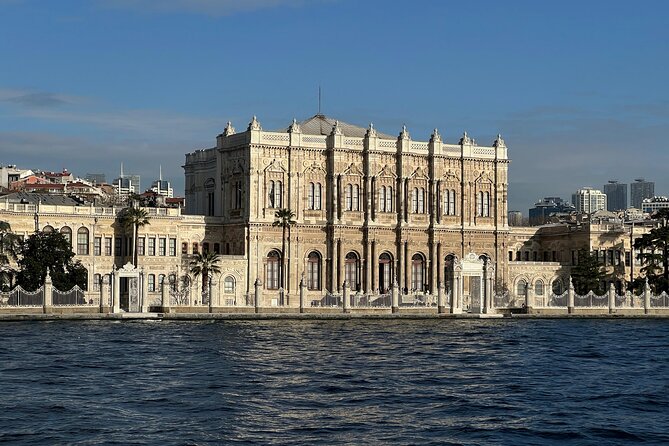
Then comes Dolmabahçe Palace. This is where the cruise earns its reputation. The palace is a 19th-century Ottoman residence, and the design blends European-inspired architecture with intricate Ottoman artistry. From the Bosphorus, you don’t just see the façade—you see it framed by the water and the strait’s changing light, which makes the place feel more dramatic than it does in most photos.
Because this is a boat tour, you’ll be relying on timing and sightlines. If you want the best photos, take a moment early in the ride to find where you’ll stand for the palace views, rather than moving around constantly.
Ortaköy from the water: mosque photos and real neighborhood life
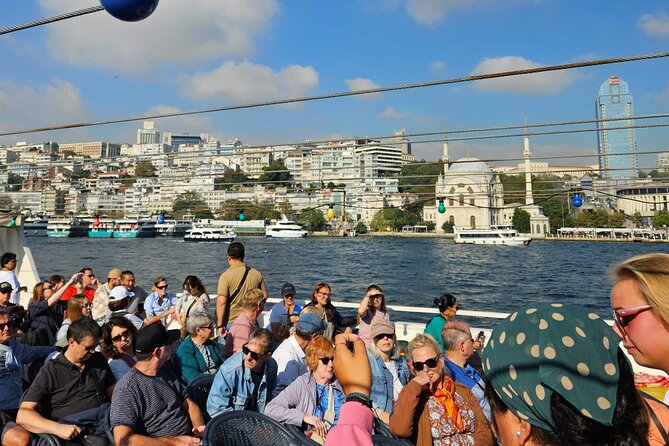
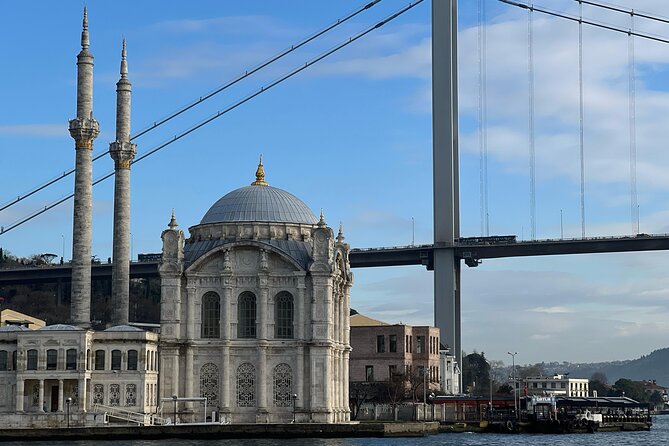
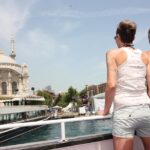
As you continue, Ortaköy appears right on the shoreline—cobblestones, markets, and a lived-in feel. The cruise passes the Ortaköy Mosque, often photographed as if it’s almost floating above the Bosphorus.
I like this segment because it shifts you away from only monumental architecture and into a more everyday Istanbul mood. It’s the kind of view that makes you want to step out and wander, even though you won’t have a lot of time for that on this particular tour.
You can also read our reviews of more tours and experiences in Istanbul

The signature moment: sailing under the Bosphorus Bridge
Then you reach the big thrill: the boat passes directly under the Bosphorus Bridge. This is more than a landmark check. It’s an engineering icon that visually “connects” Istanbul, and because you’re literally going beneath it, you get a physical sense of the strait’s scale.
This is also the moment where the tour feels like it’s delivering the core promise: the feeling of moving between sides—Europe and Asia—without changing trains, ferries, or your itinerary.
Keep an eye on wind and waves here. In rougher conditions, the boat ride can feel more bouncy, and your photo rhythm might get disrupted.
Bebek, Hidiv Kasrı, and the quiet-lush contrasts on the Bosphorus
After the bridge, you glide along Bebek and look toward Bebek Khedive Pavilion (Hidiv Kasrı). The pavilion is known for its elegant Ottoman-era style and for being tucked into greenery, which can make it tricky to spot at certain angles. When you line up the right view, it’s a lovely counterpoint to the palace-heavy earlier part of the route.
This stretch is also where you start noticing “texture” in the coastline: waterfront mansions, patches of greenery, and a shoreline that changes character as you move. Even if you’re not visiting these neighborhoods, the cruise gives you a quick sense of where the city relaxes and where it intensifies.
Rumeli Hisarı and the Fatih Sultan Mehmet Bridge: fortifications and power
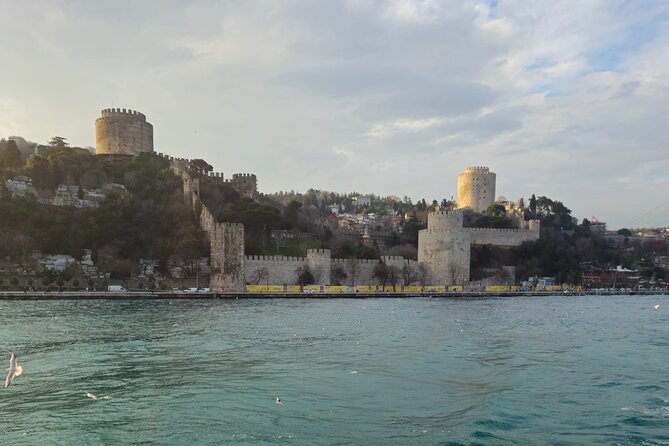
On the European shore, you’ll see Rumeli Fortress (Rumeli Hisarı). Its massive walls and towers rise from the landscape, and the guide’s framing helps you understand it as a strategic build tied to Ottoman ambition. This is one of the stops that makes history feel less abstract, because it’s literally a physical structure designed for control.
Then the boat goes by the Fatih Sultan Mehmet Bridge, named after the Ottoman conqueror. The modern bridge forms a striking contrast against the historic fortress nearby. It’s a clear visual reminder that Istanbul layers eras instead of replacing them.
Turning toward the Asian side: Anadolu Hisarı and the oldest stone on the water
Once you head toward Asia, you pass Anadolu Fortress (Anadolu Hisarı). The big detail here is age: built by Sultan Bayezid I even before the conquest of Istanbul, it’s described as the oldest Turkish structure on the Bosphorus. It’s smaller than Rumeli Hisarı, but that difference often makes it feel more intimate and easier to take in from the boat.
I like this moment because it gives you a timeline effect. You go from big strongholds to the early roots of Ottoman strategy, and you can see how the map is set up for the long story.
Küçüksu Kasrı, Kuleli Military High School: more than just palaces
As the Asian shoreline continues, you’ll pass Küçüksu Pavilion (Küçüksu Kasrı). This one is described as a Rococo-style imperial retreat from the 19th century, with delicate details and pastel tones that look almost dreamy across the water.
Then there’s Kuleli Military High School, with a distinctive red-brick, castle-like façade. It’s the kind of landmark you might miss if you were just sprinting between famous mosques and palaces. Seeing it from the Bosphorus helps you notice the institutional side of Istanbul, not only the tourist-famous side.
The Asian-side stop in Beylerbeyi: what you actually get with your hour
The tour includes a one-hour stop in the Beylerbeyi area, designed to let you experience the Asian shore a bit more directly. During this break, you can visit Beylerbeyi Palace, and the admission is noted as free. The palace visit is time-dependent, so don’t expect a deep museum-style experience during a boat-tour stop.
This is the segment that can make or break the day for some people. The promise is an hour, but if your group needs to move quickly back to the boat, you may end up with less time than you hoped. If you’re traveling with kids or you want to linger for photos in the street, plan for that reality.
Still, even a short walk here can add something important: contrast. You get a different rhythm than the European shore and more direct street-level atmosphere.
Kız Kulesi, Topkapı, and the Golden Horn edge: Istanbul’s icons from the water
After Beylerbeyi, the cruise swings back toward the historic peninsula with several of Istanbul’s headline sights seen from the strait.
First is Maiden’s Tower (Kız Kulesi), perched on a tiny islet. From the water, it’s a dramatic silhouette, and it’s especially striking as light changes near dusk. It’s one of those landmarks that almost looks like it’s floating, and the guide’s legend context helps it feel more layered than just a photo spot.
You’ll also get Topkapı Palace views. From the water, you see the palace complex cascading toward the Bosphorus, which gives you a scale you don’t always catch from the courtyards alone. Again, this isn’t a guided entry into the palace—it’s a scenic, big-picture look that helps you understand why the complex is such a central symbol of Ottoman rule.
Next comes Yeni Camii (New Mosque) at the entrance to the Golden Horn. Seeing it from the sea makes the domes and minarets look even larger, and it places the mosque in the flow of the city’s waterfront traffic.
Süleymaniye Mosque as a finale: a skyline that feels close
As you near the end of the cruise and turn back toward the meeting point, the boat showcases Süleymaniye Mosque from the water. Because it sits high on a hill, it dominates the skyline, and from the strait you get that “city crown” feeling.
This makes a good ending. By now you’ve seen bridges, fortresses, palaces, and neighborhoods. Süleymaniye ties it together by giving you a view that’s about design, proportions, and presence—less about a single façade and more about the way the whole city is arranged around its landmarks.
Price and value: why $12.09 can work for the right kind of traveler
At about $12.09 per person, this cruise is priced like a budget-friendly way to get a lot of sight value quickly. What you’re paying for is the combination of:
- guided narration in English
- onboard comfort basics like Wi‑Fi
- a route that strings together many major landmarks in a short window
Where the deal can wobble is if you want lots of time on land. This is not a slow sightseeing day with museum hours. It’s a water-first experience with limited walking—especially on the Asian side, where the stop is capped.
So I see this tour as ideal if you want: a relaxed, efficient overview of the Bosphorus, strong photo opportunities, and a guided framework to help you connect what you’re seeing.
Comfort tips that actually matter on this boat
Small practical things can make or break a Bosphorus cruise.
- Dress for cool wind. In late fall or winter, the lower level can feel cold and there may not be heat down there. Bring a warm jacket even if the city feels mild.
- Use your seating for views. If possible, sit on the left side of the boat for better sightlines.
- If you care about narration, don’t aim to sit too far back. Sound can be uneven, and the guide may speak quickly at times.
Also, the cruise runs with real conditions. Wind can affect timing, so keep your next plan flexible.
Is this the right tour for you?
Book this Bosphorus boat tour if you want a high-visibility, low-stress way to see the Istanbul highlights in a few hours. It works especially well for first-time visitors who need orientation, families who want an easy activity, and photographers who like getting skyline shots without weaving through traffic.
Skip it or pair it with extra plans if you’re hoping for long museum visits or lots of time wandering. This itinerary is designed for viewing from the water, and land time is limited.
FAQ
FAQ
How long is the Bosphorus boat tour?
The tour is about 3 hours on average, with a possible variation of around ±30 minutes due to wind currents. It’s listed as approximately 2 to 4 hours overall.
Is the tour guided, and what language is it in?
Yes. There’s an in-person guide, and the tour is offered in English.
Where do I meet, and where does the tour end?
You start at Sarıdemir, Ragıp Gümüşpala Cd. No:36, 34134 Fatih/İstanbul, Türkiye, and the tour ends back at the same meeting point.
Is Wi‑Fi available onboard?
Yes. Wi‑Fi is included on the boat.
Is there an Asian-side stop?
Yes. You get a one-hour stop in the Beylerbeyi neighborhood, with the option to visit Beylerbeyi Palace (admission is listed as free, time permitting).
What should I bring for comfort?
Bring a warm jacket, especially if you’ll be on the lower level. The lower deck can get cold in late fall or winter.
Are food and drinks included?
Soda/pop beverages, brunch are not included. You should plan to buy what you need separately.
Can I bring a service animal?
Yes. Service animals are allowed.
What if the weather is bad?
The experience requires good weather. If it’s canceled due to poor weather, you’ll be offered a different date or a full refund.
Should you book this Bosphorus tour?
If you want a guided Istanbul overview that fits into a half-day and gives you iconic Bosphorus views—including Galata Bridge, Dolmabahçe, Ortaköy, Rumeli Hisarı, Anadolu Hisarı, Beylerbeyi, Kız Kulesi, Topkapı, Yeni Camii, and Süleymaniye—this is a strong value at about $12.09.
Just go in expecting a boat-focused day with limited walking time. If that matches your style, you’ll likely have one of the easiest and most scenic ways to understand Istanbul’s shape.