REVIEW · GALLIPOLI DAY TRIPS
Private Day-Tour of Ancient Battle Fields (Troy & Gallipoli)
Book on Viator →Operated by TRAVELIUM · Bookable on Viator
Troy and Gallipoli feel worlds apart. And then, in one long day, they start talking to each other. I like the full-day structure—ancient myth on one side of the Dardanelles, then the real grief of World War I on the other—and I also like the private guide + driver setup that keeps the pacing smooth. One possible drawback: it’s a long 12-hour day, and museum/ruins entry fees aren’t included, so you’ll want to budget for those (plus meals).
I’m especially encouraged by the guide quality reported on this route, with names like Ali and Cenk showing up for strong, specific explanations. That said, English quality can vary from guide to guide, so if you’re picky, it’s worth asking ahead about your guide’s language comfort. Also plan for an early start—6:30am—because the best part of this kind of day is getting onto the sites before the crush.
In This Review
- Key Things That Make This Tour Work
- Why Combine Troy and Gallipoli in One Long Day?
- Morning Drive From Istanbul to the Dardanelles Ferry
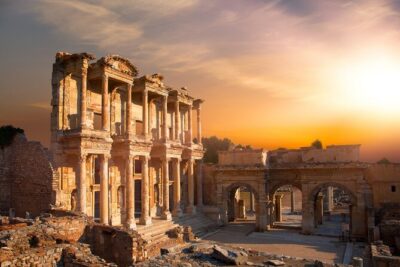
- Troy at a Walking Pace: Walls, Athena, and the Odeon Area
- The Trojan Horse Stop: Strategy, Spectacle, and a Key Photo Moment
- Athena’s Temple View: When Clear Days Actually Matter
- Behram and the Aristotle Connection: A Thoughtful Detour on the Route
- Gallipoli Battlefield: Ottoman vs ANZAC, and the Supply-Route Story
- Anzac Cove (Gaba Tepe) and the Emotional Weight of Names
- Price and Logistics: Does $541.85 Per Person Make Sense?
- Who This Private Day Tour Is Best For
- Should You Book This Troy and Gallipoli Day Tour?
- FAQ
- What time does pickup start?
- Is pickup and drop-off included?
- Is this tour private?
- Are museum entrance tickets included?
- What language is the tour in?
- How long is the tour?
- Do I need to print anything to meet the guide?
Key Things That Make This Tour Work
- One ride, two eras: Trojan legend and WWI history in a single day across the same waterway.
- Hotel pickup and drop-off: you avoid the Istanbul puzzle of buses, ferries, and timing.
- Ferry across the Dardanelles: it’s not just transport; it sets the mood for both stories.
- Guided Troy ruins: you don’t just walk the site—you learn what to look for.
- Gallipoli with context: Ottoman and ANZAC fighting, plus why some called it the Gentleman’s War.
- Quiet moments can happen: the early timing can help you get more breathing room at key spots.
Why Combine Troy and Gallipoli in One Long Day?
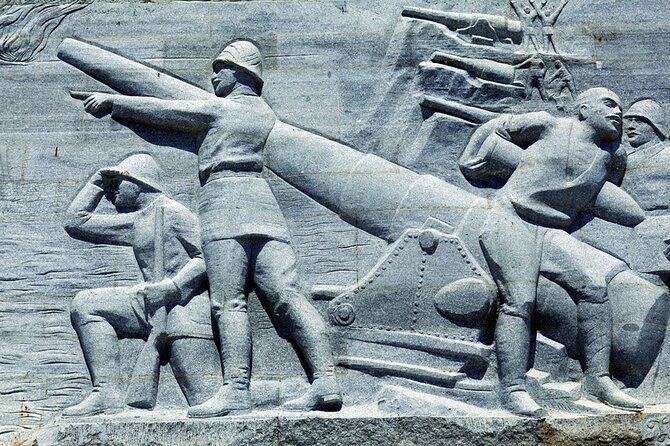
This is the rare Istanbul day trip that doesn’t force you to choose between “myth” and “modern history.” The Dardanelles strait is the thread that connects everything here: in ancient times, it was a strategic passage; in WWI, it became a supply-route chokepoint. Seeing Troy and Gallipoli back-to-back makes that continuity click fast.
You’ll also get a proper rhythm. The morning is heavy on walking and big sightlines. Then you shift into WWI remembrance, where the stops are more focused and emotional—cemeteries and battlefield ground that you can’t really speed through.
The trade-off is time. You’re starting early, and you’ll be out most of the day. If you want a vacation day that feels slow, this isn’t it.
You can also read our reviews of more private tours in Istanbul

Morning Drive From Istanbul to the Dardanelles Ferry
The day starts at 6:30am, with pickup from your hotel or the port area. You’ll want to be ready about 15 minutes early in the lobby, because departure time is the spine of the whole schedule.
From there, you drive along the European shore of the Marmara Sea. This is one of those routes that feels like it’s showing you Turkey’s in-between: elegant summer villas, rolling coastline views, and the slow build of “okay, we’re really heading out to history.”
Why this drive matters: it’s not just scenery. It’s your transition from Istanbul’s urban pace to the peninsula’s battlefield geography. You’re also moving early enough that the drive tends to feel less stressful than later-day travel.
Troy at a Walking Pace: Walls, Athena, and the Odeon Area
Once you reach the Dardanelles crossing, you take a ferry over to the Troy archaeological zone. That water crossing helps you understand the geography—especially because the day keeps returning to the idea of strategic passage between continents.
At Troy, the guide-led walk focuses on the core elements you’ll actually care about:
- City walls and the feel of where defenders would have stood
- Athena’s temple area, perched for sweeping views
- The Odeon, a well-preserved stone theater setting people can picture without much imagination
Troy is a Bronze Age ruin, so temper your expectations about “palaces.” The value here isn’t grand reconstructions—it’s the sense of place. With a good guide, you start noticing how the site layout would have shaped movement, defense, and power.
Also, note the practical side: museum entrance fees are not included, and Troy admission is likely where costs pop up. You’ll want to carry cash/card for entry and for a couple of small extras.
The Trojan Horse Stop: Strategy, Spectacle, and a Key Photo Moment
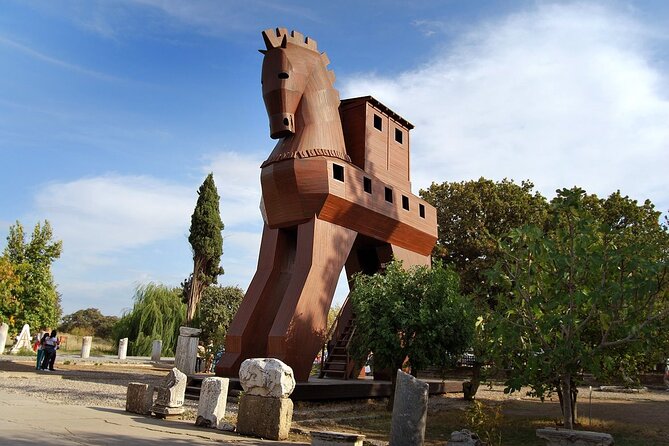
There’s a reason the Trojan Horse story survives: it’s a mix of deception, timing, and psychological warfare. You’ll spend time at the Trojan Horse statue area, and the experience is designed to make the story feel physical, not abstract.
You’ll hear the classic arc: after a long siege, Greeks use subterfuge to get into an apparently secure city. And later, that one decision becomes the strategic end to the war.
What I like about this stop on a guided day: your guide can point out how the myth is often interpreted as strategy rather than just a spooky trick. If you’re into stories, you’ll probably also enjoy how the concept of a Trojan horse turns into a modern metaphor—usually explained in plain language on tours like this.
Admittedly, it’s a faster, story-forward moment compared with the walking ruins. If you want less “theatrical” and more archaeology, you may still enjoy it, but you should treat it as a bridge between myth and site.
Athena’s Temple View: When Clear Days Actually Matter
A major payoff of Troy here is the Temple of Athena area, built on a rock outcrop (you’ll hear it described as a trachyte crag). The big deal is the view.
On a clear day, the panorama can stretch toward:
- Lesbos to the south
- Pergamum to the southeast
- Mount Ida in Phrygia to the east
- Plus the Tuzla River to the north
That’s not trivia for trivia’s sake. When you look across the water and inland, you can start understanding why control of routes mattered. Even if visibility is only so-so, the vantage point helps you get your bearings fast.
One more practical note: admission ticket fees aren’t included for this stop. If the day’s entry fees are already on your mind, this is where you’ll likely want to be prepared.




Behram and the Aristotle Connection: A Thoughtful Detour on the Route
Between Troy and Gallipoli, you stop for an hour around Behram, tied to the story of Aristotle in ancient Assos. This is a smart breather stop—still history, but less about war and more about ideas.
You’ll hear how Aristotle (with Xenocrates) connected to Assos, welcomed by King Hermias, and how his work life shifted when political violence caught up with Hermias. You also get the thread of how Aristotle eventually moved toward Macedonia, tutoring the future Alexander the Great.
The tour even notes a modern touch: there’s an Aristotle statue at the town entrance. Stops like this can feel small compared to big-name ruins, but they work well when your brain needs a rest from constant fighting-and-dying narratives.
This stop’s also listed as admission-free, which helps your budget.
Gallipoli Battlefield: Ottoman vs ANZAC, and the Supply-Route Story
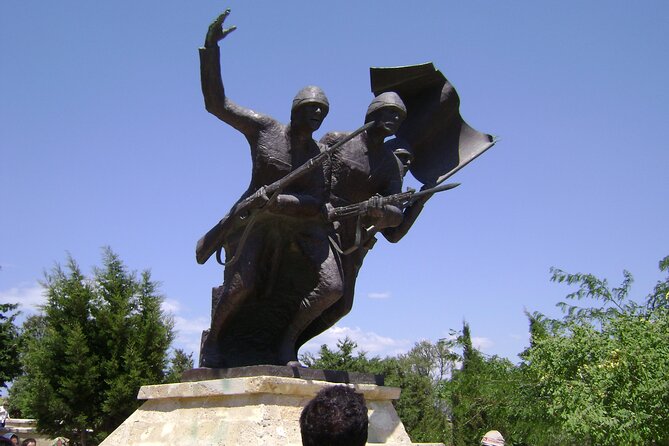
After lunch time (meals aren’t included, so you’ll be deciding on your own or following the guide’s timing suggestions), you go to the Gallipoli Battlefield area.
Here the tour shifts tone. You’ll learn the campaign timeline—17 February 1915 to 9 January 1916—and the larger aim of the Entente powers: weaken the Ottoman Empire by targeting the straits that mattered for supply lines.
A key storyline you’ll hear:
- Early attempts against Ottoman forts at the entrance of the Dardanelles in February 1915 didn’t succeed.
- Then the amphibious landing on the peninsula came in April 1915, with the goal of hitting routes toward Constantinople (Istanbul).
This context helps your brain make sense of what you’re seeing on the ground. Without it, battlefield stops can feel like scenery. With it, the terrain becomes readable.
One detail I’d pay attention to on this part of the day: the guide’s explanation of why some called the conflict a Gentleman’s War. It’s the kind of phrase that sticks because it contrasts with the brutality of what happened, and good guides can unpack the contradiction clearly.
Anzac Cove (Gaba Tepe) and the Emotional Weight of Names
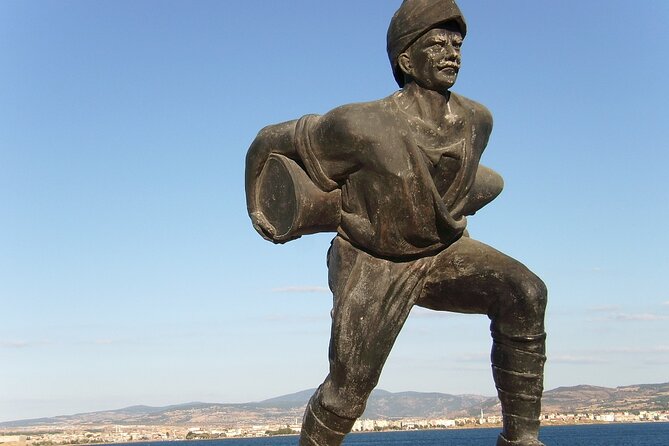
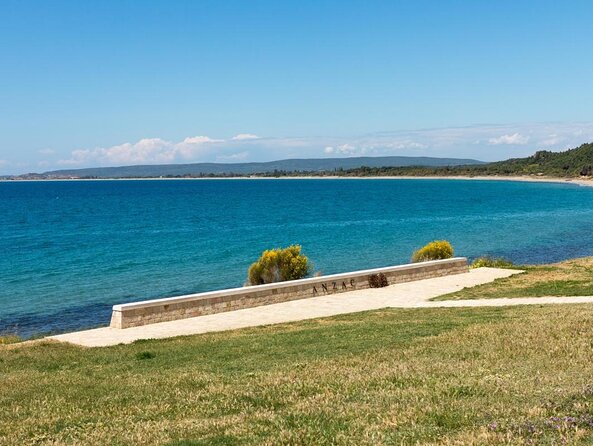
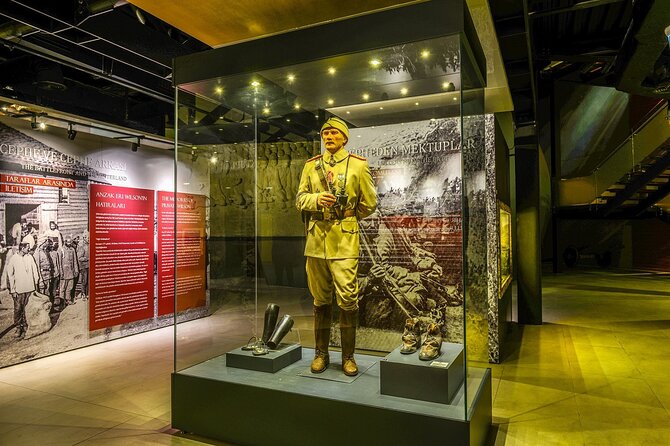
The final battlefield highlight is Anzak Bay Beach, also tied to the 25 April 1915 landing (also referred to as Gaba Tepe, and on the Turkish side as the Arıburnu Battle).
This stop is built for clarity, not just atmosphere:
- The ANZAC landings happened mostly on the night side on the Aegean-facing western peninsula.
- Troops landed about 1 mile (1.6 km) north of the intended beach, which created confusion in darkness.
- Plans shifted quickly, and fighting unfolded in a scattered, hard-to-control way.
These aren’t just historical facts. When you stand at the places where intentions went sideways, the story feels painfully logical. The “why” becomes as important as the “what.”
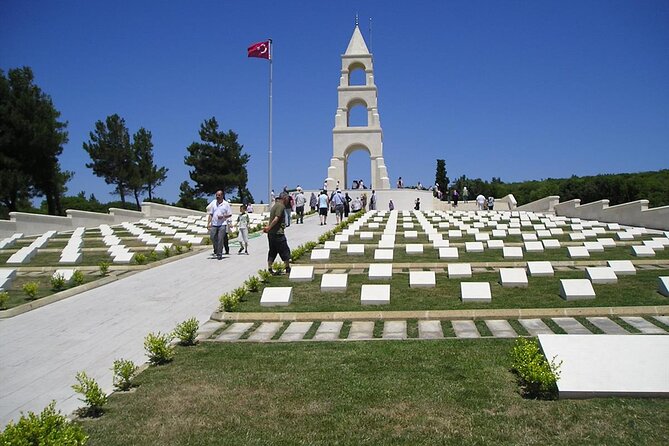
The tour also emphasizes cemeteries and remembrance, and that’s where the day stops being educational and starts being human. You should expect a moment where you just slow down, breathe, and let it land.
Admission at this stop is listed as free.
Price and Logistics: Does $541.85 Per Person Make Sense?
At $541.85 per person for roughly 12 hours, this tour is priced for travelers who want comfort and time savings—not bargain hunting. You’re paying for:
- Private vehicle transportation between the sites
- Hotel pickup and drop-off (which is a real value in Istanbul)
- A professional tour guide
- Skip-the-line access with your guide
- A route that’s hard to do neatly on your own in one day
What isn’t included:
- Meals and drinks
- Museum/ruins entrance ticket fees (so Troy and possibly other stops can add cost)
So the value question becomes simple: if you’re the kind of traveler who hates coordinating ferries, tickets, and tight timing, this price starts to look fair. If you’re comfortable DIY planning and you only care about one site, you may decide a different plan is cheaper.
Also, review feedback suggests you may end up with both a driver and guide working the day with you. If gratuities are part of your travel style, plan for it. Even if tipping isn’t required, setting a little aside helps keep you relaxed.
Who This Private Day Tour Is Best For
This fits best if you:
- Want two anchor destinations (mythic Troy and WWI Gallipoli) without splitting your time
- Like guided storytelling where you get context for both archaeological and battlefield stops
- Prefer private group pacing over crowded group buses
- Can handle a long, early day with a moderate physical fitness level
It might not fit you if:
- You’re looking for a short, low-effort day
- You dislike walking ruins and memorial grounds back-to-back
- You want all major sites paid for up front (because entry fees aren’t included)
Should You Book This Troy and Gallipoli Day Tour?
I’d book it if your Istanbul time is tight and you want a day that feels like it has a theme: how one narrow stretch of water can carry both legend and modern tragedy. The best part of this tour is the pacing that links the sites—morning myth, afternoon war, evening reflections.
I’d hesitate if you’re on a strict budget, because entry fees and meals add up, and the total cost is already significant. And if your top priority is archaeology-only, the Trojan Horse story stop and the more narrative WWI sections might feel like a different style than you prefer.
If you’re excited by both subjects and you want a guided, low-stress way to do the drive, this is a very solid way to spend a day.
FAQ
What time does pickup start?
Pickup starts at 6:30am. You should be ready in your hotel lobby about 15 minutes before your scheduled pickup time.
Is pickup and drop-off included?
Yes. Transportation from/to your base-location in Istanbul is included, with hotel pickup and drop-off.
Is this tour private?
Yes. It’s a private tour/activity, meaning only your group participates.
Are museum entrance tickets included?
No. Museum entrance ticket fees are not included. The tour includes skip-the-line access with your guide, but you’ll still need to cover site admissions.
What language is the tour in?
The tour is offered in English.
How long is the tour?
The duration is about 12 hours (approx.).
Do I need to print anything to meet the guide?
You may be asked to present your printed voucher and photo ID when you meet the guide. Also, you’ll receive confirmation of your exact pickup time when you confirm your reservation.