REVIEW · CITY TOURS
Istanbul Modern City Walking: Taksim to Galata With Secret Passages
Book on Viator →Operated by Tematique Tours · Bookable on Viator
Secret passages turn Istanbul into a puzzle. This 3-hour route blends big modern sights with Beyoğlu backstreets, including covered arcades and lane turns you’d never notice on your own. I love the focus on secret passages, because they make the city feel like it has secret shortcuts.
The best part is the guide-led storytelling and pacing through neighborhoods that overlap Roman, Byzantine, and Ottoman layers. I also like the small group feel and the way guides like Erol connect what you’re seeing to where locals actually eat and hang out. One consideration: the walk involves uneven streets and some stair steps, so it is not suitable for strollers.
In This Review
- Key highlights to look forward to
- Getting oriented fast: why this walk works
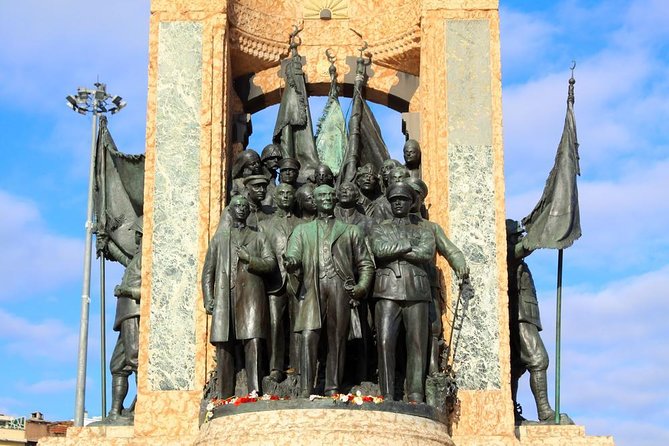
- Taksim Square and Gezi Park: the modern Istanbul handshake
- Balık Pazarı and Beyoğlu: food street energy without the chaos
- Hagia Triada Church: Ottoman-era cosmopolitan context in plain sight
- Çiçek Pasajı and the arcades: Istanbul’s covered street maze
- St Antoine Catholic Church: another anchor of foreign community life
- İstiklal Caddesi and Pera Museum: the grand boulevard with side-street stories
- Galata Tower area and Kamondo Stairs: the payoff view zone
- Karaköy and the Golden Horn: finishing with context, not just a stop
- What makes the guide part so strong
- Who should book this Taksim to Galata secret passage walk
- Should you book this tour
- FAQ
- How long is the Taksim to Galata walking tour?
- What time does the tour start?
- Where do I meet the guide?
- Where does the tour end?
- What language is the tour offered in?
- Is the group size small?
- Is hotel pickup included?
- Are there ticket costs for the stops?
- Is the tour suitable for strollers?
- What is the cancellation policy?
Key highlights to look forward to
- Taksim to Galata by foot: see modern Istanbul and its older European-quarter streets in one afternoon
- Passages you can spot and follow: Çiçek Pasajı and other arcades are the star for serious people-watching
- Churches with Ottoman-era context: you’ll learn why Beyoğlu housed foreign communities and non-Muslim Ottoman subjects
- A guide who steers you off the main drag: stop-to-stop stories help the city make sense fast
- End near Galata Tower: you can keep sightseeing after the tour ends, in a very walkable zone
- Good for first timers with limited time: a compact introduction to Taksim, Istiklal, and Karaköy
Getting oriented fast: why this walk works
Istanbul is huge, and Beyoğlu can feel like a blur if you wander without a plan. This tour is built for orientation: it starts at Taksim Square and heads downhill—socially and geographically—toward Galata. In a few hours, you’re not just ticking sights; you’re learning how neighborhoods connect.
The route also has a smart mix of textures. You get wide streets like İstiklal Caddesi, but you also get covered-and-open “passages” where the street life changes character. That combination is what makes the walk useful instead of just scenic.
Price-wise, it sits in the mid-range for a guided city walk (about $66.38). You’re paying for the guide, the small-group flow, and the stop-to-stop context that helps you spend your next day in Istanbul with way less guesswork.
You can also read our reviews of more walking tours in Istanbul



Taksim Square and Gezi Park: the modern Istanbul handshake
Most Istanbul visits start with the classics. This one starts with the city’s present mood. At Taksim Square, you get the central pulse—people moving, buses and trams funneling the crowd, and a constant stream of street life. It’s a great place to begin because it’s easy to orient yourself from here.
Right by the square is Gezi Park, tied to the memory of the Turkish Republic’s founding in 1923. Even if you’re not into monuments, parks here act like living rooms: locals cut through them, and you get a feel for how the modern city breathes at street level.
If you’re the type who likes to understand the why behind the where, this opening sets you up for what comes next in Beyoğlu. You’ll start noticing how Ottoman-era cosmopolitan life later shaped these same streets.
Balık Pazarı and Beyoğlu: food street energy without the chaos
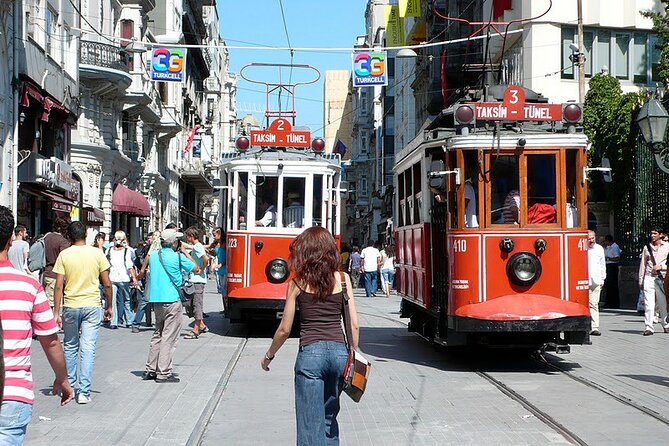
Once you move off the square, the atmosphere shifts. Balık Pazarı is the quick hit for that: a street packed with bars and fish-meze spots. It’s not just a backdrop for photos; it’s a working hangout zone. You’ll understand why locals treat this area like a social destination.
Then you get into Beyoğlu, the old “European Quarter” vibe of Istanbul that evolved over time. The tour approach matters here: you’re not trapped walking in a single line along the most famous route. You’re zigzagging through smaller streets where the daily rhythm feels more local.
One practical note: this area can get loud. A couple of guides have been described as quietly spoken, and the street noise can swallow details. If you want the stories clearly, position yourself where you can hear without craning.
Hagia Triada Church: Ottoman-era cosmopolitan context in plain sight
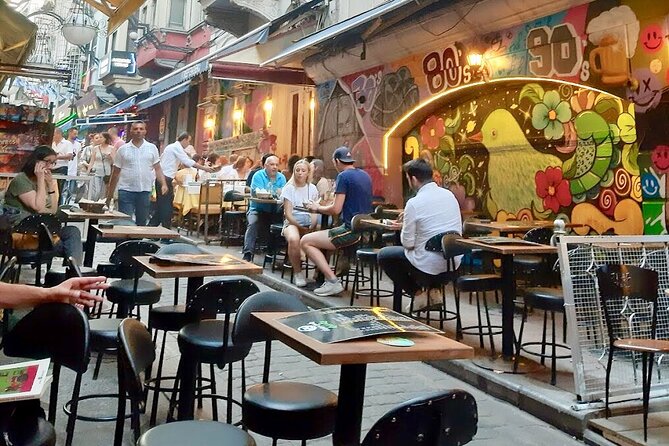
Beyoğlu is where Istanbul’s non-Muslim and foreign communities became visible over time, and Hagia Triada Church is part of that story. You’ll learn how this district functioned as a hub for the foreign community and for non-Muslim Ottoman subjects.
What I like about stops like this is that they change how you read the neighborhood. You start seeing buildings not only as pretty facades, but as clues about who lived here, who traded here, and how communities interacted across empires.
This is also a good moment to slow down for a breather. Church courtyards and nearby streets often feel calmer than the main thoroughfares, even though you’re still in a busy part of the city.
Çiçek Pasajı and the arcades: Istanbul’s covered street maze
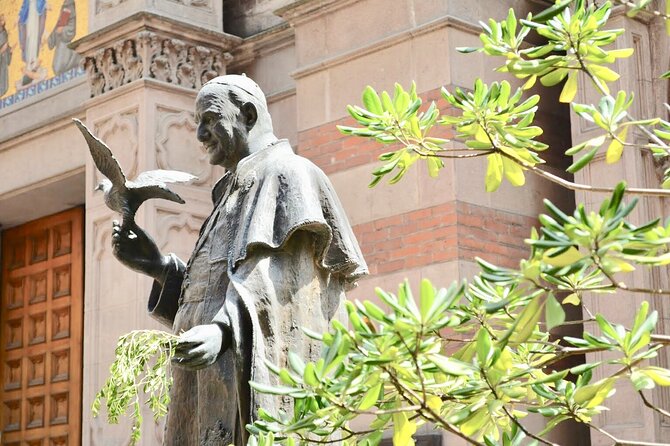
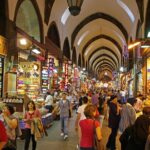
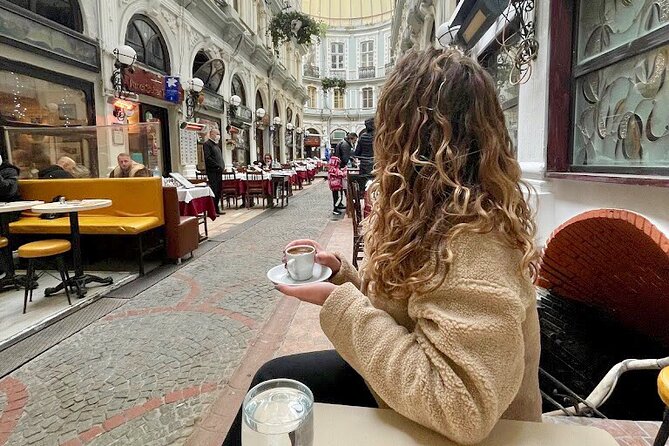
Now the tour gets really fun. Beyoğlu is famous for passages—arcades that are part covered and part open. The highlight is Çiçek Pasajı, one of the best-known of these shopping-and-snack arcades.
These passages do two things for you. First, they protect you from sun and sudden rain while keeping the street atmosphere alive. Second, they create that unique Istanbul feeling of moving through thresholds—outdoor air to sheltered corridors—without leaving the neighborhood.
From there, the route continues through more arcades, including Avrupa Pasajı and Passage Hazzopulo. This is where you’ll start noticing how Istanbul uses structure to shape foot traffic and storefront culture. You’re walking a living layout, not just passing landmarks.
If you enjoy street-level design—like the way buildings choreograph crowds—this portion delivers.
You can also read our reviews of more city tours in Istanbul





St Antoine Catholic Church: another anchor of foreign community life
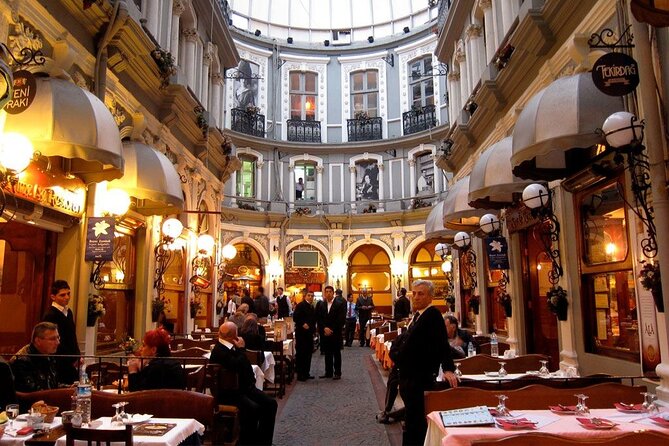
Another major storytelling stop is St Antoine Catholic Church. This Roman Catholic church stands out in size and in its community following for masses.
In practical terms, this is another place to understand the district’s long-term identity. Beyoğlu isn’t only about cafés and shopping; it’s also about institutions that served established communities and attracted new ones. When the guide ties those layers together, the architecture suddenly feels purposeful.
Take a minute here to look around slowly, not just at the main front. The side streets nearby often contain the clues for why the larger streets developed the way they did.
İstiklal Caddesi and Pera Museum: the grand boulevard with side-street stories
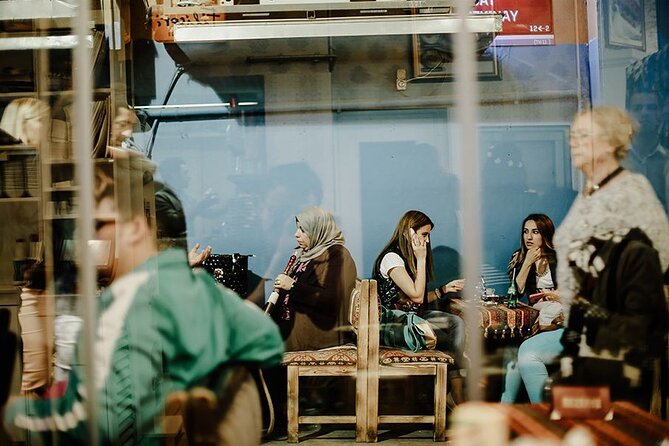
İstiklal Caddesi is the big stage. It’s the kind of street where you can walk for an hour and still feel like you only scratched the surface. In the Ottoman era, Beyoğlu was known as Pera, and the area grew with foreign embassies and trading centers, which is why it developed that European-style apartment-house feel you still see today.
The tour doesn’t just march down the boulevard. It uses it as a backbone while you learn how the surrounding blocks fit into the wider story. You’ll also pass the Pera Museum area, tied to the neighborhood’s shift from Ottoman cosmopolitan space to a more European look with the arrival of foreign embassies.
I like this section for two reasons. You get the energy of the main avenue, but you don’t lose the thread when the guide points out how the neighborhood evolved. And you get plenty of photo-worthy architecture without it turning into a slog.
Galata Tower area and Kamondo Stairs: the payoff view zone
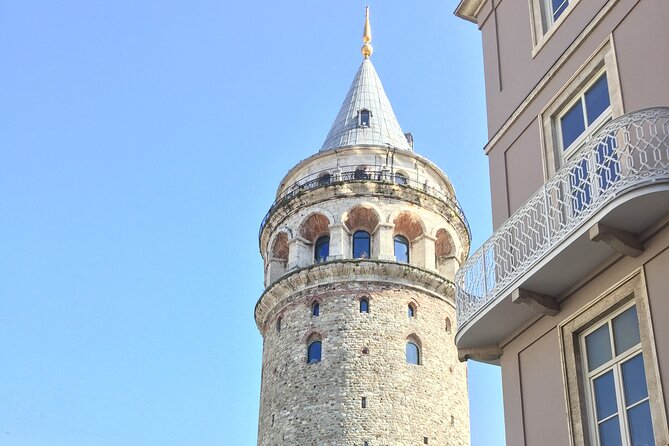
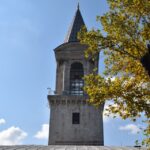
The tour’s endpoint is near Galata Tower (and you finish at Bereketzade, in Beyoğlu). Galata Tower is described as a fortification dating back to 1348, erected by Genoese Italians—yes, Istanbul’s history has more than one European thread.
Be aware of a timing reality: one guest noted the tower can be closed for maintenance, so plan for the fact that you might not always get the full view. If access to the top requires a separate ticket, that’s also normal. One review called out a fee of 175 lira to go up, so if views matter to you, budget for it on the day.
Before you reach the tower zone, you may also encounter Kamondo Stairs, which helps connect the “big street” world with the hillside rhythm of Galata.
The vibe here shifts fast. From dense foot traffic to the sensation of stepping into a hilltop neighborhood, it’s a satisfying landing point for the tour.
Karaköy and the Golden Horn: finishing with context, not just a stop
Even though the tour ends near Galata Tower, the walk-through context heads you toward Karaköy, one of the oldest districts and an important commercial and transport hub. You’ll also hear about the Golden Horn area (locally associated with Haliç, meaning inlet), which separates old and new sections of Istanbul.
The bridge crossing the Golden Horn is mentioned as a key place in daily life. That’s one of those “you’ll get it once you see it” details. Istanbul isn’t just monuments; it’s commuting, movement, and connections. The tour touches that reality right at the end.
You also leave with practical orientation: this area is very walkable for continued sightseeing. After the guide finishes, you can keep going toward waterfront views, shops, or just wander into the next lane.
What makes the guide part so strong
The guides are repeatedly described as friendly, helpful, and good at connecting buildings and streets to the city’s bigger history. Names that come up often include Erol, Elif, İşıl, Gamze, Tolga, and Kim—each with a storytelling style that makes the route feel coherent.
The biggest value is not just facts. It’s how the guide uses those facts to help you read the street. You leave understanding why Beyoğlu looks the way it does, why churches and arcades sit where they do, and why locals show up in certain food zones.
And the pacing seems to matter. Multiple people described it as a good walking pace that doesn’t drain you. That matters because a 3-hour walk can still be tiring if it’s rushed. Here, it’s built so you can enjoy the details.
Who should book this Taksim to Galata secret passage walk
This is a great fit if you want:
- A first-day or early-visit orientation to Taksim, Beyoğlu, and Galata
- A guided walk that mixes modern streets with historical context
- An easier way to find good local streets for snacks and strolling later
- A small-group experience capped at 8 travelers
It’s less ideal if:
- You need a stroller-friendly route (it’s not suitable for strollers)
- You want a tour that stays far from crowds and street noise
If you like Istanbul at street level—architecture, people-watching, and the “how did this place become this?” question—this delivers.
Should you book this tour
I’d book it if you have limited time and you want a guided walkthrough that turns Beyoğlu from confusing into understandable. The route hits the big-signal sights (Taksim, İstiklal, Galata Tower) but also focuses on what most people miss: the passageways and the district context around foreign communities and churches.
One final decision tip: if you specifically care about getting to the very top of Galata Tower, plan to treat that as a bonus, not a guarantee. One day it might be open, another day it might be shut for maintenance, and separate entry fees can apply. Still, even without tower access, this walk remains a strong way to get your bearings and enjoy Istanbul’s street-level details.
FAQ
How long is the Taksim to Galata walking tour?
It runs about 3 hours.
What time does the tour start?
The start time listed is 2:30 pm.
Where do I meet the guide?
You meet at Cafe Marmara Gümüşsuyu, Tak-ı Zafer Cd. No:3/1, 34437 Beyoğlu/İstanbul.
Where does the tour end?
The tour ends near Galata Tower at Bereketzade, 34421 Beyoğlu/İstanbul.
What language is the tour offered in?
The tour is offered in English.
Is the group size small?
Yes. It has a maximum of 8 travelers, described as a small group.
Is hotel pickup included?
No. Hotel pickup and drop-off are not included.
Are there ticket costs for the stops?
The tour information lists admission tickets as free for the listed stops, but Galata Tower top access may involve a separate fee, and one guest mentioned paying 175 lira to go up.
Is the tour suitable for strollers?
No, it is not suitable for strollers.
What is the cancellation policy?
Free cancellation is offered. You can cancel up to 24 hours in advance for a full refund. If you cancel less than 24 hours before the start time, you do not get a refund.