REVIEW · 2-DAY EXPERIENCES
Gobekli Tepe & Mountain Nemrut Tour-2 Days 1 Night From Istanbul
Book on Viator →Operated by Travel See Life · Bookable on Viator
Twelve thousand years still feels loud. This 2-day plan strings together Göbekli Tepe and Mount Nemrut with a fast hit of Şanlıurfa, so you go from pre-writing ritual stones to a mountain tomb with giant seated statues. I love how the route is practical: flights, airport transfers, and site time are handled, so you spend your energy on the places that matter.
What I really like is the guiding. When I see names like Sercan and Kerem attached to a group, it usually means you’re getting stories with context, not just a quick stop-and-pose routine. You’ll also move in a small group (up to 15 people), which tends to make the pace feel calmer even when the days are long.
One thing to consider: the drive days use windy roads, and if you’re prone to motion sickness, plan for it. Also, Nemrut can be weather-dependent, and your schedule can shift if conditions aren’t right.
Key highlights and smart reasons to care
- Göbekli Tepe timing (about 2 hours): enough time to read the carvings and absorb the scope without rushing.
- Nemrut sunset focus: East and West terraces get built-in photo time, not just a quick look.
- A tight day-1 sequence around Adıyaman: Karakuş Tumulus, Cendere Bridge, and Arsemia make the region feel connected.
- Şanlıurfa museums before the holy sites: Urfa’s museum context helps the Abraham-area stops make more sense.
- Small group size (max 15 people): easier listening during explanations, especially on the mountain.
- A guide-driven experience: the best comments center on clear, passionate explanations (often credited to Sercan and Kerem).
In This Review
- Two ancient worlds in 48 hours: what this tour is really for
- Price and logistics: why $1,189.57 can still feel like value
- Day 1 in Adıyaman: Karakuş Tumulus, Cendere Bridge, and Arsemia
- Karakuş Tumulusu (about 1 hour)
- Cendere Bridge (about 1 hour stop)
- Arsemia Antik Kenti (about 1 hour)
- Mount Nemrut sunset: the summit terraces and statue drama
- Day 2 in Şanlıurfa: museums, mosaic walls, and the Abraham-area stops
- Sanliurfa Archaeology and Mosaic Museum (about 3 hours)
- Balıklıgöl (about 1.5 hours)
- Göbekli Tepe at Potbelly Hill: how to get the most from your 2 hours
- What you’ll be dealing with: pace, weather, and physical effort
- Small-group guiding: the difference between seeing and understanding
- Should you book this Göbekli Tepe and Nemrut combo?
- FAQ
- What’s the tour duration?
- Is pickup offered from Istanbul?
- What stops are included across the two days?
- What’s included in the price?
- What language is the tour offered in?
- Do I need good weather?
- How physically demanding is it?
Two ancient worlds in 48 hours: what this tour is really for
This is a combo tour with a clear theme: early human ritual sites plus royal-era monuments, all stitched together with modern logistics. You start in Istanbul, then you fly into the south for a packed day of Adıyaman-area stops, finish with the famous Nemrut summit views, and then head to Şanlıurfa for Göbekli Tepe and the Abraham-related sites.
The value here is that you’re not piecing it together yourself across multiple regions. Instead, you get a guided, timed itinerary with museum tickets and transfers built in. If your travel style is “show me the real things, not just the photo points,” this format makes sense.
It also helps that the itinerary includes both big-ticket headline sites and smaller supporting stops. Karakuş Tumulus and Arsemia may not be as globally famous as Nemrut or Göbekli Tepe, but they add texture and timeline context to what you’re seeing.
Price and logistics: why $1,189.57 can still feel like value
At $1,189.57 per person, this is not a budget tour. You’re paying for two expensive pieces of the puzzle: domestic roundtrip flights and a multi-day guided program across regions.
What you should check in your head is how much you’d spend if you arranged it alone:
- Flights from Istanbul to the regional airports and back (handled for you)
- Airport transfers
- Museum and site admissions for multiple major stops
- A guide and timed entries during your limited time
The included list also covers breakfast and two lunches, plus all airport transfers. Those meals matter on days that start early and run late, especially when you’re trying to hit Nemrut at the right time.
One practical note: it’s marked as English, uses mobile tickets, and you can cancel up to 3 days before for a full refund. If you like decision flexibility, that’s comforting, as long as weather plays along.
You can also read our reviews of more evening experiences in Istanbul

Day 1 in Adıyaman: Karakuş Tumulus, Cendere Bridge, and Arsemia
Your day starts with pickup timing that suggests an early start for the long travel day. The plan shows pickup around 08:30 and then a flight sequence that gets you to Adıyaman by around 13:00. That’s important because it’s not wasted time. You land, meet your group, and then immediately start seeing the Commagene-region landmarks.
Karakuş Tumulusu (about 1 hour)
Karakuş Tumulus is the kind of site you might miss if you were driving on your own. The guide focus here is specific: it’s a funerary monument for Queen Isias and Princesses Antiochis and Aka I of Commagene, built by Mithridates II of Commagene around 30–20 BCE. The name Karakuş means black bird, tied to a column topped with an eagle.
What you’ll like is the visual structure. Doric columns rise around the tumulus, topped with steles and reliefs including a bull, lion, and eagle. It’s compact, but the symbolism is dense, and that’s where a good guide really helps.
Cendere Bridge (about 1 hour stop)
Then you move to Cendere Köprüsü, a late Roman bridge near Arsameia (today Eskikale). The key value is perspective: you see a still-standing engineering piece tied to a historical route, not only monumental ruins.
If you’re a “details person,” this is the kind of stop that gives you one more anchor point for why the area mattered long after the mountain monuments were built.
Arsemia Antik Kenti (about 1 hour)
Arsemia works as a bridge (pun intended) between tumulus symbolism and the grander religious-political storytelling you’ll see at Nemrut. This former summer residence of Commagene kings includes a major relief featuring Heracles (or possibly Artagnes, a Persian deity linked by the Greeks) shaking hands with King Mithridates.
There’s also mention of a major Greek inscription of Anatolia in the area. Again, it’s time-efficient: you don’t get a long wander, but you get the main reads that make the place feel meaningful.
You can also read our reviews of more tours and experiences in Istanbul

Mount Nemrut sunset: the summit terraces and statue drama
After those Adıyaman-region stops, the centerpiece comes: Mount Nemrut. The tour positions it as a summit visit with real payoff—especially around sunset. The program includes around 2 hours at Nemrut, with time to take photos in the nearby valleys afterward.
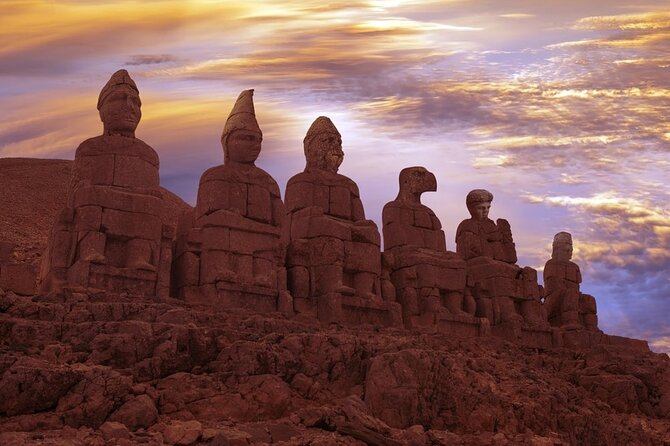
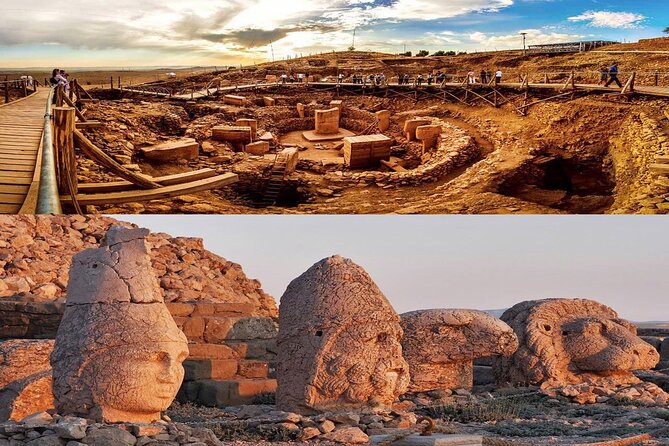
At the top, the big idea is the tomb-sanctuary built by King Antiochus I Theos of Commagene. The statues are described as massive (8–9 meters tall), seated around the assumed royal tomb from the 1st century BC. You’ll hear about the mix of figures and gods—Greek, Armenian, Iranian—plus lions and eagles as recurring companions.
A key practical detail: Nemrut is a “watch the light change” site. The tour’s setup includes both East and West Terraces so you can see the view shift as the sun drops and the statues’ faces become harder—or sometimes more dramatic—to read. You’re also given a bit of breathing room for photos after the main viewing.
One honest consideration: the mountain area can be affected by events beyond anyone’s control. One review notes that Nemrut was impacted by earthquake. Even if you don’t get those exact details on your date, it’s wise to go in expecting that the site may be less “smooth museum” and more “ancient remains under real-world conditions.”
Day 2 in Şanlıurfa: museums, mosaic walls, and the Abraham-area stops
Day two begins after breakfast and moves into Şanlıurfa in a smart order: museums first, then the holy sites. That sequence matters because it helps you understand what you’re seeing when you step into the religious and symbolic places.
Sanliurfa Archaeology and Mosaic Museum (about 3 hours)
You’ll visit the Şanlıurfa Archaeological Museum and also the Aleppo Bahçe Mosaic Museum. The program notes that the museums have collections founded from the Harran and Göbeklitepe area. That’s a useful framing device: you’re not just ticking boxes, you’re getting the museum “why” before the outdoor “wow.”
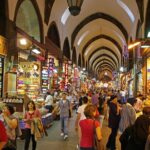
The stop also includes time around holy sites at the area called Aynzelha, described as a lake with millions of domesticated fish. There’s also mention of a cave connected with the prophet’s birthplace, and then some time walking the local covered bazaar atmosphere.
You’ll have lunch with kebabs during this day. That’s practical: after a museum-heavy morning, you need something steady before Göbekli Tepe.
Balıklıgöl (about 1.5 hours)
Then you go back into the Abraham-area story at Balıklıgöl, also connected to the cave and the Pool of Prophet Abraham. The tour description notes the pool is believed to be the place where Abraham was thrown into the fire by Nimrod.
This is where you’ll see how the tour balances archaeology with living belief. Even if you’re not there for religion, the combination of caves, pools, and the fish lake creates a strong sense of place. It’s also a nice tempo shift right before Göbekli Tepe, because it’s not all stone blocks and wind-swept views.
Göbekli Tepe at Potbelly Hill: how to get the most from your 2 hours
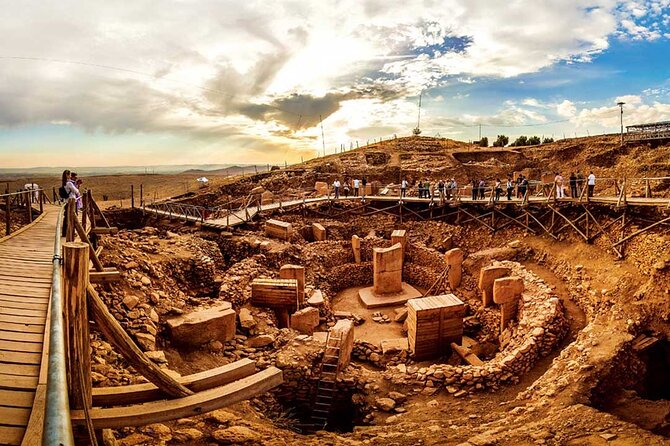
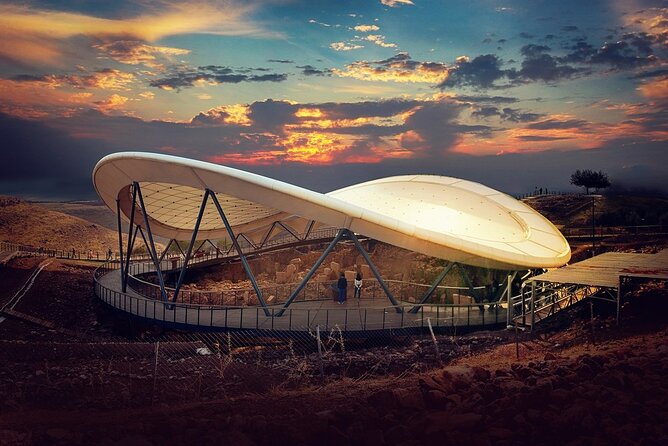
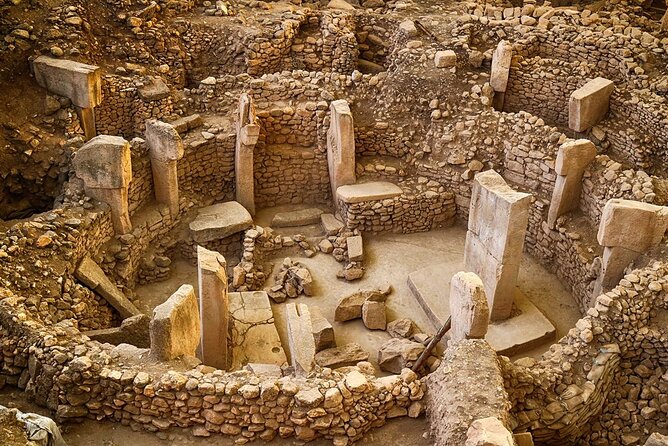
Now for the big one: Göbekli Tepe. The tour calls it one of the world’s most important archaeological sites, dating back as far as 12,000 years. It’s described as built before writing or pottery, and often framed as the world’s oldest known ritual complex.
What I like about having a dedicated 2-hour block is that it’s long enough to slow down. You can take in the layout and carvings without feeling like you’re being herded. This is one of those places where a good guide matters, because the meaning isn’t obvious when you first walk in.
Also note the way the tour signals connections. You’ll have museum context from Şanlıurfa, then you’ll go to Göbekli Tepe itself. That makes the site feel less like an isolated headline and more like a piece of a bigger puzzle.
If you care about the human story, this stop is the one that tends to linger. Even when you can’t fully grasp how something so old was imagined and built, you can feel the scale. And that feeling sticks.
What you’ll be dealing with: pace, weather, and physical effort
This plan is best for people who can handle long days and early starts. There’s a stated requirement of moderate physical fitness level, which fits the reality of:
- airport schedules
- walking within archaeological sites and museums
- summit timing at Nemrut
- a full day of driving between sites
Weather is also part of the package. The experience requires good weather, and if conditions are poor, you’ll be offered a different date or a full refund. That’s worth taking seriously, because Nemrut in bad conditions isn’t a place you rush.
For comfort, pack for wind and temperature swings. Nemrut can feel cold once the sun drops, and the rest of the region can get hot in the daytime. One review notes that because it was hot, the group was given plenty of free drinks. Even with that, you should bring water habits into your own routine.
If you’re sensitive to motion sickness, don’t ignore it. The road conditions can be windy on these drives, and you’ll want to be prepared before the day starts rolling.
Small-group guiding: the difference between seeing and understanding
The strongest compliments in the reviews center on the guides. Names like Sercan and Kerem show up with high praise for knowledge and passion, and multiple comments emphasize that explanations were clear and that the guides made it easy to access places you’d struggle to find on your own.
That matters because these sites reward attention. Nemrut needs context to read the statue system. Göbekli Tepe benefits from guided interpretation to connect carvings to purpose. Even stops like Karakuş Tumulus become more rewarding when the guide explains what you’re looking at and what it likely meant.
The other guiding win is safety and organization. Several notes highlight that the experience felt safe and well run from start to finish, including transportation. When you’re dealing with remote sites and time-sensitive views, organization is not a small detail.
This is the kind of tour where you’ll likely remember the stories as much as the stones.
Should you book this Göbekli Tepe and Nemrut combo?
I’d book it if you want two heavyweight ancient stops in one trip and you prefer guided structure over DIY puzzle-solving. The combination makes sense: you get Göbekli Tepe’s pre-writing ritual world, then Nemrut’s royal summit theatre, then you round it out with Şanlıurfa museums and the Abraham-linked sites.
I’d think twice if you:
- get motion sick easily on windy roads
- dislike packed days where you’re moving often
- need a perfectly flexible weather plan (the tour does depend on good conditions)
If your ideal trip is a mix of big set pieces and solid explanations, this one is a strong match—especially at a time window where you’d otherwise be losing half your day to planning.
FAQ
What’s the tour duration?
The tour runs for about 2 days, described as 2 days (approx.) with an overnight plan.
Is pickup offered from Istanbul?
Yes. Pickup is offered from locations within the specified pickup area, with a start time of 8:00 am.
What stops are included across the two days?
You visit Adıyaman-area sites including Karakuş Tumulus, Cendere Bridge, Arsemia Ancient City, and Mount Nemrut. On day two you explore Şanlıurfa, including the archaeology and mosaic museums, Aynzelha/Balıklıgöl, and then Göbekli Tepe (Potbelly Hill).
What’s included in the price?
Included items are breakfast, all airport transfers, domestic roundtrip flights, museum tickets and listed admissions (Nemrut Mountain National Park, Karakuş Tumulus, Arsemia, Sanliurfa museum sites, Göbekli Tepe, Balıklıgöl), plus lunch (2).
What language is the tour offered in?
The tour is offered in English.
Do I need good weather?
Yes. The experience requires good weather. If it’s canceled due to poor weather, you’ll be offered a different date or a full refund.
How physically demanding is it?
The tour notes a moderate physical fitness level is required. It’s a multi-site program with walking at museums and archaeological areas.