REVIEW · ISTANBUL CITY HIGHLIGHTS & PRIVATE TOURS
Exclusive Istanbul Old City Tour: Best Stories with Dr. Sib
Book on Viator →Operated by Sib · Bookable on Viator
Blue Mosque isn’t just a stop. It’s the anchor for a 2-hour Old City route that strings together Ottoman, Byzantine, Roman, and Ancient Greek threads in one focused walk with Dr. Sib. I love how the tour makes famous landmarks feel personal, not like a checklist. The second thing I like is the small group size (max 20), which keeps questions and details from getting lost.
The one thing to keep in mind: this is built around active visiting inside major sites, so you’ll want to plan for standing, moving, and following the timing closely—especially if you’re sensitive to crowds at the busiest photo times.
In This Review
- Key takeaways before you go
- Why This 2-Hour Sultanahmet Loop Feels Like a Win
- Value and Cost: What $27 Buys You in the Old City
- Meeting at Theodosius Obelisk: Getting Oriented Fast
- Dr. Sib’s Style: Best Stories, Not Just Sightseeing
- Blue Mosque (Sultan Ahmed Mosque): Tiles, Domes, and Ottoman Meaning
- Theodosius Obelisk: A 3,500-Year-Old Starting Point
- Serpent Column and the Hippodrome Story: Greek Victory as a Reminder
- Sultanahmet Square and the Urban Layers Around It
- What I’d Watch For During the Walk (So You Get More Out of It)
- Timing, Tickets, and Comfort: How to Plan Your Day
- Who This Tour Fits Best
- Should You Book This Exclusive Istanbul Old City Tour with Dr. Sib?
- FAQ
- How long is the Exclusive Istanbul Old City Tour?
- What sights will I see on the tour?
- Is there an admission fee for the Blue Mosque and Obelisk?
- Where do I meet the guide?
- How big is the group?
- Is the tour near public transportation?
- What is the price per person?
- Can I cancel for free?
Key takeaways before you go
- Dr. Sib’s storytelling focus: you’ll connect monuments to the people and politics behind them
- Blue Mosque (Sultan Ahmed Mosque) as the centerpiece with interior tile details and Ottoman context
- Hippodrome-area monuments in one walk, including the Theodosius Obelisk and Serpent Column
- Free entry noted for key sights: Blue Mosque and the Obelisk have admission ticket listed as free
- Limited to 20 people, which keeps the vibe calm and conversational
Why This 2-Hour Sultanahmet Loop Feels Like a Win
If you only have a short window in Istanbul’s Old City, this kind of tour is exactly the move. You’re not trying to cram in every square inch of Sultanahmet. Instead, you get a tight route built around the core sights where the city’s layers overlap—Ottoman grandeur here, older empires echoing nearby, and Roman-era markers that make the streets feel mapped by time itself.
I like that the timing is realistic. About two hours is long enough to learn what you’re looking at, but short enough that you’re not stuck on your feet while information fades. That matters because the difference between a good visit and a forgettable one is often what happens in your first 30 minutes. Once you understand the why behind the landmarks, you’ll look longer and feel smarter without trying.
Also, this tour is “exclusive” in the practical sense: the group cap is 20 travelers, and the tour is designed for small-group interpretation. That gives you breathing room to ask the things that usually get skipped on big bus tours—like what a specific monument is referencing, or why it’s placed where it is.
You can also read our reviews of more city tours in Istanbul

Value and Cost: What $27 Buys You in the Old City
At $27 per person, the pricing sits in the sweet spot for a guided Old City experience. You’re paying for the guide’s interpretation and the structure of the walk—not for a long, complicated itinerary that drags. The tour is short, and it centers on some of the best-known sights in Istanbul, including the Blue Mosque and the Hippodrome-area monuments.
Two practical value boosts come from the details provided:
- The Blue Mosque admission ticket is listed as free for this tour.
- The Obelisk of Theodosius admission is listed as free too.
Even if you still end up spending money elsewhere in the area, the core “big-ticket” entries in this route won’t add to your baseline cost. That helps you plan a smoother day and reduces the stress of figuring out fees on the fly.
One more factor: the tour offers mobile tickets and group discounts. That usually means less friction day-of and less time spent figuring out logistics.
Meeting at Theodosius Obelisk: Getting Oriented Fast
You meet at the Obelisk of Theodosius, in Sultanahmet (Binbirdirek, 34122 Fatih). That’s a smart anchor point because it places you right in the historical heart of the Old City. It also means you’re starting where the monuments are close enough to connect in your mind—rather than walking all over town before anything clicks.
The tour also notes it’s near public transportation, which helps if you’re chaining it with other stops in Istanbul. The area is one of those places where you’ll likely be doing short transfers anyway, so being able to reach the meeting point without a complicated plan is genuinely helpful.
Dr. Sib’s Style: Best Stories, Not Just Sightseeing
The biggest reason this tour works is the guide approach. Dr. Sib’s role isn’t just to recite facts. The tour is framed around interpreting history through structures—so you’re learning how people used these buildings and monuments, and why later eras kept adapting the same space.
You can expect a guided pace where each stop builds on the last. You go from the emotional and visual impact of the Blue Mosque to the “story of power” vibe around the Hippodrome area, where older symbols and imperial statements sit in the open air. That flow helps you stop treating Istanbul like disconnected postcards.
The reviews we received also highlight that Sib is gracious and highly informed—so if you care about understanding, not just photographing, you’ll likely appreciate the way questions and context are handled.
Blue Mosque (Sultan Ahmed Mosque): Tiles, Domes, and Ottoman Meaning
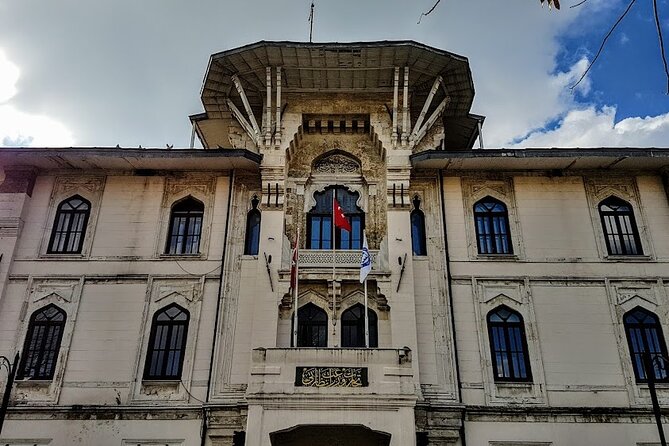
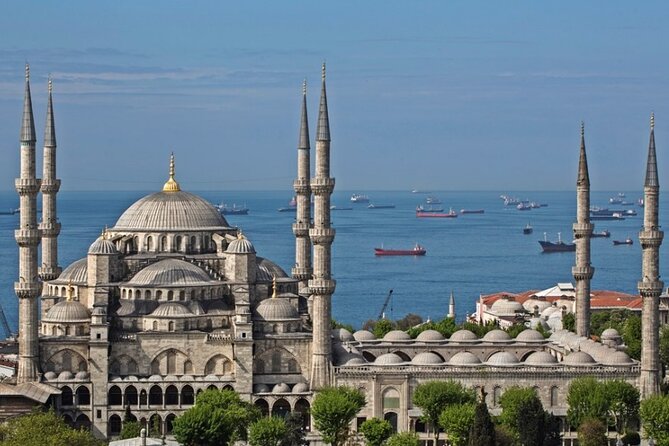
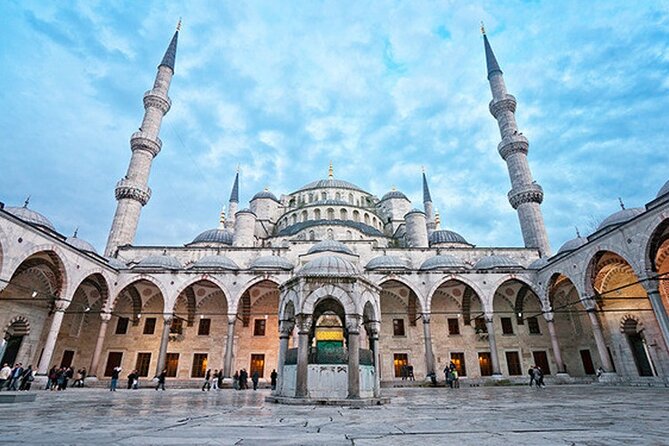
The tour’s first major stop is the Blue Mosque, also called Sultan Ahmed Mosque. It’s an Ottoman-era imperial mosque located in Istanbul, and it’s also a functioning place of worship—so you’ll want to be respectful with your volume and movement. This isn’t an empty museum set. People use it.
Construction details matter here because they connect beauty to ambition. The mosque was built between 1609 and 1616 during the rule of Ahmed I. Understanding that timeline helps you see it as a statement of authority and identity, not just an architectural masterpiece.
Here’s what you’ll likely focus on during the visit:
- The Külliye around the mosque includes Ahmed’s tomb, plus a madrasah and a hospice. That means the complex wasn’t only about worship—it supported education and care too.
- The interior has hand-painted blue tiles. The blue isn’t a random color choice; it’s part of the mosque’s visual language.
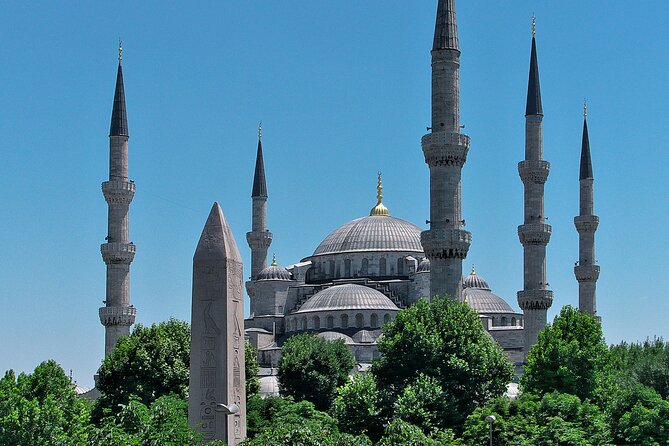
- The mosque’s design includes five main domes, six minarets, and eight secondary domes. Those numbers help you “read” the structure instead of just admiring it.
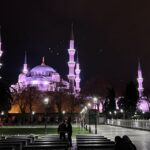
The tour also notes that at night the mosque is framed by lighting that makes it appear bathed in blue. Even if you’re visiting daytime, that description is useful because it explains why the building looks so dramatic from certain angles—what you’re seeing is designed to be seen.
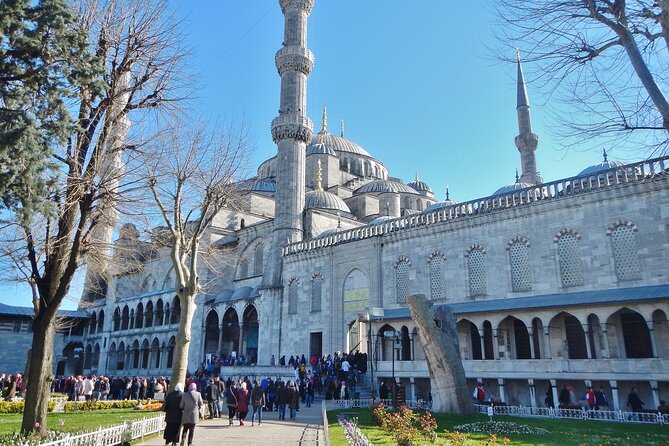
Possible drawback: because it’s a functioning mosque and a major tourist magnet, it can feel busy. The tour timing gives you about 40 minutes here, which is usually enough to see what matters and ask your questions, but it’s not a slow, lingering art class.





Theodosius Obelisk: A 3,500-Year-Old Starting Point

After the mosque, you move to the Obelisk of Theodosius, listed as 3500 years old Egyptian. This is one of those monuments where your brain needs context: it’s Egyptian in origin but placed in the Roman/Byzantine-world rhythm of Istanbul. When you understand that it traveled through layers of power, the stone stops being “just an old thing” and becomes a clue.
The tour notes 10 minutes here, with admission ticket free. That time is short on purpose. The guide’s job is to point out what to look for so you don’t waste those minutes staring at the wrong details.
If you like history that’s physical—real objects you can circle and stand near—this stop delivers well. It also sets you up for the surrounding Hippodrome-area symbols, where the theme becomes: empires borrowing, reusing, and re-signaling power.
Serpent Column and the Hippodrome Story: Greek Victory as a Reminder
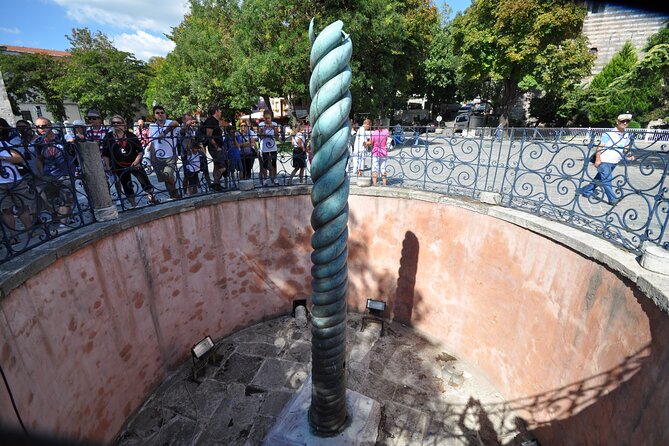
Next comes the Serpent Column, a monument created by ancient Greeks to symbolize their first victory against the Persian army in the war of Platea. That’s a fascinating detail because it ties a specific battle outcome to a physical monument that later civilizations still treated as meaningful.
This part of the route matters because it turns Istanbul into a “palimpsest” you can walk through. You’re not just seeing Ottoman buildings. You’re also standing in the kind of civic space where older symbols were displayed, remembered, and repurposed.
Serpent Column is the kind of thing where a guide helps you interpret the meaning fast. Without context, it can look like decorative archaeology. With context, you understand it as a public statement—a trophy-like reminder of triumph.
Sultanahmet Square and the Urban Layers Around It
From there, the tour moves through Sultanahmet Square, a zone where the street plan and the placement of monuments help you feel the city’s long continuity. This stop isn’t only about one building. It’s about how the open space functions as a stage for what came before.
Then the route layers in multiple landmarks that each represent a different era:
- A fountain built by German king Kaiser Wilhelm II as a gift for the Ottoman king before his visit
- A 1500 years old temple (not named in the tour details, but treated as a key aged landmark in the area)
- Km 0 in Roman times, a reference point that connects the city’s roads and travel origins to the Roman world
- A 5 centuries old Ottoman hamam, which adds everyday-life context by reminding you that this area wasn’t only political and ceremonial—it was also practical and social
- Hipodrom square, which is the broader setting tying together the monumental display
The big value here is not memorizing each date. It’s learning how to see the pattern: Istanbul repeatedly re-anchors itself using what’s already in place. That’s why you’ll likely feel less lost while walking. You’re starting to map the city in your head.
What I’d Watch For During the Walk (So You Get More Out of It)
Because this tour covers multiple major points in a relatively short time, you’ll get the most out of it if you treat each stop as a “chapter,” not a photo break.
A few practical ways to do that:
- Arrive ready for mosque etiquette if you’re entering or viewing inside the Blue Mosque area. You’ll get better attention and a smoother experience.
- Take a quick moment before each stop to orient yourself: where is the main structure, and what direction are you facing? It helps when your guide ties the building to the story.
- If you’re the type who likes to ask questions, this is a good size group for it. With max 20, you’re more likely to get answers instead of being brushed past.
Also, keep your expectations aligned with the format. This is a guided interpretation walk with defined time boxes at the main monuments. You’re not getting an all-day museum schedule. You’re getting a smart “see it, understand it, move on” approach.
Timing, Tickets, and Comfort: How to Plan Your Day
The tour is about 2 hours and includes a range of exterior viewing plus time at the Blue Mosque. The Blue Mosque stop is listed at 40 minutes. The Obelisk stop is 10 minutes. The rest of the time is distributed across Sultanahmet Square and the Hippodrome-area points.
That matters because it affects what you can pair it with. If you’ve got another timed activity later the same day, this tour’s compact length helps you keep control of your schedule.
On tickets: the details provided list admission ticket free for the Blue Mosque and the Obelisk. You should still be prepared for normal on-site procedures since the Blue Mosque is active and heavily visited, but you’re not starting from a “pay entrance fee just to look” situation for these core points.
The tour also offers free cancellation, which you can treat as flexibility if your plans are shifting. (I’d still avoid last-minute changes unless you’re sure you can adjust.)
Who This Tour Fits Best
This is a strong match if you want:
- A guided route through Sultanahmet without spending hours bouncing between far-apart sights
- A meaningful focus on the Blue Mosque, plus nearby monumental storytelling sites
- A smaller group environment where the guide can explain connections clearly
It’s also a good option if you’re someone who enjoys the “layered city” idea—Ottoman + Roman + ancient Greek cues in one compact walk. And if you’re traveling with limited time, the route makes it easier to get your bearings quickly.
If you’re the kind of traveler who wants a long, slow, totally unhurried museum-style visit at each stop, you might feel rushed at Blue Mosque’s 40-minute window. In that case, you could pair this with independent time after the tour.
Should You Book This Exclusive Istanbul Old City Tour with Dr. Sib?
I’d book it if you care about understanding what you’re seeing and you want that understanding delivered in a tight, efficient walk. At $27 for two hours, with free entry listed for the Blue Mosque and Theodosius Obelisk, it offers solid value and a route that’s built for meaning, not just movement.
If you’re a first-time Istanbul visitor, this also helps you set up the rest of your day. You’ll leave with a map in your head: where the big Ottoman symbol sits, how the Hippodrome area echoes older eras, and why those monuments cluster in the same space.
FAQ
How long is the Exclusive Istanbul Old City Tour?
It runs for about 2 hours.
What sights will I see on the tour?
You’ll visit the Blue Mosque, the Obelisk of Theodosius, a fountain built by Kaiser Wilhelm II, the Serpent Column, Sultanahmet Square, a 1500-years-old temple, Km 0 in Roman times, a 5-centuries-old Ottoman hamam, and Hipodrom square.
Is there an admission fee for the Blue Mosque and Obelisk?
The tour details list admission tickets as free for the Blue Mosque and the Obelisk of Theodosius.
Where do I meet the guide?
You meet at the Obelisk of Theodosius, Sultanahmet, Binbirdirek, 34122 Fatih/İstanbul, Türkiye.
How big is the group?
The tour has a maximum of 20 travelers.
Is the tour near public transportation?
Yes, it’s listed as near public transportation.
What is the price per person?
The price is $27.00 per person.
Can I cancel for free?
Yes. You can cancel up to 24 hours in advance for a full refund.