REVIEW · BOSPHORUS SUNSET & YACHT CRUISES
Bosphorus Sunset Cruise on Luxury Yacht with Transfers
Book on Viator →Operated by Golden City Tours · Bookable on Viator
Two hours on the Bosphorus feels like a whole vacation. You’ll glide past grand shoreline landmarks, with Bosphorus sunset views and an English-speaking guide keeping the sights easy to place. It’s the kind of outing where you can actually relax while the city keeps moving around you.
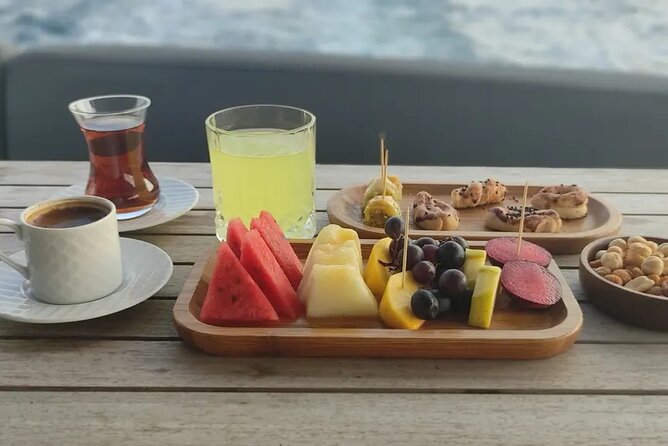
I love the round-trip transfers. Depending on where you’re staying, the pickup is organized and you’re back at the meeting point afterward, so you’re not hunting for piers and struggling with timing. I also like the onboard food setup: cookies and baklava, a fresh fruit plate, and homemade lemonade with fresh mint, plus water and tea/coffee.
One thing to consider: the boat’s bathroom and deck seating can feel tight at peak moments, especially if it’s chilly and everyone wants to cluster indoors. If you’re prone to seasickness or have strong motion sensitivity, this cruise is also not your best bet.
In This Review
- Key things I’d bet on before you book
- What you get in 2 hours: palaces, bridges, and Europe-to-Asia views
- Dolmabahçe Palace and Cırağan Palace: the European-side showpieces
- Ortaköy Mosque, the Bosphorus Bridge, and the shoreline photo run
- Kuruçeşme, Bebek, and Arnavutköy: stylish neighborhoods without the walking tax
- Rumeli Hisarı, Fatih Sultan Mehmet Bridge, and Anadolu Hisarı
- Asian-shore palaces: Küçüksu, Kuleli, Beylerbeyi, and Üsküdar
- Maiden’s Tower and the skyline: why this cruise feels longer than it is
- Golden Horn detour: Galata Tower, Galata Bridge, and Galataport
- Yacht comfort, snacks, and guide talk: where the price actually goes
- Price and logistics: getting picked up, getting out, and seeing a lot
- Should you book this Bosphorus sunset yacht?
Key things I’d bet on before you book
- Hotel-area transfers reduce the hassle on both ends of the ride
- Dolmabahçe and Cırağan deliver real “palace waterfront” drama without standing in crowds
- Ortaköy Mosque and the Bosphorus Bridge are built for classic sunset photos
- Rumeli Hisarı and Anadolu Hisarı add fortress-and-history scale to the scenery
- Asian-shore stops like Beylerbeyi Palace and Üsküdar keep the route interesting
- Blankets, hot tea, and sweet snacks make the evening feel comfortable, even when it turns cool
What you get in 2 hours: palaces, bridges, and Europe-to-Asia views
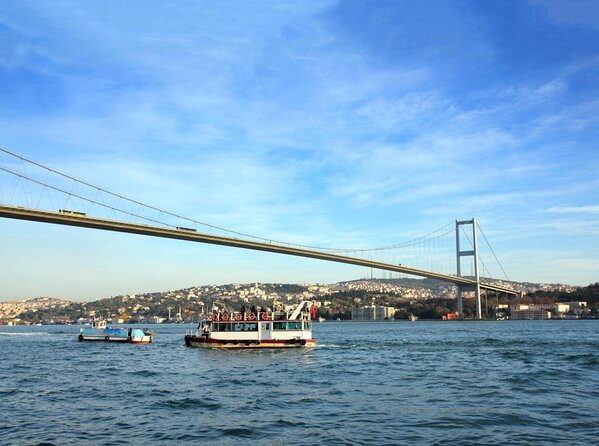
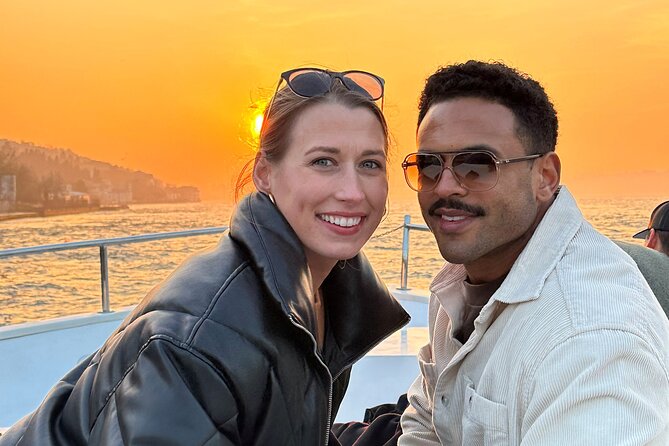
This is a 2-hour luxury yacht cruise designed to cover a lot of Istanbul’s waterfront in one smooth evening. The Bosphorus is a UNESCO World Heritage Site, and the route gives you the best kind of sightseeing: you watch big landmarks slide by while the light softens and the city starts glowing.
You’ll get an onboard guide (English), plus commentary timed for what you’re seeing right then. That matters because the Bosphorus can look “just scenic” if you don’t have context. Here, you get the story behind the palaces, forts, and bridges as they appear.
The group is kept to a maximum of 40 travelers, which helps the vibe stay calm instead of chaotic. And since there’s an interior cabin, you’re not stuck outside if clouds roll in or the wind picks up. This is especially nice for families—there’s enough going on visually to satisfy kids, but the explanations keep it worthwhile for adults.
You can also read our reviews of more boat tours in Istanbul
Dolmabahçe Palace and Cırağan Palace: the European-side showpieces
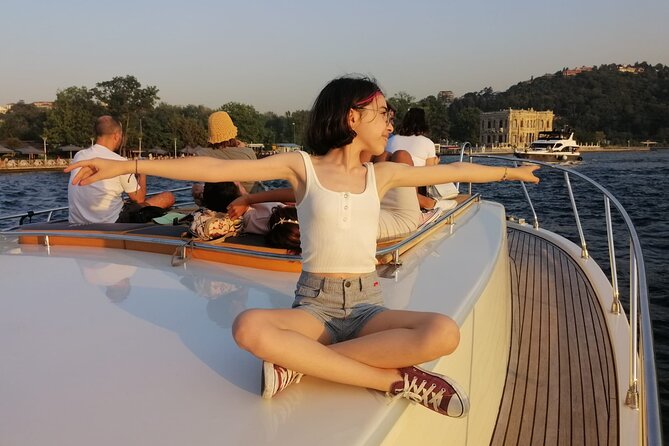
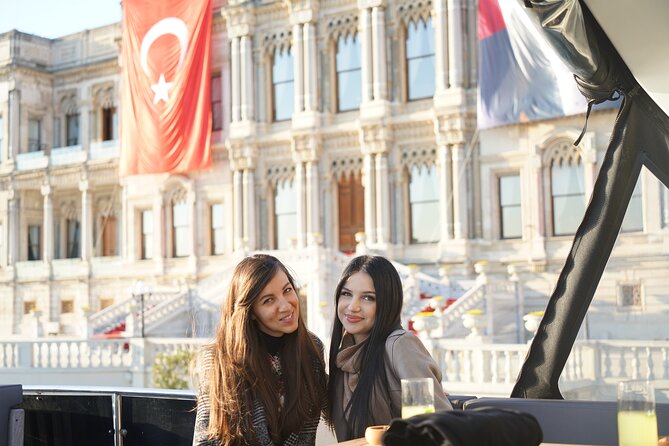
The cruise highlights start with the kind of Istanbul scenery that’s hard to replicate any other way: the European shore’s palace waterfront. Dolmabahçe Palace is a star for a reason—built between 1843 and 1856 by Karabet Balyan (court architect), it mixes European architectural styles with Ottoman power. It’s also famous for scale: 285 rooms and 43 halls, plus original decorations, furniture, and silk carpets and curtains that survived intact.
What I like about seeing it from the water: the palace sits in a way that feels ceremonial. From the Bosphorus, you get a sense of how the waterfront used to function as a major corridor of influence and travel—not just scenery.
Then Cırağan Palace comes in as a second act of waterfront opulence. Commissioned by Sultan Abdulaziz and designed by architect Sarkis Balyan, the palace was completed in 1871 and is made of marble, spread across about 80,000 square meters. Today it operates as a Kempinski luxury hotel, so the old grandeur has a modern use.
From a practical standpoint, you get all of this without paying for separate entry tickets or spending your evening walking between major stops. The trade-off is that you’re viewing from the water, not touring the interiors—so if you want museum-level access, you’ll still want separate visits later.
Ortaköy Mosque, the Bosphorus Bridge, and the shoreline photo run
Ortaköy is where the Bosphorus turns into something street-level and social. The neighborhood includes the Ortaköy Bazaar, with shops, cafes, and restaurants, and it comes alive as the day goes on. Early morning can feel less exciting, but during sunset it’s usually all about atmosphere and views rather than browsing.
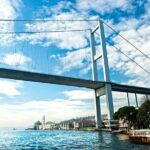
The real landmark hit is the Ortaköy Mosque, officially the Büyük Mecidiye Mosque. It’s a 19th-century Ottoman-era building in an elegant Baroque style, and its waterfront setting makes it instantly photogenic. One of the best features here is that you’re also in the orbit of the Bosphorus Bridge, which creates that unmistakable “Istanbul at dusk” composition.
And speaking of the bridge: the Bosphorus Bridge is one of the two suspension bridges in the strait and has a special claim to fame—it connects Europe to Asia, and it’s the first bridge built across the Bosphorus. Seeing it from the water gives you more scale than a roadside viewpoint.
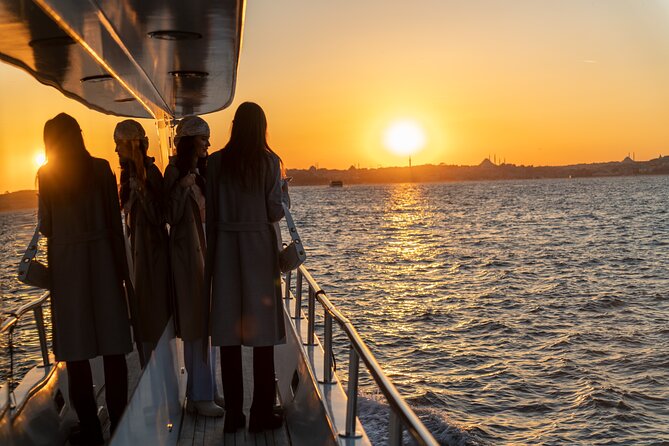
A small consideration: sunset photos are timing-sensitive. If clouds or light rain show up, you may not get the textbook orange horizon. Still, the cruise is calming even under gray skies, because the city lights and water reflections can take over the show.
Kuruçeşme, Bebek, and Arnavutköy: stylish neighborhoods without the walking tax
After the landmark cluster around Ortaköy, the cruise shifts into “neighborhood rhythm.” This is where you feel the Bosphorus as a live, residential-to-nightlife corridor.
- Kuruçeşme is known for its waterfront mansions, luxury venues, and nightlife energy, with wide sea views that work well for a slow photo stop-by-stop glance.
- Bebek has the laid-back-luxury feel people associate with wealthy coastal districts. It’s also surrounded by areas like Arnavutköy and Etiler, and it includes waterside mansions and institutions such as Bogazici University.
- Arnavutköy adds the cozy, authentic edge with colorful historic wooden houses and small cafés along the shore.
What’s valuable here is that you’re not paying Istanbul prices in time or energy. You’re not hopping between neighborhoods with taxis while the sun drops. You just look out, let the shoreline geography make sense, and save your legs for another day.
If you’re sensitive to cold, this segment matters. Wind can change fast on open water. The good news: the cruise includes warmth support like blankets and hot tea if the weather turns.
Rumeli Hisarı, Fatih Sultan Mehmet Bridge, and Anadolu Hisarı
This part of the Bosphorus route turns more dramatic. You’re no longer just seeing residences and palaces—you’re seeing how Istanbul defended itself.
Rumeli Hisarı (Rumeli Fortress) sits across from Anadolu Hisarı at the narrowest point of the Bosphorus. Construction began in 1453 on Sultan Mehmet the Conqueror’s orders and finished in just three months. Before the conquest, it helped protect against naval attacks; after, it functioned as an inspection point for maritime traffic. Today it serves as an open-air theater and museum.
Then you’ll see the Fatih Sultan Mehmet Bridge, the second Bosphorus bridge. It began construction in 1986 and opened on July 3, 1988. It’s a steel suspension bridge that carries a large portion of trans-Bosphorus traffic, and it has become part of Istanbul’s skyline identity.
On the Asian side, Anadolu Hisarı (built by Beyazit I in 1395) comes into view. It includes a citadel and exterior castle walls. After Istanbul’s conquest, it lost strategic importance and became a military hospital. Restoration happened between 1991 and 1993, and while it was converted into a museum, it’s not open to the public in the usual way. You can visit the outer walls as an open-air museum area, and the road runs through the zone.
This is the segment I’d recommend for anyone who loves seeing how Istanbul’s geography shaped power. You get defense architecture and modern infrastructure in the same line of sight.
You can also read our reviews of more tours and experiences in Istanbul


Asian-shore palaces: Küçüksu, Kuleli, Beylerbeyi, and Üsküdar
The cruise keeps crossing the Istanbul emotional temperature: from palace wealth to Ottoman summer retreat vibes.
You may pass the Küçüksu Palace, a smaller Ottoman summer palace ordered by Sultan Abdulmecit and designed by architect Nikogos Balyan. It’s remembered for its Bosphorus views and for fine internal details like furniture, paintings, carpets, and delicate craftsmanship. In the Republic era, it became a museum.
You’ll also see Kuleli Military High School, an iconic historical building on the Asian shore with an elegant waterfront setting and ties to Istanbul’s military-and-education heritage.
Next is Beylerbeyi Palace, one of the most impressive “from-the-water” Ottoman-complex sightings. Built in the 1860s and designed by Sarkis Balyan, it sits right under the Bosphorus Bridge. The palace mixes Renaissance, Baroque, and other styles from both East and West. The main building has two storeys with stone construction on a high basement, and it includes Imperial Mabeyn on one side and Valide Sultan’s Apartment on the other. The complex includes 6 halls, 24 rooms, a hamam, and a bathroom, plus a lily pond and large garden.
Then you reach Üsküdar, which is a historic district with seaside promenades, traditional neighborhoods, and mosques. It’s the kind of area where everyday Istanbul feels close to the historical waterfront.
Maiden’s Tower and the skyline: why this cruise feels longer than it is
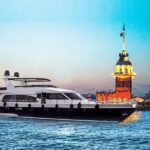
The route includes a view of Maiden’s Tower (Kız Kulesi). This nine-story tower was built by the Genoese in 1348, and it stands 66.90 meters tall. It has been used over time as a fire observatory and even as a jail. One of the best-known stories involves Hezarfen Ahmet Çelebi in 1632, when he glided across the Bosphorus from Galata’s top using self-made wings.
The tower also has a storm history: in 1875, the conic roof was destroyed, and it was only restored in the 1960s, with the interior replaced by concrete. Today it’s open to the public, with a restaurant and cafe on the upper floor.
Why it works on this cruise: Maiden’s Tower sits in your mind while you’re moving. You get the silhouette and then later you see it again in the flow of Istanbul’s waterfront, which makes the skyline feel more connected rather than random.
This is also where the cruise earns its “longer than 2 hours” feeling. You’re watching the city come alive, and the water keeps giving you new angles without you changing plans.
Golden Horn detour: Galata Tower, Galata Bridge, and Galataport
On the same evening, the cruise includes sights around the Golden Horn area, which is a big reason it doesn’t feel like a one-note Bosphorus ride.
You’ll see Galata Tower, built by the Genoese in 1348. It was the tallest building in the city when it was constructed, and in Ottoman times it served multiple roles such as a fire observatory and jail. The tower’s restored conic cap in the 1960s helped bring back its classic outline, and today the tower is open to the public with a restaurant and cafe near the top.
Then comes Galata Bridge (Galata Köprüsü). Its story begins in 1845 and it has been rebuilt over the years. After a fire in 1992, a new bridge was built, and the older bridge was moved to Halic. The layout gives it that night-meets-life vibe: restaurants and cafes below, with tram and pedestrian traffic above. In the evening it’s an excellent place for photos because the bridge acts like a framing device over the water.
Finally, the cruise ends near Galataport, a modern port and social hub in Karaköy. It blends modern design with the area’s historic feel, with restaurants, cafes, shops, and cultural venues. There’s also an underground terminal that manages cruise ship traffic.
If you like ending a trip with a mix of old and new, Galataport is a strong finish.
Yacht comfort, snacks, and guide talk: where the price actually goes
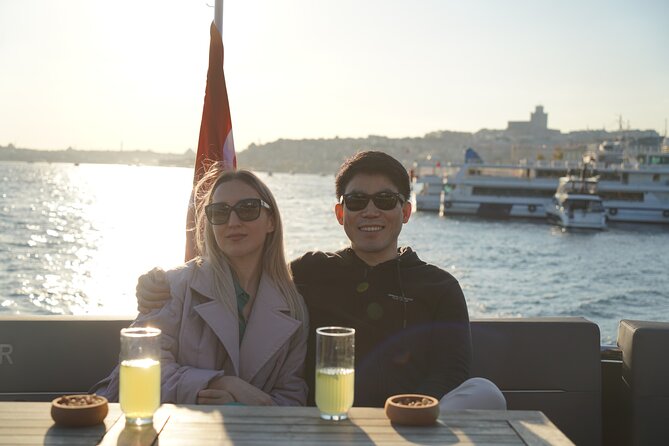
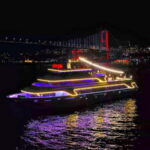
This is the part that makes the tour feel like a value. The cruise is billed as luxury yacht time, and the small details support that.
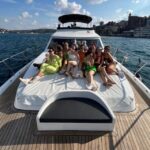
You get an onboard restroom, plus an interior cabin for shelter when the wind or rain appears. On chilly days, blankets and hot tea can make a huge difference, and you don’t have to fight the weather to enjoy the views.
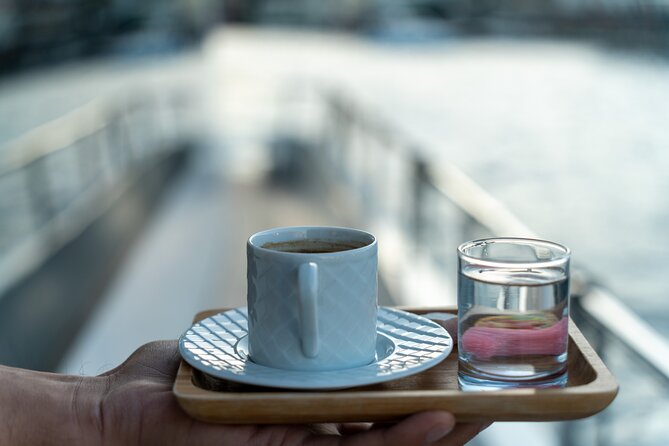
Food is part of the experience, not a quick afterthought. You’ll have cookies and baklava served aboard, a fresh seasonal fruit plate, and water plus tea and/or coffee. Drinks include homemade lemonade with fresh mint. Alcoholic beverages are not included, so if that’s your thing, plan to choose something else later.
Service quality matters most during sunset because everyone wants the rail at the same moment. I found the setup keeps the group moving: you can take photos standing by the waterline without feeling like you’re blocking people.
One caution from experience on similar boats: bathroom facilities can feel like the bottleneck when it’s cold and everyone wants warmth indoors. In this case, the restroom exists onboard, but it’s worth knowing that the onboard comfort level is practical rather than hotel-spacious.
Price and logistics: getting picked up, getting out, and seeing a lot
At $60.46 per person for about 2 hours, the value is in what you avoid: time lost to transit and planning. You also get a structured route that combines major palaces, iconic mosques, fortifications, and bridges—plus snacks—without switching tours repeatedly.
Logistics are simplified by transfers. Your pickup depends on where you’re staying:
- If you’re in the Taksim area, the meeting point is in front of THE MARMARA TAKSİM HOTEL.
- If you’re near Sultanahmet, the meeting point is AKBIYIK BUS STATION.
The main start point is Kabataş Square (Kabataş, Meclis-i Mebusan Cd.). You’ll also be told the departure time, and the vehicle has a GOLDEN CITY TOURS board out front.
A smart tip: dress for wind, not for sun. Sunset can feel mild on land and then turn cool fast on the water. If you have vertigo or are prone to seasickness, this cruise is not recommended.
Should you book this Bosphorus sunset yacht?
Book it if you want Istanbul waterfront highlights in one evening without turning your day into a checklist. This is a strong choice for families, couples, and anyone who wants palace-and-bridge views with less walking and more calm.
Skip it if you need museum-style interior access, or if motion makes you uncomfortable. Also consider that deck seating and the onboard bathroom are practical, not huge, so bring patience if you’re traveling during peak conditions.
If you’re aiming for a classic Istanbul sunset mood—Europe, Asia, and city lights working together—this cruise is a solid bet for the money.