REVIEW · ISTANBUL
Tour to Byzantium
Book on GetYourGuide →Operated by Gray Line Turkey · Bookable on GetYourGuide
The Golden Horn sets the tone fast. This tour stitches together major Byzantine landmarks in a tight route, so you actually see how Constantinople worked, not just read about it. I especially love the way the walk connects Byzantine walls with Orthodox worship sites, and I also like the focus on big structures you can spot in your own photos.
Two stops make the experience feel real right away: the Church of Panagia of Blachernae with its holy-water reputation, and the weirdly specific prison architecture of Anemas Dungeons. One thing to consider: St. Savior in Chora (now the Kariye Museum) is a view from the outside only, so if you were hoping for interior mosaics, plan accordingly.
This is priced at $85 per person and runs on a small, guided schedule, so you’ll want your expectations tuned to a guided walk-and-see format, not an all-day museum marathon.
In This Review
- Key highlights you should care about
- Golden Horn to Byzantine walls: why this route clicks in 4 hours
- Fener’s Patriarchate area: seeing Orthodox Christianity’s seat in the city map
- Panagia of Blachernae and the legend of Hagiasma holy water
- St. Savior in Chora (Kariye Museum): mosaics and frescoes, but outside only
- Anemas Dungeons and Tekfur Palace: the palace-to-prison story in stone
- Byzantine city walls: seeing scale in ruins of 22 kilometers
- Price and value: is $85 per person fair for this kind of day?
- Timing, group size, and making the most of the schedule
- Who this tour suits best (and who should choose something else)
- Should you book the Tour to Byzantium?
- FAQ
- How much does the Tour to Byzantium cost?
- How long is the tour?
- What sites are visited?
- Is there an interior visit to the Kariye Museum?
- What languages are the guides?
- What’s included in the price?
- Do you get hotel drop-off?
- What do I need to bring?
- What are the minimum group requirements, and when is departure guaranteed?
- Can I cancel for a refund?
- Are pets allowed?
Key highlights you should care about
- Golden Horn orientation: hornlike harbor shape and golden reflections as the route starts
- Orthodox center in Fener: the Patriarchate area tied to Constantine-era Christianity
- Panagia of Blachernae details: Hagiasma holy water and Hagion Lousma sacred bath
- Kariye Museum viewed from outside: St. Savior in Chora with mosaics and fresco context, no interior visit
- Anemas Dungeons structure: 14 dungeons, each with basements below sea-level
- Tekfur Palace next to the walls: a surviving pavilion from the Blachernae Palace complex
Golden Horn to Byzantine walls: why this route clicks in 4 hours
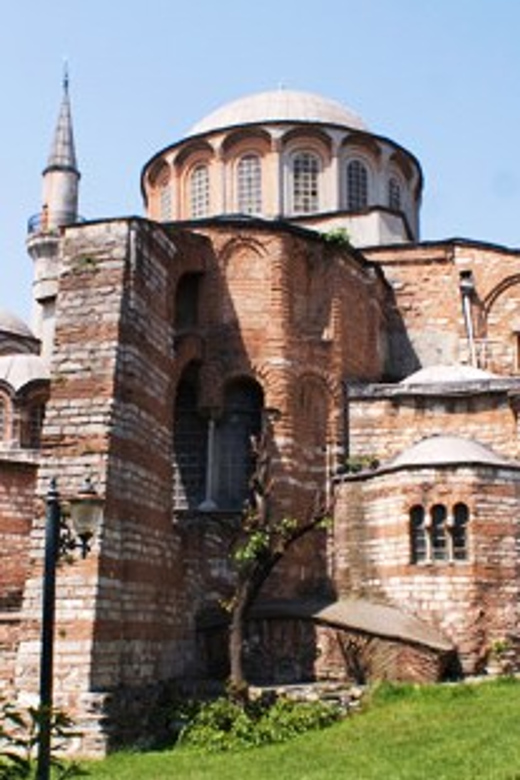
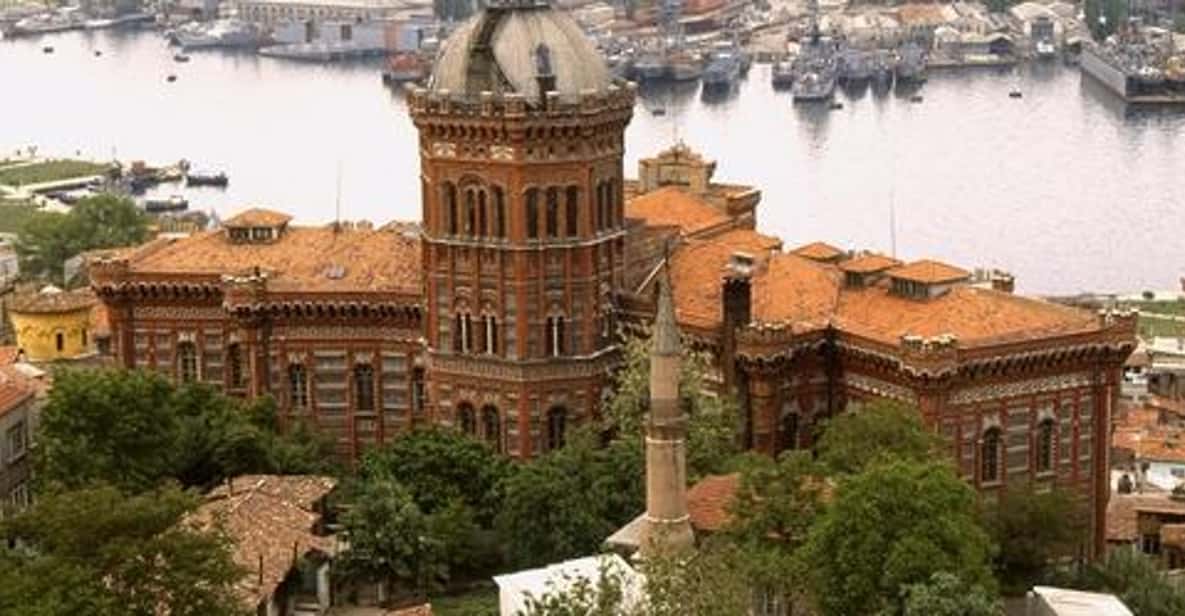
If you want a quick, high-impact way to understand Byzantine Istanbul, this tour is built for you. You start at the Golden Horn, the famous natural harbor the Byzantines named for its hornlike shape. The idea is simple: get oriented first, then spend the next hours walking through places that shaped power, faith, and defense.
I like that the itinerary doesn’t just toss you between photo stops. The sites connect by theme. You see religious authority (Fener and Blachernae), then you move to the physical side of rule: palace spaces, punishment spaces, and the city walls that protected the acropolis area of Byzantium. Even if you only remember a few names later, the geography stays in your head.
The route also works because many of these landmarks are visually dramatic from the street. You don’t need to hunt for viewpoints for hours. You’re guided to the right places, with enough context to make the stone feel like it has a story.
You can also read our reviews of more tours and experiences in Istanbul.



Fener’s Patriarchate area: seeing Orthodox Christianity’s seat in the city map
The tour continues to the Patriarchate area in Fener, tied to Orthodox Christianity after Constantine the Great declared Christianity the official religion of the Roman Empire. Even if you have only a basic sense of Byzantine history, this stop helps you understand why Istanbul mattered as an empire’s capital for centuries.
What you’re doing here is getting your bearings. The Byzantines didn’t just build temples. They built institutions. The Patriarchate area is part of the reason the city’s religious landscape stayed influential long after political control changed.
If your guide is strong, this stop sets up the rest of the day, because it frames the next churches as more than buildings. You start thinking about pilgrimage, tradition, and why certain shrines gained special status.
Panagia of Blachernae and the legend of Hagiasma holy water
Next comes the Church of Panagia of Blachernae, described as the most celebrated shrine of the Holy Virgin. This is one of those places where the reputation matters. The tour highlights its connection to Hagiasma (holy water) and Hagion Lousma (sacred bath), which makes the church feel tied to lived practice, not only worship as an idea.
A good tour guide can help you picture why a shrine like this attracts attention. People didn’t travel to Istanbul just to admire architecture. They came for meaning, for healing traditions, and for rituals connected to holy water and bathing traditions. Even today, the mindset is easier to grasp when you hear it in context.
Practical note: this is still an active religious setting in a major city. Expect to move carefully, respect the space, and keep your photos thoughtful rather than loud. The payoff is that the site feels grounded in tradition, not frozen behind glass.
St. Savior in Chora (Kariye Museum): mosaics and frescoes, but outside only
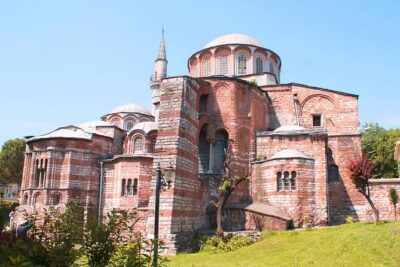
St. Savior in Chora is now the Kariye Museum, and this is a standout name in Byzantine art. The tour’s angle here is historical context: it used to be a Byzantine monastery, and it’s famous for mosaics and frescoes showing scenes from the Bible.
Here’s the trade-off. The tour is explicit that you’ll visit from the outside only, with no interior visit. That means you won’t spend time inside studying the artwork. You will, however, learn what you’re looking at and why it matters, so your future museum visit (or your memory of what you’ve seen elsewhere) will line up better.
If you’re the kind of visitor who cares about art in detail, you might wish the itinerary included an interior pass here. If you’re more into the big picture, the outside view still helps you connect Chora to the wider Byzantine story in a way that doesn’t eat your whole day.
Anemas Dungeons and Tekfur Palace: the palace-to-prison story in stone
Now you hit the darker, more surprising side of Byzantine power. Anemas Dungeons sit as part of the Blachernae Palace complex, and the structure is described as unique in the world. You’ll learn that it was used as a prison for high-ranking statesmen.
What makes this stop especially interesting is the level of specificity: it consisted of 14 separate dungeons, and each included two basements below sea-level. That detail turns the dungeon from a generic “prison” label into a real engineering and architectural system tied to location and security.
It’s the kind of place where a guide’s storytelling changes how you perceive the area. The walls and openings don’t just look old. They look designed. You start thinking about what the Byzantines wanted to control: movement, secrecy, and containment.
After that, you move to Tekfur Palace, built in the 12th century. It’s adjacent to the city walls, and it’s described as the only surviving pavilion of the Blachernae Palace. That phrasing matters. Instead of seeing a “ruin somewhere,” you see one of the few remaining high-status structures from that complex.
If you love structure and scale, Tekfur Palace is one of the stops that makes your photos look like more than postcards. The palace-to-wall connection helps you understand how these sites functioned together.


Byzantine city walls: seeing scale in ruins of 22 kilometers
The last big visual focus is the remains of the 5th-century Byzantine city walls. These walls surrounded the acropolis of Byzantium and stretched about 22 kilometers (13 miles) long, with 96 towers and 9 main gates.
That is big enough to sound like a textbook number. The tour’s value is that it gives you a route and context so the scale lands in your body, not only your brain.
Walking near remnants like this changes your sense of what “defense” meant. You begin to imagine the movement of people and supplies, the threat of siege, and how much planning it takes to keep a city standing for centuries. When you hear the names of gates and towers, even without seeing everything that used to exist, it helps you build a mental map of Constantinople’s protective shell.
For photography, the walls and palace-adjacent areas tend to reward timing: you’ll often catch angles where the stone texture shows clearly, and where you can fit a large enough view to understand the shape of the defense system.
Price and value: is $85 per person fair for this kind of day?
At $85 per person, this tour sits in the “good value if you like guided context” zone. Here’s what you actually get for that price:
- Air-conditioned transportation
- Museum entrance fees
- Pick-up from centrally located Istanbul hotels
- A live English or Spanish guide
- Skip-the-ticket-line access (where relevant)
What you don’t get is hotel drop-off. That matters if you’re planning a later meal or need to get back quickly, because you’ll likely end somewhere you still have to navigate independently.
The best way to judge value is to ask what you want from your time in Istanbul. If you want a guided overview of key Byzantine sites in a single half-day, this price makes sense. If you want deep museum time and long interior stays, you’ll likely feel constrained because the route is a set itinerary and at least one major art stop (Kariye/Chora) is outside-only.
Also, the guide quality can swing the experience. One guide named Umut received major praise for being a true historian, and even adding an extra site for the tour. You can’t rely on a specific guide, but the lesson is that with the right guide, this route can turn from “I saw landmarks” into “I understood what they meant.”
Timing, group size, and making the most of the schedule
This activity is listed with duration of 4 hours, and the route description also describes it as a 3-hour tour. Either way, think half-day pace. You’re meant to see multiple sites without slow stops that drag.
A few logistics points matter because they affect your stress level:
- A minimum of 6 people is required for the tour to operate.
- The departure is guaranteed on Tuesday afternoons.
- After booking, you need to call the local supplier to learn the exact time and whether a free shuttle is available for your hotel.
- Free shuttle pick-up is offered between 13:00 and 14:00, and it can take 45 to 60 minutes depending on where you’re staying.
- Pick-up works only for centrally located hotels. If your hotel isn’t accessible, you’ll be advised on alternative meeting points.
My advice: if you want a smooth day, pick a meeting point you can reach without rushing. The shuttle travel time can eat into your energy, so eat lightly beforehand and keep your documents ready. The tour asks for a passport or ID card, and you’ll want that at hand.
Who this tour suits best (and who should choose something else)
This is a strong fit if you:
- Like guided storytelling that ties geography to history
- Want Byzantine Istanbul without spending a full day on museums
- Enjoy architecture and city defense as much as churches
- Prefer a structured route that keeps you from second-guessing what to see next
It’s less ideal if you:
- Want lots of interior time inside Kariye Museum
- Prefer flexible wandering rather than a set itinerary
- Need hotel drop-off at the end of the tour
That outside-only approach at St. Savior in Chora is the biggest indicator. If interior mosaics are your top priority, you’ll probably want to pair this with a separate museum visit.
Should you book the Tour to Byzantium?
I’d book this if your goal is to understand Byzantine Istanbul in one focused half-day and walk away with names you can actually place on a map. The combination of religious landmarks, palace and prison architecture, and the city walls gives you a full “power-to-faith-to-defense” picture, which is exactly what makes it more than a pile of stops.
Skip it if you mainly want deep museum time, because at least one of the marquee art sites is outside-only. Also, if you’re staying far from central areas, double-check the pick-up plan early, since shuttle availability depends on your hotel.
If you like history with physical context, this tour is a practical way to get there fast, and the $85 price is reasonable for the mix of sites, guide time, and included entrances.
FAQ
How much does the Tour to Byzantium cost?
It costs $85 per person.
How long is the tour?
The duration is listed as 4 hours, and the tour description also describes it as a 3-hour tour. Check availability to see the starting times.
What sites are visited?
You’ll see the Golden Horn area, the Patriarchate at Fener, the Church of Panagia of Blachernae, St. Savior in Chora (Kariye Museum area from outside), Anemas Dungeons, Tekfur Palace, and the remains of the Byzantine city walls.
Is there an interior visit to the Kariye Museum?
No. St. Savior in Chora is described as an outside visit only, with no interior visit.
What languages are the guides?
The live tour guide is available in English and Spanish.
What’s included in the price?
The tour includes air-conditioned transportation, museum entrance fees, and pick-up service from centrally-located hotels, plus a live guide and skip-the-ticket-line.
Do you get hotel drop-off?
No. The tour notes that hotel drop-off is not included.
What do I need to bring?
Bring your passport or ID card.
What are the minimum group requirements, and when is departure guaranteed?
A minimum of 6 people are required to operate the tour, and departure is guaranteed on Tuesday afternoons.
Can I cancel for a refund?
Yes. Free cancellation is offered up to 24 hours in advance for a full refund.
Are pets allowed?
No, pets are not allowed. Smoking is also not allowed.