REVIEW · BOSPHORUS SUNSET & YACHT CRUISES
Luxury Bosphorus Yacht Tour – Asian Side Stop & Exploration
Book on Viator →Operated by Sunset Bosphorus Yacht Cruises · Bookable on Viator
Two continents, one slow glide on the water. I love the clean, roomy yacht and the Kanlıca yogurt stop that makes this feel like more than a drive-by photoshoot. The main downside to plan around is simple: this cruise needs good weather to run at its best.
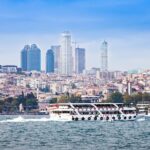
In about 2.5 hours, you get a guided circuit along the Bosphorus views that connect major palaces, mosques, fortresses, and bridges. You’ll also get time to step off briefly on the Asian side and taste something Istanbul-specific.
This tour runs with a maximum group size of 35, starts at the IDO Kabataş pier, and you can choose pickup if it’s offered for your option (the operator confirms the day before if you booked pickup). Expect English narration and a steady flow of included snacks and drinks while you watch the city slide past.
In This Review
- Key reasons this Bosphorus cruise works
- Starting at Kabataş: what your 2.5 hours actually feels like
- The European shoreline: Dolmabahçe, Çırağan, and Ortaköy from the water
- Bosphorus bridges and the in-between places: Galatasaray Island to Bebek Bay
- Fortresses on the waterline: Rumeli Hisarı and the story of controlling the strait
- Asian-side highlights before Kanlıca: Anadolu Hisarı, Küçüksu, Beylerbeyi, Kız Kulesi
- Stop at Kanlıca Meydani: yogurt on the Asian side, for real
- Returning along the Golden Horn: New Mosque, Spice Bazaar area, Galata Tower
- What’s included on board, and why it changes the trip
- Price and value: $33.86 for sights plus a real food stop
- Who should book this Bosphorus yacht tour
- Who it might disappoint
- Should you book Sunset Bosphorus Yacht Cruises?
- FAQ
- How long is the Bosphorus yacht tour?
- Where does the tour start?
- Is pickup available?
- Is the tour in English?
- Is there a stop on the Asian side?
- What food and drinks are included?
- Do I need a printed ticket?
- What’s the cancellation policy?
Key reasons this Bosphorus cruise works
- A short Asian-side break at Kanlıca: you get a real local snack moment, not just a quick photo stop.
- Ottoman landmarks explained in plain English: palaces and mosques aren’t just scenery; you learn what changed and why.
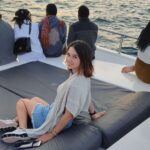
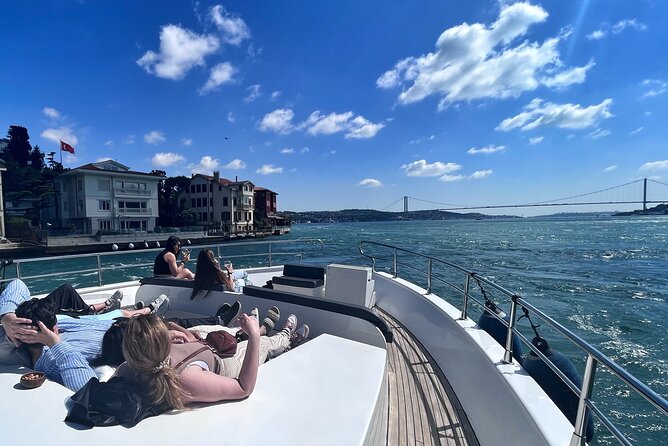
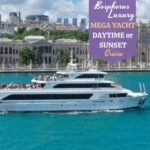
- Comfort without overcrowding: the boat feels clean and spacious, with room both up top and inside.
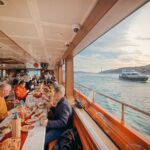
- Included food that keeps you happy on the water: coffee or tea, pastry, fruit, water, plus Turkish coffee with Turkish delight.
- Tight route, big variety: you see everything from fortresses at the narrowest Bosphorus to Golden Horn sights on the return.
Starting at Kabataş: what your 2.5 hours actually feels like
The tour begins at İdo Kabataş Deniz Otobüsü İskelesi in Beyoğlu. You’ll meet at the pier, show your mobile ticket, and board for a smooth ride that’s usually relaxed rather than rushed.
Duration is typically 2 hours 30 minutes to 2 hours 45 minutes, and because the group is capped at 35 people, the vibe stays calm. If you care about comfort, this matters: the Bosphorus can get busy on land, but on the water you spread out and actually enjoy the views.
If you choose pickup, don’t stress about guessing where to go. The operator contacts you the day before to confirm pickup time and point.
You can also read our reviews of more boat tours in Istanbul
The European shoreline: Dolmabahçe, Çırağan, and Ortaköy from the water
Most Bosphorus cruises sell you on views, but this one pairs the views with context. As you move along the European side, the guide helps you connect the dots between Ottoman power and the city’s waterfront look.
You’ll pass Dolmabahçe Palace, the Ottoman administrative center and residence for sultans from the mid-19th century. It was commissioned by Sultan Abdülmecid I and built from 1843 to 1856 by the Balyan architectural family (Garabet Balyan and his son Nigoğayos). The point of the palace, beyond its size, is that it reflects a more Western-leaning Ottoman taste—so when you see it from the water, you’re seeing a change in style, not just another pretty building.
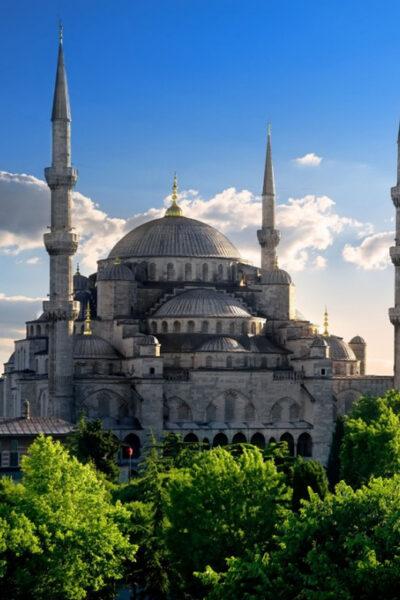
Nearby, you’ll also glide past the Dolmabahçe Mosque (Bezm-i Alem Valide Sultan Mosque). Construction was 1853–1855, commissioned by Bezm-i Alem Valide Sultan and designed by Garabet Balyan. From the Bosphorus you get a quick read on the mix of Baroque and Ottoman elements: central dome, smaller domes, and ornate exterior details.
Then come the waterfront palaces with extra drama. Çırağan Palace (1863–1867, also by Nigoğayos Balyan) shows neo-Baroque opulence on the shore—think crystal staircases, marble interiors, ornamentation, and chandeliers, all part of the sultan’s waterfront life.
And don’t miss Ortaköy Mosque. Completed in 1856 and designed by Nigoğayos Balyan, it’s known for its scenic Bosphorus setting and a slender minaret that stands beside the main dome. Even if you don’t linger on land, the yacht angle helps you notice the building’s proportions and why Ortaköy looks so photogenic from the water.
Bosphorus bridges and the in-between places: Galatasaray Island to Bebek Bay
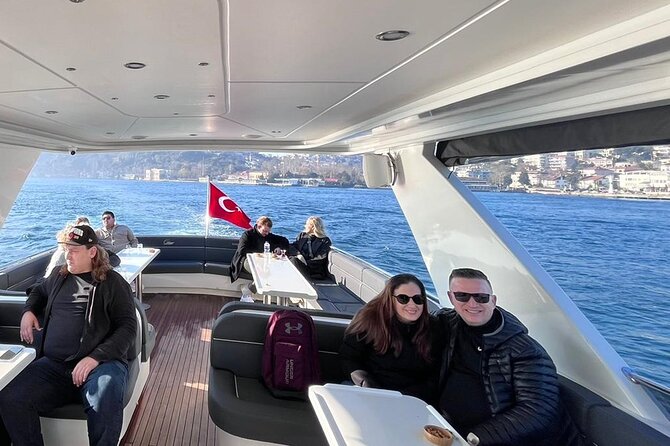
Once you’re out on the water, you’ll start seeing how Istanbul works as a two-continent city. Bridges cut across the strait, neighborhoods pull up to the shoreline, and the Bosphorus turns into a live transportation corridor.
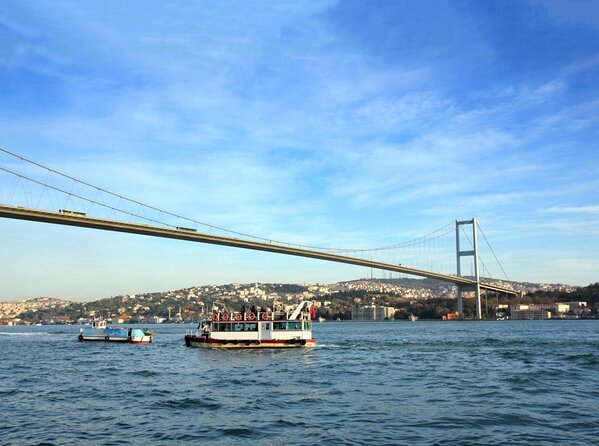
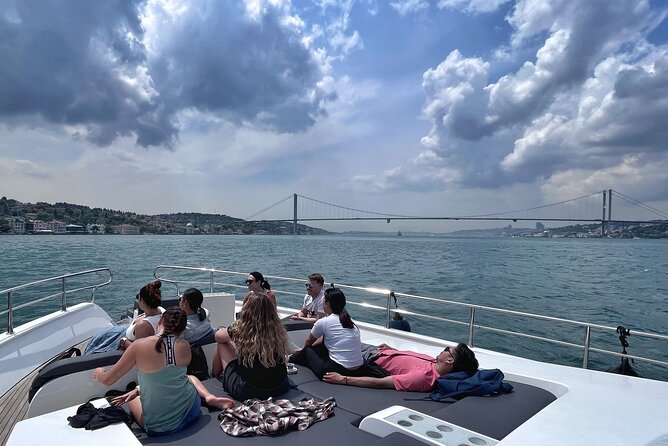
You’ll pass the Bosphorus Bridge (Boğaziçi Köprüsü), completed in 1973. It’s about 1.5 km long and known for its two towers rising roughly 165 meters above the water. It was the first direct Europe–Asia bridge since antiquity, so it’s more than engineering—it’s a symbol that the city learned to connect fast.
You may also spot Galatasaray Island (Galatasaray Adası), tied to the long-running Galatasaray Sports Club. Historically, it served as a training ground and recreation space, especially for rowing and swimming teams—another reminder that the Bosphorus isn’t only about palaces and monuments.
As the cruise continues, the guide points out neighborhood sections like Arnavutköy and Bebek. Arnavutköy means Albanian village, and its waterfront history includes Ottoman wooden mansions (yalıs) and seafood restaurants. Today it’s more upscale, with trendier cafes and affluent housing, but you can still read the waterfront lifestyle from the boat.
A practical note: the scenery changes fast here. If you want the best photos, I’d focus on steady shots from the same side of the yacht rather than running around—motion plus crowding is when photos blur.
Fortresses on the waterline: Rumeli Hisarı and the story of controlling the strait
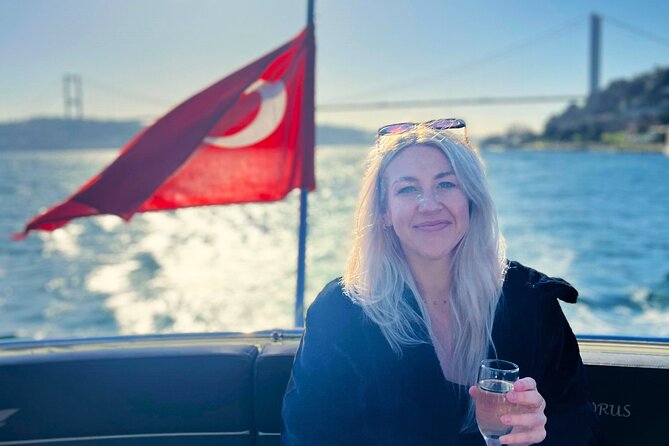
The Bosphorus isn’t wide in the places that mattered most. Istanbul’s defenses were built for that reality, and from the yacht you can see why the fortresses were placed where they were.
You’ll pass Rumeli Fortress (Rumelihisarı), built in 1452 by Ottoman Sultan Mehmed the Conqueror. The striking detail is how fast it was done—around four months—because it was part of preparations to besiege Constantinople in 1453. The fortress sits on a hill overlooking the narrowest stretch of the Bosphorus, built to control the waterway and block reinforcements arriving via the Black Sea.
The structure is designed to endure: massive stone walls, towers, and battlements, with three main towers enclosing an inner courtyard. Even from a moving boat, you’ll get a sense of the defensive logic: sightlines down to the channel, and thick fortification where attackers would need strength.
From a values standpoint, this part of the cruise is one reason I like yacht tours. You get angles you just cannot get from street level, and the guide’s explanation turns architecture into strategy instead of just “another old stone building.”
Asian-side highlights before Kanlıca: Anadolu Hisarı, Küçüksu, Beylerbeyi, Kız Kulesi
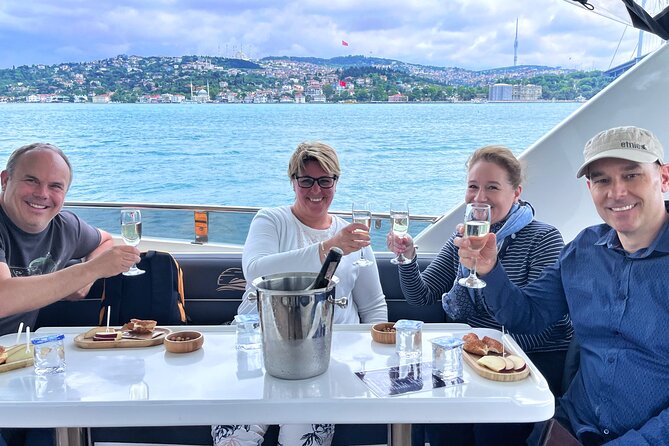
Crossing toward the Asian shore feels like moving into a different chapter of Istanbul’s Bosphorus story—still Ottoman, still strategic, but with different landmarks and a different pace.
You’ll pass Anadolu Hisarı (Anadolu Fortress), built at the narrowest point of the strait. It was commissioned by Sultan Bayezid I and completed in 1394. Like Rumeli Hisarı, it was built to defend the Bosphorus against naval threats from the north and to control maritime traffic approaching Constantinople.
Then you’ll likely see Küçüksu Pavilion (Göksu Pavilion) on the Asian shore. Built 1856–1857 as a summer retreat and hunting lodge for Ottoman sultans and guests, it was commissioned by Sultan Abdülmecid I and designed by Nigoğayos Balyan. From the water, you get a feel for the pavilion’s delicate elegance compared to the fortress mass—same empire, different purpose.
Next up is Beylerbeyi Palace, constructed 1861–1865 as a summer palace and guesthouse for visiting dignitaries. It blends Ottoman, Baroque, and Rococo influences, with marble interiors and ornate details. It’s the kind of building that helps you understand why the Bosphorus became a favorite imperial address.
You may also catch views of the Maiden’s Tower (Kız Kulesi) off Üsküdar. Its origins are uncertain, but it’s strongly linked to legends. The famous one involves a prophecy about the death of the emperor’s daughter and a snakebite delivered through a fruit basket. Even if you don’t follow the myth, it’s a distinctive silhouette that makes the waterfront feel alive with stories.
You can also read our reviews of more tours and experiences in Istanbul

Stop at Kanlıca Meydani: yogurt on the Asian side, for real
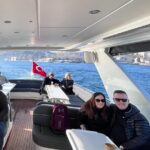
The cruise includes a brief 15-minute stop at Kanlıca Meydani on the Asian shore. This is the part that turns the outing from pretty views into a small, genuine food moment.
Kanlıca is known for its yogurt, served creamy and local with powdered sugar. In practice, you’ll have a chance to buy yogurt and, depending on what’s offered on-site, you might see ice cream options too. Keep it simple: order the local yogurt and eat it right there, ideally while boats glide past behind you.
This stop is short, so it rewards a plan. If you want to avoid wasted steps, decide what you’ll order before you get carried away by photos and menus. Bring your best “quick taste” attitude: this isn’t a sit-down meal.
Tip: if the water is slightly choppy, eat on the earlier side of the stop and keep your phone secure. You want the taste moment, not a slow scramble.
Returning along the Golden Horn: New Mosque, Spice Bazaar area, Galata Tower
After the Asian-side break, your yacht route brings you views toward the Golden Horn inlet (Haliç). This is where Istanbul’s old-city story tightens up: the harbor shaped trade, and the shoreline built neighborhoods around that movement.
From the water, you’ll see the Galata Bridge and its two levels, including the section associated with fishermen and seafood. Nearby, the Yeni Cami (New Mosque) sits on the Golden Horn shore in Eminönü. Construction began in the 17th century under Sultan Murad IV and finished later under Sultan Mehmed IV. The building’s mix of Ottoman and Baroque design shows in the dome and slender minarets.
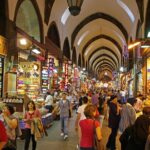
The area around the mosque is also tied to the Spice Bazaar (Mısır Çarşısı), which dates to the 17th century and was established as part of the New Mosque complex. On the yacht you won’t browse stalls, but you’ll understand why the location became a trading magnet—this inlet was made for shipping and exchange.
You may also pass by views toward the Galata Tower (Galata Kulesi). The tower was built by the Genoese in the 14th century and later used as a watchtower and lookout. If you’ve been looking for Istanbul’s skyline anchor, this is it from the Bosphorus corridor.
Finally, the cruise route connects toward Galataport, the modern cruise port and waterfront renewal project in Karaköy. From the water it reads like a new layer on top of the old city fabric: updated infrastructure, still framed by historic shoreline.
What’s included on board, and why it changes the trip
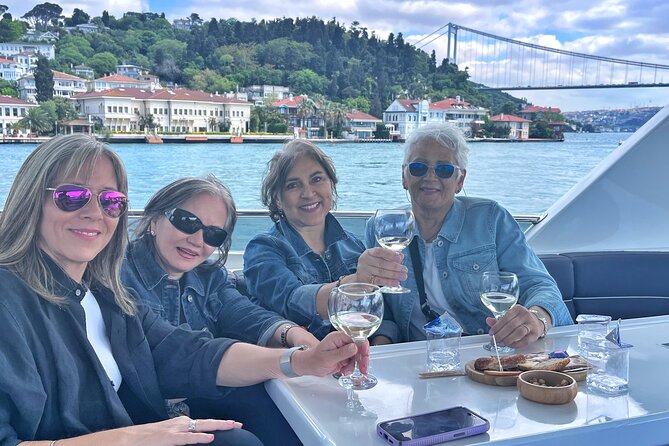
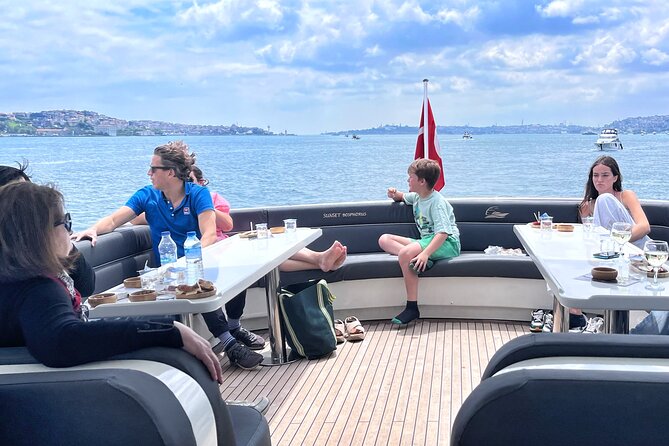
This is not a BYO picnic style tour. You get coffee or tea, snacks, bottled water, a savory pastry, and fresh seasonal fruits. You’ll also get Turkish coffee with Turkish delight served in traditional cups, which is a nice local touch at the right moment on the water.
A couple reviews also mention that snacks arrive right after departure and that the boat feels clean and comfortable, not tightly packed. If you’re worried about feeling hungry or thirsty while the guide narrates, this inclusion helps a lot.
Drinks: extra hot or cold beverages may be available for purchase, so if you love tea or want something stronger, you’ll have options.
Price and value: $33.86 for sights plus a real food stop
At $33.86 per person, the value comes from three things together: time (about 2.5 hours), coverage (major waterfront landmarks on both sides), and included food.
If you try to replicate this on your own, you’d pay for transportation plus you’d need a plan for where to see the Asian shore quickly. This cruise lets you do it in one sitting, with a guide who links what you’re seeing to what it meant historically and politically.
Also, because the tour caps at 35 people, you’re not fighting for space to enjoy the views. That’s part of the pricing equation too.
One more practical reality: it’s typically booked about 34 days in advance on average. If your dates are fixed, I’d book early rather than waiting for last-minute luck.
Who should book this Bosphorus yacht tour
This is a great choice if you want an Istanbul highlight that feels calm and scenic, and you don’t want to spend hours coordinating ferries or jumping between neighborhoods.
It also works well for:
- Couples and friends who like photos but also want context
- First-time visitors who want the big Bosphorus landmarks without a full-day commitment
- Families who want a short outing with snacks and comfort (the group size stays limited)
If you’re the kind of traveler who wants to go inside palaces and mosques, you should pair this with separate on-land visits. This cruise is about seeing and learning from the water, not ticketed entry.
Who it might disappoint
The main mismatch is time. You’ll see plenty of landmarks from the boat, but not every stop is a walkable visit. If your ideal day is long wandering in one neighborhood, this will feel fast.
And again: if the weather is poor, the operator can change plans or cancel. Istanbul’s Bosphorus can be windy, and the tour depends on good conditions to keep the ride enjoyable.
Should you book Sunset Bosphorus Yacht Cruises?
If you’re looking for a smart, cost-controlled way to experience the Bosphorus with both European and Asian views, I’d book it. The Kanlıca yogurt stop gives the trip a local flavor, not just sightseeing, and the included snacks keep the 2.5 hours comfortable.
Do it especially if you appreciate a guide who explains what you’re seeing without making it feel like a lecture. In fact, one English-speaking guide you might hear, depending on your date, is Serdar Cengiz, known for clear narration and a sense of humor during the ride.
FAQ
How long is the Bosphorus yacht tour?
It runs about 2 hours 30 minutes to 2 hours 45 minutes.
Where does the tour start?
You meet at İdo Kabataş Deniz Otobüsü İskelesi at Ömer Avni, İskele Yolu, 34427 Beyoğlu/İstanbul.
Is pickup available?
Pickup may be offered, but hotel transfers are not included. If you select pickup, the operator contacts you the day before to confirm the pickup point and time.
Is the tour in English?
Yes, the tour is offered in English.
Is there a stop on the Asian side?
Yes. There is a stop at Kanlıca Meydani for about 15 minutes, where you can taste local Kanlıca yogurt.
What food and drinks are included?
Coffee and/or tea, snacks, bottled water, a savory pastry, fresh seasonal fruits, plus Turkish coffee with Turkish delight in traditional cups.
Do I need a printed ticket?
No. You receive a mobile ticket.
What’s the cancellation policy?
You can cancel for free up to 24 hours in advance for a full refund. The experience also depends on good weather, and if it’s canceled due to weather you’ll be offered another date or a full refund.