REVIEW · ISTANBUL
Tour of Byzantine and Constantinople, in istanbul
Book on GetYourGuide →Operated by layover in Istanbul · Bookable on GetYourGuide
Walls can tell a city’s story. This 6-hour private route takes you straight into Constantinople’s big monuments and the neighborhoods that carried Byzantine life forward toward Ottoman rule. It’s one of those days where the stones feel connected, not random.
I like two things most: the chance to stand near the Walls of Constantinople and understand why defenses mattered to empire life, not just military history. And I really value the neighborhood shift afterward, when Fener and Balat give you a more human sense of interwoven communities rather than only palace drama.
One possible drawback: the exact wall-gate and side stops can vary by guide and timing, so if you have a specific must-see spot (like a particular gate on the walls) it’s worth asking ahead. Also, any private guide day depends on focus and pacing, and not every day will feel equally unhurried.
In This Review
- Key points worth knowing before you go
- The 6-hour loop from Fatih and Golden Horn
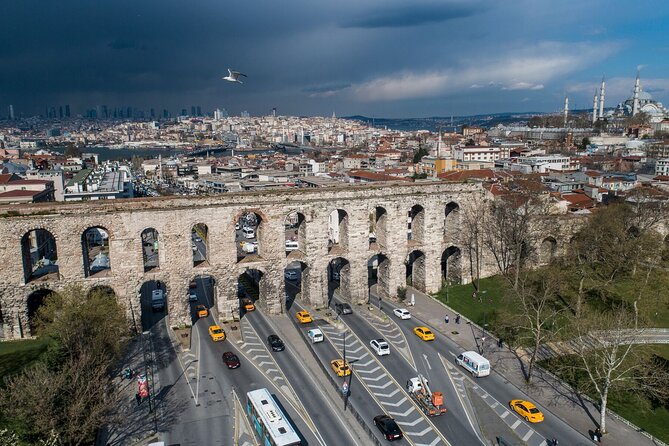
- Walls of Constantinople: defenses, politics, and a city’s rhythm
- Palace of the Porphyrogenitus: imperial power you can still read
- Yedikule Fortress: where city gates became history
- Blachernae Palace and the Mary of Blachernae church area
- The Christian and Jewish neighborhood story in Fener and Balat
- Models of historical sights: a shortcut for first-time Istanbul brains
- Lunch, comfort, and how the guide keeps the day coherent
- Price and value: is $190 fair for this much ground?
- Who this tour fits best
- Should you book this Byzantine and Constantinople tour?
- FAQ
- How long is the tour?
- Where does pickup happen?
- Is lunch included?
- What’s included besides the guide?
- Is this a private group or shared group?
- What language is the tour guide?
- Is there free cancellation?
- What is the cancellation and refund rule if plans change last minute?
Key points worth knowing before you go
- Golden Horn area history: you start where Constantinople’s shoreline story really matters
- Byzantine walls on the ground: not just photos, but context for how the city protected itself
- Yedikule Fortress: a major reminder that gates and fortifications became part of political theater
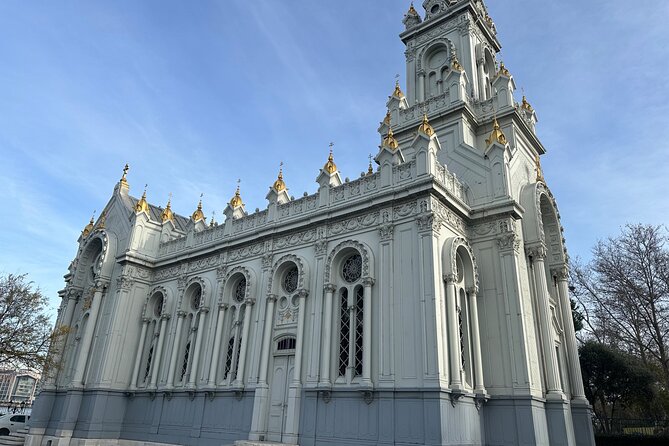
- Fener and Balat districts: church-and-community geography that helps you picture everyday life
- Blachernae Palace stop: an imperial power site tied to later Byzantines and beyond
- Lunch plus entrances included: less decision fatigue, more time looking and listening
The 6-hour loop from Fatih and Golden Horn
This tour is built like a guided walk through layers of Istanbul. You get hotel pickup from Fatih, then you’re driven toward the Golden Horn area to start making sense of the city’s defensive line. The flow matters. If you arrive in Istanbul and only bounce between highlights, it’s easy to miss the way Constantinople’s geography shaped everything—religion, power, and movement.
Once you’re out on the route, you’ll keep moving through major stops tied to different eras. The day isn’t only “Byzantine stuff,” either. The guide frames how Rome, Byzantine, and Ottoman periods overlap in the same spaces. That’s what turns the monuments into something you can connect, instead of a checklist.
The pacing is also adjustable in practice. One guide experience highlighted that the guide took time to learn what you want and then paced the day to fit your interests. If you like questions and real back-and-forth, that matters.
You can also read our reviews of more tours and experiences in Istanbul.



Walls of Constantinople: defenses, politics, and a city’s rhythm
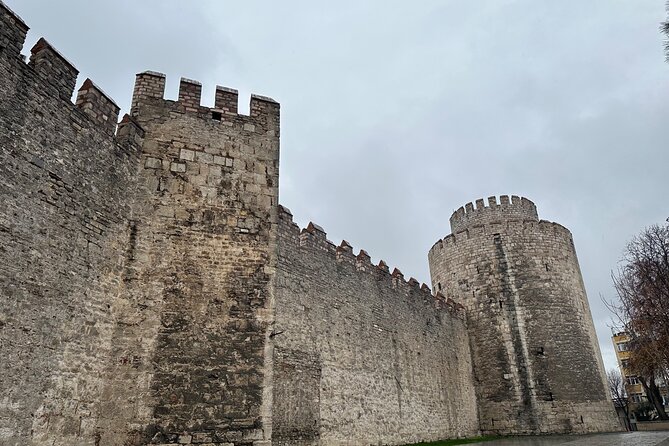
You spend about an hour at the Walls of Constantinople. This is the kind of stop where your brain changes gears. From street level, it can be hard to grasp how a city’s walls governed daily life. A good guide helps you read the walls like evidence.
What you’re looking for isn’t only the big stone structure. It’s the “why” behind it—how the city organized itself around protection, control, and movement of people and goods. The walls also connect directly to larger historical arcs, so you can understand why later empires cared so much about the same defensive logic.
If your interest leans toward conquests and major turning points, this stop is especially useful. In one past experience, the guide answered questions about Mehmed’s conquest and offered new perspectives on why these fortifications were so important over time. That kind of explanation is what transforms a wall from scenery into a story.
Tip for you: if walls are your top priority, plan to arrive with a couple of focused questions. Ask what parts of the line mattered most for Roman, Byzantine, and Ottoman eras, and how the purpose of the walls shifted.
Palace of the Porphyrogenitus: imperial power you can still read
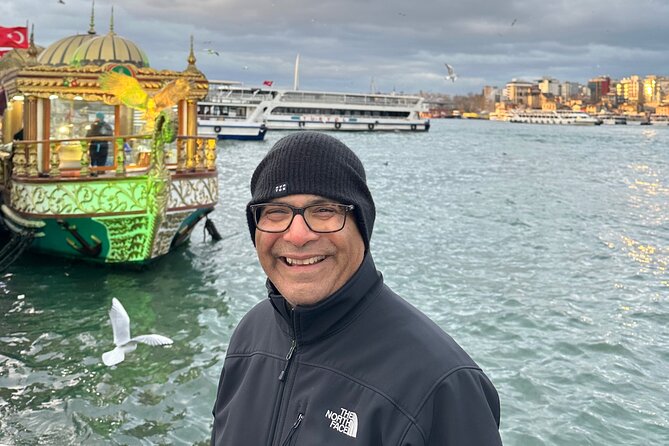
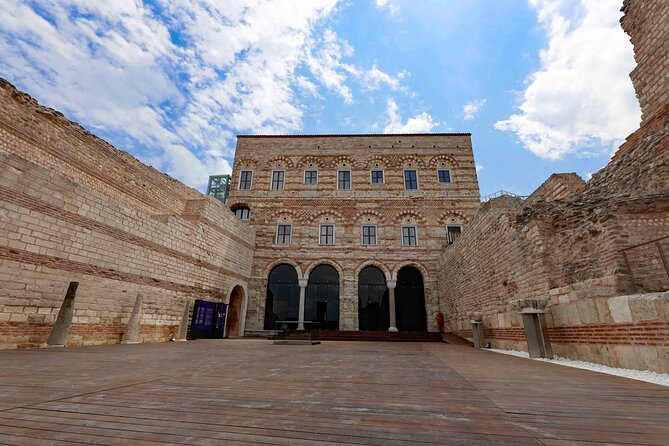
After the walls, you move to the Palace of the Porphyrogenitus for about an hour. Even if you’re not a “palace person,” this stop is worth it because it helps you interpret Byzantine ideas of legitimacy and status.
The palace connects directly to the imperial world—who belonged close to power, how authority was expressed, and how architecture carried messages. A guided hour here is the difference between seeing ruins and understanding what they were designed to do.
The practical side: this isn’t a stop that demands deep archaeology knowledge from you. With a guide pointing you to the big themes, you can follow the story. You’ll also be able to connect the palace to the broader timeline the tour uses—Rome’s influence, Byzantium’s priorities, and later Ottoman inheritance of the city’s imperial prestige.
Yedikule Fortress: where city gates became history
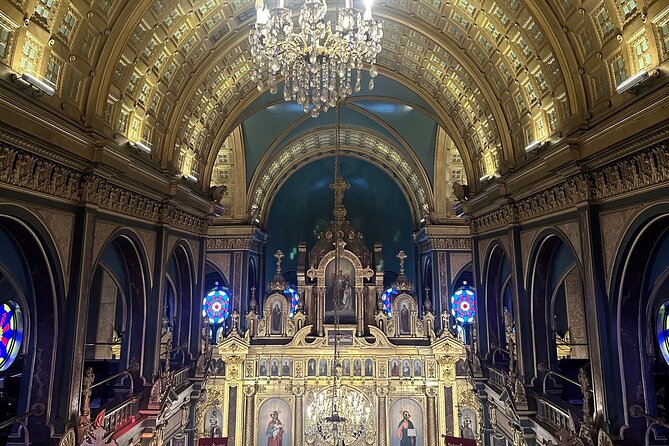
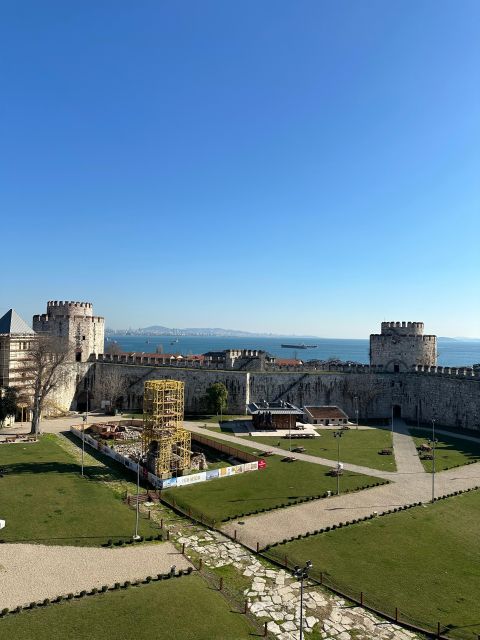
Next comes Yedikule Fortress (about an hour), with entrance included. This is one of those places where “fortress” is more than a word. You get the sensation that gates and routes mattered, because power and security often moved through specific chokepoints.
Yedikule sits in a zone that helps you understand the defensive architecture theme from earlier—except now it feels more concentrated. If the walls are the long protective spine, Yedikule can feel like a muscle group: a place meant to control access.
It’s also a strong stop for photo taking, but don’t rush it. Spend your hour looking at the layout and letting the guide explain what made these kinds of fortifications so hard to ignore in a city that changed rulers.
Practical note: since fortress time is time inside, you’ll likely do some walking between viewpoints. Wear shoes that you’re comfortable standing in, because you’ll want to spend your energy on seeing, not on adjusting blisters.
Blachernae Palace and the Mary of Blachernae church area
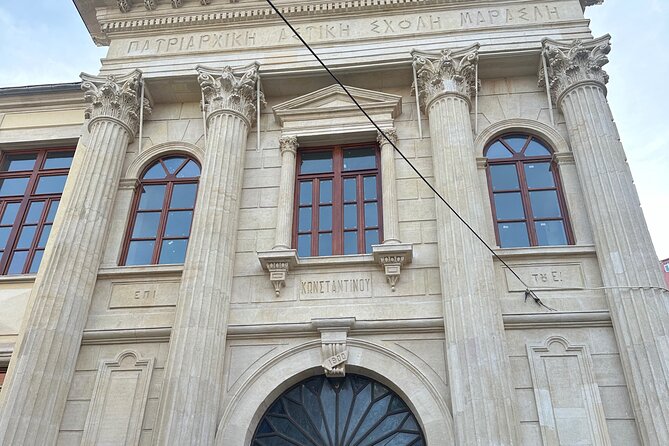
The tour description includes Palace of Blachernae and entrance to it, plus stops related to the Church of Mary of Blachernae. This matters because Blachernae is tied to religious and political significance in Byzantine Istanbul, and that connection is exactly the kind of thread you want on a short day.
You’ll also hear about the area’s layered life—how a sacred site fits into the city’s broader structures and changing eras. For many visitors, Byzantine Istanbul feels abstract until a guide connects the dots like this: monument-to-monument, faith-to-power, then power-to-history.
If you care about how Byzantine identity formed over time (and how later periods re-used those symbols), Blachernae is the type of stop that gives you something to hold in your mind as the day closes.


The Christian and Jewish neighborhood story in Fener and Balat
After the big imperial sites, the tour shifts toward neighborhoods—Fener and Balat—for about an hour each. That’s not just a geographic change. It’s a change in perspective.
Fener and Balat are where you start to feel how Constantinople functioned as a lived-in city, not only an imperial stage. The tour also frames the area as part of the historical “ghetto of Christians and Jews” story, and you’ll see the Orthodox district context as part of the larger mosaic.
Why this is valuable: when you only focus on palaces and fortresses, you miss the social web. The neighborhood stops help you picture how communities coexisted, negotiated space, and carried religious traditions across centuries. Even if your time is limited to guided viewpoints, the structure of the stops gives you a way to read what you see.
And yes, the streets and buildings can be visually intense. That’s fine. Just don’t let the beauty become the whole experience. The goal is to connect what you’re looking at to what the guide is telling you about community life in Constantinople and how those identities persisted into later eras.
Models of historical sights: a shortcut for first-time Istanbul brains
One neat detail in the tour description is that you’ll see models of historical sights in Turkey. In practical terms, these models help you connect sites you’ve heard about but can’t fully place yet.
Think of this as a map for your mind. When you’re bouncing between multiple centuries in one day, you’ll appreciate anything that anchors the timeline and location logic. Without this kind of visual support, it’s easy to confuse which palace belonged to which period, or why certain walls seem more symbolic than strategic.
If you’re the kind of traveler who likes to leave with a mental diagram, this stop helps.
Lunch, comfort, and how the guide keeps the day coherent
Lunch is included, and it’s not a throwaway add-on. It gives you a break at the right time in a half-day schedule so you can reset before the neighborhood stretch. A midday pause also matters because you’ll be listening—history you can hear sticks better after you’ve had food and water.
The tour is private group, and English is the working language. In past experiences, guides have shown flexibility, adjusting the tour to match interests and answering deep questions about walls and conquest history. That’s a big deal on a 6-hour itinerary, because you don’t want a script-only day.
That said, one caution worth keeping in mind: one booking criticized the guide for being distracted with phone calls for part of the tour and for finishing about an hour early. Another noted missing options they expected to see near the walls (like the Chrysalis gate). I’m not expecting this to be typical, but it’s a reminder to check your must-see list before you go and to ask whether the wall stop includes the exact gates you care about.
Price and value: is $190 fair for this much ground?
At $190 per person for a 6-hour private experience, the question isn’t whether it’s cheap. It’s whether the inclusions make the day worth the premium.
Here’s what you do get that drives value:
- Hotel pickup and drop-off from central Fatih
- Transportation throughout the route
- A live English guide
- Lunch
- Entrance to Yedikule Fortress
- Entrance to Blachernae Palace
For many people, the biggest hidden cost of DIY is time. You lose it hunting transit, entrances, and the kind of context a good guide provides. In this tour, you’re basically paying to compress the “how do I connect these sites?” step.
When it feels like great value: if you want a clear route through Byzantine monuments in Istanbul with both imperial sites and neighborhood context, and you’d rather spend your energy listening than figuring it out. It can also make sense for couples or small groups sharing the cost of a private guide day.
When you might pause before booking: if you only care about one or two specific wall points and you’re comfortable building the rest on your own. In that case, you could spend less—though you’d give up the storyline that connects Rome, Byzantine, and Ottoman layers.
Who this tour fits best
This tour is a strong match if:
- You love Constantinople walls and want them explained as more than a photo stop
- You want both big monuments and neighborhood life context
- You prefer a guided day that connects Rome, Byzantine, and Ottoman themes
- You’re okay with a focused 6-hour schedule that covers several sites in one loop
It’s less ideal if:
- Your only priority is a very specific wall gate and you don’t want any uncertainty about whether it’s included
- You need a totally rigid, fixed itinerary no matter what your guide’s pace ends up being
Should you book this Byzantine and Constantinople tour?
I’d book it if you want a guided, coherent half-day through Constantinople’s defining spaces—walls, fortress, imperial palace sites, and then Fener/Balat to understand how people actually lived with these historical layers. The combination of entrances, lunch, pickup, and on-the-ground explanation is what makes the day feel efficient rather than rushed.
I’d double-check your must-see list first if walls are your obsession, especially if there’s a particular gate you’re hoping for. If you’re flexible and you like learning the story behind the stones, this is the kind of tour that leaves you with a clearer picture of Istanbul’s Byzantine-to-Ottoman transformation.
FAQ
How long is the tour?
The tour lasts 6 hours.
Where does pickup happen?
Pickup is included from Fatih (from central hotels in Istanbul).
Is lunch included?
Yes. Lunch is included.
What’s included besides the guide?
You get hotel pickup and drop-off, transportation, a guide, entrance to Yedikule Fortress, and entrance to Blachernae Palace.
Is this a private group or shared group?
It’s a private group.
What language is the tour guide?
The tour is guided in English.
Is there free cancellation?
Yes. You can cancel up to 24 hours in advance for a full refund.
What is the cancellation and refund rule if plans change last minute?
The tour states that you can cancel up to 24 hours before for a full refund; beyond that window, the data doesn’t specify further details.