REVIEW · SHOPPING TOURS
Private Guided Bazaar Tour in Istanbul
Book on Viator →Operated by A to Z Istanbul- Private Tours by Tour Guide Zerrin · Bookable on Viator
Bazaar time, with real craft lessons. This private tour is built for seeing Istanbul’s markets as art, not just shopping. You get professional guidance from Zerrin, plus a route that blends the Grand Bazaar with the Spice Market and Kadıköy on the Asian side.
Two things I really like: you start with a smart explanation at Cagaloglu about why Ottoman tiles were made with quartz (not clay), and you spend real time in the Grand Bazaar’s back streets where locals shop. That combo turns the whole day into something you can understand as you walk.
One thing to keep in mind: the day is market-focused, so it’s lively, crowded, and a bit walk-heavy. If you want mostly museum-grade sightseeing with minimal shopping energy, this might feel more commercial than you expect.
In This Review
- Key Highlights Worth Your Attention
- Why a Grand Bazaar Tour Works Best When It’s Private
- Cagaloglu’s Quartz Tiles: The “Before You Shop” Lesson
- Grand Bazaar Back Streets: How You Avoid the Same Old Loop
- Rugs in the Oldest Part of the Bazaar (Family Trade Time)
- Turkish Jewelry Workshops: Where Craft Still Happens
- Leather Business in the Bazaar: Quality Comes With Process
- Spice Market and Kadıköy: The Day Shifts From Art to Eating Life
- The Ferry Ride to Kadıköy: A Small Time Window With Big Payoff
- Logistics That Make the Day Easier: Pickup and Returning to Your Start
- Price and Value: $350 for a Private Group (and Where It Shows)
- Who Should Book This Bazaar Tour (and Who Should Think Twice)
- Should You Book This Tour or Do It Yourself?
- FAQ
- What is the duration of the Private Guided Bazaar Tour in Istanbul?
- Is pickup included, and where does the tour start?
- How big is the group for this private tour?
- What language is the tour offered in?
- What transportation is included?
- What’s included and not included?
- Is lunch covered during the Kadıköy stop?
Key Highlights Worth Your Attention
- Quartz-tile context at Cagaloglu before you reach the big-name sights
- Back-street shopping flow in the Grand Bazaar instead of only front-aisle tourist corridors
- Rugs, jewelry, and leather explained through small workshops and long family trades
- Spice Market time plus Kadıköy’s local open-air market vibe
- Public ferry + transit so you experience Istanbul’s movement, not just destinations
- Private group up to 6 with a guide who can adapt to your pace
Why a Grand Bazaar Tour Works Best When It’s Private
The Grand Bazaar can be fun, but it can also be exhausting. Without help, you get bounced around by similar shop layouts, aggressive invitations, and the same souvenir stacks everywhere. What makes this tour stand out is that it’s private (up to 6 people), so you’re not trapped in a rigid group herd.
The guiding style here is practical: you’re shown where to look, what to ask about, and how to compare quality across different stores. Zerrin’s focus isn’t only on products. It’s on helping you see the craft behind the item—tiles, rugs, jewelry, and leather—so you know what you’re looking at when the sales pitch starts.
Also, your day includes real logistics that matter. Pickup is offered from your hotel lobby (Sura Hagia Sophia Hotel area), and you use public transport like tram, bus, subway, and a ferry segment to reach Kadıköy. That helps the tour feel like Istanbul, not like a car-taxi checklist.
You can also read our reviews of more guided tours in Istanbul


Cagaloglu’s Quartz Tiles: The “Before You Shop” Lesson
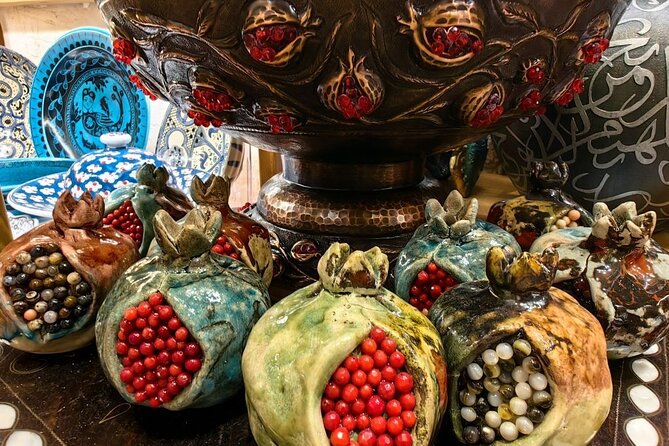
Your day begins at Cagaloglu, with a focused introduction to Ottoman tilework. You’ll hear the difference between how ceramics are made elsewhere (often with clay) versus how Turkish tiles you see in major Ottoman places were made using quartz-based materials.
That sounds niche—until you realize why it changes everything. If you learn what quartz does for durability, suddenly the tiles stop being just pretty patterns. You start noticing the “why” behind the longevity and the material choices that kept these designs intact for centuries.
Even better, this opening stop is time-efficient: about 1 hour, and the admission is free as part of the tour’s schedule. It’s a clever warm-up, because the rest of your day is full of crafts tied to the same design culture.
Grand Bazaar Back Streets: How You Avoid the Same Old Loop
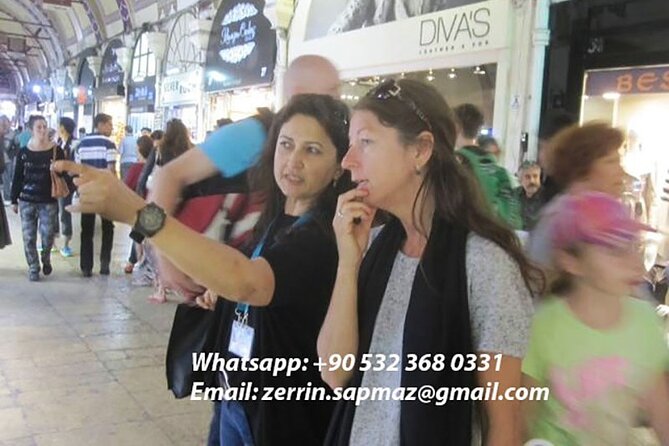
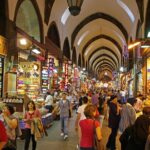
When you enter the Grand Bazaar, you’re not sent straight down the busiest main aisles. You start by walking toward quieter, back areas where locals go. The tour includes about 30 minutes for this “get your bearings” style of exploration.
This part matters more than people think. The Bazaar is famously maze-like. If you learn the internal logic early—how streets connect, where artisan shops cluster, and what areas feel more like working businesses versus storefront theatre—you’ll spend less time lost and more time learning.
A huge advantage of having Zerrin guiding you here is that she navigates you away from the most repetitive shopping pattern. In practical terms, you waste less time saying “is this the same as the last shop?” You start comparing. And comparison is where good purchases—and good memories—come from.
Rugs in the Oldest Part of the Bazaar (Family Trade Time)
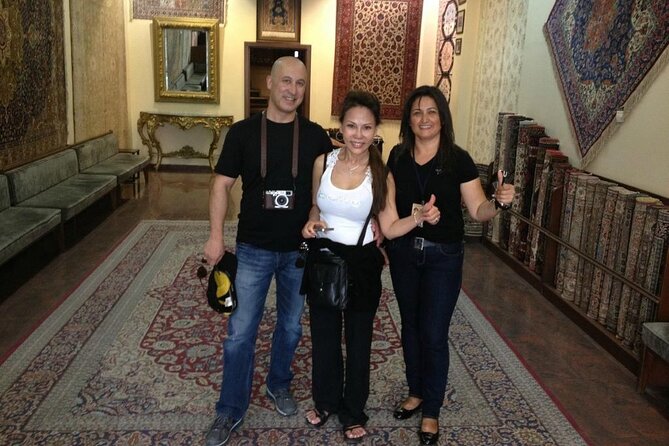
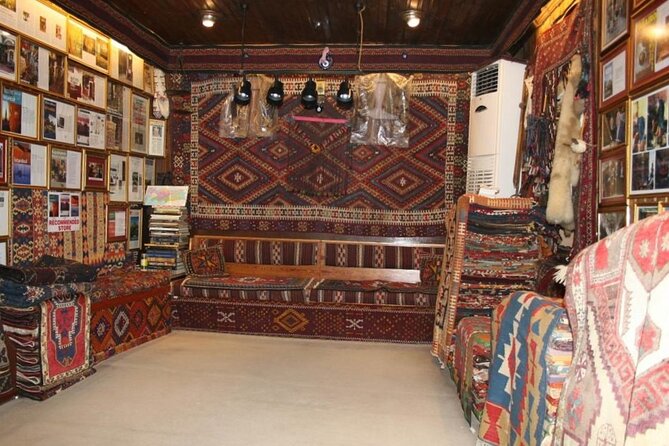
One of the strongest segments of this tour is the rug stop in the oldest part of the Grand Bazaar. You’ll spend about 1 hour at an old rug store, and the key detail here is the shop’s deep family history—running the business since the 18th century.
That long timeline gives you a different kind of conversation than typical souvenir retail. Instead of being only about price tags, you’re hearing how Turkish rugs are understood through design, structure, and tradition. The tour is set up so you get solid information about what you’re seeing, and then you can step back to decide how much you want to shop.
If you’ve ever been overwhelmed by rug jargon, this is the moment where a guide earns their fee. You’re not just surrounded by carpets; you’re given a way to interpret them.
One store name that has shown up in past visits connected to this rug focus is Sisko Osman Carpets. The point isn’t that you’ll see exactly the same shop every time, but that the tour aims for real craft dealers, not only the most obvious storefronts.
Turkish Jewelry Workshops: Where Craft Still Happens
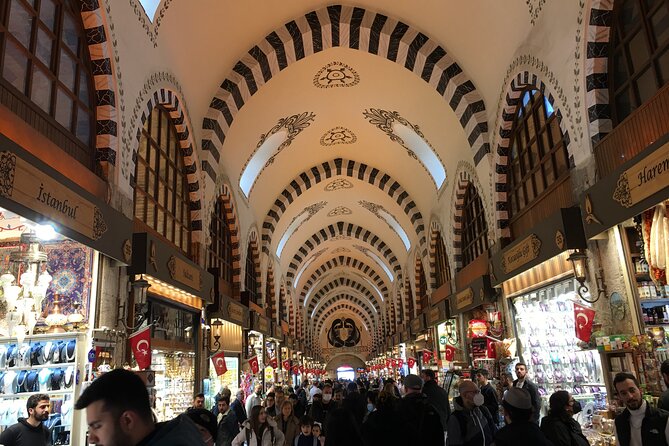
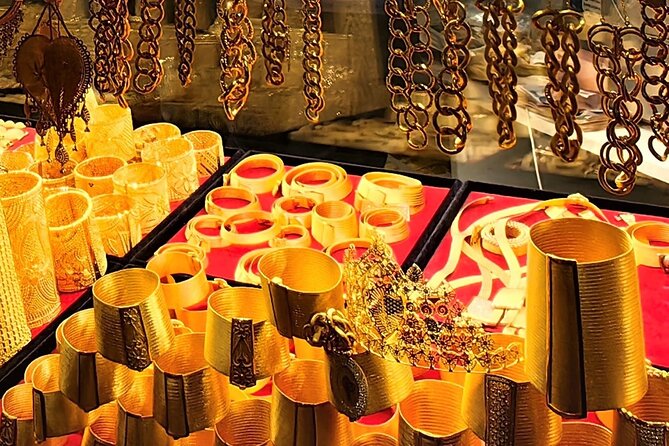
Next comes jewelry, with about 45 minutes centered on Turkish jewelry and small workshop environments inside the Grand Bazaar. This section is timed so you can actually watch how things work instead of getting only a fast photo-stop.
You’ll hear that jewelry art in these market workshops has been refined and sold for generations, with roots reaching back to the 15th century (as described in the tour context). That doesn’t mean every item is old-world antique. It means the culture of making and the workshop rhythm carries history.
A practical plus: you get directed to little workshop spaces where you can see the process and ask questions. And if you care about quality—materials, design style, and finishing—having a guide to steer the order of shops helps a lot. Otherwise, you bounce around and forget what you learned three shops ago.
You can also read our reviews of more private tours in Istanbul





Leather Business in the Bazaar: Quality Comes With Process
Leather is a big deal in Istanbul, and this tour gives it a dedicated segment of about 1 hour. You’ll visit leather jacket and leather bag shops of different quality levels, with a focus on what makes one piece different from another.
Here’s why this section feels more grounded than a typical shopping stop: the tour frames leather tanning as one of the oldest crafts from Turkish history, with roots in central Asia. Once you connect the craft origin to what you’re seeing today, leather goods stop being random fashion items. They become the output of long technical knowledge.
You should still expect shopping talk—this is the Bazaar. But with a structured route, you can actually compare. The goal is to help you leave with a clearer sense of what’s worth paying for, rather than guessing after one “best deal” conversation.
Spice Market and Kadıköy: The Day Shifts From Art to Eating Life
After the Grand Bazaar craft stops, the tour moves into food-adjacent Istanbul: first Misir Çarşısı (Spice Market). You’ll get about 1 hour here.
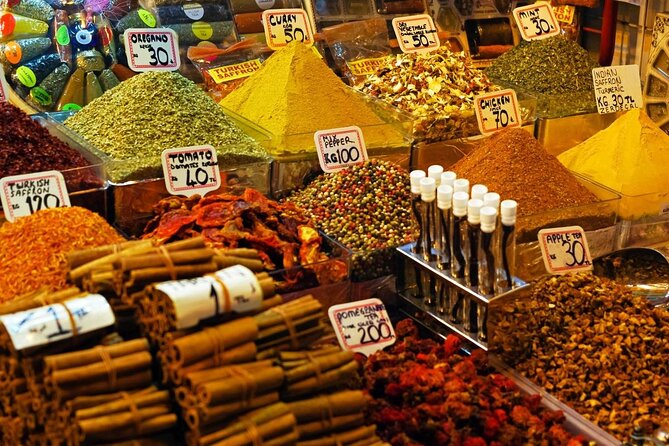
The Spice Market is basically sensory education. You can find hundreds of varieties of spices, herbs, nuts, dried fruits, teas, and sweets. The tour time is long enough to actually browse, not just snap pictures and exit. It also includes time to consider the edible gifts people actually want to pack home, like Turkish delight and baklava-style sweets, plus honey and local treats.
Then you head to Kadıköy for lunch break. The schedule includes about 1 hour for eating in a local restaurant in Kadıköy. Lunch is not included, but the tour notes that you taste local food wherever you like. Translation: you get a proper break, but you control what you order.
Finally, there’s a Kadıköy Market segment of about 1 hour. It’s an open-air market experience that runs from the Kadıköy Çarşısı area into nearby streets, with fresh produce (and plenty of other goods). This is where the day stops feeling like only traditional tourist bazaars and starts feeling like everyday Istanbul commerce.
The Ferry Ride to Kadıköy: A Small Time Window With Big Payoff
One included moment I’d happily repeat is the public ferry to Kadıköy on the Asian side. You spend about 30 minutes here, and it’s included in the tour.
That matters because it changes the rhythm of the day. Instead of only walking through covered market corridors, you get a transit segment that feels like Istanbul itself—movement, water, and city angles you don’t see when you stay on one side.
It also fits the tour’s value logic. Using public transport (tram, bus, subway, and ferry) keeps costs in check compared to private transfers, while still letting you experience the city the way residents do.
Logistics That Make the Day Easier: Pickup and Returning to Your Start
The meeting point is Sura Hagia Sophia Hotel İstanbul Alemdar, Ticarethane Sk. No:10, 34122 Fatih/İstanbul. Pickup is offered from your hotel lobby, and the guide meets you holding a Viator sign.
At the end, the tour comes back to the meeting point, which is a small detail but a real comfort. You don’t have to solve the final hop home while your feet are done negotiating.
Two more practical notes: you’ll get a mobile ticket, and the tour is offered in English. That combination helps you reduce uncertainty, especially in a place like the Grand Bazaar where everything can look “same-ish” fast.
Price and Value: $350 for a Private Group (and Where It Shows)
The price is $350 per group, for groups up to 6 people, lasting about 4 to 8 hours. That wide time range usually depends on how much you browse and how your route flows in crowded areas.
Here’s how I think about value for a tour like this:
- You’re not only paying for entry or route convenience. You’re paying for someone steering you into better stores and explaining what you’re seeing in tiles, rugs, jewelry, and leather.
- You also get tips to shopkeepers included. That’s a subtle detail, but it keeps the day from feeling awkward or interrupted when you’re encouraged to learn directly from artisans and dealers.
- Public transportation is included, so you’re not paying extra for every leg.
If you’re traveling solo or as a couple, private tours can look expensive on paper. But splitting $350 across up to 6 people often makes it feel more like a smart “group decision,” especially when the guide helps you avoid wasted stops and confusion.
And based on the rating performance—5.0 overall with 10 reviews, with 100% recommendation—this tour seems to land well when people want craft plus navigation, not just wandering.
Who Should Book This Bazaar Tour (and Who Should Think Twice)
This tour is a great fit if:
- you want the Grand Bazaar experience without getting lost in sales chaos
- you care about the difference between materials and craft (like quartz tiles and rug structure)
- you want the day to include more than the Bazaar by adding Spice Market and Kadıköy
You might think twice if:
- you dislike market crowds and would rather spend your time in museums or quieter neighborhoods
- you’re not interested in any shopping at all. Even with a low-pressure approach, the route is still built around artisan shops and trade categories
If you’re on the fence, consider what you want your photos to represent. This tour pushes you toward photos with context: tiles, workshop doors, rugs, and spices—things you can explain later.
Should You Book This Tour or Do It Yourself?
Book it if you want Istanbul’s bazaars as a guided craft lesson with a route that respects your time. The big advantage isn’t magic. It’s direction: where to start, what to look for, and how to compare quality in rugs, jewelry, and leather without feeling like you’re guessing.
Do it yourself if you’re comfortable getting turned around and you’re happy to learn through trial and error. The Grand Bazaar is doable solo, but the learning curve is steep, and you can burn hours before you understand where the artisan shops cluster.
My practical call: if you want the Bazaar to feel meaningful—not just busy—this is one of the safer ways to get there.
FAQ
What is the duration of the Private Guided Bazaar Tour in Istanbul?
The tour runs for about 4 to 8 hours, approximately, depending on how the day moves and how much time you spend at each stop.
Is pickup included, and where does the tour start?
Pickup is offered from the lobby of Sura Hagia Sophia Hotel İstanbul. The guide will meet you holding a Viator sign. The tour also ends back at the meeting point.
How big is the group for this private tour?
It’s a private tour/activity with only your group participating, and the group size is up to 6 people.
What language is the tour offered in?
The tour is offered in English.
What transportation is included?
The tour includes public transportation such as tram, bus, ferry, and subway. Private transportation is not included.
What’s included and not included?
Included: professional guidance by Tour Guide Zerrin, tips to shopkeepers, and public transportation (plus a mobile ticket). Not included: private transportation and lunch (you choose what you want during the Kadıköy break).
Is lunch covered during the Kadıköy stop?
Lunch is not included. You’ll have a lunch break in Kadıköy to taste local food wherever you like.