REVIEW · GUIDED
Private Guide in Istanbul in Spanish
Book on Viator →Operated by Umut Polat · Bookable on Viator
Istanbul history lands fast. In about 6 hours, this Spanish private tour strings together five major sights in the Sultanahmet area, with a guide who knows how to make the stories stick. I especially like the Spanish-speaking guide and the convenience of hotel or port pickup, so you spend more time looking and less time figuring out.
What I liked even more is how the visit stays organized: the stops are timed well (around 50 minutes at the Blue Mosque, 30 at the Hippodrome, 1.5 hours at Hagia Sophia, 1 hour at the Basilica Cistern, and 1.5 hours in the Grand Bazaar). You’ll also get the kind of explanation that helps you read what you’re seeing, and the provider’s guide is Umut Polat, known for fluent Spanish and clear historical context.
One thing to consider: tickets for Hagia Sophia and the Basilica Cistern aren’t included, and that can add cost on the day. If you’re traveling on a tight budget, it’s worth planning for those entrances ahead.
In This Review
- Key points to know before you go
- Blue Mosque: The dress code and the tile effect
- Hippodrome Square: Obelisks, stolen bronze, and the old sports vibe
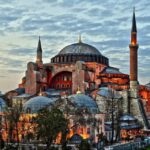
- Hagia Sophia Grand Mosque: What you can enter now
- Basilica Cistern: The 50,000 tons of mud story
- Grand Bazaar in 90 minutes: Orientation beats wandering
- Price and logistics: What you’re really paying for
- Who should book this Spanish private Istanbul tour
- Should you book it?
- FAQ
- What language is the guide?
- How long is the tour?
- What is the group size?
- Do I get hotel or port pickup?
- Where does the tour start and end?
- Is lunch included?
- Which attractions have tickets included?
- What should I do about transportation costs?
- What is the cancellation window?
Key points to know before you go
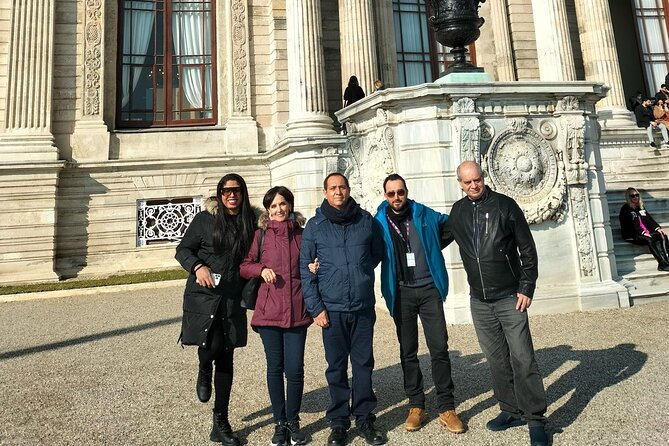
- Spanish guide with clear explanations: Umut Polat focuses on history and meaning, not just a checklist.
- Private format (up to 12): easier pace and more room to ask questions.
- Pickup from your hotel or port: the guide meets you and uses a mix of walking plus transport as needed.
- Smart combo of mosques, ruins, and waterworks: you see the city’s power, religion shifts, and engineering in one loop.
- Grand Bazaar with orientation: you get structure in a place that can otherwise feel like endless corridors.
Blue Mosque: The dress code and the tile effect
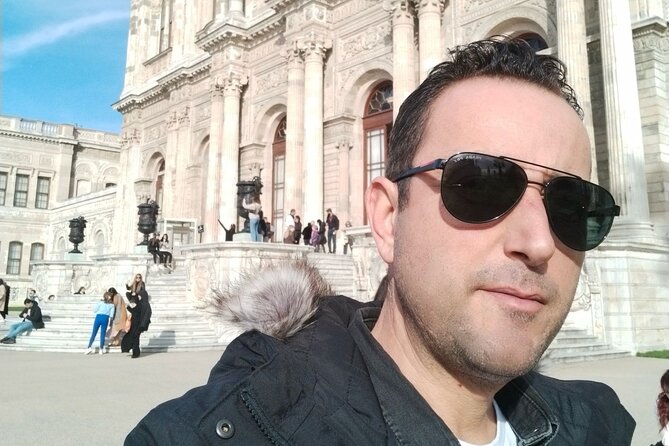
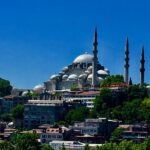
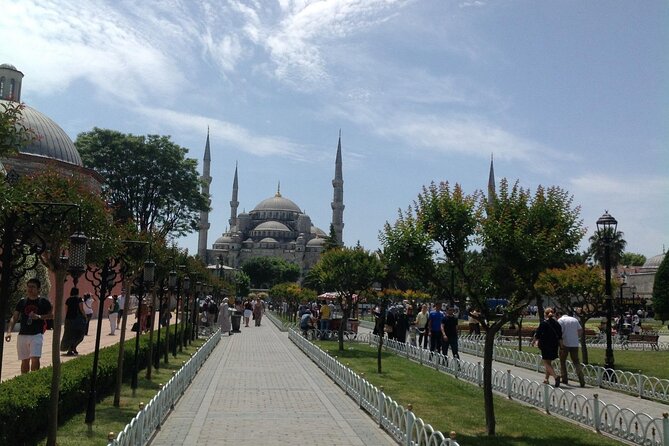
The Sultan Ahmed Mosque, often called the Blue Mosque, is the kind of place where your eyes keep “finding” details after the first look. It’s a 17th-century imperial mosque covered in more than 20,000 blue tiles, which is exactly why people remember it so well.
The practical part matters here. If you’re a woman, you’ll want to cover shoulders, hair, legs, arms, and hair. If you’re a man, plan on wearing pants that cover your knees and clothing that looks respectful. This tour doesn’t mention any special exemption or rental items, so if you’re coming in from a beach day or wearing light summer gear, I’d treat the dress code like your first priority.
You’ll spend about 50 minutes here, which is enough to get your bearings, admire the tile patterns, and understand what makes an “imperial mosque” different from a regular neighborhood mosque. The guide helps connect the visual to the story, so you’re not just counting domes and columns. Even if you’re not a religious architecture fanatic, the place has a strong visual rhythm that’s hard to ignore.
A small reality check: the Blue Mosque is popular, so you may encounter queues or slow-moving entry. The guide’s timing helps, but don’t assume it will feel like a private gallery stroll.
You can also read our reviews of more guided tours in Istanbul


Hippodrome Square: Obelisks, stolen bronze, and the old sports vibe
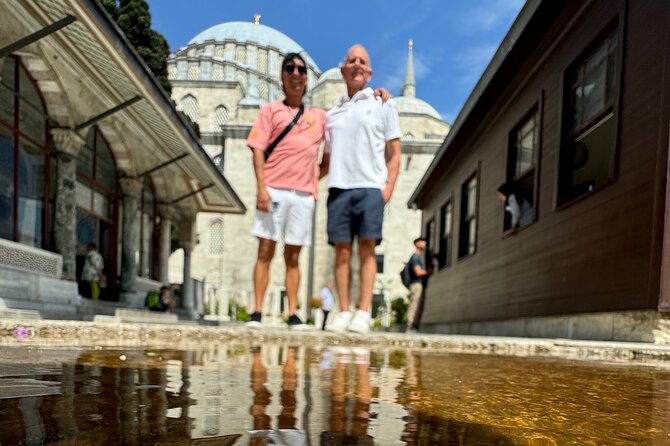
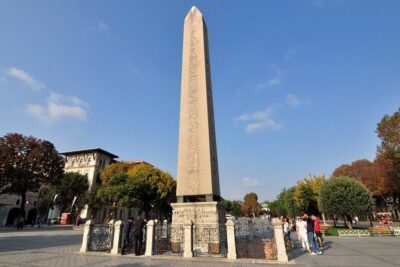
Next up is the Hippodrome, now mostly experienced as Sultan Ahmet Square. In the Byzantine era, it was the sports and social center of Constantinople, but today it’s less about cheering crowds and more about reading the fragments of what used to be there.
This stop is about 30 minutes, and that short window is perfect for the main highlights. You’ll hear about the Tripod of Plataea, which is now known as the Serpent Column. You’ll also see obelisks tied to different rulers. One is described as an obelisk from Egypt. Another is associated with Emperor Constantine VII, who built another obelisk at the other end of the hippodrome.
Here’s one detail that makes the square more than “just statues”: the obelisks were originally covered with gilded bronze plates, and those plates were stolen during the Fourth Crusade, leaving visible stone blocks inside. That story gives you a sense of how Constantinople’s “public face” could be stripped and reused through history.
This is also a good pause in the day. After religious sites and big interiors, the open square lets you breathe and take photos without feeling trapped indoors. It’s not a full museum stop, but it’s a quick way to understand the city’s public stage.
Hagia Sophia Grand Mosque: What you can enter now
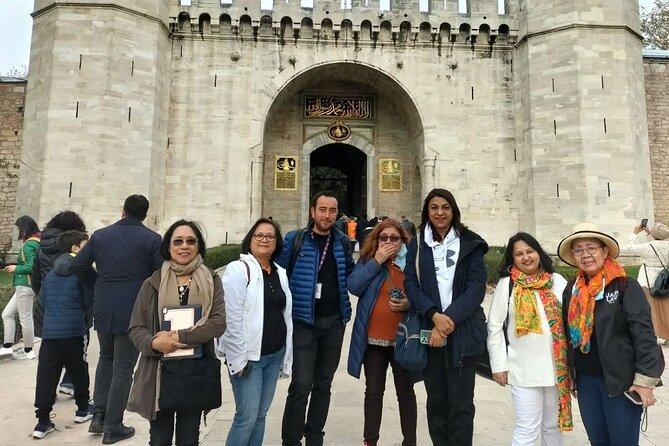
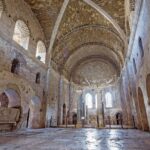
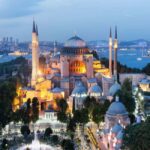
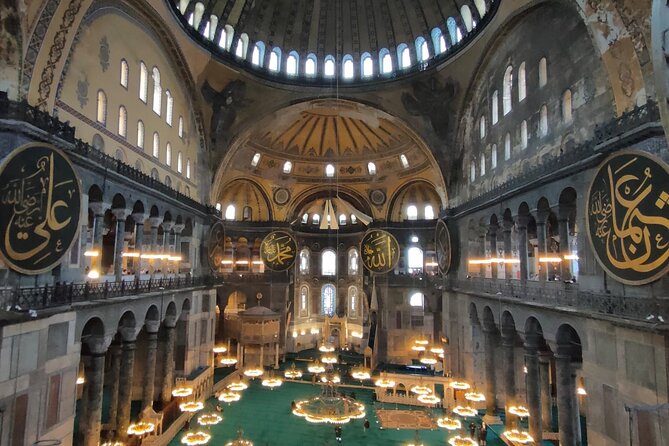
Hagia Sophia is one of those places where the building itself is the headline. It started as an ancient Christian basilica, became an Orthodox church, then a mosque, later a museum, and since August 1, 2020, it has been a mosque again. The stop is 1 hour 30 minutes, which helps because it’s not just about walking through a hall. It’s about understanding why the same space has been used in different ways.
The tour info also gives a key entry detail: the ground floor is the mosque area where tourists aren’t generally entering, while the first floor is the museum area that visitors can access. So you’ll have a split experience depending on where your visit is routed.
What I like about bringing a guide here is that you can’t fully appreciate Hagia Sophia by looking at one era. The best effect comes when someone points out how architectural choices served different religious functions over time. Even if your own interest is casual, the guide’s explanations help you “read” the space instead of only admiring it.
Plan for the realities of a working major site. You’ll likely deal with crowds and security checks, and inside can feel busy in a way that’s different from a typical museum. The guide’s timing helps keep you moving, and the 1.5 hours is long enough to absorb the big elements without rushing to the next stop.
Basilica Cistern: The 50,000 tons of mud story
If Hagia Sophia is about the big religious symbol, the Basilica Cistern is about the hidden infrastructure that made a city function. This is the largest of the city’s ancient cisterns, built under Istanbul, and it provided water for the Great Palace of Constantinople.
You’ll spend about 1 hour here. The space is dramatic: it’s underground, with rows of columns and an echo that makes it feel larger than its footprint. The guide’s job is to turn the mood into context, and the cistern has plenty of that.
One of the most memorable facts is the restoration timeline. Between 1985 and 1987, the cistern was cleaned and about 50,000 tons of mud were removed. After that, it was restored to be ready for tourist visits. That number matters. It tells you this isn’t a “barely survived” ruin. It’s a place that went through a serious reset so you can still walk through something ancient.
Tickets aren’t included for the cistern, so expect to pay your own admission on the day. I’d treat that as part of the “cost of access” to one of the most atmospheric indoor sites in Istanbul.
Also note the physical factor: even if you’re generally fine walking, you’ll be in a dim interior with steady movement. Moderate physical fitness is listed for the tour, which makes sense given entrances, walking between stops, and time spent standing and moving indoors.
Grand Bazaar in 90 minutes: Orientation beats wandering
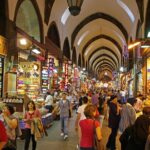
The Grand Bazaar can feel like a maze when you step in cold. This tour gives you a 1 hour 30 minute slot, which is just enough time to see how it works without getting lost.
It’s described as the largest bazaar in the city and one of the largest and oldest in the world, with more than 58 streets and around 4,000 stores. The visitor volume is huge too, with estimates ranging from 250,000 to 400,000 visitors daily. That means the bazaar can be lively, loud, and crowded even when you’re trying to move with purpose.
What’s useful is how the stalls are grouped by type of activity: jewelry and goldsmith areas, spice stores, carpets, and leather jackets. The guide’s job is to point you toward the sections that match your interests so you aren’t just bumping down random corridors.
This stop is listed as free entry. That matters because it’s your budget-friendly stretch in the day. I’d still set a small purchase plan if you want to buy something, because without a plan you can spend time comparing and lose track of the clock. And with a guide, you can ask what prices make sense and where you might find certain products.
One more reality: the bazaar is famous for shopping, but it’s also famous for crowds. If you hate crowds, go into this stop with a strategy: pick one or two categories, take a few photos, and then enjoy the atmosphere rather than trying to “see everything.”
You can also read our reviews of more private tours in Istanbul


Price and logistics: What you’re really paying for
The price is $228.29 per group for up to 12 people, lasting about 6 hours. That’s not the cheapest option per person, but it’s also not the kind of tour where you’re paying for a bus full of strangers. The private format means you get a Spanish-speaking guide and smoother handling through key stops.
Pickup is offered from your hotel or port, and the guide meets you at the front door. The route uses walking plus public transport and taxi as needed. That’s important in Istanbul, where the “distance on the map” rarely matches the “time on the street.” By building pickup into the experience, you avoid losing the best hours of sightseeing to navigation.
You also get a mobile ticket, and all fees and taxes are included where specified by the tour package. What’s not included is lunch, and public transport/taxi costs are estimated at about 8 euros. That’s a helpful planning figure if you like to budget tightly.
Admission coverage is mixed by site:
- Blue Mosque: admission ticket free
- Hippodrome: admission ticket free
- Grand Bazaar: admission ticket free
- Hagia Sophia: admission ticket not included
- Basilica Cistern: admission ticket not included
So the value equation often comes down to this: you’re paying for language, direction, and time saved, while you handle the two paid admissions yourself. In practice, that’s a pretty common way tours are built, and it can still be good value if you want solid interpretation rather than just access.
The tour also ends at Grand Bazaar Beyazıt, near Çadırcılar Cd. No:171, and the guide can take you to your hotel after the tour.
Who should book this Spanish private Istanbul tour
This is a strong fit if you want big-name sites, but you also care about understanding what you’re seeing. The tour has a clear “high-impact loop” through Sultanahmet: imperial mosque, historic sports square, a building with layered religious history, a massive cistern, then the shopping labyrinth.
I’d especially recommend it for:
- First-timers who want a structured day without guessing the order
- People who prefer explanations in Spanish
- Travelers who want a private experience, with a group size that stays manageable
It’s also a good match if you appreciate clear storytelling. One of the standout points tied to the guide (Umut Polat) is fluent Spanish and strong historical explanations, the kind that makes buildings and symbols feel connected instead of random.
If you’re the type who wants to linger for hours in one place, the pacing may feel tight. This is a 6-hour highlight reel, not a slow deep study. Still, it’s enough time to see the main elements and get context fast.
Should you book it?
Yes, if you want the Sultanahmet essentials with a Spanish-speaking guide, pickup help, and a day plan that keeps you moving in sensible blocks of time. The best reason to book is practical: interpretation plus logistics in one package.
If you’re budget-sensitive, just plan for the extra admissions at Hagia Sophia and Basilica Cistern, and keep in mind you won’t have included lunch. If you’re okay with that trade-off, this tour is a smart way to get real meaning out of Istanbul’s most famous sights without burning your day on navigation.
FAQ
What language is the guide?
The tour includes a Spanish-speaking guide, and the experience is also listed as offered in English. It’s smart to confirm which language you’ll use when you book.
How long is the tour?
It runs for about 6 hours.
What is the group size?
It’s a private tour/activity, and the group size is up to 12.
Do I get hotel or port pickup?
Yes. Pickup is offered from your hotel or port, and the guide meets you at the front door or at the port.
Where does the tour start and end?
It starts at Kurna Spa Cankurtaran (Tevkifhane Sk. No. 1, 34122 Fatih) and ends at Grand Bazaar Beyazıt (Çadırcılar Cd. No:171, 34126 Fatih).
Is lunch included?
No, lunch is not included.
Which attractions have tickets included?
Blue Mosque, Hippodrome, and Grand Bazaar are listed as free admission. Hagia Sophia and Basilica Cistern are listed as admission not included.
What should I do about transportation costs?
Public transport and taxi costs are estimated at about 8 euros, since the tour includes pickup and uses local transport methods during the day.
What is the cancellation window?
You can cancel up to 24 hours in advance for a full refund.