REVIEW · WHIRLING DERVISHES SHOWS
Istanbul: Whirling Dervishes Ceremony and Mevlevi Sema
Book on GetYourGuide →Operated by Istanbul E-pass · Bookable on GetYourGuide
A room starts quiet, then time starts spinning. This Mevlevi Sema at Hoca Rüstem Medrese turns a famous Sufi ritual into a focused, one-hour experience in central Istanbul. You’ll see the whirling dervishes, hear the live music, and get a taste of how symbolism is built into the movement.
I love two things most. First, the live music and chant set the mood right away, and the atmosphere stays respectful and calm. Second, the ceremony has real meaning baked into the details—like the color symbolism and what the whirling represents—so it feels more than a spectacle. I also appreciated that the hosts (including Kadir, from one very enthusiastic performance note) keep things running smoothly.
One thing to consider: there’s little on-site explanation during the ritual itself. If you want the story behind the spinning as you watch, plan to use the English audio guide and arrive a bit ready.
In This Review
- Key Things To Know Before You Go
- Mevlevi Sema at Hoca Rüstem Medrese: what you’re seeing
- The one-hour rhythm: tea, music, then the whirling
- Costumes and symbolism: what the whirling is supposed to mean
- Music and voices: why it’s not background noise
- Getting the best view in a small hall (and how to act)
- Price and value: is $23 a good deal for Istanbul?
- Who this fits best (and who may want a different option)
- Should you book this Istanbul whirling dervishes ceremony?
- FAQ
- How long is the Whirling Dervishes ceremony in Istanbul?
- What does the ticket price include?
- Where does the ceremony take place?
- Do I need to bring anything?
- What time should I arrive?
- Is there hotel pickup or drop-off?
- Is the venue wheelchair accessible?
Key Things To Know Before You Go
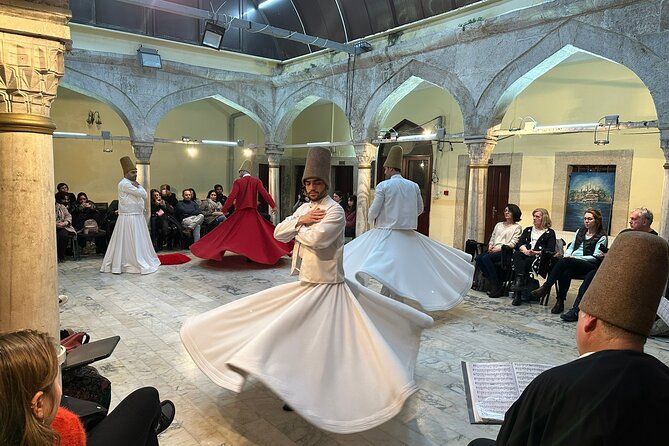
- Hoca Rüstem Medrese setting: a madrasa-like hall makes the ceremony feel intimate rather than staged.
- You’ll hear live music first: the musicians and chanting come on before the dervishes begin their whirling.
- Meaning is in the details: robes, hats, and the hand positions are part of the spiritual message.
- Bring headphones: the included audio guide is on your phone, and you’ll want it.
- Seating moves fast: front row is limited, and the room can feel tight.
- Respect matters: treat it like a spiritual service, not a concert.
Mevlevi Sema at Hoca Rüstem Medrese: what you’re seeing
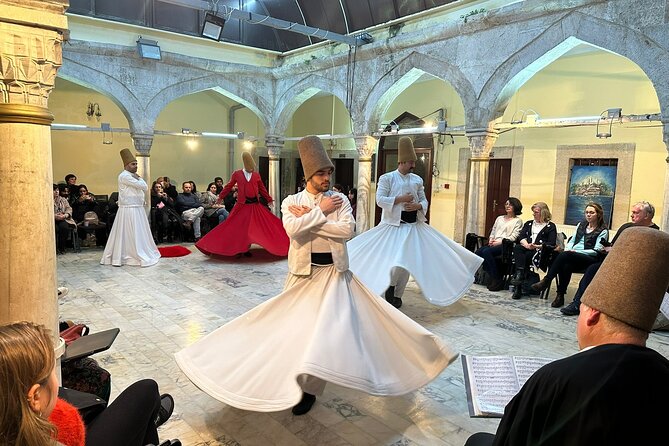
If you’ve only seen Istanbul’s big-ticket sights, this is the kind of stop that slows your pace. The Mevlevi Sema is a Sufi mystic tradition connected to Islam, and it’s tied to the Mevlevi order’s founder tradition associated with Mevlana Jelaleddini Rumi. The ritual you’ll watch is often described as having roots going back many centuries, and the version in this program is presented as a practice with a long, deep lineage—about 800 years, according to the event framing.
In plain terms, you’re not just watching dance. You’re watching a spiritual structure expressed through motion, music, and costume symbolism. That matters, because it shapes what you’ll notice: the whirling isn’t random. It’s repetitive by design, and it’s meant to feel hypnotic but controlled.
The venue also helps. Hoca Rüstem Medrese sits in the historic heart of Istanbul, and the hall style is part of the effect: close space, natural acoustics, and performers you can actually follow without craning like you’re at a stadium.
You can also read our reviews of more tours and experiences in Istanbul.



The one-hour rhythm: tea, music, then the whirling
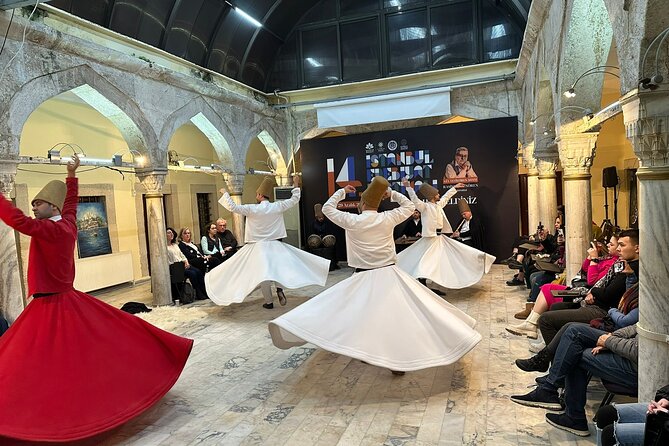
This ceremony runs about one hour from start to finish. You’ll want to arrive early and be in the hall on time—plan to be there 15 minutes before the show starts—because seating fills quickly.
Here’s the flow you should expect:
- Before the dervishes start: you’ll get hot tea (it’s served to people who arrive before the last minute), and then the live musical program begins. In real-world timing, this often takes about 20 minutes to half an hour depending on how the event settles.
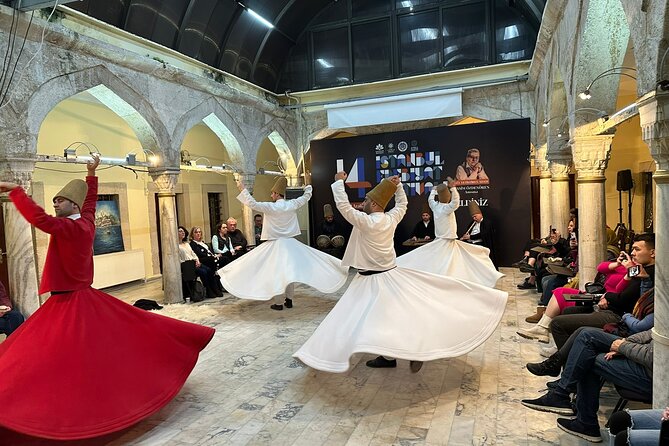
- Then the dervishes enter: the whirling begins after the music sets the tone. You’ll see the performers in their distinctive attire, spinning with a discipline that’s hard to look away from.
What I like about this pacing is that it gives you two ways to enjoy it. If you’re a music person, you’re pulled in first. If you’re a movement person, you get the whirling as the payoff. And because it’s short, you don’t have to worry about dragging attention fatigue. One hour is enough time for the mood to shift.
Costumes and symbolism: what the whirling is supposed to mean
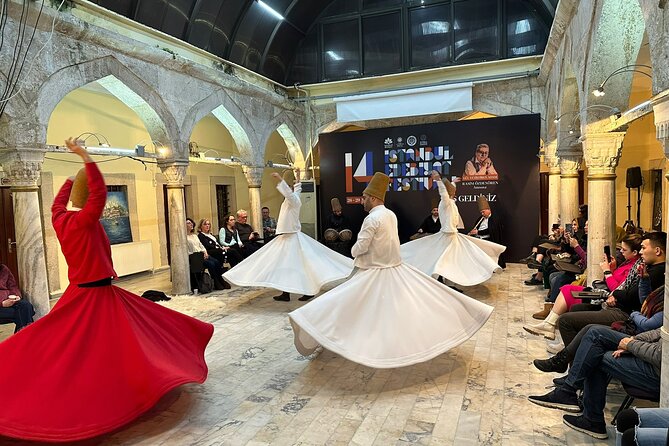
The Mevlevi Sema is famous because it’s built like a language. Even the outfits are part of the message. The event information you’re given explains that each piece has a purpose and a meaning, not just costume design flair.
Here are the symbolism points the program emphasizes:
- Black robes are linked to death.
- White robes represent birth.
- The tall hats symbolize the tombstones of the ego (your sense of self as separate and fixed).
- The whirling itself is described as being in harmony with creation—day and night, summer and winter, life and death, even the cycle of elements they reference through the veils.
You might not catch every detail in the moment, especially in a busy hall. That’s why the audio guide matters. With the guide, you can connect what you’re seeing to what it means instead of just admiring the spinning as a beautiful trick.
One neat historical tidbit from the event framing: the tradition points back to the philosopher who helped open the path of pure love and to the naming of Mevlevi through Rumi’s legacy. It even notes that Rumi’s book was a top seller in the USA at one point. Whether you know Rumi already or you’re meeting him here for the first time, it gives you a thread to follow beyond the ceremony.
Music and voices: why it’s not background noise
The live music is more than decoration. It’s part of the ritual’s structure and pacing. You’ll hear musicians performing with instruments and vocal elements, and the experience often includes chanting that sets a meditative tone.
In my view, this is where the whole thing holds together. When the music starts, it helps your brain slow down just enough to notice the pattern in the movement. When the dervishes start whirling, the rhythm keeps you from thinking of it as random spectacle.
Also, the musicians’ energy tends to read as serious and practiced. One of the best-value aspects of this ceremony is that you’re not paying just for dance. You’re paying for a full live setup that keeps tempo, builds mood, and supports the spiritual idea behind the spinning.
Getting the best view in a small hall (and how to act)
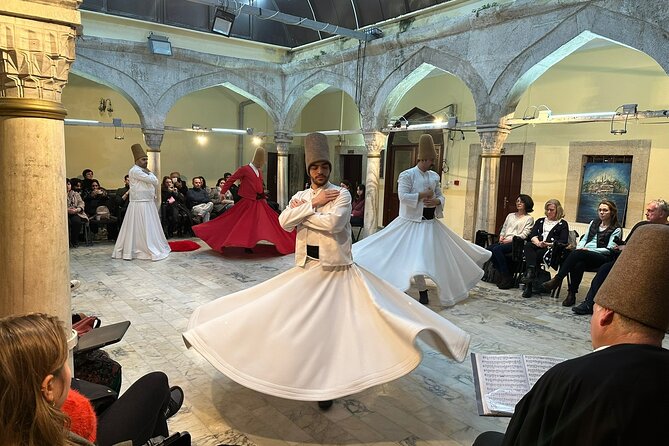
This ceremony happens in a cozy, intimate space, which is great for atmosphere—and tricky for sightlines. Many people love how close it feels, but others note the room can be over packed. That means your view can depend a lot on where you land.
A few practical tips that make a difference:
- Arrive earlier than the minimum. If you want the best angles, you’ll want time to find a good spot. Some seating is limited, and it’s easy to get stuck behind a pillar.
- Plan for footwork visibility. If you end up in the back or blocked by someone in front, you may mostly see the spinning rather than the finer details.
- Expect photography tradeoffs. The hall setup includes side panels that can be distracting in photos, so don’t assume you’ll get perfect shots no matter where you stand.
- Be quiet and respectful. This is presented as a spiritual practice, not a concert. Keep your reactions calm. Loud applause can break the tone, and some staff react when the atmosphere turns too show-like.
If you come in knowing it’s a service-like experience, you’ll get more out of it. You’ll also feel less annoyed if you can’t see every detail perfectly.



Price and value: is $23 a good deal for Istanbul?
At $23 per person for a one-hour ceremony with ticket access plus an English audio guide app, this is priced like a cultural experience rather than a full-day tour.
Here’s how I judge the value:
- You’re getting live performers, not a filmed or narrated show.
- You get interpretation support through the audio guide (and you can use it at your own pace).
- Tea is included, which sounds small, but it helps you settle in.
- The event is short. You’re not tying up half a day in the middle of a busy itinerary.
So yes, it feels like good value for Istanbul—especially if your goal is a respectful spiritual-cultural moment near major sights. If you’re only in town for a day, this one-hour slot can be the kind of memory that balances out all the sightseeing checklists.
Who this fits best (and who may want a different option)
This is a strong fit if you:
- Want an Istanbul experience beyond mosques and markets.
- Like live music and movement that you can watch closely.
- Are okay with minimal on-site commentary as long as you use the audio guide.
- Prefer something calm and focused, not a loud attraction.
You might want to reconsider if you:
- Need a lot of real-time explanation to stay engaged.
- Are uncomfortable in tight indoor spaces with limited seating.
- Are expecting a modern, guided “tour” format with extensive narration during the ceremony.
That’s not a deal-breaker. It just changes what kind of visitor you’ll be during the show. If you come prepared—headphones charged, audio guide ready—you’ll be in a much better place.
Should you book this Istanbul whirling dervishes ceremony?
If you want a short, meaningful cultural moment with live music and a ritual you can actually watch in an intimate setting, I think booking makes sense. It’s a one-hour commitment with included audio support, and the overall feel is peaceful and respectful.
Do it if you’ll treat it as a spiritual practice, arrive early enough for a good seat, and take advantage of the audio guide. Skip it (or lower expectations) if you want constant English narration and a classroom-style explanation. In that case, you might end up watching something beautiful but feeling slightly disconnected.
If you want my simple rule: come curious, come quiet, and come prepared with headphones. Then the experience is exactly the kind of Istanbul story you’ll remember.
FAQ
How long is the Whirling Dervishes ceremony in Istanbul?
It lasts about 1 hour.
What does the ticket price include?
Your ticket includes entry to the Whirling Dervishes ceremony and an audio guide app on your smartphone in English.
Where does the ceremony take place?
It takes place at the Hoca Rüstem Medrese in Istanbul.
Do I need to bring anything?
Yes. Bring headphones and a charged smartphone so you can use the audio guide.
What time should I arrive?
You should be at the hall about 15 minutes before the show starts.
Is there hotel pickup or drop-off?
No. Hotel pickup and drop-off are not included.
Is the venue wheelchair accessible?
Yes, it’s listed as wheelchair accessible.