REVIEW · ISTANBUL
Istanbul Unveiled: A Quest for the Unique and Unusual Jewels
Book on Viator →Operated by Serif Yenen Travel & Tourism Co. · Bookable on Viator
Istanbul has plenty of famous sights, but this tour sweats the unusual angles. You’ll follow the city’s underground side, plus quieter Byzantine and Ottoman stops, with a guide who links details together in plain English and keeps the pace smooth. Two things I really like right away: the small, permission-based access and the way the day mixes tea-and-street-level flavor with major monuments.
What I like most: Serif (the guide behind Serif Yenen Travel) has a talent for connecting you to places most tours can’t reach, and he’s the sort of person who answers questions without turning it into a lecture. I also appreciate the food rhythm—Turkish tea, a local lokanta lunch, and boza—so you’re not just sightseeing, you’re eating your way through the day.
One possible drawback: you’ll do a fair amount of walking and you’ll be going down into cisterns, so it’s best if you’re comfortable with uneven steps and a solid physical pace.
In This Review
- Key highlights to know before you go
- Why this tour feels like a real Istanbul detour
- Start at Küçük Ayasofya: tea first, then the timeline clicks
- Eresin Hotel Sultanahmet: the kind of access that changes the whole day
- Nakkas Oriental Rugs and an underground cistern with an exhibit twist
- Hippodrome, Seven Hills views, and why public spaces mattered
- Binbirdirek Cistern: the second-largest stop most people miss
- Columns and forums: Constantine and Theodosius in street-level form
- Lunch at a lokanta, plus boza when you want something real
- Ottoman architecture finale: Kalenderhane and Şehzade Mehmet Mosque
- Valens Aqueduct: ending with Roman infrastructure you can still see
- Price and value: what you’re paying for at $490 per person
- Who should book this tour, and who might skip it
- Should you book Istanbul Unveiled?
- FAQ
- How long is the tour?
- What language is the tour offered in?
- Is hotel drop-off included?
- What’s included in the price?
- Where does the tour start and end?
- Is this a private tour?
- Is there an age requirement and physical fitness guidance?
- What if I need to cancel?
- What sites are focused on during the tour?
Key highlights to know before you go
- Private-access Byzantine stops that feel like a behind-the-scenes perk
- Cistern time (more than one) so you see how water-storage shaped old Istanbul
- Tea, lokanta lunch, and boza tasting built into the route, not tacked on
- Panoramic viewpoints that give context fast—especially with Old City sights nearby
- Roman columns and Ottoman architecture in one logical storyline
- Serif’s English and flexibility, including accommodating dietary preferences
Why this tour feels like a real Istanbul detour
This is the kind of outing that makes Istanbul feel less like a checklist. Instead of racing between the most famous landmarks, the route keeps returning to one theme: Istanbul was layered, rebuilt, and reused for centuries—religions, empires, and practical city life all leaving their marks.
The tour also leans into the daydream part: cisterns underground, places reached by special permission, and short stops that still matter. If you like when your guide makes connections—why a column is where it is, or why one mosque looks the way it does—this format works.
And yes, the guide matters here. Multiple reviews praise Serif for being kind, organized, and able to get into places other guides can’t. If you want a tour where questions get answered well, and you’re not stuck standing around wondering what you’re looking at, this one has that advantage.
You can also read our reviews of more tours and experiences in Istanbul.

Start at Küçük Ayasofya: tea first, then the timeline clicks
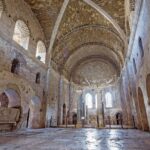
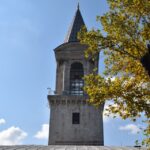
You begin at the Küçük Ayasofya Mosque area, in the garden-cafe setting where the day starts gently with traditional Turkish tea. It’s a smart opener because it does two jobs at once: it helps you settle in, and it gives you a mental map of where you are and what period you’re entering.
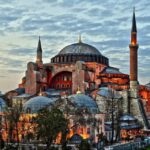
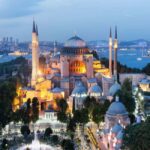
From there, you’re pointed toward why this site is important even if most visitors miss it. It’s tied to Byzantine architecture before the iconic Hagia Sophia, built under Emperor Justinian. You’re not just looking at an old building; you’re seeing how ideas and styles formed before the city’s most famous masterpiece.
Practical note: this stop is described as free admission and lasts about an hour. It’s long enough to enjoy the tea and let the guide explain the setting without rushing you.
Eresin Hotel Sultanahmet: the kind of access that changes the whole day
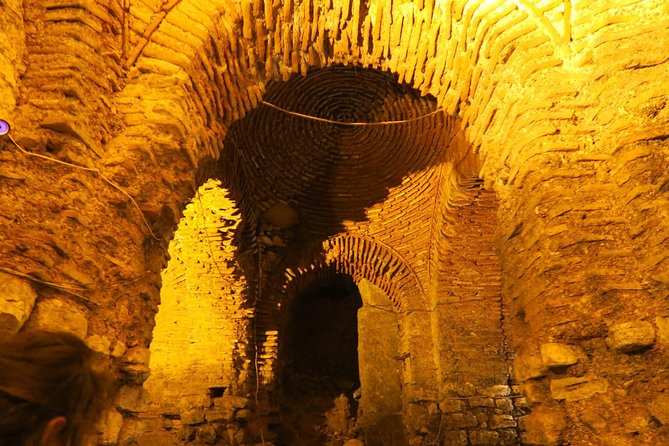
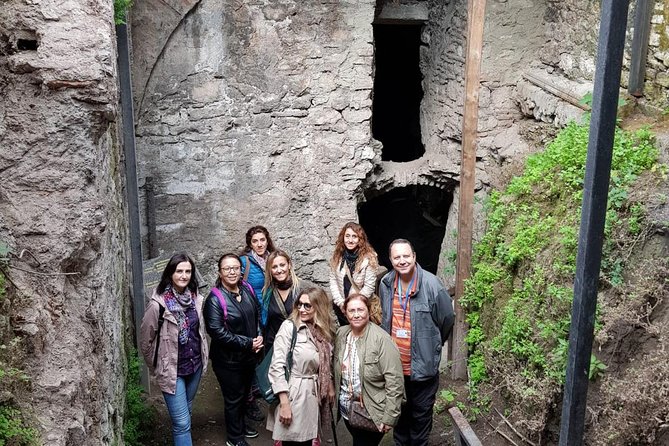
Next comes a stop near Eresin Hotel Sultanahmet, where you visit the ruins of the Byzantine Great Palace. What makes this stop stand out isn’t only what you see—it’s the fact that the visit is in a private location accessible with special permission.
That permission factor matters for two reasons. First, it changes the atmosphere. You’re not just squeezed into public viewing space. Second, it makes the palace story feel more tangible, because the guide can point out details you’d likely miss wandering on your own.
This segment is shorter—about 30 minutes—and admission is included. If you like efficient stops that still feel special, this fits the tour’s overall style.
Nakkas Oriental Rugs and an underground cistern with an exhibit twist
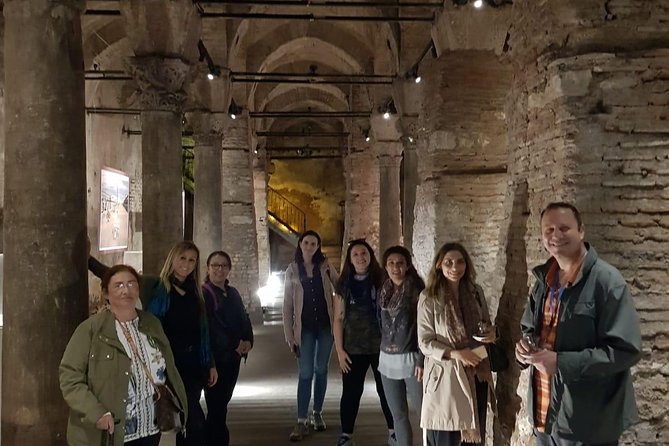
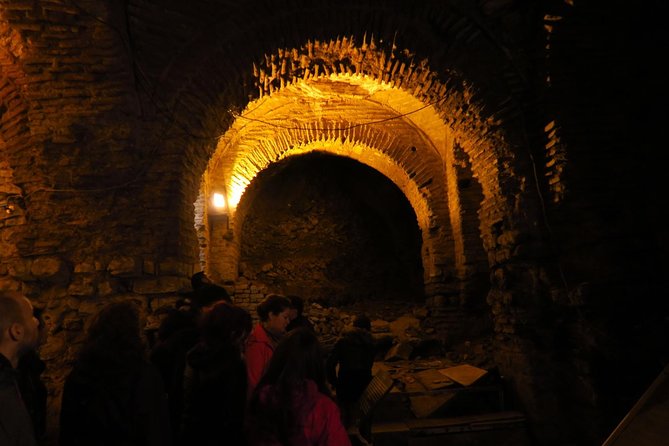
After that, you head to Nakkas Oriental Rugs & Textiles, and the route turns fully underground. Here you get an exclusive visit into a Byzantine cistern that requires special access permission. The cistern is paired with an exhibition focused on the ancient Hippodrome, which is a clever way to link water, infrastructure, and public entertainment.
This stop is about 45 minutes and includes admission. The time matters: it’s enough to slow down inside and let the guide set the scene, but not so long that you feel trapped indoors.
One small caution: cistern spaces can be cooler and dimmer, so wear shoes that are comfortable and secure. The tour recommends comfortable walking shoes, and that advice really applies once you start descending and moving between sites.
Hippodrome, Seven Hills views, and why public spaces mattered
Then you surface for two short stops that help you understand the city’s old public life.
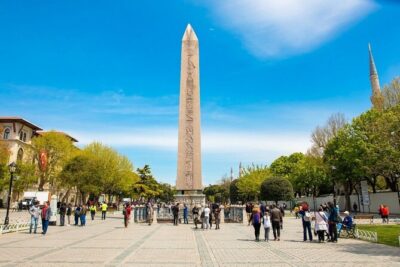
At the Hippodrome, you step into the heart of Constantinople’s public entertainment—famous for chariot races and social gatherings. Even if you’ve read about the Hippodrome before, seeing it in this day’s context makes it easier to picture the scale of crowds and the importance of imperial spectacle.
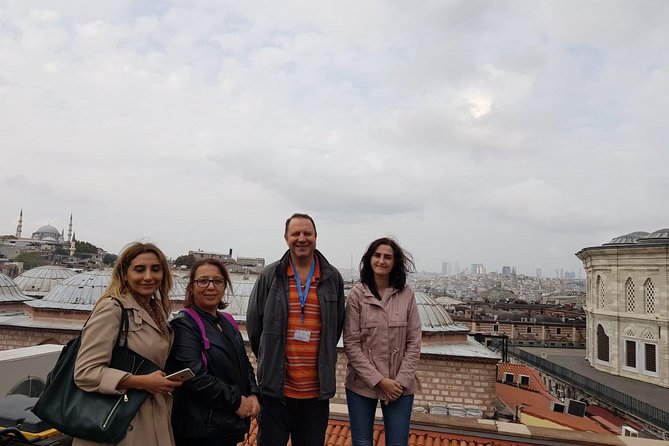
You’ll also get a viewpoint stop at the Seven Hills Hotel panoramic terrace. This is the kind of break that makes the rest of the day easier. A good view helps you connect the dots quickly: where you started, what’s near, and how the Old City forms a web of elevations.
Both of these are short—about 20 minutes each—and the Hippodrome stop is free admission.


Binbirdirek Cistern: the second-largest stop most people miss
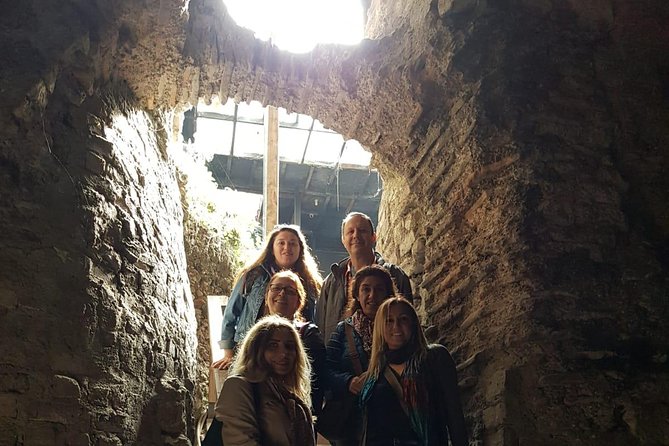
Now for one of the most compelling “why this tour” moments: the Binbirdirek Cistern, also known as the Cistern of Philoxenos. It’s described as the second largest cistern in Istanbul, which alone makes it worth seeking out.
But the big reason this tour gives it attention is that many visitors focus on only one cistern. Here, you’re getting a second perspective on how the city stored water and how underground spaces became part of everyday survival.
You’re also told about a famous name who visited: Mark Twain. He was captivated by what he saw and wrote his impressions. That detail is the kind of guide insight that makes a site feel more alive than just another photo op.
This stop lasts about 30 minutes and includes admission. If you like architecture and atmosphere, you’ll likely feel like you’re seeing the city from a different planet.
Columns and forums: Constantine and Theodosius in street-level form
After the cisterns, the tour climbs back into politics and power—stone versions of leadership you can actually stand near.
At the Forum of Constantine, you see the Column of Constantine, the only surviving monument linked to Emperor Constantine’s decision to declare Istanbul the new capital of the Roman Empire around 1700 years ago. It’s short—about 20 minutes—but the guide’s context makes the column feel less like a landmark and more like a message in stone.
Next is lunch time, then later you return to the “forum” idea with the Forum of Theodosius. This forum, originally constructed by Emperor Theodosius I in the late 4th century, was once a center of public life with arcades, shops, and marketplaces. At the core was the tall Column of Theodosius, with reliefs that spiraled upward.
Even though the original forum is mostly gone, the remnants still help you imagine public processions and political theater. This stop is brief—around 15 minutes—but it’s structured so you don’t just look; you understand what the space used to do.
Lunch at a lokanta, plus boza when you want something real
The tour builds in a lokanta-style lunch near Cemberlitas Sutunu. The selling point here is speed and variety: fast service, dishes aimed at local daily routines, and a menu that fits shopkeepers and regular life. Lunch is included, and there’s time set aside—about 45 minutes.
This is also where the guide’s care can show. In reviews, Serif is praised for being attentive, including helping a vegetarian choose the best option. If you have any dietary constraints, it’s worth mentioning them when you meet the guide, since this tour clearly has room to handle preferences.
Later comes a very Istanbul detail: boza tasting at Vefa Bozacisi. Boza is a fermented Turkish drink with a distinctive flavor and texture, and it’s treated as a local classic. This is included, lasts about 15 minutes, and it gives you a break from constant sightseeing while still feeling culturally specific.
If you like food stops that feel like part of the city instead of an obligatory souvenir stop, this pairing works.
Ottoman architecture finale: Kalenderhane and Şehzade Mehmet Mosque
After lunch and boza, you start stacking architectural stories again.
First is Kalenderhane Camii, which started life as the Theotokos Kyriotissa Church. You visit from the outside only, but the building is still striking: a mix of Byzantine and Islamic styles, with domes and detailed brickwork. Since you’re not inside, the best use of this time is to slow down and look closely at the transitions in design.
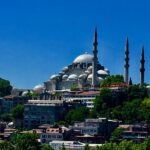
Then you finish with the Şehzade Mehmet Mosque, designed by Mimar Sinan. The tour frames it as a high point of 16th-century Ottoman architecture. It was commissioned by Sultan Süleyman the Magnificent in memory of his son, and the guide explains how Sinan’s design choices and the calligraphy connect to that emotional and political context.
This is about 30 minutes with free admission, and it’s a calm, uplifting ending compared to the louder public-space stories earlier in the day.
Valens Aqueduct: ending with Roman infrastructure you can still see
The last chapter is the Valens Aqueduct (Bozdogan Kemeri) on the European side of Istanbul. It’s an imposing Roman structure stretching across the skyline, built in the 4th century to supply water to Constantinople.
This makes a nice finish for the tour because it ties everything together: water storage underground (cisterns), water supply across the city (aqueduct), and the practical systems that let empires thrive.
You only spend about 10 minutes here, and the tour ends around the aqueduct. It’s a quick close that works well—enough time for photos and reflection, not so long that you feel trapped at the end.
Price and value: what you’re paying for at $490 per person
At $490 per person, this tour sits in a mid-to-upper range. The value is not that you’re paying for a long list of normal sights. The value is what’s included and how the day is built.
You get:
- entrance costs and a professional guide
- coffee and/or tea, plus Turkish tea during the afternoon
- a map
- boza tasting
- lunch
- admissions at the included cistern and special access sites
But the bigger reason the price can make sense is the permission-based visits. Ruins of the Byzantine Great Palace and an exclusive cistern experience are the kind of access that can be hard to arrange on your own. Add in English-speaking guiding, hotel-area drop-off described as part of the experience, and you have a day that’s more organized than most DIY Old City plans.
If you’re the type who likes learning, asking questions, and getting into places you wouldn’t easily find yourself, you’ll probably feel the cost is fair for what you get.
Who should book this tour, and who might skip it
You’ll probably love this tour if:
- you want Istanbul beyond the main postcard stops
- you like Byzantine and Ottoman architecture
- you enjoy underground sites like cisterns
- you want a guide who can explain context without making it stiff
- you care about food stops that feel local (tea, lokanta lunch, boza)
You might want to skip or consider another option if:
- you dislike getting down into underground spaces
- you don’t enjoy a route that includes short stops packed with interpretation
- you prefer long free time to wander alone
Should you book Istanbul Unveiled?
If your goal is to understand Istanbul’s layers—Byzantine structures, Ottoman design, and Roman infrastructure—this tour is a strong pick. The biggest selling points are the special permission visits and Serif’s reputation for organized pacing and genuine attention, including dietary flexibility.
If you’re staying centrally and you want a guided day that mixes monument-level sights with the city’s underground side, this one earns a spot on your shortlist.
FAQ
How long is the tour?
It runs about 6 to 7 hours.
What language is the tour offered in?
The tour is offered in English.
Is hotel drop-off included?
Yes. The experience includes hotel drop-off at centrally located accommodations.
What’s included in the price?
Included items are entrance costs, a professional guide, coffee and/or tea, an Istanbul map, boza tasting, and lunch.
Where does the tour start and end?
It starts at Küçük Ayasofya Mosque (Küçük Ayasofya, Fatih) and ends around the Aqueduct of Valens (Kalenderhane area, European Side).
Is this a private tour?
Yes. It’s described as private, meaning only your group participates.
Is there an age requirement and physical fitness guidance?
The minimum age is 8 years old, and the experience notes that travelers should have a strong physical fitness level. Comfortable walking shoes are recommended.
What if I need to cancel?
You can cancel for a full refund if you cancel up to 24 hours in advance of the experience start time.
What sites are focused on during the tour?
A major focus is Istanbul’s cisterns and underground history, plus Byzantine and Ottoman landmarks like Küçük Ayasofya, the Hippodrome, Kalenderhane Camii, Şehzade Mehmet Mosque, and the Valens Aqueduct.