REVIEW · GUIDED
Imperial Traces of Istanbul – Private Guided Signature Tour
Book on Viator →Operated by Splendid Turkey · Bookable on Viator
One sentence can say a lot: Ottoman and Byzantine in one walk. This private guided Signature Route strings together Istanbul’s biggest “must-see” landmarks in a smart order, ending in the Grand Bazaar so you can turn history into shopping. You get a professional guide and a mobile ticket, and the pacing is built for a realistic half-day.
I especially like the way this tour centers Topkapi Palace and keeps it manageable. The private format also gives you room to shape the day, like when guide Yaseen adjusted the route to fit an afternoon prayer at Hagia Sophia.
One possible drawback: several major sites charge entry fees on top of the $60 price. Plan for Basilica Cistern, Hagia Sophia, and Topkapi Palace as extra costs, and expect some walking across multiple zones.
In This Review
- Key things to know before you go
- Why this private Istanbul route works in 4–6 hours
- Price and extra admissions: what you’re really paying
- Stop 1: Hippodrome and Sultanahmet Square monuments
- Stop 2: Basilica Cistern’s marble forest and Medusa heads
- Stop 3: Topkapi Palace without getting lost in the palace maze
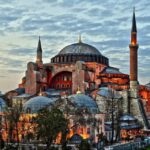
- Stop 4: Hagia Sophia’s cathedral-to-mosque layers
- Stop 5: Grand Bazaar as a real shopping lab, not a time-waster
- Stop 6: Blue Mosque tiles and included entry
- Meet your guide: what you’ll feel during the day
- Who this tour suits best (and who should reconsider)
- Should you book Imperial Traces of Istanbul?
- FAQ
- How long is the Imperial Traces of Istanbul private guided signature tour?
- What is the price per person?
- Is the tour private, or shared with other people?
- Are tickets included for all the stops?
- What language is the tour offered in?
- Where does the tour start and end?
- Can I cancel and get a refund?
Key things to know before you go
- Private guide, flexible pace: you can spend more time where you care and pass more quickly when you don’t.
- Topkapi Palace focus without chaos: a guide helps you move through the palace’s courtyards efficiently.
- Basilica Cistern photography moment: the dim light, water reflections, and Medusa-head column bases are a standout.
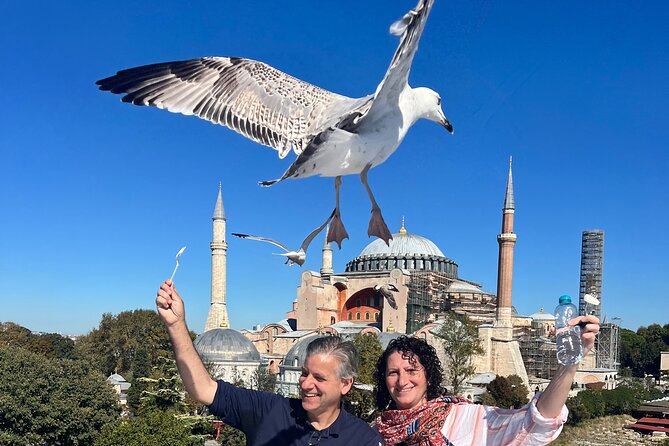
- Layered Hagia Sophia: you’ll see the building’s Christian-to-mosque story in the architecture and interior details.
- Grand Bazaar time that fits shopping goals: your guide can shape how much you browse and where you stop.
Why this private Istanbul route works in 4–6 hours
This tour is built for people who want the heavy hitters without wasting hours figuring logistics. You start at Sultanahmet’s Hippodrome area and move forward through Istanbul’s “historic core,” finishing near the Grand Bazaar around Beyazıt. At roughly 4 to 6 hours, it’s long enough to feel like a real day out, not just a photo sprint.
The private format matters more than you might think. You’re not sharing the day with a big crowd, so your guide can slow down when you’re curious and speed up when you’re ready to move on. That’s especially useful at huge sites like Topkapi, where wandering on your own can turn into decision fatigue.
Another plus: this is offered in English, and confirmation is sent at booking. If you like a plan but still want control, this style hits a nice balance.
You can also read our reviews of more guided tours in Istanbul


Price and extra admissions: what you’re really paying
The advertised price is $60.00 per person, and it’s for a guided private tour with a professional guide plus key structure time at several stops. But entry fees for some of Istanbul’s biggest sights are not included, so the final cost depends on which stops you want to spend time inside.
Here’s what’s explicitly listed as extra versus included:
- Included: the Hippodrome stop includes admission ticket time, and the Blue Mosque includes admission.
- Not included (extra cost):
- Basilica Cistern: TRY1,500.00 per person
- Hagia Sophia: €25.00 per person
- Topkapi Palace: TRY2,400.00 per person
- Free: Grand Bazaar entry is free.
So, this tour is good value if you plan to actually do the indoor highlights at the paid sites. If you’d rather skip one or two, your spending can drop, but you’ll want to tell your guide early so the day still feels tight.
Also note the tour requires good weather. That matters because your path includes outdoor-to-indoor movement across multiple areas.
Stop 1: Hippodrome and Sultanahmet Square monuments
You begin at the Hippodrome area, now Sultanahmet Square, anchored by the Serpent Column. This site used to be the Byzantine Empire’s major public hub—chariot racing, yes, but also political gatherings and big crowds.
Even though most of the original stadium structure is gone, the ground still holds major monuments you can see:
- The Obelisk of Theodosius, a 3,500-year-old Egyptian obelisk brought to Constantinople
- The Serpent Column, bronze with origins tied to Delphi and a Greek victory over the Persians
- The Walled Obelisk, a simpler stone obelisk from the reign of Constantine VII
What I like about starting here: it gives you a “map in your head” for the day. You understand where you are in Constantinople’s old social life before you head underground to the Basilica Cistern or up through Ottoman power at Topkapi.
This stop is listed for about 30 minutes, so it’s not a long lecture. It’s enough time to connect the dots and get moving.
Stop 2: Basilica Cistern’s marble forest and Medusa heads
Next comes the Basilica Cistern, a 6th-century underground water storage built under Byzantine Emperor Justinian I. Think of it as an interior “time capsule” where engineering turns into architecture.
You’ll walk into a dim space with 336 marble columns arranged in 12 rows, supporting a ceiling overhead. Part of it is still filled with water, so the columns reflect in a way that feels extra surreal—more cathedral-like than you expect from a cistern.
Two columns have Medusa heads as bases, and they’re the kind of detail that makes you pause even if you’re not usually into myth. You don’t need a background story to appreciate the mood; the environment does most of the work.
This stop runs about 40 minutes. Since you’re going below ground, plan for it to feel cooler and darker than street level. Also, if you’re the type who likes to take photos, build in time for that because the lighting can make you slow down without meaning to.
Stop 3: Topkapi Palace without getting lost in the palace maze
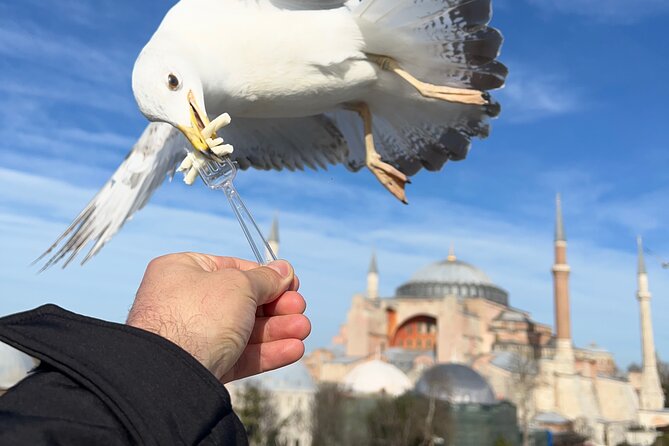
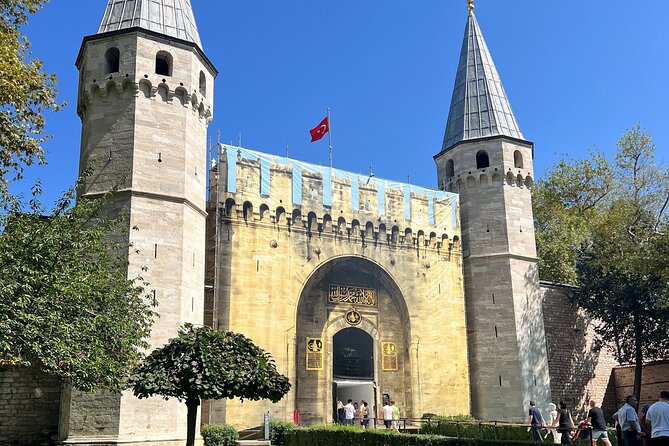
Topkapi Palace is the big one on this route, and it’s priced like a big one too—so it helps to have a guide. It served as the primary residence and administrative center of Ottoman sultans for nearly 400 years, from the 15th to the 19th centuries.
Sultan Mehmed II built the palace after the conquest of Constantinople in 1453, and it sits on a promontory with views over the Bosphorus and the Golden Horn. That makes it useful beyond just museum time: you’re also getting context for why the Ottomans placed power here.
You’ll cover major highlights such as:
- The Imperial Gate, leading into the First Courtyard
- The Harem, with intricately decorated spaces for the sultan’s family and concubines
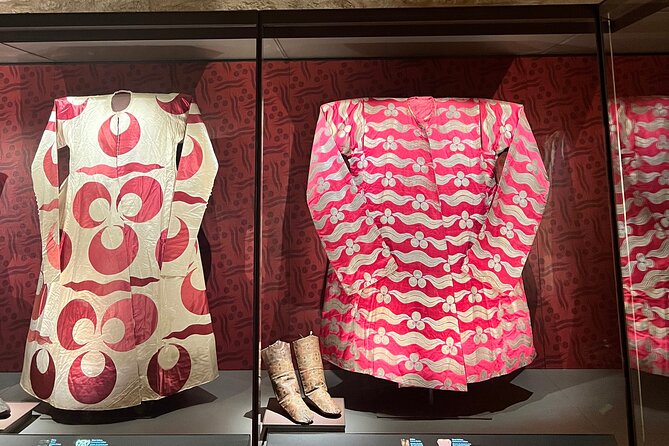
- The Treasury, including famous items like the Topkapi Dagger and the Spoonmaker’s Diamond
- The Sacred Relics, artifacts of religious significance
Topkapi is sprawling—courtyards, pavilions, gardens, and a lot of walking. That’s why the private guide angle matters. In particular, the guides on this route are known for steering you through key areas in an efficient way so you’re not stuck choosing between “important” and “interesting” every five minutes.
This stop is listed as about 2 hours. That’s enough time to see the headline rooms without turning the palace into an all-day endurance test.
You can also read our reviews of more private tours in Istanbul





Stop 4: Hagia Sophia’s cathedral-to-mosque layers
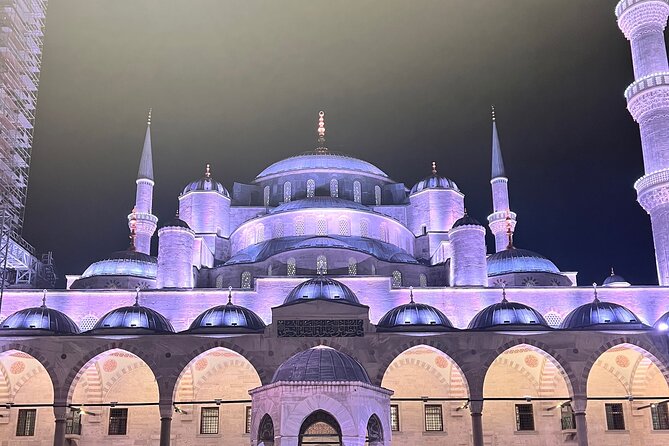
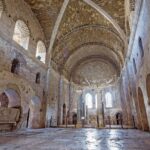
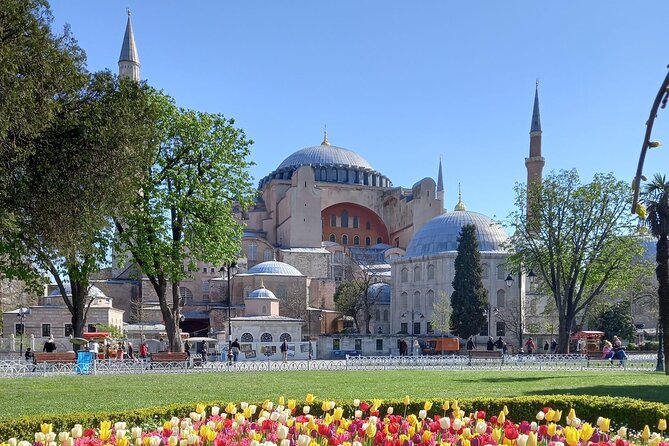
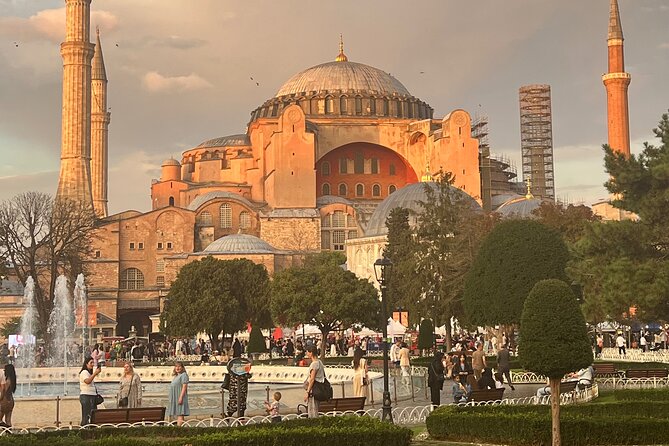
Then you’ll head to Hagia Sophia, one of the most recognizable buildings on Earth. It started as a cathedral in Constantinople, constructed between 532 and 537 AD under Emperor Justinian I, and it was the world’s largest building at the time.
The structure’s power is in its layers. It served as an Eastern Orthodox cathedral for almost 1,000 years, became a mosque after the Ottoman conquest in 1453, and then turned into a museum in 1935. In 2020, it reconverted into a mosque, but it still operates as a historic and cultural monument, welcoming people from around the world.
Inside, you’ll encounter architecture that blends Christian and Islamic design. Expect mosaics and marble pillars, plus large Ottoman-era calligraphic panels added after the mosque conversion.
This stop is about 40 minutes, and you’ll want that guided time to understand what you’re looking at—especially because the building’s story is told through details, not just one grand room. One smart thing to know: because it’s a functioning mosque now, your guide may adjust timing based on prayer moments. That flexibility is one of the reasons this route can feel smoother than a strict self-guided schedule.
Stop 5: Grand Bazaar as a real shopping lab, not a time-waster
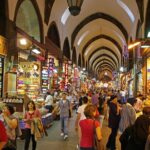
After the monumental sites, the day shifts into something more everyday: the Grand Bazaar (Kapalıçarşı). This is one of the oldest and largest covered markets in the world, established in the 15th century not long after the Ottoman conquest.
The basics you should know so it makes sense when you’re inside:
- It spans over 30,000 square meters
- It contains more than 4,000 shops
- It’s a maze of streets and alleys under domed roofs and arched passages
The shops sell everything from carpets and textiles to jewelry, ceramics, and spices. It’s not just a tourist funnel; it’s part of Istanbul’s working commercial life.
This stop is about 1 hour, with entry listed as free. That time can still feel short in the bazaar, so I like that a private guide can help you set a goal. For example, one guide on this route is known for tailoring the shopping portion to what you actually want—so you’re not wandering for 60 minutes collecting random clutter.
If you hate crowded shopping areas, tell your guide your pace ahead of time. The whole point of a private tour is you steer it, not the other way around.
Stop 6: Blue Mosque tiles and included entry
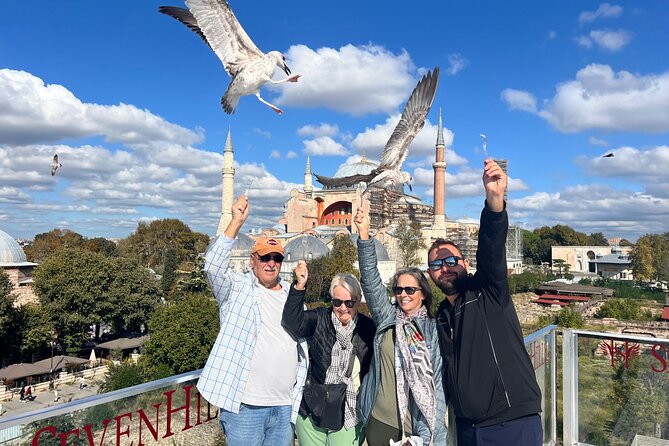
You finish at the Blue Mosque (Sultan Ahmed Mosque), built between 1609 and 1616 under Sultan Ahmed I. The nickname comes from the blue tiles inside, and the exterior silhouette is easy to spot with six minarets.
This is a strong closing stop because it’s iconic and visually concentrated. After Topkapi and Hagia Sophia, the Blue Mosque gives you a different kind of wow—smaller in scope than a palace, but incredibly direct in design.
Admission is listed as included, and this stop runs about 30 minutes. That timing is just right for most people: enough to see the key features without feeling rushed at the end of the day.
Meet your guide: what you’ll feel during the day
The difference between an okay tour and a great one is often the guide’s style—and this one is known for being personable and practical. Names that come up include Mehmet and Yaseen, both described as thoughtful and tuned to the group.
Here’s what that tends to translate into while you’re walking:
- You get clear direction on where to go next, which reduces wasted time
- The guide focuses on what matters most instead of trying to cover everything
- You can choose to go deeper on some sites and treat others more like a pass-by
That last point is underrated. Istanbul is full of “too much to see” pressure. With a private guide, you can decide what you want in detail and what you just want to understand at a glance.
Also, it’s worth noting that the tour is described as transparent about additional admission costs. That honesty helps you plan your budget instead of being surprised mid-day.
Who this tour suits best (and who should reconsider)
This private signature route is a great match if:
- You’re in Istanbul for a short stay and want a high-hit itinerary
- You care about both Byzantine and Ottoman architecture
- You want a guide who can adjust the day around prayer time or personal priorities
- You like having a plan but still want choices at major stops
It might be less ideal if:
- You want fully included admissions (this one has several paid sites)
- You dislike walking between major attractions and museums
- You only want street-level sightseeing and skip interiors
One more practical point: the itinerary includes both outdoor and indoor segments, and the tour requires good weather. If you’re visiting in a season where rain is common, you’ll want to be ready to adapt dates.
Should you book Imperial Traces of Istanbul?
Book it if you want Istanbul’s biggest landmarks in one coordinated half-day, guided by someone who knows how to keep big places from becoming overwhelming. The structure works well because you start with orientation at the Hippodrome, hit standout interiors like Basilica Cistern, then go straight into the heavyweights of Topkapi and Hagia Sophia before ending with real local energy at the Grand Bazaar.
Don’t book it without budgeting for the extra admissions. The $60 price is only part of the story, especially since Topkapi, Hagia Sophia, and Basilica Cistern are listed with separate entry fees.
FAQ
How long is the Imperial Traces of Istanbul private guided signature tour?
The tour runs about 4 to 6 hours.
What is the price per person?
The price is $60.00 per person.
Is the tour private, or shared with other people?
It is a private tour/activity, meaning only your group participates.
Are tickets included for all the stops?
No. Basilica Cistern, Hagia Sophia, and Topkapi Palace have admission fees listed as not included. The Blue Mosque and the Hippodrome stop include admission ticket time, and Grand Bazaar entry is free.
What language is the tour offered in?
The tour is offered in English.
Where does the tour start and end?
It starts at the Serpent Column area: Binbirdirek, At Meydanı Cd No:53, 34122 Fatih/İstanbul, Türkiye. It ends at the Grand Bazaar: Beyazıt, 34126 Fatih/İstanbul, Türkiye.
Can I cancel and get a refund?
Yes. You can cancel up to 24 hours in advance for a full refund.