REVIEW · ISTANBUL
Half Day Walking Tour of Old Istanbul
Book on Viator →Operated by SGA Travel · Bookable on Viator
Old Istanbul hits you fast. This half-day walking route links Sultanahmet Square, the Blue Mosque, Hagia Sophia, and the bazaar area, so you see how layers of Istanbul overlap in real life. I love the local perspective you get from the guide, and I love that entrance tickets are handled for the big indoor stops. One watch-out: the tour is listed at about 4 hours, but the pace can stretch longer if you pause for stories or need time to explore.
You start near the German Fountain at Sultanahmet, and you finish around Spice Market in Eminönü. It’s also a small group (max 8), which matters here because you’ll be moving through crowded streets and still want time to look up—at minarets, tiles, and that grand “how did they build this?” feeling.
By the end, you’re not just shopping. You’re bouncing from monuments to book sellers to tiled mosques, with a clear thread of how Istanbul works day to day. If you want a tour that keeps you oriented and moving, this fits well—just bring comfortable shoes and be ready for a bit of walking.
In This Review
- Key things I’d plan around
- From German Fountain to Sultanahmet Square’s “read the stone” lesson
- Blue Mosque tiles: your eyes will do most of the work
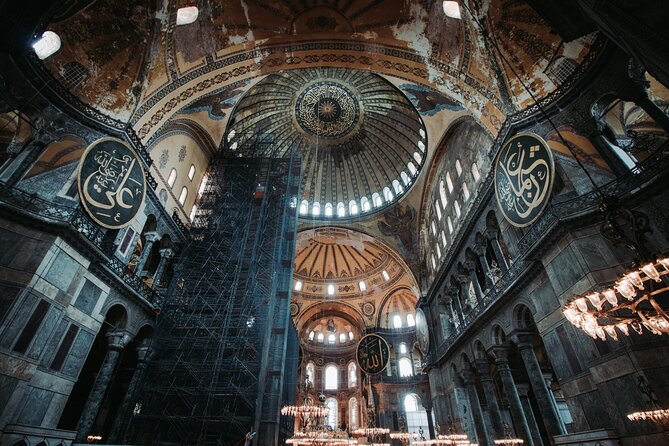
- Hagia Sophia (Ayasofya): where Christian and Islamic elements share the same frame
- Grand Bazaar area: not just shopping, but how bargaining culture works
- Sahaflar Çarşısı: the old book bazaar where printed history feels close
- Süleymaniye Mosque: classical architecture plus Bosphorus views
- Rüstempaşa Mosque: İznik tiles up close (small building, big pattern energy)
- Spice Market finish: tastings, sections, and real shopping
- Price and timing: value depends on your pace
- What you get most from: a guide who connects the dots
- Who this tour is for
- Should you book this half-day walking tour of Old Istanbul?
- FAQ
- How long is the Old Istanbul walking tour?
- What time does the tour start?
- Where do I meet the guide?
- Where does the tour end?
- Is the tour in English?
- Is there a limit on group size?
- Which entrance tickets are included?
- What’s included in the price?
- What’s not included?
- Is it dependent on good weather?
- Can I cancel for a full refund?
Key things I’d plan around
- Small group size (up to 8) makes mosque-to-bazaar navigation feel calmer
- Entrance tickets included for key sights, including Hagia Sophia
- Multiple mosque styles in one day: imperial grandeur and intimate tile work
- Bargaining culture and street logic at the Grand Bazaar area
- Old book browsing at Sahaflar Çarşısı for a different bazaar angle
- A food-and-spice finish at the Spice Market with tastings
From German Fountain to Sultanahmet Square’s “read the stone” lesson
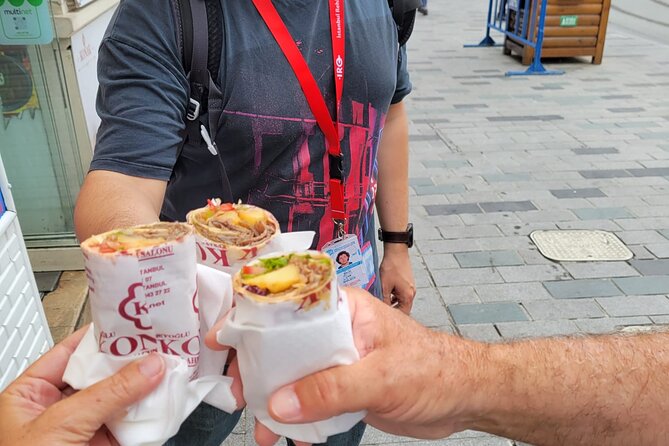
Most walking tours start with a landmark. This one starts with a landmark that helps you orient fast. Your meeting point is in Sultanahmet, in front of the German Fountain, and your guide sets the tone with stories that connect the buildings to the people who built, ruled, and prayed there.
Sultanahmet Square is where you start noticing how Istanbul repeats itself: columns, emperors, religious shifts, and reused symbols. You’ll see the Egyptian Obelisk, the Serpentine Column, and the Column of Constantine Porphyrogenitus. The names sound like classroom notes, but on the ground they’re visual anchors. You’ll also spot the Colossus column mentioned in the tour, which helps you connect what you see to why it’s here at all.
What I like about this start is the pace. It’s not a long history lecture. It’s short stops with enough context that later, when you’re facing mosaics and minarets, you’re not just collecting photos. You’re building a mental map.
Practical tip: wear layers. Sultanahmet streets can feel open and breezy in the morning, then get more crowded and warm as you move toward the bazaar area.
You can also read our reviews of more walking tours in Istanbul



Blue Mosque tiles: your eyes will do most of the work
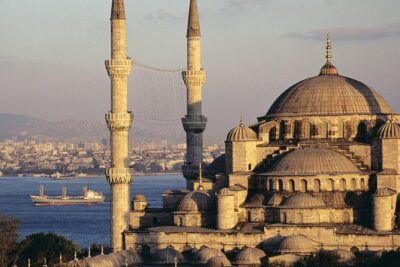
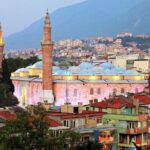
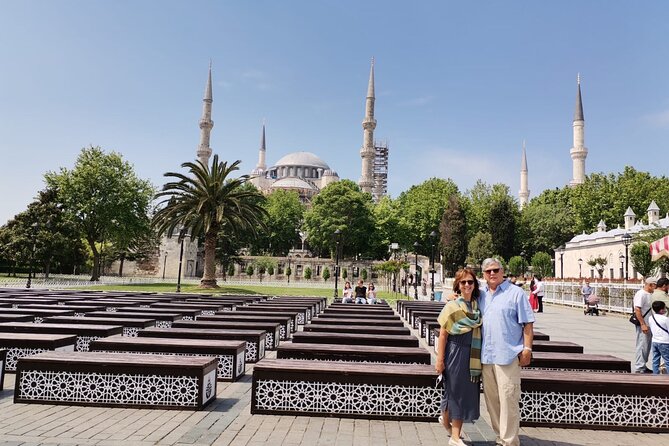
The Blue Mosque stop is brief on paper, but it’s built for maximum payoff. You’ll enter the mosque complex, and your guide points out what makes it famous: the six minarets and the interior tiles that give the mosque its nickname once you’re inside.
Outside, you won’t see anything “blue.” That’s the point. The real visual wow lands in the interior, with blue-patterned ceramics prepared for the mosque in the 17th century. The tour also frames the mosque as more than just a prayer space. You’ll hear that it functioned as a kind of social complex where people used to connect, not only worship.
If you go in expecting a museum, you might miss the atmosphere. Keep your eyes up and also slow down. The interior decoration works best when you let it pull you around: arches, tile panels, and the way light hits surfaces.
Small drawback to note: this is a busy site. A short timed visit means you’ll have to choose. If you’re the type who wants to read every inscription and study every panel, you may want extra time before or after your guide’s stop.
Hagia Sophia (Ayasofya): where Christian and Islamic elements share the same frame
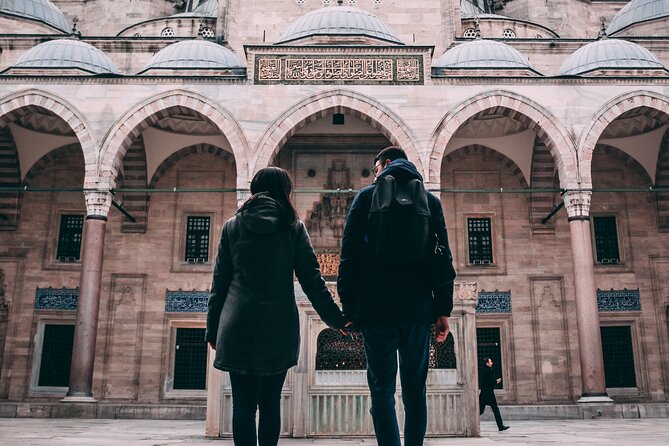
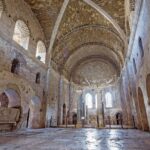
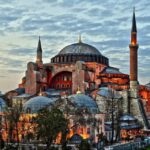
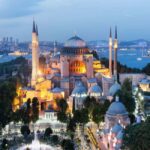
Right after the Blue Mosque, the route continues to Ayasofya, better known to most visitors as Hagia Sophia. Here, the tour focuses on what you’ll actually notice in your walk-through: Christian and Islamic elements in one space.
This is valuable because Hagia Sophia is hard to interpret if you’re standing there with only general knowledge. Having someone explain what you’re seeing helps you “decode” the building. And when you do that, the visit becomes less about checking off a landmark and more about understanding how Istanbul’s identity changed over time.
The stop time is about 30 minutes, and the entrance is included. That’s one of the clean value wins of this tour: you’re paying for guided access to the places that typically eat up time and attention on your own.
Grand Bazaar area: not just shopping, but how bargaining culture works
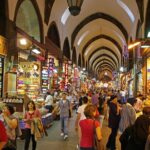
From Hagia Sophia, you move toward the Grand Bazaar area along Divanyolu Street, which the tour connects to early mapping credited to Constantine the Great. Even if you don’t memorize the ancient timeline, it helps to hear the story while you’re walking a corridor that still feels important.
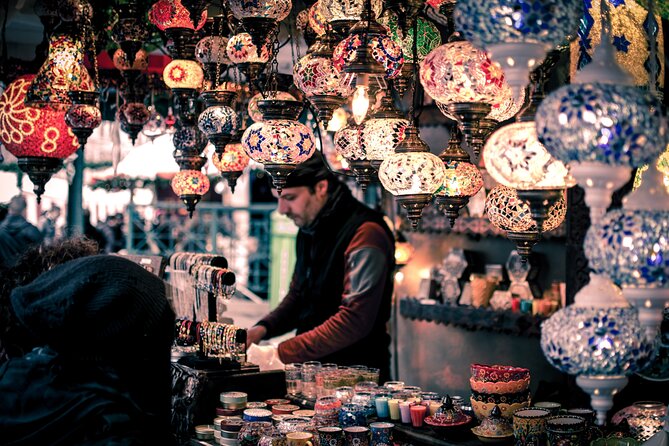
Once you reach the bazaar, the guide shifts you from “what is here” to “how it works.” You’ll spend time wandering through the bazaar backstreets and hearing about the everyday rhythm of bargaining culture—how locals approach buying and why the process looks the way it does.
Here’s the practical value: Grand Bazaar can overwhelm you. Hundreds of stalls can feel like visual noise. A guide helps you skim smarter. Instead of running from one shop to another, you can choose where you want to linger—especially if you’re looking for textiles, ceramics, or small gifts.
Time note: your bazaar portion includes multiple stops right around the same zone. That’s great for variety, but it also means you won’t have hours inside one single hall. If you’re hoping for serious shopping time, treat this as a guided intro and plan follow-up on your own.
Sahaflar Çarşısı: the old book bazaar where printed history feels close
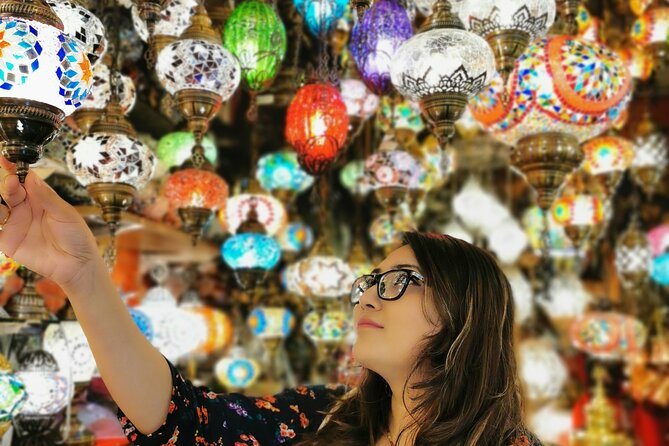
Next you’ll visit Sahaflar Çarşısı, the Old Book Bazaar. This stop is only about 15 minutes, but it breaks the pattern of “big monuments, then endless shopping.”
You’ll learn about the significance of early Turkish printing and you’ll see both historical books and modern ones aimed at students. The tour also points out that Istanbul University is next door, so the bookstore area sits in a living academic neighborhood, not just a tourist corridor.
If you like places that feel specific—not generic—this is one of the most satisfying stops. You’re not just looking at souvenirs. You’re seeing stacks and shelves tied to reading culture.
If you’re short on time, don’t rush. Even a quick look at how books are displayed here tells you the kind of place it is.





Süleymaniye Mosque: classical architecture plus Bosphorus views
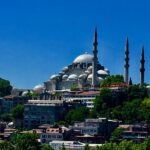
Then you head to Süleymaniye Mosque complex, designed by Mimar Sinan. The tour gives you the basics that matter while you’re there: the complex dates to the mid-1500s (construction between 1550 and 1557) and it’s an imperial-scale work of architecture.
What makes this stop feel different from the Blue Mosque is the setting. You’ll get a chance to appreciate views toward the Bosphorus and the Golden Horn. Architecture plus a wide horizon changes how you experience the building. Instead of only focusing on tiles and ornament, you’re also seeing how the mosque sits in the city.
You’ll also have a moment to sit on a carpet inside and learn about Islamic history. That’s a small detail, but it helps you reset. It slows your brain down, which is rare during a walking tour that moves quickly between major sights.
Practical note: if you’re sensitive to crowds or the sound level inside mosques, take it slow here. It’s worth the calm pause.
Rüstempaşa Mosque: İznik tiles up close (small building, big pattern energy)
After Süleymaniye, the route goes to the tiny Rüstempaşa Mosque. This is the tile lover’s stop. You’ll see famous İznik tiles in a wide variety of floral and geometric designs, and the tour points out that the tiles aren’t only decorative surfaces. They cover key areas including the porch façade and interior elements like the mihrab and minbar.
The tour mentions around 80 different patterns, and that number starts to make sense once you’re looking at the surfaces. Instead of thinking of tiles as one “style,” you notice them as a full visual system.
One consideration: this stop is about 30 minutes, and it’s a smaller space than the big monuments. If you’re the type who likes to stare closely at design details, you’ll feel like you could spend longer. If you have a hard evening plan, keep an eye on timing here.
Spice Market finish: tastings, sections, and real shopping
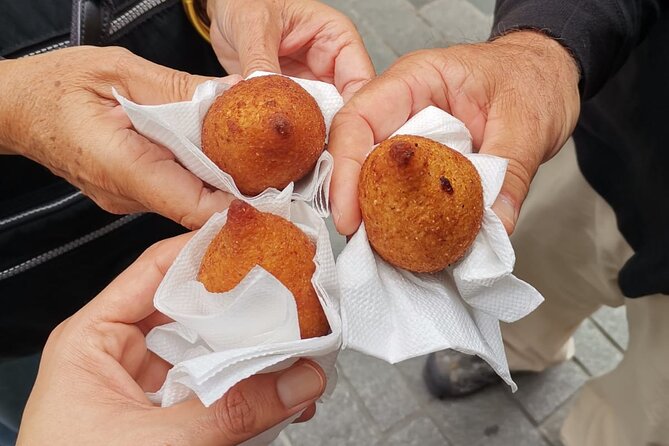
The tour ends at the Spice Market (Misir Çarşısı) in Eminönü, where you can taste Turkish delights and spices. This is a better ending than “one last photo” because it adds a sensory layer.
Spice Market is still a shopping center for locals, and the tour breaks it into different sections for different products. You’ll hear about a fish market, cheese market, coffee section, and a Turkish delight area—so the bazaar doesn’t feel random. It feels organized in a way you can understand as you walk.
At this point in the tour, your brain is tired in a good way. You’ve been inside major religious buildings and around landmark squares. The Spice Market lets you shift to smaller, immediate choices: smells, tastes, and quick browsing.
If you want to buy gifts, this is often where you can make decisions faster than at a larger craft or textile shop, because it’s tied to edible products and recognizable categories.
Price and timing: value depends on your pace
The tour costs $138.18 per person, runs about 4 hours on paper, and includes entrance tickets (including Hagia Sophia). That means you’re not paying extra onsite for every major stop, which can save money and hassle if you’re moving fast.
Is it cheap? Not really. But it’s priced like a guided “best-of” walk where the guide’s storytelling and the included admissions help you get more out of each site than you would alone in the same time window.
Timing is the main variable. The route is designed as a half-day, but mosque and bazaar crowds can slow things down. One guide may also adjust the pace based on your interests, and if you linger for stories, the day can stretch. If you have a dinner reservation or a timed ticket later, tell the guide at the start so they can manage the flow.
If you want to reduce stress, treat this like an active morning plan, not a strict 9-to-1 machine.
What you get most from: a guide who connects the dots
The best part of this tour is the way it teaches you to see. The guides highlighted in the experience are known for flexibility and strong storytelling—names like Huseyin, Koray, and Eser come up with guests who loved how explanations matched their interests.
That matters because the sites are famous, but the meaning isn’t obvious if you rush. You’ll be walking between monumental places (Sultanahmet Square, Blue Mosque, Hagia Sophia) and more niche stops (Old Book Bazaar, Rüstempaşa tilework). A good guide makes those transitions feel like one story instead of disconnected stops.
So if you love architecture, religious art, or the way empires leave traces in street-level places, this tour is a strong match.
Who this tour is for
This works especially well if you:
- Want an organized walking route through Old Istanbul without stitching together multiple ticket lines yourself
- Like mosques and want guided context, not just exterior photos
- Enjoy markets, but prefer a guide to help you navigate what to notice
- Travel with limited time and want the highlights plus a couple of thoughtful side stops (like the book bazaar)
It may be less ideal if you:
- Need an exact, immovable schedule that cannot flex
- Prefer long, unhurried museum-style visits for every stop
- Dislike walking in crowded areas and want mostly indoor sightseeing
Should you book this half-day walking tour of Old Istanbul?
If you want a guided, small-group route that ties together Sultanahmet landmarks, two major mosque interiors, and the bazaar zone ending with Spice Market tastings, I’d book it. The value is strongest because entrance tickets are included and the guide helps you understand what you’re seeing, not just where to stand.
Book it if you’re the type who enjoys short stops done well. Skip it only if your schedule is ultra tight or you’d rather spend all day at one site. If you can handle a longer half-day and you like strong storytelling, this is a smart way to get oriented in the oldest part of Istanbul.
FAQ
How long is the Old Istanbul walking tour?
The tour is listed as about 4 hours.
What time does the tour start?
The start time is 9:00 am.
Where do I meet the guide?
You meet in front of the German Fountain at Binbirdirek, At Meydanı Cd, 34122 Fatih/İstanbul, Türkiye.
Where does the tour end?
The tour ends in front of Spice Market at Rüstem Paşa, 34116 Fatih/İstanbul, Türkiye (Eminönü area).
Is the tour in English?
Yes, the tour is offered in English.
Is there a limit on group size?
Yes, the maximum group size is 8 travelers.
Which entrance tickets are included?
Entrance tickets are included. The tour specifically notes admission for Hagia Sophia, while other stops list admission as free in the tour details.
What’s included in the price?
“All fees and taxes” are included, along with entrance tickets.
What’s not included?
Lunch, snacks, and breakfast are not included.
Is it dependent on good weather?
Yes. The experience requires good weather, and if it’s canceled due to poor weather, you’ll be offered a different date or a full refund.
Can I cancel for a full refund?
You can cancel for a full refund if you cancel at least 24 hours before the experience’s start time.