REVIEW · FULL-DAY
Full Day Tour in Istanbul with Private Local Guide
Book on Viator →Operated by ROBIOS TOURS TURKEY · Bookable on Viator
Power points of Istanbul start at the Hippodrome.
This private full-day route uses a Roman–Byzantine–Ottoman timeline to explain how the city’s clashes, celebrations, and social life shaped what you see today. I especially like the way the guide turns monuments into stories with cause-and-effect, and how the pacing moves you through the core of historic Istanbul instead of treating sights like checkboxes.
Two things I really like: you get private local guidance tailored to your group, and key early stops include entry tickets so you’re not constantly doing ticket math in the middle of your day. One possible drawback is that not every major site on the route has its entry fee included, so you’ll want to budget for additional per-person admissions as you go.
In This Review
- Key highlights worth choosing this tour for
- A Roman-to-Ottoman time tunnel you can actually follow
- Price and value: what $350 per group really means
- Your day in the Old City: how the flow keeps you from wasting time
- Stop 1: Hippodrome and the political stage of power
- Stop 2: Blue Mosque, built beside the Hippodrome
- Stop 3: Ayasofya (Hagia Sophia) and Byzantine scale
- Stop 4: Topkapi Palace and the Ottoman command center
- Stop 5: Sultanahmet Square break where you can breathe
- Stop 6: Grand Bazaar, the classic end to a history day
- What the guides get right (and why people praise this tour)
- Pickup, meeting points, and staying efficient in the Old City
- How long should you plan for?
- Who this tour suits best
- Should you book this Old City heritage tour?
- FAQ
- How long is the Full Day Tour in Istanbul?
- How many people are in a private group?
- Is pickup included?
- Where does the tour start and end?
- Which major stops are included?
- Are entry tickets included for all sites?
- What should I expect to pay for entry fees?
- What is the cancellation policy?
Key highlights worth choosing this tour for
- A guided timeline that links Roman, Byzantine, and Ottoman eras instead of listing facts.
- Private group format (up to 6) for a calmer, more flexible pace.
- Included tickets early on at the Hippodrome and Blue Mosque to cut friction right away.
- Hassan and Nesi-led experiences are praised for teaching with detail and making history feel practical.
- Grand Bazaar as the relaxed finale, with the market visit priced as part of the day rather than a separate attraction.
- Old City start and finish, so you’re not burning time crossing Istanbul for a museum-only day.
A Roman-to-Ottoman time tunnel you can actually follow
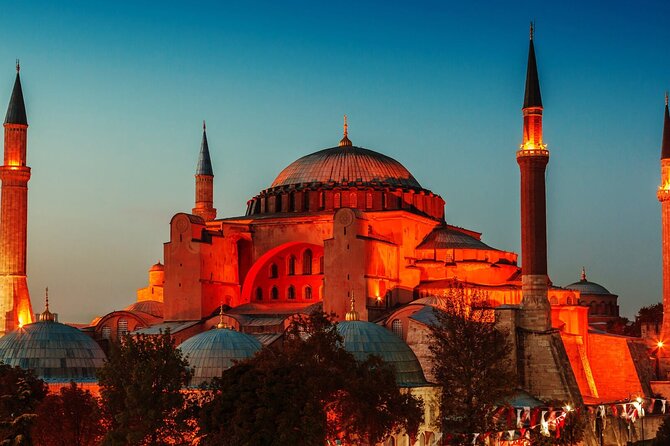
Istanbul can feel like a blur of domes, towers, and grand stone. What makes this tour work is the structure: you move through a clear chronology—Roman foundations, Byzantine transformation, then Ottoman rule—so each place answers the question, why is this here, and what changed because of it?
The tour’s approach is less about memorizing dates and more about understanding the city’s social energy: who had power, who pushed back, what people believed, and how public spaces turned political. That matters because the sites you visit are big and symbolic. Without context, they can turn into impressive backdrops. With this framing, they become readable.
You’ll spend roughly 5 to 8 hours, and it’s a private tour for only your group. Pickup is offered, and both the meeting point and the end point are in the Old City area, which helps if you’re staying nearby or want to avoid an “end somewhere random” situation.
You can also read our reviews of more guided tours in Istanbul


Price and value: what $350 per group really means
The price is $350.00 per group (up to 6 people). That’s the big decision point, because private-guided days can swing from a deal to pricey depending on your group size.
Here’s the practical math:
- If you fill the group limit (6 people), that’s about $58 per person for the guide and tour structure.
- If it’s only 2 or 3 people, the guide cost per person goes up.
On top of the tour price, plan for per-person entry fees around $100 as a useful ballpark. Some entrances are included, while others are not, so budgeting ahead saves stress. The reason this is still often good value is that you get a full route that covers several major landmarks in one coherent sweep, plus a guide who can explain what you’re looking at as you go.
Your day in the Old City: how the flow keeps you from wasting time
This is not a scattershot plan. You start in the historical core and stay there, which is a real quality-of-life upgrade. The route is built around major public landmarks first, then moves into the religious and imperial scale of the Byzantine and Ottoman eras, and finally lands in the Grand Bazaar.
You’ll also get a built-in meal or refreshment break in Sultanahmet Square. That’s smart because the day includes several heavy-hitter stops, and a scheduled pause keeps the momentum from turning into a rush.
One more practical point: because the start and end points are in the Old City and the tour is near public transportation, it’s easier to stitch the rest of your day around it.
Stop 1: Hippodrome and the political stage of power
You begin at the Hippodrome, and that choice is clever. This is one of those places where it’s hard to appreciate the importance at first glance—until someone connects it to the city’s conflict and public life.
On your visit, you’ll see key pieces including the Obelisks, the Serpent Column, the Germain Fountain, and the Constantine Column. Each element helps the guide explain how public arenas weren’t just entertainment; they were places where crowds expressed allegiance, anger, and identity.
What I like about starting here is timing and mindset. By the time you reach later Ottoman and Byzantine sites, you understand the city’s pattern: power talks loudly in public spaces. You’re not just looking at architecture; you’re reading a civic story.
Stop 2: Blue Mosque, built beside the Hippodrome
From the Hippodrome, you move directly into the world of the Blue Mosque (Sultanahmet Mosque). The tour frames it as an imperial mosque connected to the same historic area, which is exactly how you should understand it: it didn’t appear in a vacuum.
You’ll spend about 40 minutes, and the visit includes admission. The guide also points out the story behind the mosque’s six minarets, a detail that’s easy to notice even if you’re not a deep-dive architecture person.
Potential consideration: since this is an active landmark, it can be busy at times. A private guide helps because you’re not left to figure out what’s important while also trying to navigate crowds.
You can also read our reviews of more private tours in Istanbul





Stop 3: Ayasofya (Hagia Sophia) and Byzantine scale
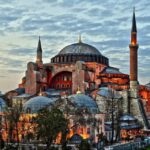
Next comes Ayasofya, and this stop is the big emotional weight of the Byzantine era. You’ll spend about 40 minutes here, and the admission is not included in the tour price.
What makes Ayasofya worth the extra ticket planning is the scale and religious symbolism. The way this tour presents it, you’re not only looking at a building—you’re seeing Constantinople-period ambition and mystery in stone.
This is also a strong moment for the guide’s storytelling style. The strongest tours don’t just say what something is. They help you notice why it feels dramatic. Ayasofya tends to do that to people; having context makes it easier to appreciate beyond the wow factor.
Stop 4: Topkapi Palace and the Ottoman command center
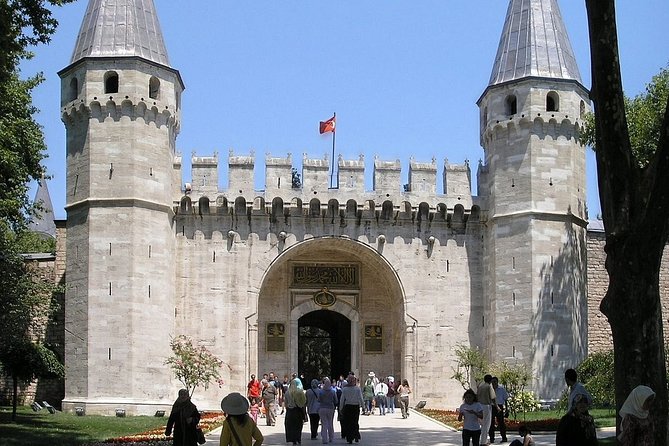
After Ayasofya, you head to Topkapi Palace, a massive Ottoman royal residence that naturally shifts the mood from religious grandeur to governance.
You’ll have about 2 hours, and again, the admission ticket is not included. That extra budget is worth it for the simple reason that palace sites reward time. You need time to connect courtyards, power spaces, and the way the palace functions as a world of its own.
The tour also leans into the idea of a time tunnel. In practice, that means the guide keeps translating imperial rules into what you see around you. Instead of wandering, you’re given prompts—what this part of the palace signals, why this arrangement mattered, and how Ottoman authority shaped daily life at the top.
Stop 5: Sultanahmet Square break where you can breathe
Between major monuments, you get a break around Sultanahmet Square for about 1 hour. The plan here is flexible: you can eat lunch or grab a refreshment at nearby local restaurants around the Old City landmarks.
I like that the tour doesn’t force one restaurant or one meal. It’s a good way to keep costs under control while letting you choose what fits your appetite and pace. It also gives you a chance to regroup mentally. When you’re taking in Ayasofya and Topkapi, your brain gets full. That hour gives it room to reset.
Stop 6: Grand Bazaar, the classic end to a history day
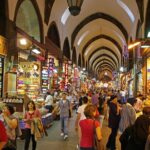
Your final stop is the Grand Bazaar. This is where the tour shifts from empires to everyday life—and from sacred spaces to commerce.
You’ll spend about 1 hour, and the market visit is free as part of the experience. The bazaar is known for a huge spread of items like textiles, leather goods, glassware, tiles, pots, ceramics, and jewelry.
A useful way to experience it without getting overwhelmed: treat it like a living museum of what different eras valued and traded. With the earlier context from your guide, you can connect the bazaar’s energy to the Ottoman capital’s role as a hub of craft and trade.
The one consideration: with a market this big, you might feel tempted to buy just to end the browsing. Don’t. If you want souvenirs, decide early what kind of item you want, then shop with a plan. Otherwise you’ll spend money and still leave feeling uncertain about what you actually wanted.
What the guides get right (and why people praise this tour)
The reviews highlight something you can feel during a good tour: teaching that stays grounded in detail, not just generalities. Guides like Hassan and Nesi are specifically praised for being accommodating and for having strong, specific city-history explanations, even down to small points.
That matters because Istanbul’s landmarks overlap in time. Roman-era fragments, Byzantine religious symbolism, Ottoman imperial storytelling—everything layers. A guide who can untangle those threads saves you from walking through the city guessing what matters.
You also get the benefit of a private format. When it’s only your group, it’s easier for the guide to adjust pace and focus. If you’re the type who likes asking questions, this kind of structure makes it easier to keep the conversation going.
Pickup, meeting points, and staying efficient in the Old City
Pickup is offered, and the tour is set up so you can start and finish in the Old City. That’s a practical win because it reduces dead time between your hotel and the landmarks.
Also, the tour is near public transportation. That means if your pickup isn’t used or doesn’t fit your day, you still have a workable option for getting to the meeting point and returning afterward.
How long should you plan for?
The tour runs 5 to 8 hours (approx.), which is a wide range on purpose. Your actual pace depends on how much time you spend at the major sites and how quickly you move through each stop.
In practice, give yourself buffer time on either side of the tour. You’ll be moving between several top landmarks, and at this scale, your day can run long if you stop for photos, questions, or extra viewing.
Who this tour suits best
This is a great fit if:
- You want an organized way to understand Roman, Byzantine, and Ottoman Istanbul without getting lost in chaos.
- You’d rather have a guide explain what you’re seeing than do it alone.
- You like a day that mixes major landmarks with a real Old City market experience.
It may be less ideal if:
- You only have a short time and want a single-site focus.
- You strongly dislike budgeting for separate site admissions (since Ayasofya and Topkapi aren’t included, while other entries are).
Should you book this Old City heritage tour?
If you want the fast route to understanding Istanbul’s layers, I’d book it. The big reason: the day is built around a clear timeline and a private local guide, and the pacing keeps the story coherent from Hippodrome to Blue Mosque to Ayasofya to Topkapi and then the Grand Bazaar.
Book it especially if you care about context more than collecting photos. With guides like Hassan and Nesi praised for detailed explanations and accommodation, you’re more likely to leave feeling like you understand the city, not just that you visited it.
Just budget for extra entrances at Ayasofya and Topkapi, and plan for the day to be active. If that fits your style, this is one of the most practical ways to experience Istanbul beyond postcard highlights.
FAQ
How long is the Full Day Tour in Istanbul?
The tour lasts about 5 to 8 hours.
How many people are in a private group?
It’s a private tour, and the group size is up to 6 people.
Is pickup included?
Pickup is offered.
Where does the tour start and end?
Both the meeting point and end point are in the Old City.
Which major stops are included?
The tour includes Hippodrome, Blue Mosque, Ayasofya, Topkapi Palace, Sultanahmet Square (break), and Grand Bazaar.
Are entry tickets included for all sites?
Not all. Admission tickets are included for the Hippodrome and the Blue Mosque, while Ayasofya and Topkapi Palace are not included. Grand Bazaar admission is free as part of the visit.
What should I expect to pay for entry fees?
Per-person entry fees for the tour are around $100 as a helpful estimate.
What is the cancellation policy?
You can cancel for a full refund if you cancel up to 24 hours in advance of the experience start time.