REVIEW · ISTANBUL
Ephesus Pamukkale Tour by Plane
Book on Viator →Operated by Before Travel Agency · Bookable on Viator
Early starts can be worth it. This Ephesus Pamukkale tour strings together the biggest hits of the Aegean in just about two days, and the plane connection is the key that keeps the pace from feeling totally crazy. I especially like the small-group size (max 15) and the fact that your guide handles the logistics while you focus on the ruins—starting with major Ephesus monuments and then moving to Pamukkale’s famous white terraces and thermal pools. The one drawback to consider is that the day starts at 5:00 am, and the schedule is tight enough that any travel-day hiccup can feel stressful.
You’ll also get practical value here: overnight accommodations and meals are included, so you’re not hunting down meals or trying to time buses after a long day. I like that most site admission is bundled into the tour price, so you can spend your attention where it belongs: walking, looking, and asking questions. Just keep in mind there’s at least one paid-add-on (the Cleopatra Pools area), and one low-rated report flagged confusion around airport flight details—so I’d plan to confirm everything in writing before travel day.
In This Review
- Key things I’d focus on before you book
- Price and Logistics: what you’re really paying for
- The 5:00 am Istanbul start: why the early pickup can be a win
- Bibliotheque de Celsus and the Ephesus monuments you don’t want to miss
- Entering the ancient city at Magnesia Gate: walking downhill with a guide
- Temple of Hadrian: a stop that pays off if you like detail
- Meryemana (Virgin Mary’s House) in the Solmissos Mountains
- Temple of Artemis: seeing the Seven Wonders connection
- Kusadası overnight: the quiet service piece that makes the rest work
- Hierapolis theatre and Pamukkale terraces: the two-part payoff
- Cleopatra Pools: an extra you should decide about before you go
- Small group size (15 or fewer): where it actually changes your day
- A quick caution: make sure flight day details are clear
- Should you book this Ephesus Pamukkale by Plane tour?
- FAQ
- What time does the tour start in Istanbul?
- How many people are in the group?
- What’s included in the price?
- Are drinks included?
- Is Cleopatra Pools included in the tour price?
- Is there free cancellation?
Key things I’d focus on before you book
- Small group up to 15: easier questions, less crowding in key viewpoints, and a calmer pace.
- Flight time savings: helps you fit Ephesus and Pamukkale into two days instead of stretching the trip.
- Overnight + meals included: you avoid extra planning and keep the rhythm of the tour.
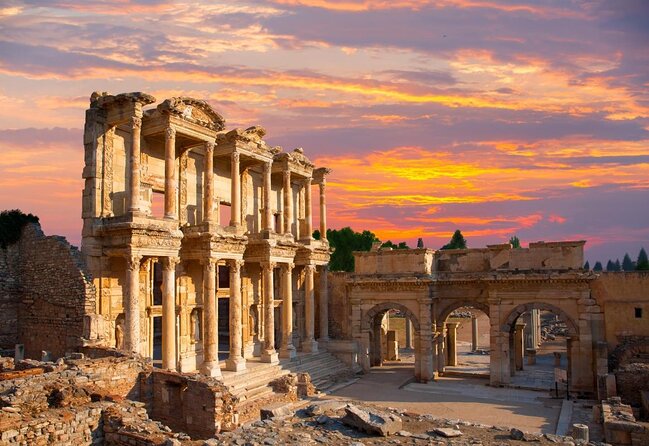
- Major Ephesus sites included: Celsus, the Great Theatre area views, and key temple stops.
- Pamukkale terraces and thermal pools: the main attraction is built into the schedule with time on-site.
- Cleopatra Pools not included: budget extra if you want that specific pool experience.
Price and Logistics: what you’re really paying for
At $814.49 per person, this isn’t a budget day trip. But you also aren’t paying for a bare-bones transfer. The price is doing real work for you: a professional guide, overnight lodging, meals, pickup and drop-off in Istanbul, and admission for most of the big stops. The plane option matters too—air travel is usually what turns a multi-day slog into something you can actually squeeze into a weekend.
Still, you’re buying speed. The start time is 5:00 am, and the flow of the days is designed around site access and travel time between regions. That means you’ll want to be ready for an early breakfast routine, comfortable walking shoes, and a mindset of seeing a lot rather than lingering at a single spot for hours. If you prefer slow travel where every ruin gets a long, quiet stare, you may find this schedule a bit intense.
Then there’s the small but important risk-management piece. One low-rated experience reported confusion at the airport—like not getting flight details at drop-off—which is exactly the kind of thing you can prevent with your own checklist (more on that below). Even if that’s not typical, it’s a good reminder: travel days need confirmation, not guessing.
You can also read our reviews of more tours and experiences in Istanbul.


The 5:00 am Istanbul start: why the early pickup can be a win
Your day begins with pickup from your hotel in Istanbul, timed for a 5:00 am start. That’s early enough to make your coffee habits feel like a professional sport. But this is also how you protect the itinerary. Starting before the city wakes up gives the tour a better shot at smooth connections and daylight for outdoor walking.
Here’s the practical way to think about it: if you book a tour like this, you’re choosing convenience over control. You’re letting someone else manage the “get from point A to point B” problem. When it works, it feels effortless. When it doesn’t, you’ll feel it fast—especially on flight days. So aim to pack with intention: charge your phone, keep your documents handy, and bring a light layer. Early mornings in Turkey can feel cooler than you expect.
If you like being efficient, you’ll probably enjoy this part. If you’re the type who needs a leisurely start, plan to treat this as a two-day sprint and adjust expectations accordingly.
Bibliotheque de Celsus and the Ephesus monuments you don’t want to miss
The Ephesus section hits with big-name landmarks right away, and the order makes sense. You start around the Bibliotheque de Celsus area, where the guide walks you past key features such as the Odem, the Celsus Library, the Temple of Hadrian, the Fountain of Trajan, and the Great Theatre zone.
This is one of the smartest parts of the plan because these buildings give you instant context. In other words, you get your mental map fast. Instead of wandering through ruins like a scavenger hunt, you understand what you’re seeing as you move: civic spaces, religious structures, and the kind of architecture that made Ephesus such a major center.
What I love about this approach is that it reduces the “I’m here, now what?” feeling. A guide can point out relationships between sites—what’s near what, what function each space likely served, and why certain structures were built where they were. If you’ve ever visited ancient places and felt you were missing the story, this is the fix.
A consideration: you’ll have limited time per stop. The Celsus area is about 1 hour, which is enough for a meaningful look if you keep moving and let the guide set the pace. Don’t plan on slow wandering with deep photo sessions here unless you’re willing to move quickly through parts of the visit.
Entering the ancient city at Magnesia Gate: walking downhill with a guide
Next you enter the ancient site at the Magnesia Gate and begin a slow downhill walk, guided through the major ruins. You’ll spend about 1 hour here, and that downhill route is useful because it naturally pulls your attention along the city’s layout.
What you’ll feel on this kind of walk is how much Ephesus was built for processions and public life. Streets and architectural alignments create sightlines, and the grade helps you see how spaces connect. Even if you don’t memorize facts, you start to “read” the site. A guide makes a huge difference because they’ll focus you on the most important corners rather than letting you get stuck staring at stone fragments.
The practical part: wear shoes you can trust. You’ll be moving on uneven surfaces. And because the tour is structured, don’t overbook yourself with additional stops outside the plan. The most satisfying part of Ephesus on a tight schedule is staying with the group and using your hour efficiently.
Temple of Hadrian: a stop that pays off if you like detail
You’ll then visit the Temple of Hadrian for about 1 hour. This stop is valuable because it adds another layer to the city’s identity. You’re shifting from grand public spaces into a more focused architectural and religious setting.
In tours like this, the “why” matters. A temple stop shouldn’t feel like a detour. In a good guided flow, the temple helps you understand the bigger political and cultural picture—how rulers, worship, and civic life overlapped in the Roman era. If you’re the kind of traveler who likes seeing how architecture tells stories, this is a strong inclusion.
Consideration: if you’re already feeling “ruined out” from back-to-back major Ephesus areas, you’ll want to keep your energy up with water and a quick mental reset. The tour packs a lot into a short time, and the best strategy is to treat each stop as a new chapter rather than trying to keep everything in one big blur.


Meryemana (Virgin Mary’s House) in the Solmissos Mountains
A key emotional and spiritual stop comes next: Meryemana (The Virgin Mary’s House). The tour frames it as a small house in the Solmissos Mountains, known by the Vatican as her final resting place. You’ll have about 1 hour here.
Even if you’re not visiting for religious reasons, this is a meaningful change of pace. Ephesus is Roman and ancient-history dense. Meryemana is more intimate—smaller scale, quieter atmosphere, and a site where people often slow down. If you travel with family, or you like mixing history with a personal stop, you’ll probably find this part worth the time.
The challenge is that your day is already full. That means you’ll want to approach it as a breath break within a schedule, not an all-day stop. If you need long quiet time, you might feel rushed. But if you’re okay taking it in for an hour, it’s a nice contrast.
Temple of Artemis: seeing the Seven Wonders connection
Next is the Temple of Artemis, described as one of the Seven Wonders of the Ancient World. You’ll spend about 1 hour here.
This stop matters even if the structure you see today isn’t the complete original monument. The value is in the guide’s ability to connect the present remains to what made Artemis famous in antiquity—its scale, cultural importance, and why so many ancient travelers and writers cared about it.
If you like legendary landmarks, this is a fun moment. If you prefer fully preserved sites, you may need a bit of imagination. The trick is to treat this as a historical lens: you’re learning how the ancient world measured greatness.
One practical thought: keep your expectations realistic. This is one of those sites where the story is bigger than the stones in front of you.
Kusadası overnight: the quiet service piece that makes the rest work
After the Ephesus-heavy day, you move to Kusadası Castle and then overnight in Kusadası for about 12 hours, with admission included for that stop. This is where the tour earns its comfort points.
Why the overnight matters: it resets your travel fatigue. Instead of trying to return to Istanbul the same day (which would turn into a grind), you get a night in the region. That makes the next day’s Pamukkale section feel more manageable, and it’s also a lot safer on your energy. A lot of tours fail here; they pack too much into Day 1 and then hope you’re fresh enough for Day 2. This one builds in recovery.
Practical note: your tour includes breakfast and lunch as part of the itinerary, but drinks aren’t included. That matters when you’re outdoors walking early and often. Bring a habit of drinking water regularly.
Hierapolis theatre and Pamukkale terraces: the two-part payoff
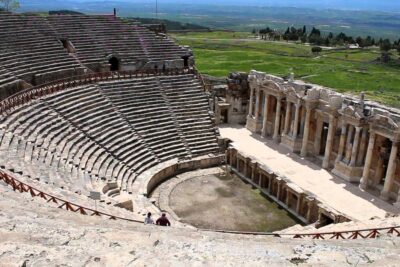
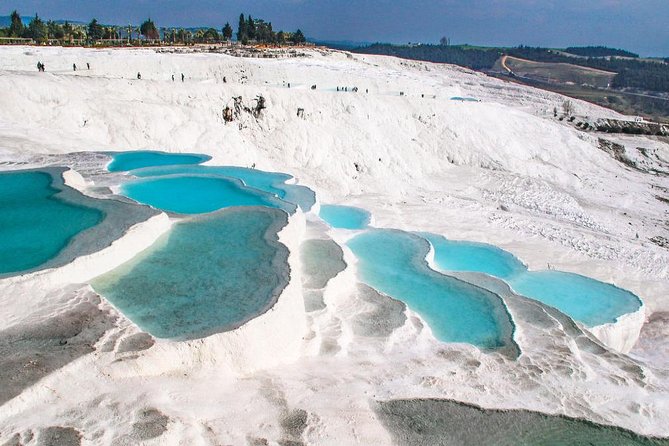
Day two is anchored by Hierapolis & Pamukkale plus a dedicated stop at the Pamukkale Thermal Pools. You’ll also visit Pamukkale Theater (Hierapolis) for about 1 hour, then have about 1 hour for Hierapolis & Pamukkale and about 1 hour for the Pamukkale Thermal Pools.
This is the classic two-layer effect:
1) Hierapolis gives you ancient context and an up-close sense of how people lived and gathered in this region.
2) Pamukkale gives you the visuals—white calcified terraces and the feeling of stepping into a famous thermal setting.
What to watch for: the tour time windows are tight but designed to cover both the ruins and the pools. The best way to enjoy it is to keep switching modes—look at the stone structures, then switch to the thermal pools experience without trying to turn the day into one long photo session.
If you want more than a quick dip, don’t assume you’ll have unlimited time. The thermal pools slot is about 1 hour. You’ll enjoy it most if you arrive with a game plan: sunscreen, a swimsuit you’re comfortable with, and a towel you’re used to drying quickly.
Cleopatra Pools: an extra you should decide about before you go
The plan also includes Cleopatra Pools, but the ticket for that portion is listed as not included. That means you can’t count it fully toward the included value, even though it’s part of the overall experience lineup.
This is a simple decision point for you. If you love the idea of doing the most famous pool area, budget the additional cost and plan your time so it doesn’t squeeze the main Pamukkale pools experience. If you’re mainly there for the terraces and the core thermal pools, you may not need the add-on.
Either way, it’s useful to know ahead of time. Nothing ruins a good day faster than finding out you have an unexpected extra charge in the middle of the best part.
Small group size (15 or fewer): where it actually changes your day
A max group of 15 is one of those details that sounds marketing-ish until you experience it. In practical terms, it usually means:
- you can hear your guide better around key monuments,
- you’re less likely to get separated in the crowded parts,
- and you can ask questions without feeling like you’re holding up a bus.
At Ephesus, where you’re surrounded by stone and signage, clarity matters. At Pamukkale, where you’re dealing with surfaces and movement, having a group that stays together makes the visit smoother.
This is also a good tour style if you want authenticity over performance. The guide’s role isn’t just reciting facts. A good guide helps you focus on what to look for, and it can make ancient sites feel like a living place rather than a checklist.
A quick caution: make sure flight day details are clear
One low-rated account I saw described a problematic airport experience with missing flight specifics and confusion about where they were being routed. I can’t say whether that’s the norm, but it’s enough to justify your own safety step.
Do this before you leave Istanbul:
- Confirm your flight details with the provider (destination, flight number, and the expected departure info).
- Keep the written confirmation accessible on your phone.
- Plan to arrive early enough at the airport that you’re not forced into last-minute problem solving.
That’s not paranoia. It’s simple travel hygiene, especially on tours that use planes to save time.
Should you book this Ephesus Pamukkale by Plane tour?
Book it if you want a smart, time-saving way to hit Ephesus + Pamukkale without turning your trip into a logistics project. The best reason is the combination of plane travel, a small group, and real inclusions: overnight lodging, meals, and guide-led access to major sites.
Skip it (or at least think twice) if you hate early mornings, dislike tight schedules, or need lots of free time to linger. Also, if you’re the kind of traveler who relies on clear written travel-day documents and hates any ambiguity, do your flight-detail confirmation proactively.
For many people, this is an efficient Istanbul-to-Aegean package that trades some flexibility for big results.
FAQ
What time does the tour start in Istanbul?
The start time is 5:00 am.
How many people are in the group?
The tour is limited to a maximum of 15 travelers.
What’s included in the price?
Included items are overnight accommodation, breakfast and lunch per itinerary, a professional guide, and hotel/port pickup and drop-off, plus admission tickets for many of the listed sites.
Are drinks included?
No. Drinks are not included.
Is Cleopatra Pools included in the tour price?
Cleopatra Pools admission is listed as not included.
Is there free cancellation?
Yes. You can cancel for a full refund up to 24 hours in advance of the experience’s start time.