REVIEW · BLUE MOSQUE TOURS
Blue Mosque and Sultanahmet Tour
Book on Viator →Operated by Travelgroup · Bookable on Viator
Six minarets, one tight patch of time. This tour threads together Sultanahmet’s UNESCO setting and the Blue Mosque skyline in a short, guided route, with a licensed English speaker walking you through Byzantine and Ottoman-era landmarks. You also get a chance to linger inside the mosque to take in the famous blue Iznik tiles up close.
I like that the focus stays practical: you get clear context for what you’re seeing, not just names. I also like that the small group size (up to 20) makes it easier to follow along, especially around the crowded square. One possible drawback to plan for is sound and space: inside the Blue Mosque can get tight, so hearing the guide can be tricky when it’s busy.
In This Review
- Key Points to Know Before You Go
- Why This Blue Mosque and Sultanahmet Route Makes Sense
- Getting There: Binbirdirek Start and the Dsign Cafe Redemption Point
- Blue Mosque First: What the Mosque Visit Really Gives You
- A note on crowds and hearing the guide
- Sultanahmet Square and the Hippodrome Stops That Actually Matter
- The Hippodrome: obelisks and the Serpentine Column
- What to watch for while you listen
- German Fountain and Palace of Ibrahim Pasha: Ottoman-Era Landmarks With Foreign Connections
- German Fountain, linked to Wilhelm II
- Palace of Ibrahim Pasha area
- Guide Performance: When You Get Eser, You’re in Good Hands
- My practical advice for getting more from the guide
- Price and Value: About $19 for a Guided Blue Mosque Day
- Who This Tour Fits Best (and Who Might Want a Different Plan)
- Should You Book This Blue Mosque and Sultanahmet Tour?
- FAQ
- How long is the Blue Mosque and Sultanahmet Tour?
- Where does the tour start and end?
- Is the Blue Mosque admission included?
- What does the tour include?
- How large is the group?
- Is the meeting point near public transportation?
- Is free cancellation available?
Key Points to Know Before You Go
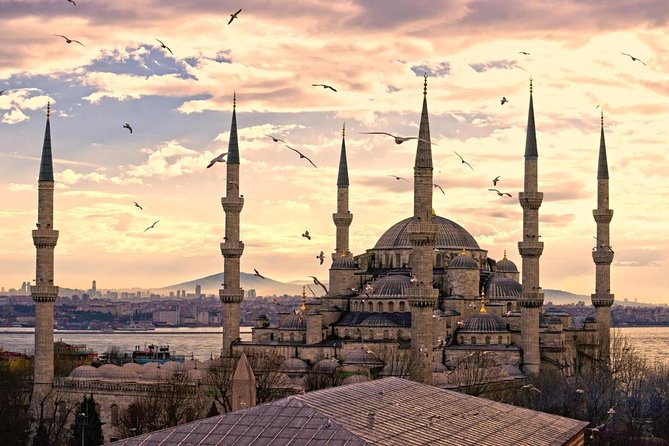
- Blue Mosque time plus courtyard access: You end up in the courtyard and can enter and stay inside as long as you want.
- Sultanahmet UNESCO walking focus: The route is built for seeing major landmarks around the ancient imperial square.
- Hippodrome highlights on the route: You’ll stop for two obelisks and the Serpentine Column.
- German Fountain and Wilhelm II connection: A gift from the German Emperor Wilhelm II is part of the story you’ll hear.
- Palace of Ibrahim Pasha sighting: You’ll get a look at the area tied to this Ottoman figure.
- Guide quality varies, so pick your timing: Some guides are described as engaging and expert, but crowds can make it harder to hear.
Why This Blue Mosque and Sultanahmet Route Makes Sense
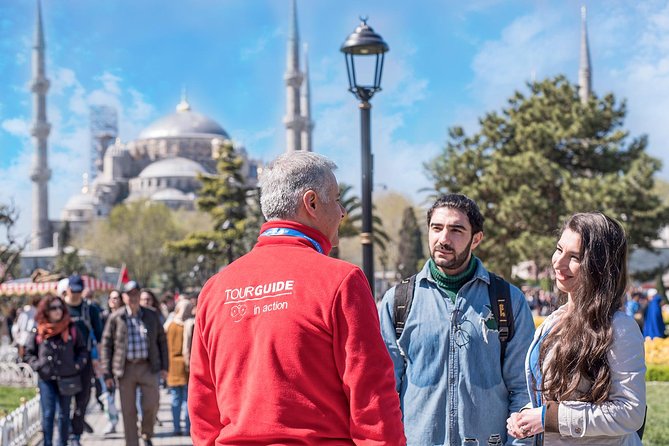
Istanbul can feel like a lot at once. This experience keeps it focused, aiming your attention at the core of Sultanahmet: the ancient imperial square area where Byzantine and Ottoman chapters sit side by side. The payoff is that the guide doesn’t just point at buildings. They explain how the places connect across time, so your photos start to come with a mental map.
What I especially like is the way it treats the Blue Mosque as more than a photo stop. You’re not rushed past the doors. You get time to step inside and actually look at the details that make the mosque famous, including the blue Iznik tiles. That extra patience matters in a place where DIY visits can blur into a line shuffle.
The other strong point is the route around the Hippodrome and surrounding landmarks. You’ll see the two obelisks and the Serpentine Column, plus other iconic points like the German Fountain tied to Wilhelm II, and the Palace of Ibrahim Pasha area. Even if you only know a little about Istanbul’s layered past, the guide turns those objects into a coherent story you can recall later.
You can also read our reviews of more tours and experiences in Istanbul.



Getting There: Binbirdirek Start and the Dsign Cafe Redemption Point
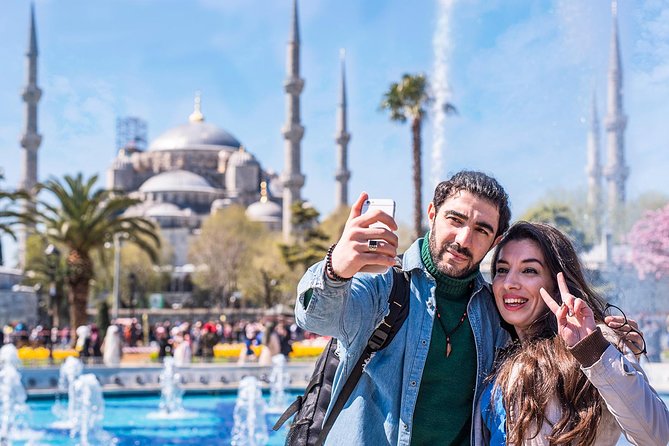
This tour starts at Binbirdirek, At Meydanı Cd No:10, 34122 Fatih/İstanbul, and ends at the Blue Mosque courtyard. In practical terms, the biggest time-saver is using the exact meeting area and planning to arrive a few minutes early, because you’re starting in a dense tourist zone where sightlines are limited.
Ticket redemption is listed at Dsign Cafe, Binbirdirek, At Meydanı Cd No:10, 34093 Fatih/İstanbul. That matters because the square is busy, and directions alone can become fuzzy when everyone is heading the same direction. If you want the smoothest start, use your phone map to find the Dsign Cafe and regroup there before walking toward the mosque.
Also, the meeting point is noted as being near public transportation. That helps if you’re mixing this with other Sultanahmet stops, because you’re not committing to a long transit puzzle on the same day.
Blue Mosque First: What the Mosque Visit Really Gives You
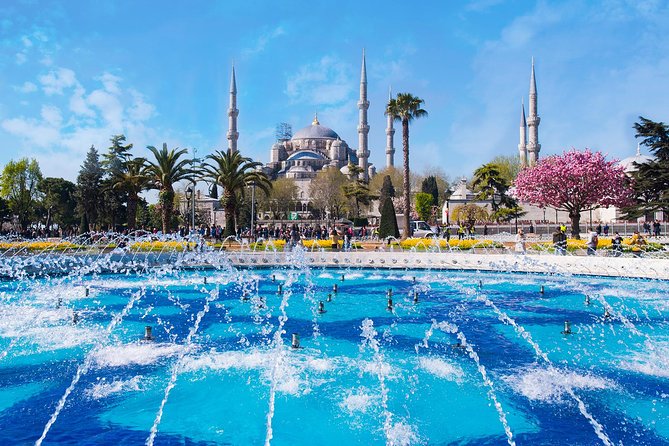
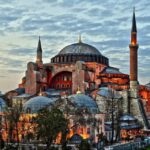
The Blue Mosque part is the headline for a reason. It was built in 1616, and the six minarets are the kind of skyline detail you can spot even when you’re still trying to find your bearings. With a guide, you don’t just see the silhouette. You understand why it’s considered a major Ottoman masterpiece, and you get the kind of context that makes the interior make more sense when you step in.
One of the best advantages here is that you can stay inside as long as you want. That changes the vibe of the visit. Instead of clock-watching, you can take a calm pass through the interior, then return your attention to the details that catch your eye. In a crowded place, having permission to pause and re-look is a real comfort.
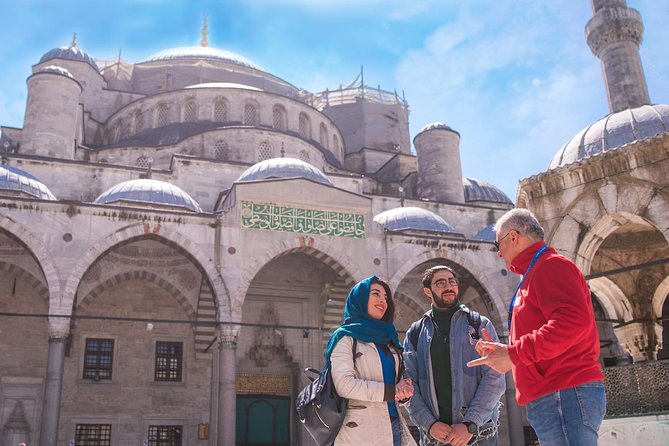
The courtyard ending is also useful. You don’t have to scramble to exit and reset. You finish inside the complex area where the mosque’s blue Iznik tiles are front and center, both from viewing angles around the courtyard and through the entry into the mosque interior.
A note on crowds and hearing the guide
This is the main realistic drawback. The mosque interior can be crowded, and then the guide’s explanations compete with the noise level. If you’re the type who likes to follow every word, try to time your visit when the crush is slightly lower. Even with a great guide, it’s hard to guarantee volume in a space full of people.
Sultanahmet Square and the Hippodrome Stops That Actually Matter
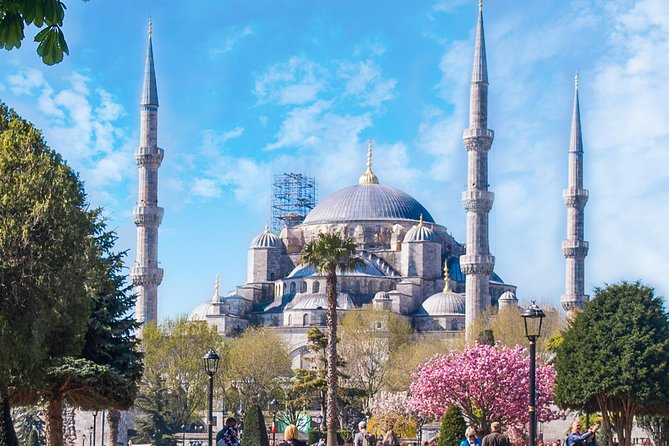
After the mosque focus, the tour route shifts to the surrounding landmarks that shaped the area long before today’s tourist lines. This is where the tour earns its keep as a guided experience, because you’re moving through a compact world of ruins, monuments, and Ottoman-era city layers.


The Hippodrome: obelisks and the Serpentine Column
You’ll explore the Hippodrome area, including two obelisks and the Serpentine Column. These stops are interesting because they connect the physical objects in front of you to the political and cultural energy of earlier eras. Without a guide, you might see standing stones and feel like you’re missing the point. With a guide, the same objects become a shortcut to understanding how power and public space worked.
Also, obelisks and columns are easy to photograph but easy to misunderstand. A good guide helps you notice what you’re actually looking at and why it ended up here. That’s the difference between a photo collection and a memory you can explain to someone later.
What to watch for while you listen
When you’re surrounded by big landmarks, it’s easy to tune out small explanations. I’d focus on one thing at a time: pick up the story the guide tells for each stop, then look around the area for visual cues that match it. If the guide explains how a monument relates to the city’s identity, test it by scanning the nearby buildings and sightlines. That quick mental check helps the information stick.
German Fountain and Palace of Ibrahim Pasha: Ottoman-Era Landmarks With Foreign Connections
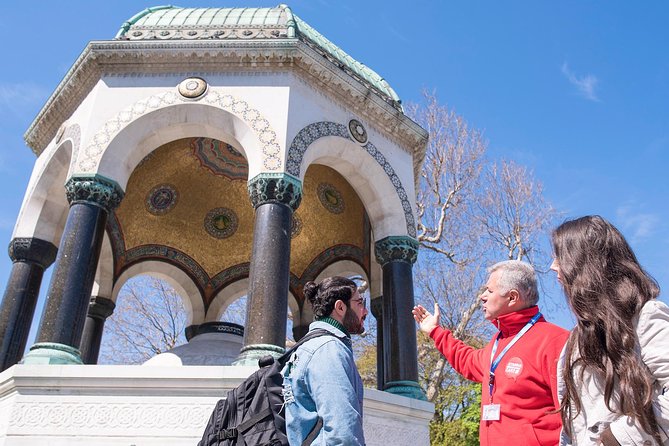
Two of the most distinctive stops in this route connect Istanbul to broader European stories while still staying grounded in the local Ottoman landscape.
German Fountain, linked to Wilhelm II
You’ll visit the German Fountain, identified as a gift from the German Emperor Wilhelm II. This is the kind of detail that makes the square feel less like a sealed museum and more like a living stage where Istanbul’s rulers and diplomats interacted with international power. It also gives you a concrete anchor when the guide talks about Ottoman-era identity and external relationships.
Palace of Ibrahim Pasha area
You’ll also see the Palace of Ibrahim Pasha. Even if you’re not walking through a full preserved palace complex, learning how and why the place mattered changes what you notice around it. It turns a building footprint or a sightline into a clue about who held influence and how that influence was displayed in the city.
If you like stories that connect people to places, these stops deliver. They’re also a helpful counterbalance to the mosque interior, because they keep the route from feeling repetitive.
Guide Performance: When You Get Eser, You’re in Good Hands
The quality of a guided walk can make or break your experience, especially when timing and sound become tough. From the guidance I saw people talk about, the strongest guiding moments tend to be: clear explanations, an easy pace, and the ability to make details memorable.
For example, one guide named Eser was singled out as extremely knowledgeable and engaging, giving a strong overview of the Blue Mosque and the surrounding area. Another positive note tied to an engineering-minded perspective: there was mention of construction facts comparing the Blue Mosque with the Hagia Sophia. If you like structure, proportions, or how buildings were planned, that kind of comparison is a real bonus.
The flip side is that not every guide experience lands perfectly. There’s at least one serious complaint about a guide being hard to hear in a busy setting, and another about a guide admitting they didn’t know Arabic well enough to read signs. That doesn’t mean you’ll face those exact issues. It does mean you should be mindful about expectations: you’re booking a short walk, not a private lecture, and crowded sites can flatten audio clarity.
My practical advice for getting more from the guide
Arrive ready to listen with your eyes. Pick one major theme the guide is covering—Byzantine-to-Ottoman shifts, the Hippodrome monuments, or the German Fountain connection—and let that theme guide your attention. You’ll get more from the explanation when you’re mentally collecting the story, not just waiting for the next stop.
Price and Value: About $19 for a Guided Blue Mosque Day
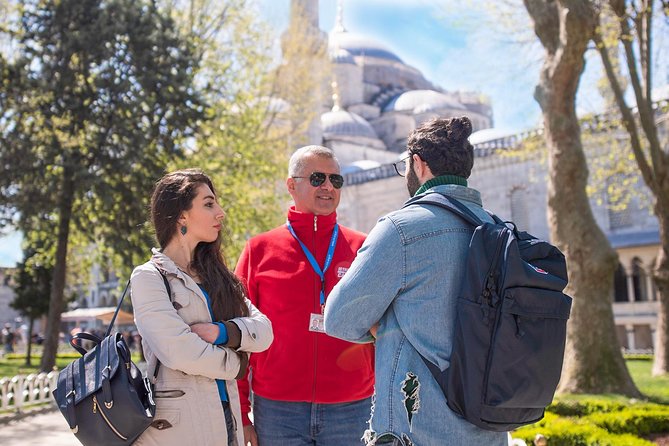
At $19.12 per person, this is priced like a value-minded orientation rather than a full-day paid deep dive. That’s fair, because the experience is short and structured: a 45-minute walking tour with a licensed English guide, plus meaningful time at the mosque.
Two value factors make it feel like more than the ticket price:
- You’re getting a guide to connect what you see around Sultanahmet Square, including Hippodrome landmarks and specific monuments.
- You’re getting mosque access with time to stay inside as long as you want, rather than a fast pass.
What’s not included matters too: there’s a note that a donation for the Blue Mosque is expected. Even though the tour lists Blue Mosque admission ticket as free, plan for the possibility of a donation request so you’re not surprised at the moment you’re ready to enter.
Also, the group size maximum of 20 travelers is a sweet spot for a place like this. You’re not swallowed by a massive crowd of strangers, but you still get a social, tour-style atmosphere.
Who This Tour Fits Best (and Who Might Want a Different Plan)
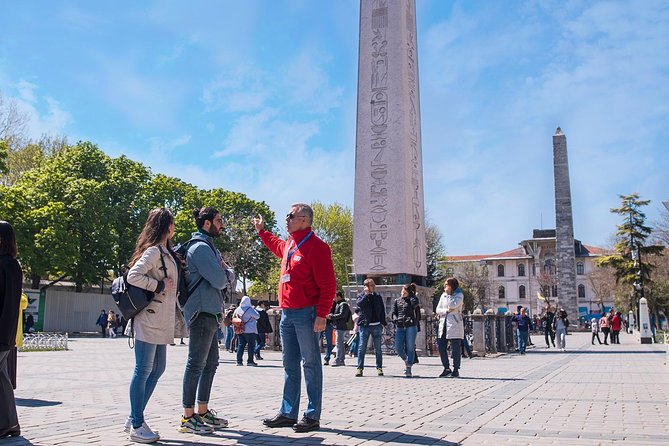
This is a strong fit if you want:
- A short guided route through Sultanahmet’s key landmarks without spending your day piecing it together
- A chance to understand the Hippodrome monuments and why they’re there
- Time inside the Blue Mosque without feeling like you’re being herded through
It may be less ideal if you’re very sensitive to crowd noise and need perfectly audible explanations. In that case, you’ll still likely enjoy the mosque itself, but you might feel frustrated if your main goal is to catch every word while people surge around you.
You’d also want to think about language expectations. The tour is English-speaking, and that’s helpful. But in a complex area with signs in multiple scripts, a guide’s ability to interpret all sign languages can’t be assumed.
Should You Book This Blue Mosque and Sultanahmet Tour?
I’d book it if you want a clean, guided way to get your bearings in Sultanahmet fast, then spend real time at the Blue Mosque interior. The blend of mosque time plus Hippodrome and monument context is the kind of value that works well when your schedule is tight.
Skip it or consider a different approach if you know you hate crowded interiors or you need a very quiet, private experience. This is a popular area, and even the best guide can’t control how loud the mosque gets when the foot traffic peaks.
If you decide to go, show up a bit early, use the Dsign Cafe for redemption reference, and give yourself permission to slow down inside the mosque once you’re in. That’s where this tour earns its main payoff.
FAQ
How long is the Blue Mosque and Sultanahmet Tour?
The walking tour is listed as about 45 minutes.
Where does the tour start and end?
It starts at Binbirdirek, At Meydanı Cd No:10, 34122 Fatih/İstanbul, and ends in the courtyard of the Blue Mosque.
Is the Blue Mosque admission included?
The tour information lists the Blue Mosque admission ticket as free, but it also notes a donation for the Blue Mosque is not included.
What does the tour include?
You get an English-speaking licensed guide and about 45 minutes walking tour at UNESCO World Heritage sites.
How large is the group?
The maximum group size is 20 travelers.
Is the meeting point near public transportation?
Yes, the meeting point is noted as near public transportation.
Is free cancellation available?
Yes. You can cancel up to 24 hours in advance for a full refund. If you cancel less than 24 hours before the start time, the amount paid is not refunded.