REVIEW · BASILICA CISTERN TICKETS
Basilica Cistern Tickets Skip the-line Entry
Book on GetYourGuide →Operated by Aussie Tours Travel Agency · Bookable on GetYourGuide
Istanbul’s underground is oddly calming. With fast-track entry and a tight 30-minute guided visit, the Basilica Cistern turns a big, busy attraction into something you can actually enjoy. Two things I like a lot: you get help making sense of the site, and you see the famous Medusa head sculptures without losing time to long queues.
The one thing to keep in mind is that it’s still a walking stop in a dim, cool space. Bring comfortable shoes, and know the site isn’t wheelchair accessible—so plan your pace and your route accordingly.
In This Review
- Key things I’d prioritize before you go
- Fast-Track Entry to the Basilica Cistern: What the 30 Minutes Really Feel Like
- Choosing Your Starting Point: Alman Çeşmesi vs. Yerebatan Sarnıcı
- Basilica Cistern Layout: What You’ll Notice Under the 336 Columns
- Justinian’s Water System: Why Byzantine Engineering Still Feels Modern
- The Medusa Head Sculptures: The Mystery You’ll Actually See
- Audio vs. Live Guide: How to Pick the Right Level of Help
- Practical Tips: Shoes, Photos, and What’s Not Allowed
- Price and Value: Is $62 Worth It?
- Who This Experience Fits Best
- Should You Book the Skip-the-Line Basilica Cistern Tour?
- FAQ
- How long is the Basilica Cistern experience?
- Do I get fast-track entry?
- Is there a live guide, or is it audio?
- Where do we meet for the tour?
- Can I take photos inside the cistern?
- Is the Basilica Cistern wheelchair accessible?
Key things I’d prioritize before you go
- Fast-track entry saves your limited time in Istanbul’s Old City.
- 30 minutes is short enough to fit easily, but long enough to notice details.
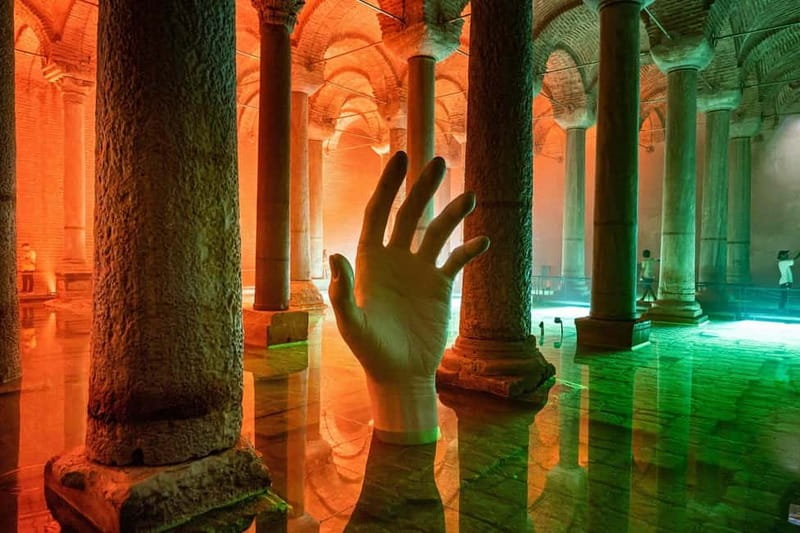
- 336 marble columns (arranged in 12 rows) give you a clear sense of scale.
- The Medusa head bases sit sideways and upside down, and their purpose is still a mystery.
- A live English guide (private option) or an optional audio guide helps you connect the visuals to the story.
- Flash photography isn’t allowed, so you’ll rely on lighting and your eyes.
Fast-Track Entry to the Basilica Cistern: What the 30 Minutes Really Feel Like
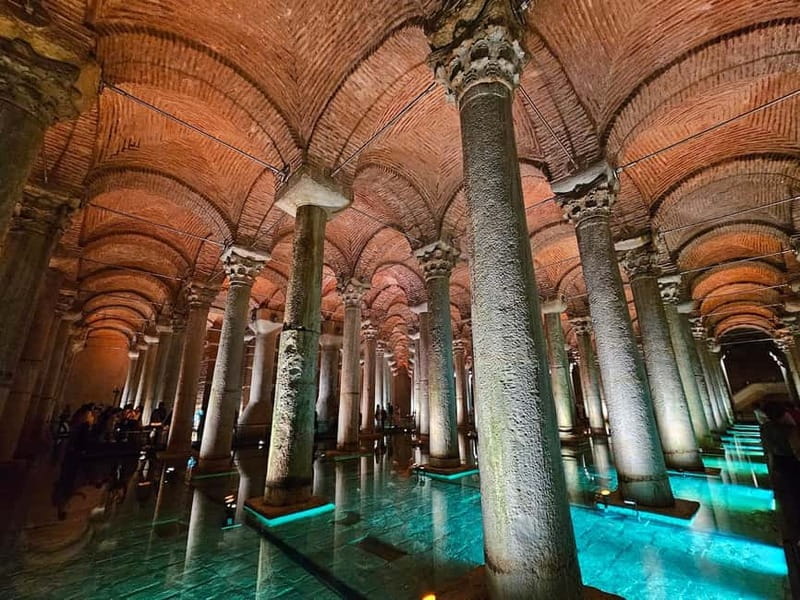
The Basilica Cistern is one of those places that looks instantly memorable from the first glimpse—dark water, columns vanishing into mist, and that surreal quiet below street level. The trick is timing. This experience is designed around skip-the-line access, so you’re not stuck negotiating crowds before you even start.
Your visit is built around a simple rhythm: you’ll meet at one of the two starting points (either Alman Çeşmesi or Yerebatan Sarnıcı), then head into the cistern for a guided walk and visit lasting about 30 minutes. That duration matters more than it sounds. Many cistern visits balloon because people arrive late or spend too long at a single photo spot. Here, the format nudges you to see the essentials: the overall structure, the stories behind it, and the signature features.
Also, you’re not just wandering. The experience includes fast-track entry plus a guided component (live English guide available with the private guide option) or an optional audio guide. For a short visit, that’s key. The cistern is full of visual clues—reused columns, unusual placements, and water reflections—but without a guide, it’s easy to miss what makes it special.
You can also read our reviews of more tours and experiences in Istanbul


Choosing Your Starting Point: Alman Çeşmesi vs. Yerebatan Sarnıcı
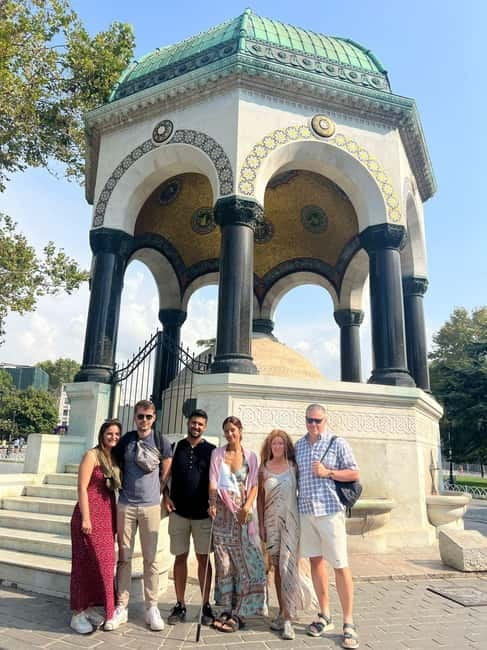
You’ll see two possible meeting points tied to this experience: Alman Çeşmesi or Yerebatan Sarnıcı. That’s more than just logistics—it can affect how smooth your day feels.
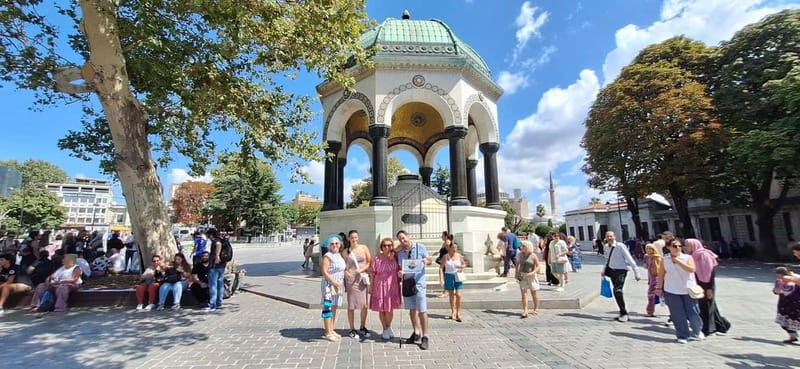
If you’re exploring the Old City and want to start nearby, picking the option that matches your route can save you a lot of last-minute stress. If you’re already close to the historic cistern area, meeting at Yerebatan Sarnıcı can keep things straightforward. If you’re using Alman Çeşmesi as an anchor, it can help you time your arrival with nearby sightseeing.
The main drawback with meeting points is the usual one: they can vary depending on what you book. So before you head out, make sure your chosen meeting spot is confirmed for your exact start time. A 30-minute tour is quick—small delays add up.
Basilica Cistern Layout: What You’ll Notice Under the 336 Columns
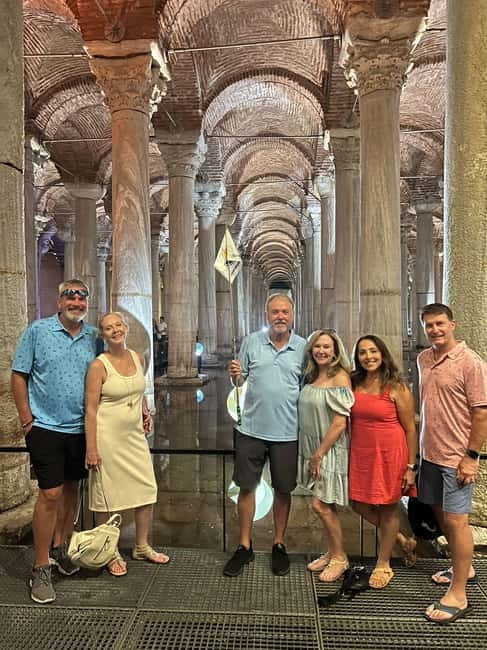
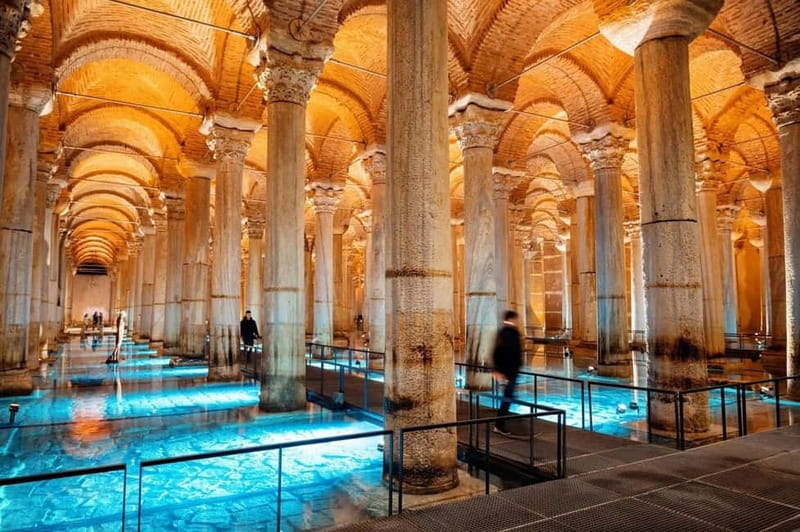
Once inside, the cistern’s scale hits immediately. The Basilica Cistern is known as the largest and most famous underground water reservoir in Istanbul, built in the 6th century (532 AD) during the reign of Byzantine Emperor Justinian I. It wasn’t built for tourists. It was built to supply water to the Great Palace, nearby public buildings, and the imperial city.
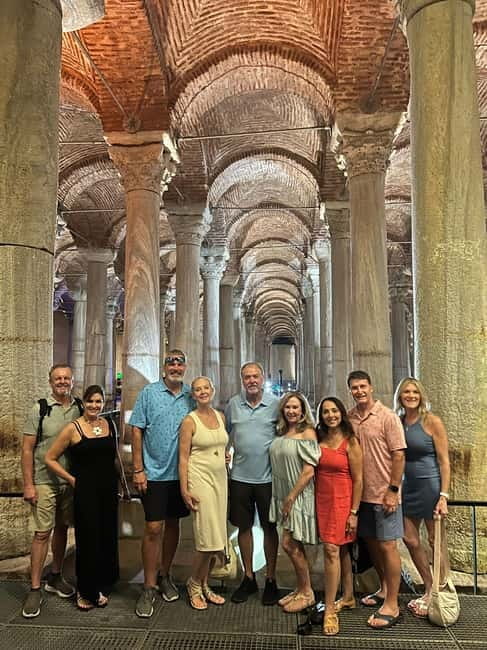
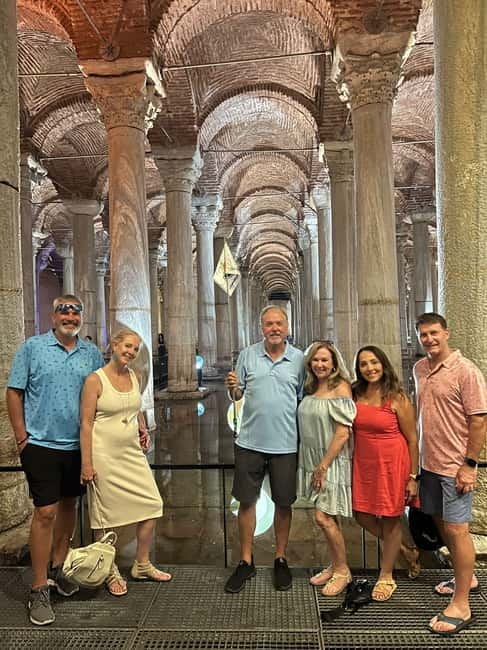
The structure is the real star. You’ll see 336 marble columns, about 9 meters (30 feet) tall, arranged in 12 rows of 28 columns. If you only look at photos, you might think it’s a sea of identical supports. Up close, you start noticing differences—because many columns were reused from earlier Roman structures.
That mix is part of the fascination. Reused materials mean you may spot different column styles and finishes. It’s the cistern’s physical evidence of Istanbul’s layered past—Roman elements carried forward into Byzantine engineering. If the guide (or audio track) points out what to look for, you’ll leave with a much clearer picture of how the site was assembled and why it looks the way it does.
Justinian’s Water System: Why Byzantine Engineering Still Feels Modern
The story of the cistern isn’t just ancient trivia. Understanding the purpose changes how you see the space. When you hear that it was designed as a functional water reservoir—supporting major buildings and the imperial city—you start to interpret the architecture as infrastructure, not just decoration.
The cistern’s design also makes sense in context: underground storage helps stabilize water access, and the column-supported roof turns the chamber into a controlled environment. The lighting and the constant presence of water reflections add atmosphere, but the engineering is the backbone.
In a short 30-minute visit, the guide or audio doesn’t try to cover every historical detail. Instead, it focuses on the parts you can visually confirm: the date (532 AD), the ruler (Justinian I), the purpose (supplying water to key areas), and the structural system (rows of columns supporting the chamber). That’s the value here—linking the name on a sign to what your eyes can actually see.
The Medusa Head Sculptures: The Mystery You’ll Actually See
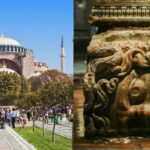
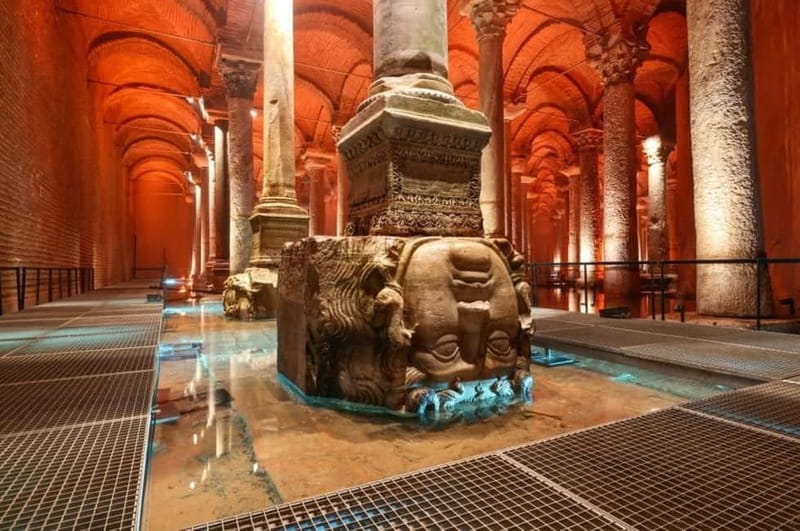
One feature earns instant attention: the Medusa head sculptures. The cistern has two Medusa head bases, and they’re placed in unusual ways—sideways and upside down. Their exact purpose is unknown, which is part of why they’ve become legendary.
This isn’t a “trust me, it’s there” kind of stop. You’ll be able to locate them and notice how the positioning breaks normal expectations. That twist helps you understand something important about historical sites: symbolism and reuse often get mixed into practical projects. Even if the original intent of the Medusa heads isn’t fully settled, the presence of the sculptures adds a human layer to a structure that was built to manage water.
If you want the most out of this moment, don’t rush past it to the next landmark. Take a minute, read the room (dim light, watery reflections), and let the visual contrast do its work.






Audio vs. Live Guide: How to Pick the Right Level of Help
This experience offers two ways to get guided context:
- Live English tour guide is available with the private guide option.
- An optional audio guide can be selected, and it’s offered in English, Spanish, French, Italian, Arabic.
For a short visit, I think this choice is really about your attention style. If you like asking questions and getting answers on the spot, the private guide option is the more satisfying path. One of the best practical touches from a guide you might encounter is patience with questions—there’s a documented example of Zeki being especially engaging and calm while handling queries.
If you’re the type who likes to move at your own pace and still want context, the audio guide is a smart compromise. At 30 minutes, audio helps you connect the columns, the reused materials, and the Medusa heads to the “why” behind them. It can also keep you from feeling lost when the space gets visually similar.
Either way, plan to listen. The cistern is visually striking, but the story is what turns it from pretty into memorable.
Practical Tips: Shoes, Photos, and What’s Not Allowed
This is a cool, dim interior with a moderate amount of walking. Simple advice, but it makes the difference between enjoying it and rushing through it:
- Wear comfortable shoes. Even if you’re only there for 30 minutes, the flooring and crowds can slow you down.
- Photography is allowed, but flash photography isn’t permitted. That matters because flash can ruin other people’s experience and can distract the guides’ pacing.
- The cistern is not wheelchair accessible, so if mobility is a concern, plan for alternate arrangements.
- Keep your belongings with you at all times.
- Weapons or sharp objects aren’t allowed.
One more small but important note: since this is a skip-the-line experience with a short visit, treat your timing like a restaurant reservation. Show up ready, then enjoy the chamber.
Price and Value: Is $62 Worth It?
At about $62 per person, the price can look steep until you think about what you’re buying: time, guidance, and friction-free entry. Istanbul’s top attractions have a way of eating your day. The fast-track entry here is the clearest value driver. If you’d otherwise lose a chunk of your morning or afternoon waiting in line, this ticket can pay you back immediately.
The second value driver is the content density. The cistern is large, but the experience is designed to be efficient—30 minutes means you’re not leaving with only one photo and a blur of columns. With a guide (private option) or audio, you’ll likely understand more of what you’re seeing—especially the structural details like 336 columns, the reused Roman elements, and the Medusa sculptures.
So who gets the best value? You’ll get it if you:
- want the headline sights without spending half your day in queues,
- prefer a guided or narrated context over a self-guided walk, and
- like history that’s tied to what you can visually confirm quickly.
If you’re the kind of traveler who enjoys wandering slowly with no structure, you might not need the fast-track ticket. But most people appreciate cutting the waiting and getting the stories in a manageable timeframe.
Who This Experience Fits Best
This is a strong fit for:
- first-time Istanbul visitors who want a major site with minimal time waste,
- couples and small groups who want a focused visit,
- history-minded travelers who like architecture and engineering more than “museum talk,” and
- anyone who wants to see the Medusa heads without feeling rushed by a long queue.
It’s less ideal if you need wheelchair access or if you dislike enclosed, dim indoor spaces. And because the experience includes a moderate amount of walking, it’s better to come with shoes that won’t punish you after.
Should You Book the Skip-the-Line Basilica Cistern Tour?
Yes—if your priority is seeing the Basilica Cistern efficiently and getting the context that makes it click.
I’d book when you:
- are short on time and want fast-track entry,
- like guided explanations for details like the Justinian-era purpose and the reused Roman columns,
- care about the Medusa head story and want help noticing what’s unusual.
Hold off if you’re an ultra-slow wanderer who doesn’t mind queues, or if accessibility is a hard requirement. Otherwise, this is one of those Istanbul experiences where a structured visit pays off: you get the atmosphere, the scale, and the key mysteries—without turning your day into a line-up marathon.
FAQ
How long is the Basilica Cistern experience?
The experience lasts about 30 minutes, including the guided visit and walk inside the cistern.
Do I get fast-track entry?
Yes. The ticket includes skip-the-line entry through a separate entrance.
Is there a live guide, or is it audio?
A live English tour guide is available with the private guide option. An audio guide is optional and is offered in English, Spanish, French, Italian, and Arabic.
Where do we meet for the tour?
The meeting point can vary depending on the option booked, with starting locations listed as Alman Çeşmesi or Yerebatan Sarnıcı.
Can I take photos inside the cistern?
Yes, photography is allowed, but flash photography is not permitted.
Is the Basilica Cistern wheelchair accessible?
No. The Basilica Cistern is not wheelchair accessible.