REVIEW · 3-HOUR EXPERIENCES
3-Hour Private Bike Tour in Istanbul
Book on Viator →Operated by OSMAN ALTAY - YOUR TOUR GUIDE AND LOCAL PARTNER · Bookable on Viator
Pedal past Istanbul’s most iconic sights in hours. This 3-hour private bike tour in Istanbul stitches together major landmarks around the Golden Horn, with an English-speaking guide and a route designed to keep the ride manageable.
I especially love the hill-smart routing—Osman takes you onto paths that avoid the worst uphills, even though Istanbul has a way of throwing hills at you. I also love the stop choices: you get a rare mix of places of worship and everyday street life, from the Phanar Greek Orthodox Patriarchate area to mosques, churches, and the kind of neighborhoods where local shops still feel like the point.
One consideration: you’ll need moderate physical fitness. It’s not a long, gentle stroll—this is cycling through a real city, including traffic-adjacent streets and some climbs that you can’t fully eliminate.
In This Review
- Key highlights you’ll actually feel on the ride
- A 3-hour private bike tour that hits the old core fast
- Starting in Balat: Ottoman streets and the Phanar Patriarchate nearby
- Fener & Balat: churches, synagogues, and mosques all in the same frame
- Eminönü and Sirkeci Station: the busy waterfront without the wasted wandering
- Gülhane to Hagia Sophia: pacing architecture at bike speed
- Blue Mosque and the Hippodrome: stopping for the city’s layout clues
- Beyazıt Square and the Grand Bazaar stretch: power, learning, trade
- Süleymaniye Mosque and Vefa Bozacısı: Ottoman scale plus a food break
- Cibali and the ride back: a quieter Golden Horn edge
- Price and value: what $119.14 buys in real time
- Who should book this, and who should skip it
- Should you book this 3-hour bike tour?
- FAQ
- How long is the bike tour?
- Is the tour private?
- Is it offered in English?
- Where does the tour start?
- What fitness level do I need?
- Are there admission tickets included?
- What if the weather is bad?
Key highlights you’ll actually feel on the ride
- Balat to Fener begins with the Phanar Greek Orthodox Patriarchate, a powerful spiritual landmark tied to Eastern Orthodoxy
- Most of the experience stays near the Golden Horn water, so you get constant scenery and easier pacing
- Sirkeci Station and Gülhane Park break up the big-ticket monuments with breathing room
- Hagia Sophia and the Blue Mosque area is timed for efficient sightseeing without wasting half a day on transit
- Süleymaniye Mosque plus Vefa Bozacısı adds Ottoman architecture and a very Istanbul food stop
- The tour ends where it started, so you don’t have to figure out a complicated exit plan
A 3-hour private bike tour that hits the old core fast
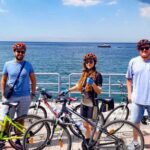
This ride is built for travelers who want more than photos. In about three hours, you cover a tight web of sights that normally take a patchwork of taxis, ferries, and waiting around. The private format matters here: you’re not squeezed into a large group tempo, and Osman can shape the pace around your comfort level.
The other big value is that the tour is in English and uses a mobile ticket, so you’re not scrambling over paper vouchers while you’re trying to get started. And because it returns to the meeting point, your evening plans stay intact.
If you like walking tours, you’ll still enjoy this. But you’ll also get something walking can’t do as well: continuous movement, more sightlines, and that sense of the city flowing past you.
You can also read our reviews of more cycling tours in Istanbul
Starting in Balat: Ottoman streets and the Phanar Patriarchate nearby
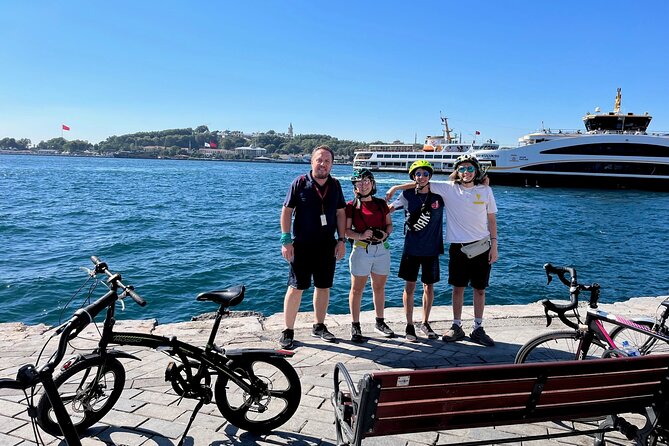
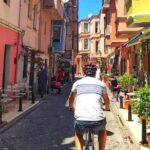
Your meet-up is in Balat (Vodina Cd. No:116, Fatih/İstanbul, 34087). Balat is the kind of neighborhood where you can feel the city’s mix of eras without needing a museum ticket to notice it. The streets are tight, local, and made for slow exploration—perfect for starting a bike route that still feels human-scale.
From there, the ride connects you to the area around the Phanar Greek Orthodox Patriarchate, often called the Ecumenical Patriarchate of Constantinople. This is not just a “pretty church stop.” Established in the 4th century, it’s tied to the Eastern Orthodox world in a way that gives the whole area context. Even if you spend only short time there, it helps you understand why Istanbul’s religious architecture is so layered.
Practical tip: if you’re sensitive to crowds, arrive ready to move. The route is designed so the most important moments aren’t lost, but starting in busy historic areas means you’ll want to keep your bike pace steady and predictable.
Fener & Balat: churches, synagogues, and mosques all in the same frame
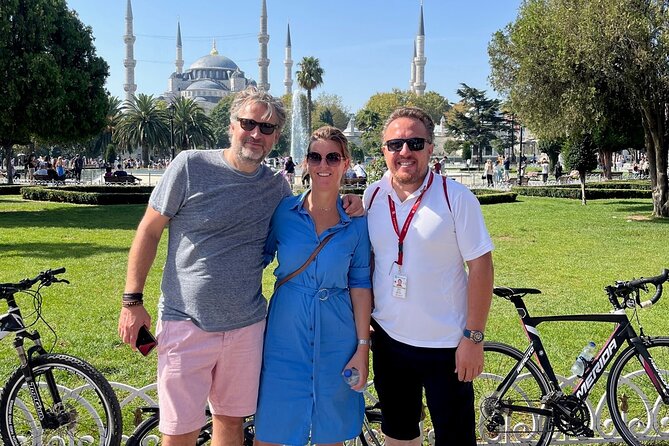
After the opening, you move into the twin-district feel of Fener & Balat along the Golden Horn. This part of Istanbul is known for how different faiths and communities share space—side by side, not in separate tourism zones.
You’ll see religious buildings representing more than one tradition, and that’s the point. Istanbul isn’t a single story told by one monument; it’s multiple stories pressed close together. Short stop time works well here because you’re not trying to “finish” a neighborhood. You’re getting oriented—what’s where, and why it matters.
A small but real plus: some stops in this stretch are listed as admission ticket free, so you’re spending time looking and listening rather than waiting in ticket lines. That makes a 3-hour tour feel tighter and more efficient.
Eminönü and Sirkeci Station: the busy waterfront without the wasted wandering
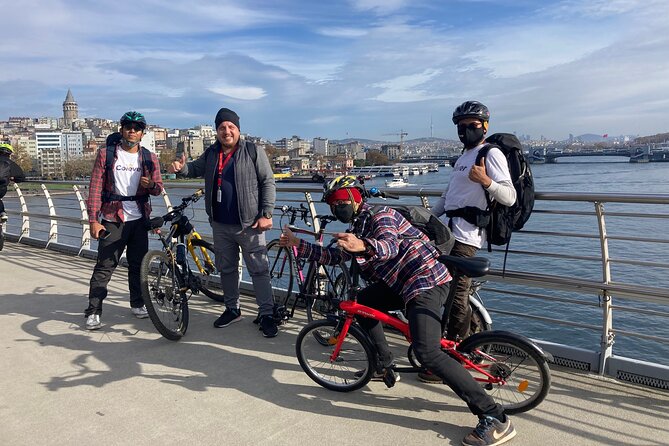
Eminönü is the crossroads area where Istanbul feels like it’s running at full volume. You’ll ride through a segment that connects the water, the markets, and the main historic spine of the peninsula.
This is where cycling shines. By bike, you’re not stuck zigzagging through the same intersections over and over. You also get constant glimpses of the water and the architecture that hugs it—exactly the kind of scenery that makes a short tour feel longer.
Then comes Sirkeci Station, built in 1890 as the eastern terminus for the Orient Express. This is the stop that gives you a time-travel feeling, because you’re looking at a place designed for movement—travelers stepping off trains into Istanbul. Even a brief stop here can make the city’s scale click, because it’s hard to grasp Istanbul’s historic role without seeing something tied to international routes.
From there, the tour shifts toward Gülhane Park, near Topkapı and Sultanahmet Square. It’s a welcome reset: trees dating back to the 1800s and the simple fact of a park gives your legs and eyes a break.
Gülhane to Hagia Sophia: pacing architecture at bike speed
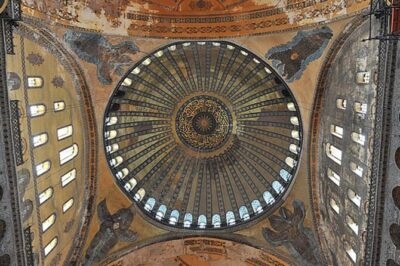
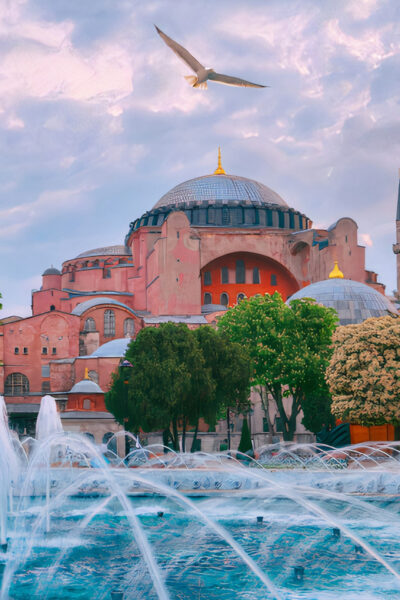
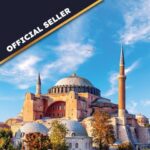
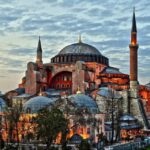
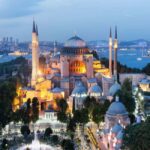
You’ll pass through the monument cluster near Sultanahmet and Topkapı’s area, including Hagia Sophia. This building is one of those places you can’t really understand from outside a guide’s explanation. It was originally called Megale Ekklesia, and later known as Hagia Sophia, Sacred Wisdom—serving as a cathedral for much of the Eastern Roman Empire’s period in the city.
Hagia Sophia was built three times on the same site. That repeated rebuilding is a reminder: this wasn’t a one-and-done project; it was an evolving statement of power, technology, and faith. When you’re touring by bike, you don’t have time to read every detail at street level. The value is that you can get the big ideas fast—then decide later if you want a slower return visit.
Logistics note: the tour’s structure gives you short stop moments at several places. For Hagia Sophia, plan for some combination of looking, listening, and understanding what to notice. If you’re the type who wants deep time inside monuments, this bike format will still set the stage—but it won’t replace a longer, on-foot visit.
You can also read our reviews of more private tours in Istanbul

Blue Mosque and the Hippodrome: stopping for the city’s layout clues
Next you’ll reach the Sultan Ahmet Mosque, also known as the Blue Mosque, famous for the intense blue Iznik tiles. The scale is hard to grasp until you see the complex in context, including the larger complex beyond the prayer hall itself—madrasahs, shops, fountains, a Turkish bath component, and more.
Then the route heads to the Hippodrome area (Atmeydanı in the Ottoman era). This isn’t just a square; it’s a clue to the city’s past urban design. You’ll see historic structures like the Knitted Obelisk, Serpent Column, Theodosius Obelisk, and the German Fountain. Even if you don’t know each name before you arrive, you’ll leave with a better sense of how people once gathered here and how the Blue Mosque anchors the space now.
This stop is one of the best examples of why bike tours work in Istanbul: the monuments and remnants sit close enough that riding keeps you connected to the city’s geometry. You start to understand where you are without studying a map like it’s your job.
Beyazıt Square and the Grand Bazaar stretch: power, learning, trade
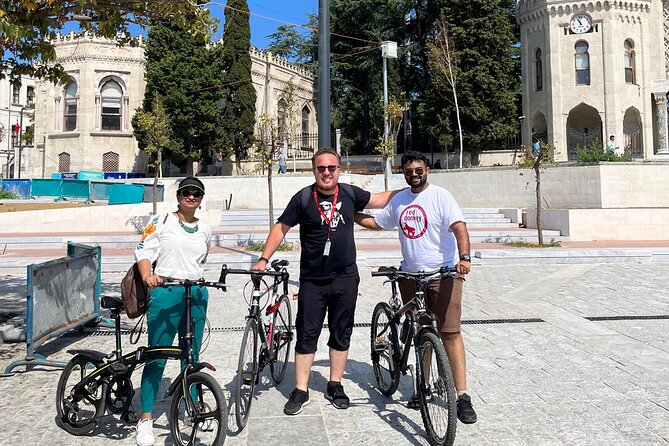
The ride continues to Beyazıt Square, tied to political and historical identity. It was built by Emperor Theodosius in 393 AD and originally known as Form Tauri Square because of the bronze bull heads on an arch in the middle. That kind of detail helps you see the square as something older than the shops and street life around it.
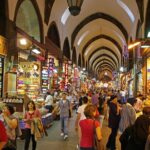
Then you’ll reach the area of the Grand Bazaar. Here, the value is less about shopping and more about understanding the bazaar as an institution. The foundation was laid in 1461, with structures built under Fatih Sultan Mehmet connected to funding for Hagia Sophia. Over time it grew into the major commercial center of the region, trading in jewelry and goods from around the world.
Even if you’re not planning to buy anything, the bazaar stop helps you learn how Istanbul worked—where people exchanged more than products. It was also about connections, status, and the flow of money and materials through the city.
Tip if you’re tempted to wander off: treat this stop as orientation time. If you want to shop in depth, plan a separate visit later when you’re not on a timed bike route.
Süleymaniye Mosque and Vefa Bozacısı: Ottoman scale plus a food break
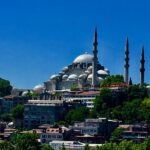
A highlight for many people is Süleymaniye Mosque, built by Mimar Sinan between 1551 and 1558, commissioned by Süleyman the Magnificent. Sinan’s work is a whole topic on its own, but what you’ll appreciate quickly is the balance and scale: a major dome, plus four minarets rising to about 75 meters, and a design that’s meant to be seen from multiple angles.
The tour also includes a nearby “slow it down” moment at Vefa Bozacısı in the Vefa area. This is where you get food that feels like Istanbul, not just a tourist snack. Vefa is known for boza, a traditional fermented Turkish drink, and you also pass the Vefa Kilise Mosque, a former Byzantine church. That pairing matters: it’s not random eating; it’s eating in a neighborhood where layers of time still show.
In at least one 5/5 experience, Osman even offered a drink and something to eat at the end of the tour. It’s a nice finish, because by the time you’ve cycled through so many stops, your body starts caring about calories.
Cibali and the ride back: a quieter Golden Horn edge
The final segment heads toward Cibali, a quieter historic area on the shore of the Golden Horn. This is the part where the city can feel less like a sightseeing checklist and more like daily life. The streets are narrow, and you’ll see a blend of old Ottoman houses, local markets, and historic remnants.
You’ll also encounter the Cibali Gate, a remnant of the ancient city walls, tying the ride back to Byzantine-era defenses. It’s the sort of stop that makes the whole tour click: you started with major spiritual institutions, moved through civic squares and trade, and ended with a reminder of the city’s built boundaries.
Because the tour ends back at the meeting point, you can regroup without hunting down transport right when you’re tired. That simple “return” plan makes booking easier.
Price and value: what $119.14 buys in real time
At $119.14 per person for about three hours, this tour isn’t the cheapest way to see monuments. But it can be strong value if you weigh it against time, effort, and convenience.
Here’s what you’re paying for:
- Private pacing: you ride with just your group, not a crowd-driven schedule.
- Bike routing that avoids the worst hills: this matters in Istanbul. Osman’s route choices help keep the ride enjoyable.
- High sight-to-time ratio: many stops are listed as short stops (often 10 minutes) at major points, plus time to actually move between them.
- Guided context in English: places like Hagia Sophia and the Hippodrome aren’t just landmarks; they’re stories.
One potential trade-off: this is a short tour by design. If you want to spend long hours inside museums or linger at every corner, you might feel slightly “on the clock.” But if you’re aiming to get the big picture and then return for a slower day, this format is a smart move.
Also, it runs best in good weather. Cycling in rain changes the experience fast—so keep an eye on forecasts when you book.
Who should book this, and who should skip it
This tour is a great match if you:
- like a mix of landmarks and local streets
- want a guided explanation without spending all day walking
- are comfortable with moderate cycling and can handle some hills (even when the route avoids the worst of them)
- prefer a private experience that can adjust to your interests
I’d be cautious if you:
- need fully flat terrain
- are uncomfortable riding near busy intersections
- want long, in-depth time inside major sites rather than a short “orientation visit”
Should you book this 3-hour bike tour?
Yes, if you want Istanbul’s classic sights plus neighborhood texture, in a time-efficient private ride. The combination of Osman Altay’s hill-smart routing, the steady pace along the Golden Horn, and the stop mix—Orthodox heritage, major mosques, the Hippodrome area, the Grand Bazaar zone, and a food stop at Vefa Bozacısı—makes it feel like more than just transportation.
If you’re the type who loves building a “first map” of a city, this tour is an excellent way to do that, then come back later for whatever you loved most.
FAQ
How long is the bike tour?
It’s listed as about 3 hours.
Is the tour private?
Yes. It’s a private tour, meaning only your group participates.
Is it offered in English?
Yes, the tour is offered in English.
Where does the tour start?
The meeting point is Balat, Vodina Cd. No:116, 34087 Fatih/İstanbul, Türkiye. The tour ends back at the meeting point.
What fitness level do I need?
The tour notes moderate physical fitness. You’ll be cycling in a real city environment, with some hills to manage even when the route tries to avoid the worst of them.
Are there admission tickets included?
Several stops are listed as admission ticket free. Other major sights in the route are not marked this way in the provided information, so entry rules can vary by site.
What if the weather is bad?
The tour requires good weather. If it’s canceled due to poor weather, you’ll be offered a different date or a full refund.