REVIEW · ISTANBUL CITY HIGHLIGHTS & PRIVATE TOURS
Istanbul Old City Tour
Book on Viator →Operated by Laal Dmc · Bookable on Viator
You can cover Istanbul’s top sights on foot. This private day with a professionally licensed guide helps you see the Old City’s big landmarks without the usual scramble, in just a small-group format.
I especially like how the guide work can match your pace and interests. In past days with guides like Naci, the tour can be adjusted on the spot for what you care about most, including practical add-ons like food and shopping stops, not just monuments.
The main thing to plan around is time and lines: entrance fees are not included for some major sites, and since Hagia Sophia is an active mosque again, you should expect security queues and you won’t get skip-the-line priority there (and on Fridays, mosque visits may be from outside).
In This Review
- Key things that make this Old City day worth it
- What you’re really getting for $90 in Istanbul’s Old City
- How the day flows: from German Fountain to the Hippodrome
- German Fountain (Alman Çeşmesi): a small stop with a big context
- Sultanahmet District and Sultanahmet Square: where your bearings lock in
- Hippodrome (Atmeydanı): Roman chariot energy, Byzantine relics
- Hagia Sophia: the one stop that changes the rules
- What you should expect when it’s an active mosque
- Why the building feels different than the photos
- Friday note: sometimes you’ll see it from outside
- The Blue Mosque: architecture you can actually appreciate in 1 hour
- Mosque interiors: no “skip” advantage
- Friday note again
- Basilica Cistern: the “cool down” that costs time (and changes what you see)
- Why this cistern is worth making room for
- Plan around the indoor ticketed reality
- Topkapi Palace: when the day turns into a museum sprint
- The timing check that matters
- Grand Bazaar: a market stop that works only if you have a plan
- What I like about a guided bazaar hour
- Sunday closure and the likely swap
- The guide is the real product: different styles, same goal
- Practical planning tips so you don’t get stuck
- Start early if you care about queues
- Wear shoes that forgive you
- Budget for museum entrances
- Expect mosque schedules to shape the plan
- Who this tour suits best
- Should you book the Istanbul Old City Tour?
- FAQ
- FAQ
- How long is the Istanbul Old City Tour?
- Is this tour private or group-based?
- What language is the tour offered in?
- Are museum tickets included in the price?
- Is there skip-the-line access?
- What happens on Fridays?
- Is the Blue Mosque interior always included?
- Is Topkapi Palace open every day?
- Is the Grand Bazaar open every day?
- Can I cancel and get a full refund?
Key things that make this Old City day worth it
- Private with a licensed guide, so you can ask real questions and move at your pace
- Big-hit sequence from German Fountain and Hippodrome right into Hagia Sophia and the Blue Mosque
- Flexibility shown by guides like Eren and Sedat, adjusting timing so the day feels manageable
- Logistics help for entries, including booking/entry handling on the day where possible
- Cistern trade-off: you’ll skip one mosque interior to make time for Basilica Cistern
- Price value depends on museum fees since Topkapi (and other sites) cost extra
What you’re really getting for $90 in Istanbul’s Old City
At $90 per person, this is one of those prices that can make sense fast—if you’re aiming to cover the classic Istanbul highlights in a single day. The value is less about “cheap” and more about buying time and guidance: you get a licensed guide, a private format (so you’re not stuck with other peoples’ pace), and a route that packs in the core historic areas of Constantinople/Istanbul’s Old City.
One practical note: this is a walking-focused experience. The tour doesn’t include transportation, and it runs about 4 to 8 hours depending on the day, walking pace, and how long you spend inside major stops. If you want a guided day that feels efficient without a bus ride, it fits well.
Also, admission costs are a real part of the math. Hagia Sophia and the Blue Mosque have no skip-the-line priority for active-worship security reasons, and Topkapi Palace admission is not included. So, think of the $90 as the guide + route + on-the-ground help, then budget separately for ticketed interiors.
You can also read our reviews of more city tours in Istanbul

How the day flows: from German Fountain to the Hippodrome
The early stops do more than fill time. They act like a “show map, then explain it” warm-up so the rest of the day clicks.
German Fountain (Alman Çeşmesi): a small stop with a big context
You spend about 15 minutes at the German Fountain, which is free to visit. It’s not a mega-attraction, but it’s a great orientation point. The fountain matters because it’s tied to the wider story of the squares around it—especially the Ottoman-era layout of public space.
I like using this moment to calibrate: once you stand in the area, the later landmarks around Sultanahmet start making visual sense. You’ll also get a nice pause before heading into the denser historic core.
Sultanahmet District and Sultanahmet Square: where your bearings lock in
Next comes Sultanahmet District and Sultanahmet Square, each about 15 minutes, also marked free. Even if you’ve seen photos, these short stops are useful because the guide can explain what you’re looking at in plain terms—how the city’s layers overlap and how power shifts show up in architecture and public space.
This is where a private guide earns their fee. You don’t just wander. You get a short lecture that helps you “read” the street.
Hippodrome (Atmeydanı): Roman chariot energy, Byzantine relics
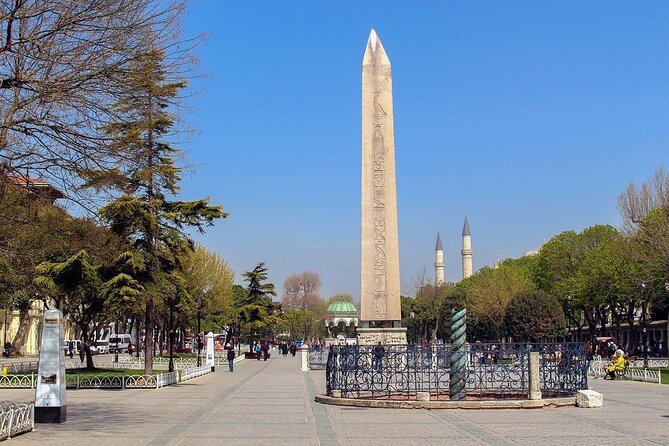
The Hippodrome Square stop is another about 15 minutes and free to access. This is where you learn to picture a place that’s mostly open space now—but was once the stage for chariot races in the Roman Empire.
A highlight here is the Egyptian Column (Byzantine-era presence) and the way landmarks frame the Ottoman-era Ottoman connection to the square. You’ll likely take photos, yes—but more importantly, you’ll understand why this area still feels like a civic center.






Hagia Sophia: the one stop that changes the rules
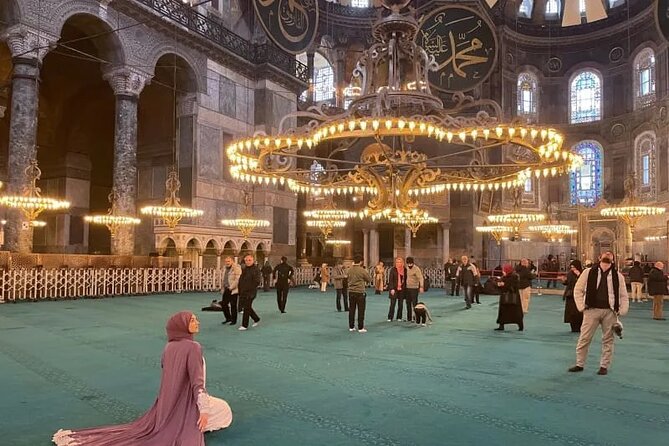
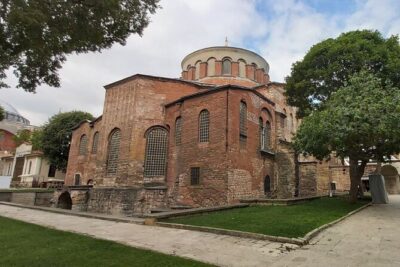
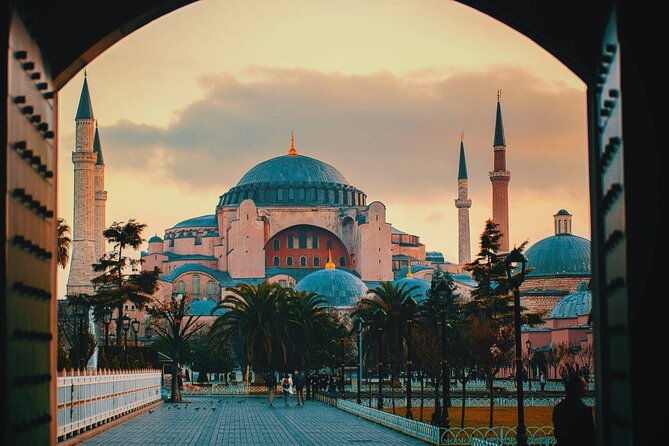
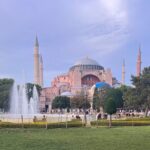
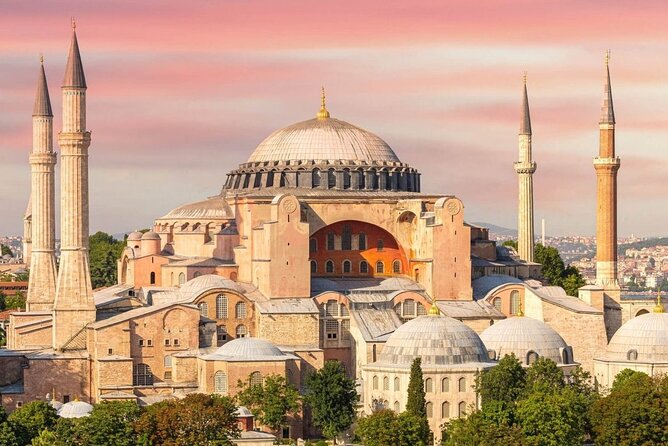
If you only care about one building in the day, it’s usually this one. Hagia Sophia takes you into the city’s identity switchovers—Christian basilica, Ottoman mosque, museum phase, and now mosque again.
What you should expect when it’s an active mosque
Hagia Sophia is scheduled for about 1 hour and listed as free for the tour. The big practical point: since it’s not operating as a museum in the usual way, the tour does not include skip-the-line priority. You should plan for security screening queues.
The tour guidance suggests leaving early to reduce waiting—aim for around 8:30am to 9:00am if you can. That timing makes a difference, because security is the kind of delay you can’t negotiate.
Why the building feels different than the photos
Hagia Sophia’s story is almost too dramatic, but the details help it land. Built in the 6th century by Emperor Justinian, it played a major role in both the Christian and Islamic worlds. After the Ottoman conquest, elements tied to Christian worship were removed, and mosaics were covered as part of the conversion process. Later, it became a museum—and now it’s a mosque again.
That’s why the guide’s on-the-ground pointing helps. You’ll spend less time guessing and more time understanding what you’re seeing.
Friday note: sometimes you’ll see it from outside
On Fridays, Hagia Sophia may be visited from the outside because of worship schedules. Plan for that possibility so you don’t feel shortchanged if your day runs into a worship timeline.
The Blue Mosque: architecture you can actually appreciate in 1 hour
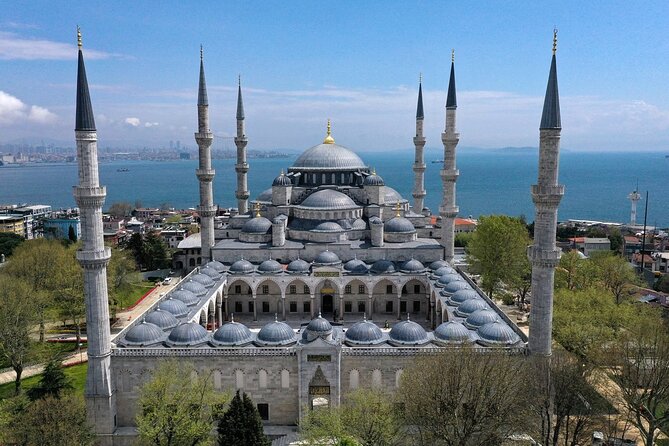
Right after Hagia Sophia, you’ll head to the Blue Mosque (Sultanahmet Camii) for about 1 hour.
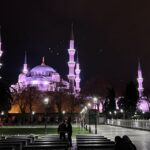
The Blue Mosque was built in the early 1600s for Sultan Ahmet I. The reason it’s famous isn’t only the scale—it’s the delicate proportions. Standing inside the setting, you start noticing how the architecture is designed to feel balanced, not heavy.
Mosque interiors: no “skip” advantage
Like Hagia Sophia, because this is an active mosque, skip-the-line service isn’t available for entry. There’s a queue for the entrance. The best move is simple: accept that security is part of the experience, and use the guide’s explanations while you wait so the time doesn’t feel wasted.
Friday note again
On Fridays, the tour may also switch how you experience the Blue Mosque—often from outside due to worship.
Basilica Cistern: the “cool down” that costs time (and changes what you see)
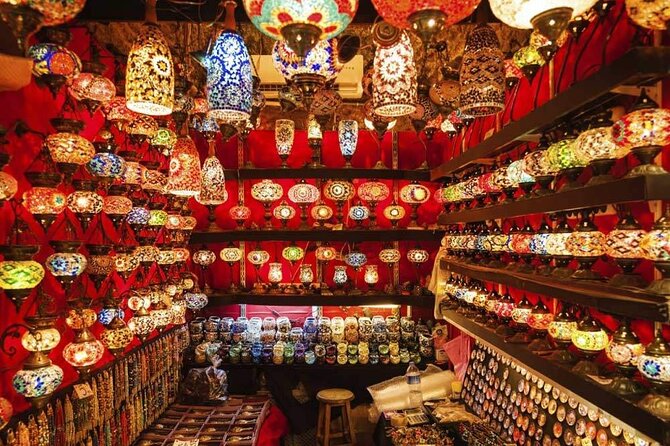
There’s a trade-off in this tour design. You’ll skip one of the mosques’ interiors to save time and visit the Basilica Cistern interior instead.
Why this cistern is worth making room for
Basilica Cistern was a former water storage chamber, and it’s also one of the greatest surviving Byzantine sites. If you like Istanbul for the quieter, more atmospheric moments—not just the big-name landmarks—this stop can be a standout.
It’s also a smart pacing tool. After the heavy history and high-demand mosques, you get a different feel: lower light, stone, water, and a calmer tempo.
Plan around the indoor ticketed reality
The tour listing says museum entrance fees are not included for additional museums. Basilica Cistern is the kind of stop that often falls into that category, so budget for ticket costs if you care about the interior experience.
Topkapi Palace: when the day turns into a museum sprint
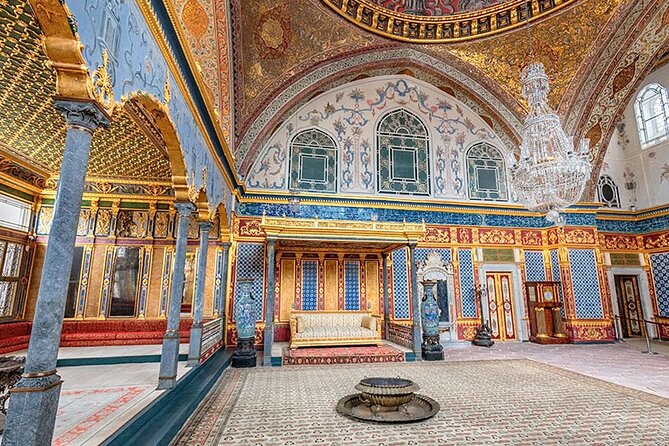
Then comes Topkapı Palace, scheduled for about 2 hours, and admission is not included.
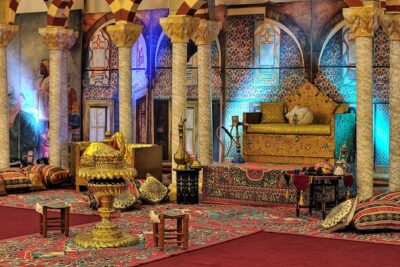
Topkapi isn’t only an imperial residence. It was the seat of the supreme executive and judiciary council for almost 400 years, which is a big part of why the palace feels like power made architectural.
If you enjoy symbolism, you’ll notice how the design resembles the Ottoman Empire’s sense of authority. Even if you’re not a museum person, the guide can help you pick the key things to look for so you don’t get lost in hallways.
The timing check that matters
Topkapi Palace is closed on Tuesdays. The tour notes that it can be replaced with alternatives, but the specific replacement isn’t guaranteed here—so if you’re traveling on a Tuesday, I’d confirm what substitute stop you’ll get.
Grand Bazaar: a market stop that works only if you have a plan
After palace time, the tour shifts into shopping-land: the Grand Bazaar (Kapalı Çarşı).
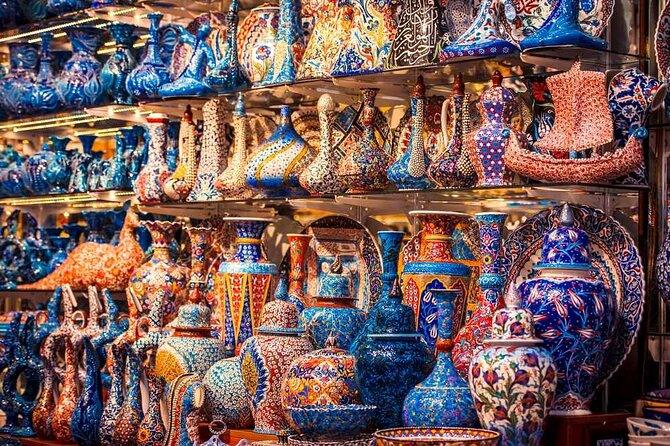
You get about 1 hour, and the tour lists it as admission free. This is one of the largest and oldest covered markets in the world, with over 4,000 shops. The place is loud, crowded, and full of handmade and not-so-handmade items. You’ll see ceramics, leather, rugs and carpets, handicrafts, clothes, plus silver and gold.
What I like about a guided bazaar hour
A guided bazaar stop is about reducing decision fatigue. In many bazaars, you can waste time comparing identical items without a strategy. When the guide knows how to route you through the most efficient lanes, you can actually enjoy browsing.
One extra bonus from guide styles you might encounter: Naci has been known to adjust stops for food and shopping based on interests, which can make the bazaar hour feel less random.
Sunday closure and the likely swap
Grand Bazaar is closed on Sundays, and the tour can replace it with the Spice Market. That’s useful because it means you still get a market experience even if you travel on a Sunday.
The guide is the real product: different styles, same goal
In a private tour, your guide can make a huge difference. The best days I’ve seen with this kind of Old City route show up in small behaviors: how they manage pacing, how they explain what you’re looking at, and how they adjust when your group runs ahead or lags behind.
Here are the guide qualities you should look for (and the names you may see, based on past service):
- Naci: reached out the night before to customize the day around interests, then made on-the-spot timing changes that included specific food and shopping stops. He also handles booking/entry logistics smoothly, so you don’t spend mental energy figuring out where to go.
- Murat: kept explanations focused and moved at the group’s pace without dumping info you don’t ask for.
- Eren: adjusted timing to match your schedule and kept the day from feeling like a rushed checklist.
- Sedat: put extra attention into explaining Hagia Sophia, Blue Mosque, and Basilica Cistern so the story of the buildings felt coherent instead of random facts.
There can be variability—one day might feel ultra polished, another might feel more basic. I’d treat this as a “pick the right guide day” situation, and if punctuality is crucial to you, I’d build a bit of buffer into your day.
Practical planning tips so you don’t get stuck
Start early if you care about queues
Because Hagia Sophia security queues are part of the reality, earlier arrival is your friend. Plan around 8:30am–9:00am if you can.
Wear shoes that forgive you
This is a walking-heavy Old City route. Even with a guide, your comfort will drive your enjoyment.
Budget for museum entrances
Ticketed interiors like Topkapi Palace are not included. Add in other possible paid entry points based on what you end up visiting inside. It’s not a deal-breaker, but it prevents sticker-shock.
Expect mosque schedules to shape the plan
On Fridays, one or both mosques may be viewed from outside due to worship. If interior time is the top priority, plan your dates with that in mind.
Who this tour suits best
You’ll likely love this if:
- You want a one-day, guided hits-of-Old-City plan without planning logistics yourself
- You like history, but also want the guide to translate it into what you can actually see
- You prefer private pacing over joining a large group
- You’re okay paying some extra museum fees for the biggest interiors
You might want to think twice if:
- You’re traveling on a day when you really can’t handle queues or schedule changes (mosque entry and Friday timing)
- You refuse to pay extra for museum admissions, especially Topkapi
Should you book the Istanbul Old City Tour?
Yes, book it if you’re trying to make Istanbul’s Old City feel organized and understandable in one day. The licensed private guide adds real value, and the route is strong: orientation in Sultanahmet, then the emotional and architectural power of Hagia Sophia and the Blue Mosque, plus Topkapi and a market finale.
Just go in with two smart expectations: museum admissions will cost extra, and mosque entry means you’ll meet security lines instead of skip-the-line access. If you can handle that—and especially if you start early—you’re likely to come away with a day that feels coherent, not chaotic.
FAQ
FAQ
How long is the Istanbul Old City Tour?
It runs for about 4 to 8 hours, depending on the day and how long you spend at each stop.
Is this tour private or group-based?
It’s a private tour, meaning only your group participates.
What language is the tour offered in?
The tour is offered in English.
Are museum tickets included in the price?
Additional museum fees are not included. Topkapi Palace admission is specifically listed as not included.
Is there skip-the-line access?
Skip-the-line priority is not available for active mosques. You may need to wait in security lines, especially at Hagia Sophia.
What happens on Fridays?
On Fridays, Hagia Sophia or the Blue Mosque may be visited from outside due to worship.
Is the Blue Mosque interior always included?
Not always. The tour notes that one of the mosques may be skipped to save time so you can visit the interior of Basilica Cistern.
Is Topkapi Palace open every day?
No. Topkapi Palace is closed on Tuesdays, and the tour can replace it with alternatives.
Is the Grand Bazaar open every day?
No. The Grand Bazaar is closed on Sundays and can be replaced with the Spice Market.
Can I cancel and get a full refund?
Yes. You can cancel up to 24 hours in advance for a full refund.