REVIEW · DOLMABAHCE PALACE TOURS
Istanbul: Dolmabahce Palace & Harem Skip-the-Line Entry
Book on GetYourGuide →Operated by Istanbul Tourist Pass® · Bookable on GetYourGuide
Dolmabahçe Palace hits you with instant scale: chandeliers, gold, and Ottoman grandeur in one tight visit. What I like most is that you get skip-the-line e-tickets and a 25-language audio guide, so you can move at your own pace without hunting for info. One thing to note up front: the palace still runs a mandatory security check, so the line-skipping can be less magical at peak times.
This is also a strong way to understand the shift from Ottoman empire power to modern Turkey. You’ll hear about the palace’s origins under Sultan Abdülmecid I (opened in 1856) and how it served as a last headquarters until 1922, with Mustafa Kemal Atatürk’s legacy woven into the story. My one caution is simple: if your QR code or ticket exchange doesn’t cooperate, you may lose time at the information desk.
In This Review
- Key Highlights You’ll Feel During Your Visit
- Dolmabahçe Palace Skip-the-Line Entry: What You Gain for $55
- Timing Your 2 Hours: Security Checks, Monday Closures, and Best Use of Time
- Entering Dolmabahçe Palace: Architecture, 1856 Origins, and the Interior Shockwave
- Baccarat and Bohemian Chandeliers: Why These Lights Feel Different In Person
- Gold Ceilings and Imperial Luxury: What to Watch for Beyond the First Wow
- Dolmabahçe vs Topkapi: The Contrast That Makes the Palace Make Sense
- Mustafa Kemal Atatürk’s Legacy: Modern Turkey in an Ottoman Palace
- The Harem Section: What You’ll See and What Can Go Wrong
- Audio Guide in 25 Languages: How to Make It Actually Work
- Optional Private Guide: When Paying Extra Makes Sense
- Practical Reality Checks: Where Time Slips and How to Avoid It
- Is It Good Value? Weighing $55 Against What You Actually Get
- Should You Book This Dolmabahçe Palace and Harem Entry?
- FAQ
- What’s included with this Dolmabahçe Palace & Harem experience?
- How do I get the tickets and QR codes?
- Where do I access the 25-language audio guide?
- Is Dolmabahçe Palace open every day?
- How long is the visit?
- Can I cancel for a refund?
Key Highlights You’ll Feel During Your Visit
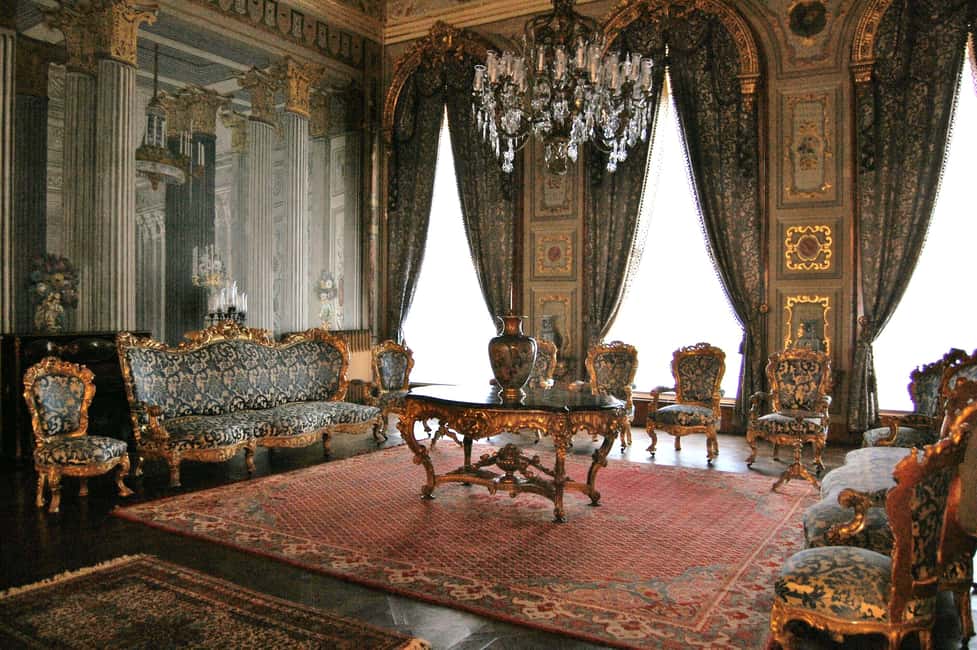
- Skip-the-line entry for both Dolmabahçe Palace and the Harem
- Audio guide in 25 languages, linked to your ticket (not something you pick up on site)
- Baccarat and Bohemian chandeliers, including the biggest Bohemian chandelier ever
- Ornate gold interiors, especially on the ceiling details
- Clear contrast with Topkapi Palace, from style to furniture choices
- Built in 1856, ordered by Sultan Abdülmecid I, and used until 1922
Dolmabahçe Palace Skip-the-Line Entry: What You Gain for $55
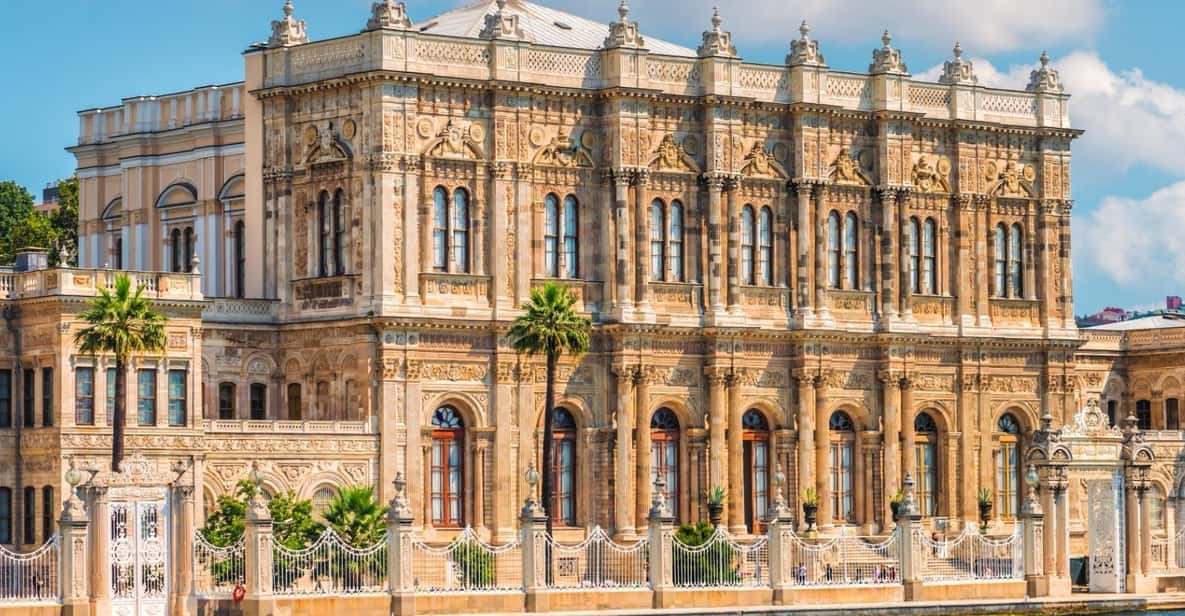
At $55 per person for a 2-hour visit, this isn’t a budget “see it fast” ticket. It’s priced for convenience and structure: you avoid waiting in the main entry chaos and you get an audio guide system set up in advance.
Here’s the practical benefit. Dolmabahçe can be a line-and-squeeze experience, especially when tour groups stack up. A skip-the-line approach helps you reach the palace areas faster, then you can spend time where you actually care—gold ceilings, crystal chandeliers, and the Harem section.
Just be realistic about how “skip-the-line” works. The museum still requires a security check, and you may need to stop at an info desk to validate or exchange your entry if your QR code doesn’t scan smoothly. In short: you’re likely to save time, but don’t plan a super-tight schedule where minutes matter.
You can also read our reviews of more tours and experiences in Istanbul

Timing Your 2 Hours: Security Checks, Monday Closures, and Best Use of Time
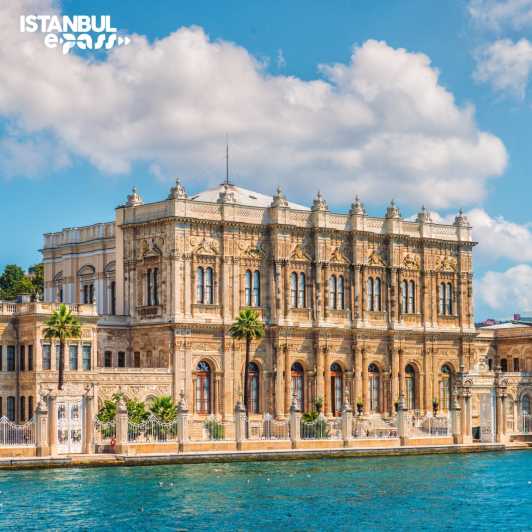
This experience is set for 2 hours, which is enough time if you keep moving and listen selectively. It’s not enough time if you plan to stand and stare at every ceiling painting and chandelier detail for 10 minutes each.
Also plan around closures. Dolmabahçe Palace Museum is closed on Mondays. During November 1 to March 31, opening hours are approximately 9:00 AM to 4:00 PM, so you’ll want to book an earlier slot if you’re visiting in winter.
Then add one more factor: a mandatory security check. Waiting times can happen, especially busy hours. My advice is to arrive a little earlier than you think you need and treat security as a normal part of the experience, not a surprise.
Entering Dolmabahçe Palace: Architecture, 1856 Origins, and the Interior Shockwave
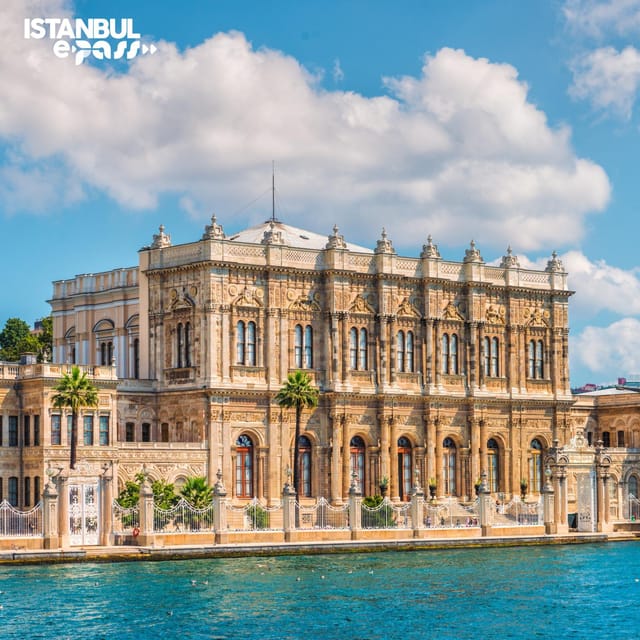
Once you’re inside, Dolmabahçe doesn’t ease you in. It hits with the full Ottoman royal statement—architecture that feels engineered for power and wealth.
The palace was built by the orders of Sultan Abdülmecid I and opened in 1856. Knowing that helps you interpret the interiors. This isn’t just decorative. It’s a political space meant to show authority, connections, and legitimacy during a major era of change.
When you walk through the main rooms, keep an eye on the details your audio guide highlights: ornate ceilings with gold and that famous crystal-and-light effect from the chandelier collection. The visuals are what you’ll remember later, but the audio guide can help you understand what you’re looking at.
A practical note: the palace interior rules typically mean you shouldn’t expect to take photos inside. Some visitors mention that photography isn’t allowed in the palace rooms, so plan on using your eyes and letting the experience live in your memory rather than your camera.
Baccarat and Bohemian Chandeliers: Why These Lights Feel Different In Person
If you’re the kind of person who usually skips chandeliers, Dolmabahçe might change your mind. The palace features the greatest collection of Baccarat and Bohemian chandeliers on the planet, including the biggest Bohemian chandelier ever.
What makes this special is how chandeliers work as atmosphere. They don’t just hang there. They change how the whole room feels—bright points of light against dark wood, gold accents, and long sightlines. Even if you’re not an expert in glass history, your brain will clock the scale.
In a two-hour visit, I’d treat the chandelier rooms like your “anchor stops.” Don’t rush past them while you’re still loading the audio guide. Pause, listen for the story tied to the room, and then look up. You’ll understand why people get genuinely stunned here.
Gold Ceilings and Imperial Luxury: What to Watch for Beyond the First Wow
Yes, it’s beautiful. But if you want the visit to feel more meaningful than a quick photo-and-go, watch for patterns.
Dolmabahçe’s luxury is visible in two main ways. First, it’s the gold—especially on ornate ceilings. Second, it’s the overall interior design language: the “royal ship” feeling of a residence that’s meant to impress from every angle.
The audio guide is set up for this. Since you’re not getting a live guide included in this option, you’ll want to use the audio in a targeted way: play it when you enter a major room, then pause it when you’re looking at surfaces. That keeps the visit from turning into background noise.
One more context point that makes the gold feel different: this palace was used until 1922, long after its 1856 opening. That time gap means the building wasn’t frozen in one era. It absorbed change—political and cultural—and the interiors reflect that long lifespan.





Dolmabahçe vs Topkapi: The Contrast That Makes the Palace Make Sense
If you’ve already visited Topkapi Palace (or plan to), you’ll appreciate the way this experience explains the differences. The audio guide covers how Dolmabahçe and Topkapi diverge in architecture style and even furniture choices.
Here’s what that means for you on the ground: Dolmabahçe feels more like a statement of modern wealth and diplomatic ambition, while Topkapi often feels more like layered Ottoman tradition. You don’t need museum language to feel that contrast. You’ll see it in how rooms are arranged, how light behaves, and how the spaces guide your movement.
This “compare and contrast” approach is a real value add. Without it, Dolmabahçe can blend into a general category of palace rooms. With it, you start noticing why this residence mattered in its own specific moment of Ottoman and early Republican Turkey.
Mustafa Kemal Atatürk’s Legacy: Modern Turkey in an Ottoman Palace
The experience includes the cherished legacy of Mustafa Kemal Atatürk, and that detail matters because it ties the building to the country’s later story, not just Ottoman pageantry.
You’ll also hear how Dolmabahçe served as the last imperial headquarters and continued to function as a seat of power until 1922. That’s the bridge between empire and republic, and it’s what gives the palace extra emotional weight for many visitors.
If you’re the type who likes understanding what you’re standing in, don’t skip the audio parts that deal with the palace’s final role and the shift in Turkey’s leadership timeline. Those sections help you see the rooms as stages in a bigger transformation.
The Harem Section: What You’ll See and What Can Go Wrong
The ticket includes entry for both Dolmabahçe Palace and the Harem section. That matters because the Harem is where the palace stops feeling like pure ceremonial luxury and starts feeling like lived space within royal life—more personal, more inward.
Still, be aware of a key variable. Some visitors report that the Harem was not open during their visit. That doesn’t mean it’s always closed, but it does mean you shouldn’t treat the Harem as guaranteed on every date and every time slot.
If the Harem is open, plan to keep moving. The whole experience is only 2 hours. A common pattern is that people get stuck in the palace rooms and then feel rushed near the Harem.
A small comfort tip from experience on-site: there’s a cafe close to the Harem entry area, and one visitor specifically mentioned grabbing a frozen drink there to cool off. In a warm day (or after security), that pause can make the last stretch much more pleasant.
Audio Guide in 25 Languages: How to Make It Actually Work
This is where you can win or lose your experience.
You get an audio guide in 25 different languages, but you don’t pick it up at the palace. It’s prepared for this experience and provided via a link connected to your tickets. That means you should plan your setup before you arrive.
Two key “do this” tips:
- Make sure you can access the audio link using your phone before you enter. If you wait until you’re standing in front of the building, you might waste time.
- Use the audio like a tool, not a constant stream. Turn it on for key rooms, then turn it off when you want your eyes to do the work.
Also note the ticket delivery method. You receive your entry QR codes via a separate e-mail from the supplier (Istanbul Tourist Pass®). If you only look for a ticket inside another app or assume one QR code will always scan, you might hit a snag.
Some visitors also described cases where a QR code didn’t work at the entrance and they had to wait while staff fixed it. Others mentioned needing to exchange vouchers for actual ticket access. So: arrive calmly, keep your confirmation emails handy, and don’t plan to be late.
Optional Private Guide: When Paying Extra Makes Sense
Live guiding isn’t included in this specific option, but there is an additional private tour guide choice. That can be worth it if you want more than audio and you like Q&A.
If you do choose a guide, know that palace rules can limit how much a guide can do inside. One visitor noted that museum rules prevented the guide from walking along with a group when the group was more than 5 people. That means a private guide might still provide explanations, but it may not be a free-flowing walkthrough like some smaller museums.
So the “value” question is about your style. If you like structured listening while walking and you’re fine reading the room through audio, you’ll likely feel satisfied with the self-paced format. If you want answers in real time and you’re sensitive to details, the private option can turn the visit into a more personal experience.
Names of guides that popped up include Zey, Ilke, Ozzy, Furkan, Adam, John, and Ozy. If your booking assigns you someone like that, you may get extra story and local context layered into the audio framework.
Practical Reality Checks: Where Time Slips and How to Avoid It
Even with skip-the-line entry, a few things can slow you down. Security is one. QR code problems are another.
Common friction points based on real on-site experiences:
- QR codes not scanning smoothly, leading to a brief wait at an office or information desk
- Ticket validation that ends up causing a line-like delay if you don’t have the right document type ready
- Timing mismatch if you assume the Harem is open when it might be closed that day
- Photography expectations, since interior photo rules can be strict
Your best defense is simple preparation:
- Keep the Istanbul Tourist Pass® e-mail and QR codes accessible on your phone.
- If you can, have a backup screenshot or printed copy.
- Give yourself cushion time for security and any ticket checks.
Is It Good Value? Weighing $55 Against What You Actually Get
For $55 and a 2-hour experience, the biggest “value” is not the building itself. Dolmabahçe is famous and dramatic. The value is the friction removal: skip-the-line entry plus a ready-to-go audio guide in 25 languages.
If you’re visiting in a busy season or you want the experience without paying for a live guide, this pricing can make sense because it buys you time and clarity. You’re not spending extra money on an instructor, but you still get guided context through the audio.
If you’re someone who loves slow wandering and deep reading, 2 hours might feel short. And if your phone battery is weak, audio-guide dependent experiences can feel stressful. In those cases, the private guide option or careful planning becomes more important.
Also remember Monday closures. If you book on the wrong day, “skip-the-line” won’t rescue you.
Should You Book This Dolmabahçe Palace and Harem Entry?
I’d book this if you want an efficient, structured palace visit with audio guidance and a real chance to avoid the worst entry waits. It’s a good fit for couples, solo visitors, and families who can handle walking through palace rooms at a steady pace.
Don’t book if you only want a live guide inside the palace with constant narration, or if you’re likely to struggle with QR codes and phone-based audio setup. The experience assumes you’ll use the ticket QR codes you receive by e-mail and the audio link you access ahead of time.
If you time it well, arrive with your QR codes ready, and use the audio guide at the right moments, you’ll come away with the look of Dolmabahçe in your head: gold ceilings, crystal chandeliers, and a palace story that connects the Ottoman world to Atatürk’s Turkey.
FAQ
What’s included with this Dolmabahçe Palace & Harem experience?
It includes a skip-the-line entry ticket for both Dolmabahçe Palace and the Harem section, plus an audio guide in 25 languages.
How do I get the tickets and QR codes?
You receive your entry QR codes via a separate e-mail from the supplier, Istanbul Tourist Pass®.
Where do I access the 25-language audio guide?
The audio guide is provided via a link with your tickets. It is specially prepared by Istanbul Tourist Pass and cannot be obtained at the palace.
Is Dolmabahçe Palace open every day?
No. The Dolmabahçe Palace Museum is closed on Mondays.
How long is the visit?
The experience duration is 2 hours.
Can I cancel for a refund?
Yes. There is free cancellation up to 24 hours in advance for a full refund.