REVIEW · 2-DAY EXPERIENCES
2 Days Ephesus and Pamukkale from Istanbul
Book on Viator →Operated by Tours Flame · Bookable on Viator
Ancient Turkey, delivered in two days. This quick-turn itinerary strings together Ephesus with a guided walk through major ruins, then follows up with Pamukkale and Hierapolis the next day, all wrapped in airport transfers and a round-trip flight from Istanbul. It is built for people who want the headline sites without spending half their trip figuring out transport.
Two things I really like: the hassle-free hotel pickup in Istanbul and the smooth, organized day flow that keeps you moving instead of waiting around. I also like that you get complimentary lunches both days, which matters when you’re doing ancient-city walking in the sun and you don’t want to hunt for food between ruins.
One thing to consider: the pace is busy, and there’s a real walking component at Pamukkale, including a 0.5-mile travertine walk without shoes. If you’re not comfortable with uneven, hot-surface terrain, plan carefully and bring the right stuff.
In This Review
- Quick hit checklist
- What your money buys: flights, hotel in the area, and entry fees
- Day 1: the Istanbul-to-Ephesus shortcut that keeps the day moving
- Magnesia Gate to the Great Theater: walking the core Ephesus highlights
- House of the Virgin Mary and Artemis: faith tourism meets ancient architecture
- Sirince: a smart break from ruins
- Overnight in the Kuşadası/Selçuk area: what to expect
- Day 2: the 3-hour drive to Pamukkale and Hierapolis
- Hierapolis: gymnasium, amphitheater, and Temple of Apollo
- Pamukkale’s white terraces: walking, dips, and the shoeless rule
- Flight back to Istanbul: how the day ends without drama
- Guides and team: why the trip feels smooth
- Meal planning: why two included lunches are a big deal
- Who this tour suits best (and who might not)
- Should you book this 2-day Ephesus and Pamukkale tour from Istanbul?
- FAQ
- FAQ
- How do pickups work for this tour in Istanbul?
- Are flights included in the price?
- Is there a hotel included for one night?
- What meals are included?
- Are entrance fees included?
- What language is the tour guide?
- How big is the group?
- Will I need to walk without shoes at Pamukkale?
- What should I bring for Pamukkale?
- What is the cancellation rule?
Quick hit checklist
- Hotel pickup in Istanbul plus transfers at both ends of the journey
- Round-trip flights (Istanbul to Izmir one day, then back the second day) to save serious time
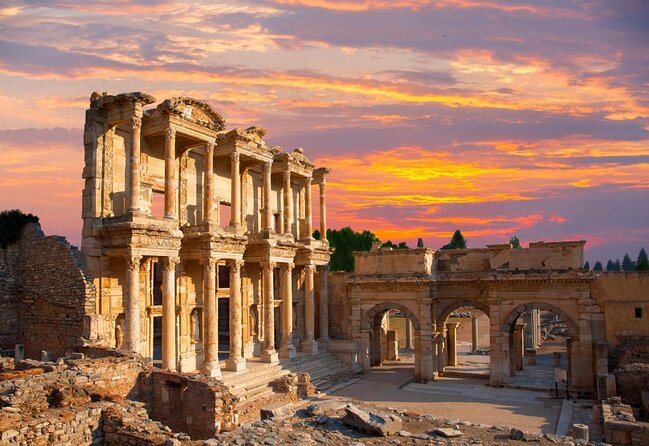
- Guided Ephesus with major stops like Celsus Library, Hadrian’s Temple, and the Great Theater
- Lunch included both days, so you’re not budgeting energy for meal searches
- Pamukkale + Hierapolis with time on the white travertines and optional thermal pools
- Small group size (max 15 travelers) for a less chaotic experience
What your money buys: flights, hotel in the area, and entry fees
At $856.48 per person, this is not a bargain-basement tour. The value is in the combo: round-trip airfare, airport transfers, a hotel night in the Kuşadası/Selçuk area (with breakfast), and guided time at the sites you came for. You also get two lunches, which can quietly add up when you’re traveling through tourist hubs.
You’re paying for convenience and scheduling. Instead of driving from Istanbul and losing a whole day to transit, you fly to Izmir and then use a vehicle with a driver for the inland legs. That time-saving matters on a two-day format, where every extra hour becomes less time at the monuments.
Entrance fees are handled for most of the key ruins (some stops are listed as free, others as included). Either way, you’re not stuck at the gate trying to sort tickets while the tour bus waits.
You can also read our reviews of more tours and experiences in Istanbul


Day 1: the Istanbul-to-Ephesus shortcut that keeps the day moving
Day 1 starts with an early hotel pickup in Istanbul, then you’re taken to the airport. The flight is about an hour to Izmir, and once you land, the program keeps rolling—airport transfer, then you meet up with the guide and head toward Selçuk Town.
What I like about this flow is that you go from city hotel to ancient ruins without the dead time that comes from DIY planning. Once the day’s actually underway, the guide gives you context en route. That briefing helps you read the place as more than random columns and archways.
In the vehicle, you also get the benefit of small-group pacing. With a maximum of 15 travelers, the day tends to feel like a group outing, not a herd. It’s still busy, just less crowded than some bigger tours.
Magnesia Gate to the Great Theater: walking the core Ephesus highlights
Ephesus is the kind of site where the route matters. This tour doesn’t just drop you at one viewpoint; it guides you through a downhill walk with major monuments in a logical sweep.
You start with the Magnesia Gate, which is a good first anchor because it tells you you’re entering a real city, not just a collection of ruins. From there, you move through the main ruin corridor with the guide pointing things out as you go.
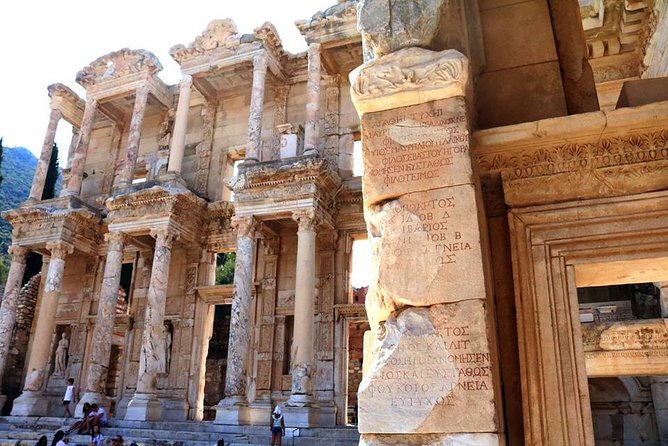
Then comes the part you will probably remember the most: the stretch that includes the Odeon and the Celsus Library area. The Celsus Library stop is one of the headline moments, and the downhill walking approach gives you changing perspectives as you progress. You get the sense of how the city’s layout guided daily movement—markets, public spaces, and ceremonial architecture built to impress.
Next, you hit the Temple of Hadrian and Trajan’s Fountain. These stops work well because they connect Ephesus to Roman-era civic life. You’ll see how the city’s grandeur wasn’t accidental; it was funded and maintained as a major urban center.
Finally, you reach the Great Theater, one of the best-preserved monuments in the complex. The tour also notes it still gets used today for a local spring festival, which is a nice reminder that you’re looking at a site that remains part of local culture. The theater’s scale—once seating about 24,000 people—helps you picture how loud and packed public life must have been.
The tour also ties the theater area to early Christian tradition (including the idea that St Paul preached there). Even if you approach history from a secular angle, it’s helpful because it gives the ruins a human timeline, not just stone dates.
House of the Virgin Mary and Artemis: faith tourism meets ancient architecture
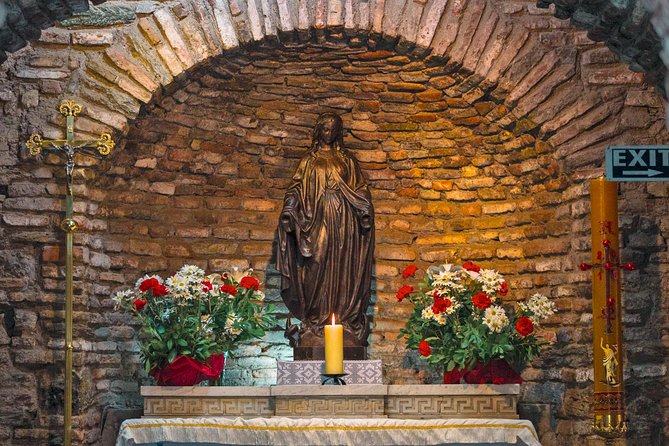
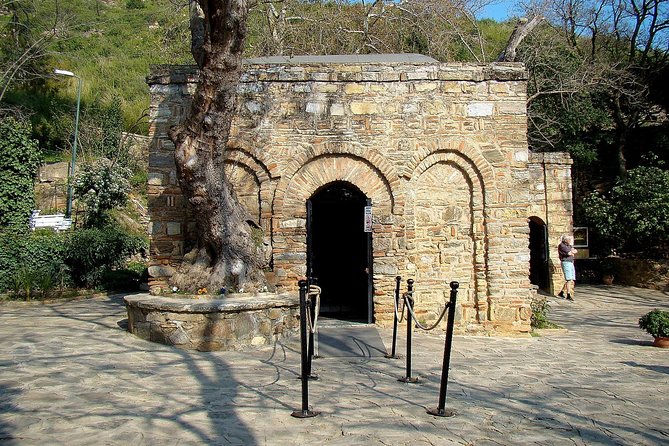
After the Ephesus walk, you drive to the House of the Virgin Mary. This stop is calmer than the high-impact theater and library zones. It also gives your legs a short break in terms of how you experience the day.
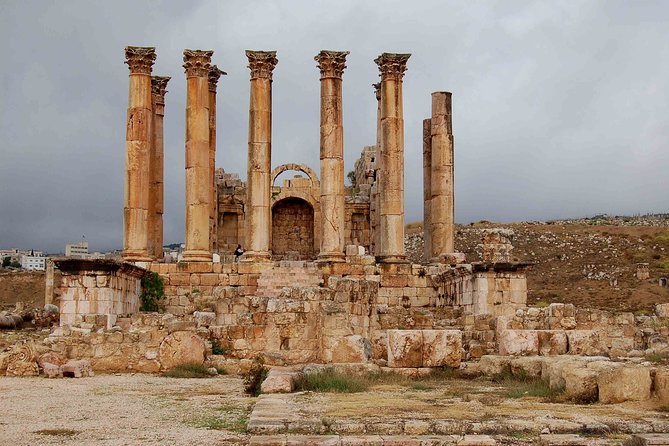
Then you head to lunch—Turkish cuisine—before visiting the Temple of Artemis, one of the Seven Wonders of the Ancient World. Even in ruins, Artemis is a powerful stop because it sets Ephesus in a bigger ancient-world frame. You’re no longer only thinking about local streets; you’re thinking about something famous across the wider Mediterranean.
One practical point: lunch timing is important on day 1. You’ve spent the morning walking, and then you’re eating before the final major stop(s). That usually makes the afternoon feel doable instead of forced.
Sirince: a smart break from ruins
Toward the end of the day, the tour drives you to Sirince, an old Greek village known for its charm and atmosphere. This is the kind of stop that keeps the trip from feeling like nonstop monuments.
You get time to see the village, then the tour ends after your Sirince visit with a drop-off in the Kuşadası/Selçuk area. If you like wandering for an hour or just grabbing a snack and people-watching, this is where that freedom is built in.
If you dislike time in small towns, you might treat Sirince as a quick reset rather than a must-see. Either way, it helps you end day 1 without feeling like you’re rushing straight back to your hotel right after the theater.



Overnight in the Kuşadası/Selçuk area: what to expect
This trip includes a hotel night with breakfast in Kuşadası/Selçuk. That matters because it sets you up for an early-ish start on day 2.
I find the hotel location helpful because it keeps your second day logistics simpler. You’re already positioned near the main drive toward Pamukkale and Hierapolis, so you don’t lose time relocating overnight.
In one endorsement, the tour coordination was praised along with the comfort of the overnight stay. I’d treat that as a positive signal that the lodging tends to be looked after, but your comfort will still depend on your room expectations and how you handle basic travel mornings.
Day 2: the 3-hour drive to Pamukkale and Hierapolis
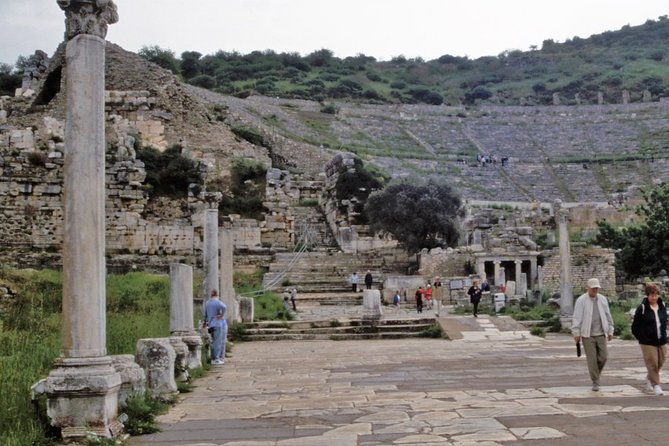
Day 2 begins with a pickup from your Kuşadası hotel. You board the vehicle and the guide gives intro context during the ride as you travel roughly 3 hours to Pamukkale.
On arrival, you have lunch at a local restaurant before starting the site tour. This is another smart timing choice. Pamukkale isn’t an all-air-conditioned sit-and-watch stop. You’ll be walking through major ancient zones and then dealing with the famous travertines, so a meal before you begin is a real quality-of-life win.
Hierapolis: gymnasium, amphitheater, and Temple of Apollo
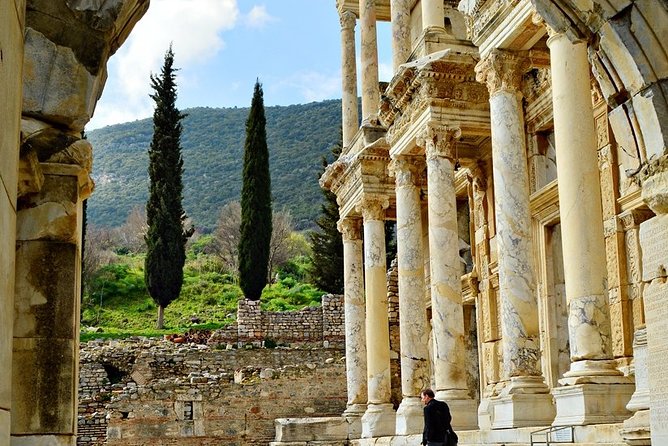
Once you enter from the top of Hierapolis, the flow is set up to help you understand the site as a whole rather than one random viewpoint at a time.
You explore the gymnasium area first, then move to the Pamukkale Theater section (Hierapolis amphitheater) and the Temple of Apollo. The amphitheater is called out as having a capacity of about 15,000 people. That scale makes it easier to grasp why the setting was chosen and how the city functioned as a cultural hub.
The guide’s job here is key. You’re walking through significant structures, and the guide explains what they were and why they mattered. That interpretation is what turns “I saw a ruin” into “I got it.”
Pamukkale’s white terraces: walking, dips, and the shoeless rule
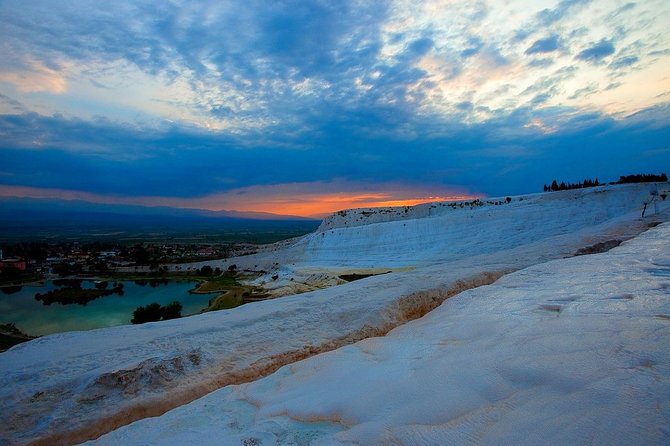
Then comes the part you probably pictured from photos: the white travertines at Pamukkale. The tour takes shoes off and has you walk along the terraces. You can dip your feet in the natural hot springs, or you can head to the man-made hot spring baths for a swim.
Here’s the practical side you should plan for: the tour states you must be able to walk about 0.5 miles over the travertines without shoes. That is not a “short stroll” for everyone. The surface can be uneven, and it can feel slippery or hot depending on conditions. If you have foot problems or balance issues, consider whether you can do this comfortably.
Also bring what the tour advises: sunglasses, sunscreen, and a comfortable swimsuit. Those aren’t generic suggestions. They directly improve the experience on the terraces and in the pools.
The afternoon includes free time, so you’re not boxed into every minute. Use that time to rehydrate, take photos, and decide whether you want another dip before heading out.
Flight back to Istanbul: how the day ends without drama
After your Pamukkale time, the guide brings you to the airport for your flight back to Istanbul. When you land, you get picked up and transferred to your hotel in Istanbul.
The value here is that you finish day 2 with a closed loop. You’re not hunting rides or trying to time public transport while tired. For a two-day tour, that’s not a small perk—it’s what keeps the last day from feeling stressful.
Guides and team: why the trip feels smooth
This type of itinerary lives or dies by coordination. The tour’s setup—pickup, flights, vehicle transfers, timed site stops—depends on the team doing their job.
In one highly praised experience, a guide named Mr Ahmad was credited for a standout tour to Ephesus and Pamukkale, with drivers and guides described as knowledgeable and helpful. That feedback lines up with what you need on a two-day format: someone who can keep things on schedule while still explaining enough that the monuments connect.
Another review highlighted that the lunches were good and that the overall experience felt well managed. For you, that means fewer surprises and more time spent where it counts.
Meal planning: why two included lunches are a big deal
You get lunch included both days. That’s one of the most underrated features in tours like this. When you’re doing ancient sites, you often end up either:
- paying extra for quick meals that don’t fill you, or
- losing time because you’re trying to eat on your own between stops.
With lunches built in, you can keep your energy steady. It also keeps logistics cleaner. You’re not scanning menus while you should be learning about Celsus or Artemis.
The lunch is Turkish cuisine on day 1, and day 2’s lunch is at a local restaurant on the way into Pamukkale/Hierapolis. If you’re picky about spice, it’s still smart to carry water and maybe mention preferences, but the structure is set up so you’re fed.
Who this tour suits best (and who might not)
This experience is a good fit if you want:
- Ephesus and Pamukkale in one tight schedule
- guided context at major sites instead of wandering alone
- a low-stress transport plan from Istanbul
It’s also a good choice for first-time visitors to Turkey who want to avoid the logistics headache. With max 15 travelers, it’s not overly crowded.
You might want to choose differently if:
- you dislike early starts and packed schedules
- you have limited mobility for the shoeless travertine walking requirement
- you want lots of unstructured time (this tour is efficient, not slow and lazy)
Should you book this 2-day Ephesus and Pamukkale tour from Istanbul?
Yes—if you want maximum ancient-site value with minimal planning, this tour is built for you. The biggest strengths are the hassle-free Istanbul pickup, the time-saving flights, and the fact that lunch is handled both days. You also get guided stops at the major Ephesus monuments and a structured day at Hierapolis before Pamukkale’s terraces.
Think twice only if your feet or balance aren’t up to the 0.5-mile travertine walk without shoes, because that is a real, required part of the experience. If you can handle that, you’ll likely come away feeling like two days was enough to understand why Ephesus and Pamukkale are famous.
FAQ
FAQ
How do pickups work for this tour in Istanbul?
You get picked up from any hotel in Istanbul City Center.
Are flights included in the price?
Yes. The tour includes a round-trip flight with taxes: Istanbul to Izmir on day 1, then a flight back to Istanbul after Pamukkale on day 2.
Is there a hotel included for one night?
Yes. You stay overnight in the Kuşadası/Selçuk area, and breakfast is included.
What meals are included?
Lunch is included for both days. Dinner and drinks are not included.
Are entrance fees included?
Entrance fees are included for many of the listed stops, while some stops are marked as free. The overall tour package includes entrance fees where applicable.
What language is the tour guide?
The tour is offered in English.
How big is the group?
The tour has a maximum of 15 travelers.
Will I need to walk without shoes at Pamukkale?
Yes. You must be able to walk about 0.5 miles over the travertines without shoes.
What should I bring for Pamukkale?
Bring sunglasses, sunscreen, and a comfortable swimsuit.
What is the cancellation rule?
You can cancel for a full refund up to 24 hours in advance of the experience’s start time.