REVIEW · ISTANBUL
Turkish Marbling Paper Ebru Art Workshop
Book on GetYourGuide →Operated by Turkish Arts by Betul · Bookable on GetYourGuide
Marbling feels like magic, but it is teachable. In a small Sultanahmet studio near Topkapi, you learn Ebru on real paper and watch colors spread into patterns like calm moving ink.
I love the patient coaching of the instructors, including Betül and Ali Hoca, who keep the steps simple and practical. You also get hands-on value fast: all materials are provided, and you practice classic designs like stone effects, comb work, and flower patterns such as tulip and hyacinth.
The main consideration is the building: the studio is on the 3rd floor with no elevator, so plan for stairs if mobility is an issue.
In This Review
- Key Highlights Worth Your Time
- Sultanahmet Studio Basics: Meeting Point and Getting There
- Two Hours of Ebru: How the Class Flows
- The Ebru Techniques You’ll Learn (Stone, Back-and-Forth, Comb, and Flowers)
- Stone
- Back and forth
- Comb design
- Flowers: tulip, hyacinth, carnation
- Art-Making With Bosphorus Views: Why It Feels Like Meditation
- What You Take Home: Drying Time and Keepsake Strategy
- Price and Value for $64: What You’re Actually Buying
- Who Should Book This Ebru Workshop (and Who Might Skip It)
- Should You Book This Ebru Workshop? My Practical Decision Guide
- FAQ
- How long is the Turkish marbling (Ebru) art workshop?
- Where is the meeting point?
- Is the workshop suitable for wheelchair users?
- Are materials provided, and can I take my artwork home?
- What techniques will I learn?
- What languages are available?
- What is included in the price?
- Is there a cancellation policy?
Key Highlights Worth Your Time
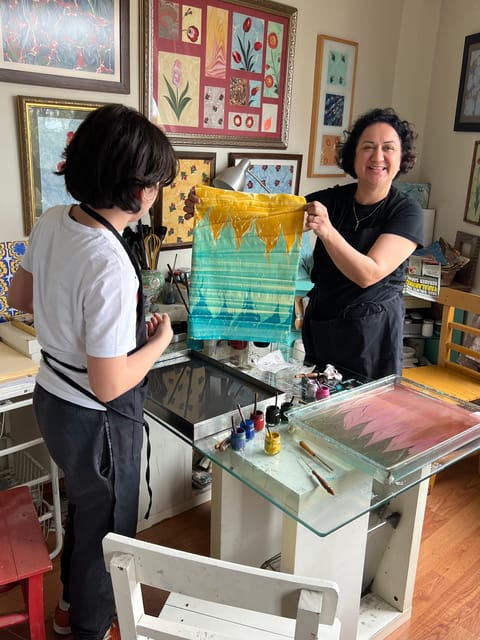
- Small group focus (up to 10 people) so you’re not fighting for attention
- Traditional techniques you actually practice: stone, back and forth, comb design, tulip/hyacinth/carnation
- Bosphorus views built into the day with a rooftop/terrace vibe
- Take-home marbled paper you can keep once the pieces dry
- Tea and coffee included, plus a relaxed atmosphere that feels like a reset
Sultanahmet Studio Basics: Meeting Point and Getting There
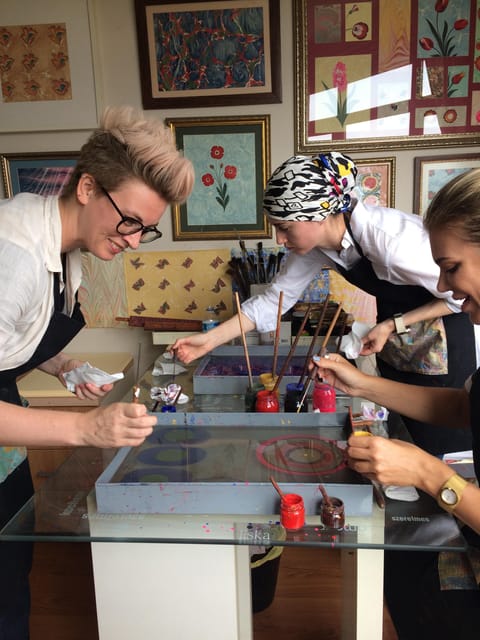
This workshop is set in Sultanahmet, in a tight, walk-friendly part of the old city. Your meeting point is Ishakpasa Street No.6, on the 3rd floor. It’s about 2 minutes from Topkapi Palace, and the location is convenient if you’re also planning Hagia Sophia and the Blue Mosque.
One practical thing to know: there’s no elevator access. If you’re traveling with elderly relatives or anyone who doesn’t do well with stairs, this can matter more than the art itself. The class is only 2 hours, but the building logistics last longer than you’d like.
The upside is the setting. The studio has great Bosphorus views, and people often mention the terrace/rooftop space as part of the charm. So you get more than a workshop room—you get a break from the street noise.
You can also read our reviews of more tours and experiences in Istanbul

Two Hours of Ebru: How the Class Flows
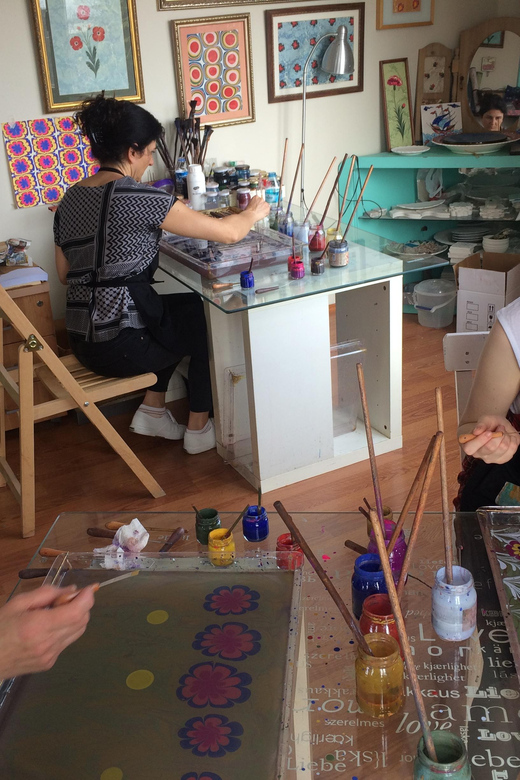
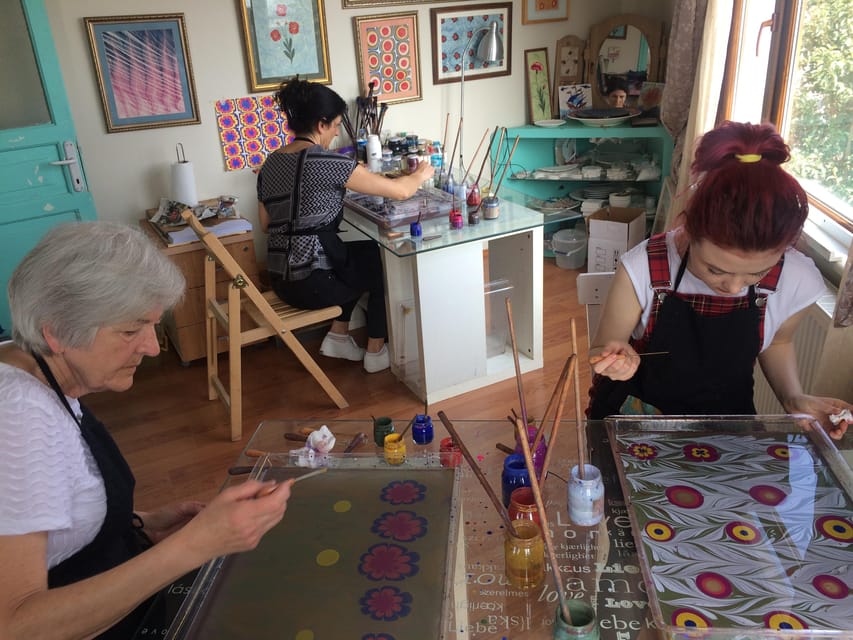
The rhythm of the class is part of why people love it. You’re not crammed into quick demos. Instead, you learn the basics, practice the motions, and gradually get more confident.
Here’s what the flow feels like in a typical 2-hour session:
First, you settle in with tea and coffee. The pace is calm. That matters because Ebru has a weird, hypnotic quality—your focus locks in, and suddenly time passes faster than you expect.
Next comes the intro to Ebru art and the materials. You’ll learn what you’re working with and how the traditional approach creates the marbled look. The instructor also sets expectations for beginners, which is helpful if you think you lack artistic talent. You’re not expected to produce something perfect. You’re expected to learn the moves.
Then the teaching shifts into techniques. You’ll start with simpler patterns and build up. The goal isn’t just one design—it’s giving you a toolkit so you can understand how each method changes the final paper.
As you work, you get chances to reproduce the techniques. That repetition is key. Several people mention that the structure helps you build confidence step by step, so you’re not guessing the whole time.
By the end, you can create in a more free style. Many participants leave with multiple finished pieces—not just one souvenir sheet.
The Ebru Techniques You’ll Learn (Stone, Back-and-Forth, Comb, and Flowers)
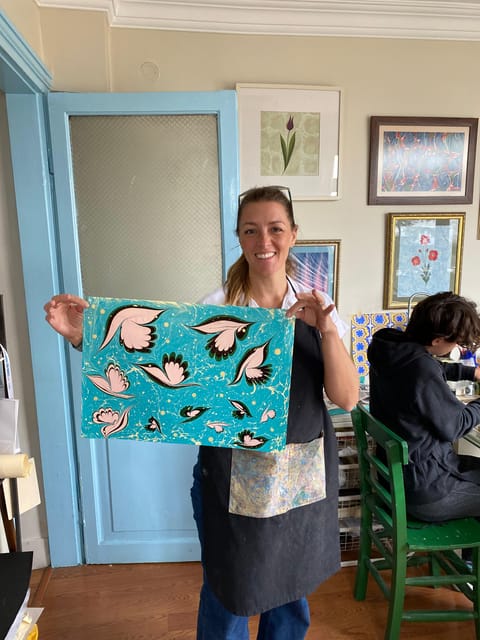
This workshop is built around traditional Ebru techniques, and you cover enough of them to feel like you learned a real craft.
Stone
The stone technique gives you that naturally textured effect, like small islands of color. It’s a great starting point because it teaches you control without demanding fancy drawing skills. You learn how to work with the colors so they behave the way you want.
Back and forth
This method is all about rhythm. You’ll learn how repeated, even motions influence the marbling pattern. It’s the kind of technique that looks intimidating until you do it once, then suddenly it makes sense.





Comb design
Comb work is where many people get excited. This technique creates lines and patterned streaks that feel instantly more detailed. It’s also one of the fastest ways to see that Ebru isn’t only about random beauty—you can guide it.
Flowers: tulip, hyacinth, carnation
The flower section is classic and practical. You’ll learn how to shape recognizable floral forms in marbling style, including tulip, hyacinth, and carnation. Even if you only remember the general idea, the experience teaches you how the pattern transfers from water to paper.
In fact, one participant described making an under-the-sea inspired version of Ebru after learning the foundations. That’s the real takeaway: techniques become creative options once you understand the basic mechanics.
Art-Making With Bosphorus Views: Why It Feels Like Meditation
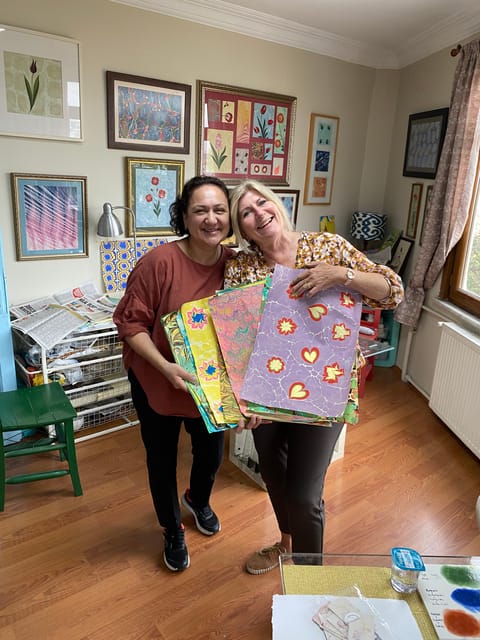
Ebru has a built-in calm factor. You’re doing something physical—pouring, moving, guiding—but it’s also repetitive and focused. The result is almost stress-reducing by default.
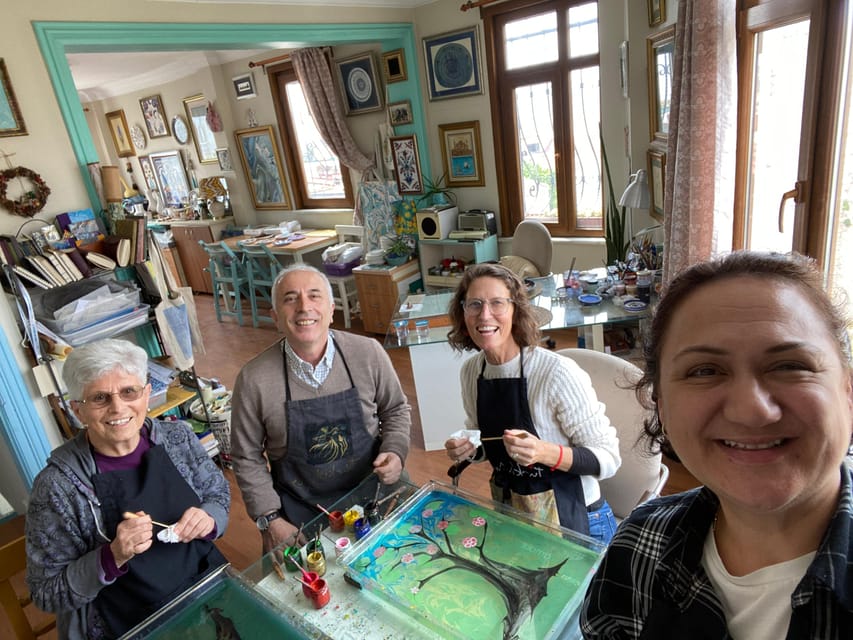
People mention this workshop feels meditational and inspiring, and I get why. You’re not talking over each other. You’re not rushing. You’re watching patterns form and learning how to influence them gently.
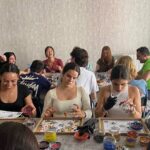
The studio vibe helps too. Several participants highlight a warm, welcoming atmosphere that feels like stepping into someone’s home rather than into a factory-style class. Tea and coffee keep the mood steady. Some also note background music, which makes the whole process less like a lesson and more like a thoughtful break in a busy Istanbul day.
And yes, the view counts. When you can glance up and see the Bosphorus, the workshop stops feeling like a checkbox and starts feeling like a memory-maker.
What You Take Home: Drying Time and Keepsake Strategy
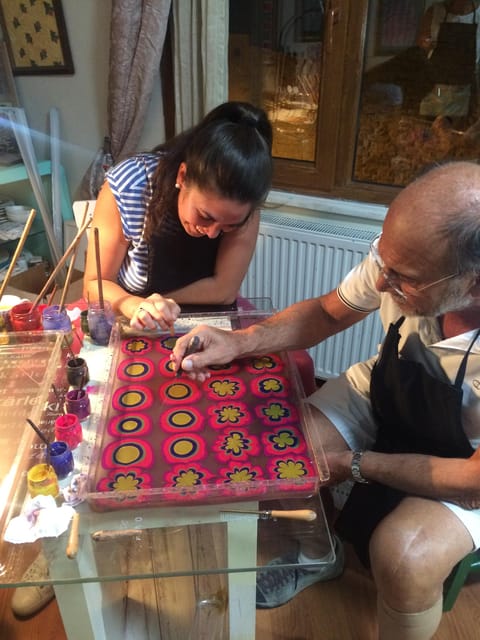
The promise here is straightforward: you can take your painting home once it dries. And since Ebru is water-based, drying is part of the plan.
You may not walk out holding it instantly. Some people report needing to return the next day to pick up the pieces because they need time to dry. That means you should avoid scheduling this as a last-day activity if you want your keep-safe souvenirs without hassle.
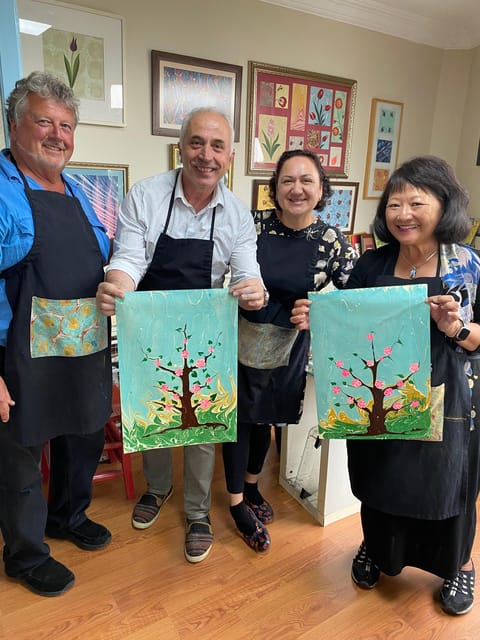
What you get for your time is also worth noting. Many participants describe making several different pieces, sometimes around five to six prints, plus additional practice during the session. That’s a good balance for families and solo travelers: you leave with variety, not just one single try.
Practical tip: if you’re short on packing space, choose a frame size in advance or bring a small portfolio. Marbled paper is gorgeous, but it deserves protection.
Price and Value for $64: What You’re Actually Buying
At $64 per person for a 2-hour class, you’re paying for three things that matter more than the price tag:
- Instruction in multiple traditional techniques
You’re not learning only one pattern. You cover stone, back and forth, comb design, and flower styles like tulip, hyacinth, and carnation. That turns the session into real skill, not only a one-off craft.
- All materials provided
You don’t need to hunt down supplies in Istanbul. The kit is handled for you, which makes the workshop easier to fit into a trip schedule.
- A genuine cultural exchange moment
The workshop isn’t only about the final product. People repeatedly highlight the warmth of Betül and Ali Hoca and the thoughtful pace. That human part makes the experience feel personal and memorable.
Also, you’re getting a small group environment. The class is limited to 10 participants, which is a huge difference from large group activities where you wait your turn.
If you like the idea of buying one nice souvenir instead of several small impulse purchases, this workshop can be a stronger use of money. You’re paying to make something, not just to acquire something.
Who Should Book This Ebru Workshop (and Who Might Skip It)
This is a strong fit if you want:
- a hands-on activity in Istanbul that still feels calm
- a break from sightseeing that doesn’t require advanced artistic skills
- something you can keep as a personal souvenir made with your own hands
- a small-group experience with English or Japanese instruction
Families do well here too. One family group of four included kids aged 6 and 8, and everyone finished their own artwork. That suggests the class structure works for a range of attention spans.
However, you should think twice if:
- you use a wheelchair (this workshop is not suitable)
- you’re traveling with someone who struggles with stairs (the studio is on the 3rd floor, no elevator)
- you’re traveling with babies under 1 year (not suitable)
Should You Book This Ebru Workshop? My Practical Decision Guide
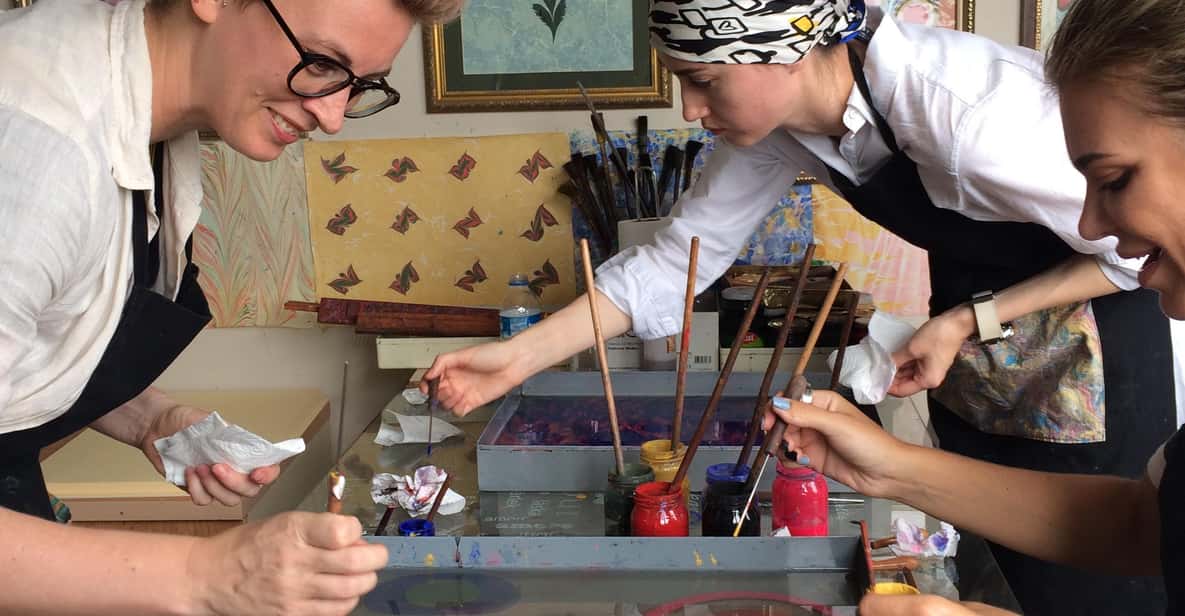
Book it if you want a meaningful Istanbul moment that’s hands-on, relaxing, and rooted in a traditional craft. The $64 price makes sense because you’re getting instruction across several Ebru techniques, materials included, and take-home marbled paper once it dries. Add the Bosphorus views, tea and coffee, and the small-group size, and it becomes a well-rounded experience.
Skip it only if the stair situation would be a dealbreaker for your group, or if you need a guaranteed walk-out take-home item the same day. If you do have flexibility for drying and possible next-day pickup, you’re set.
If you’re choosing between another short city tour and this workshop, I’d steer you toward Ebru—especially on a day when you want something quieter than the big attractions nearby.
FAQ
How long is the Turkish marbling (Ebru) art workshop?
The workshop lasts 2 hours.
Where is the meeting point?
The studio is located in Sultanahmet on Ishakpasa Street No.6, on the 3rd floor. It is about 2 minutes from Topkapi Palace.
Is the workshop suitable for wheelchair users?
No. It is not suitable for wheelchair users, and there is no elevator access.
Are materials provided, and can I take my artwork home?
All materials are provided. You can take your painting home once it has dried.
What techniques will I learn?
You will learn traditional Ebru techniques including stone, back and forth, comb design, and flower patterns such as tulip, hyacinth, and carnation.
What languages are available?
Instruction is available in English and Japanese.
What is included in the price?
All materials are included, and tea and coffee are offered during the workshop.
Is there a cancellation policy?
Free cancellation is available up to 24 hours in advance for a full refund.