REVIEW · AUDIO TOURS
Turkish and Islamic Arts Museum: Entry Ticket & Audio Guide
Book on GetYourGuide →Operated by Istanbul Tourist Pass® · Bookable on GetYourGuide
Carpets and manuscripts make a smart plan. You get skip-the-line QR entry plus a 25-language audio guide, so you can move at your own pace and still understand what you’re seeing.
What I especially like is the way this museum mixes major craft traditions—carpets, calligraphy, ceramics—with a setting that’s already a historical artifact: the 16th-century Ibrahim Pasha Palace. One practical catch: if you try to download the audio guide last-minute without Wi‑Fi, you may hit access problems (Apple security issues have been reported), so plan to test before you arrive.
In This Review
- Key things to know before you go
- Tickets and timing: what $28 really buys
- Ibrahim Pasha Palace: the building matters as much as the exhibits
- Getting there from Sultanahmet: fast tram access
- What you’ll see: a clear path through Turkish and Islamic arts
- Carpets and textiles: the star section
- Manuscripts and written arts: meaning you can actually follow
- Calligraphy, ceramics, glasswork, and metalwork: variety that stays coherent
- Religious relics: powerful, sensitive, and worth context
- The audio guide in 25 languages: how to use it well
- QR entry and your emails: how to avoid last-minute stress
- How long to spend: your 1-day museum rhythm
- Price vs. value: when this ticket is a smart buy
- Should you book this Turkish and Islamic Arts Museum ticket?
- FAQ
- Where is the Turkish and Islamic Arts Museum located?
- How much does the entry ticket cost?
- How long is the experience?
- Is an audio guide included?
- Can I skip the ticket line with the QR code?
- Do I get a guided tour?
- Which languages are available on the audio guide?
- How will I receive the QR codes and audio guide link?
- How do I get there using public transport?
- What is the cancellation policy?
Key things to know before you go
- QR entry + security lines: You can skip the ticket line, but security lines still apply to everyone.
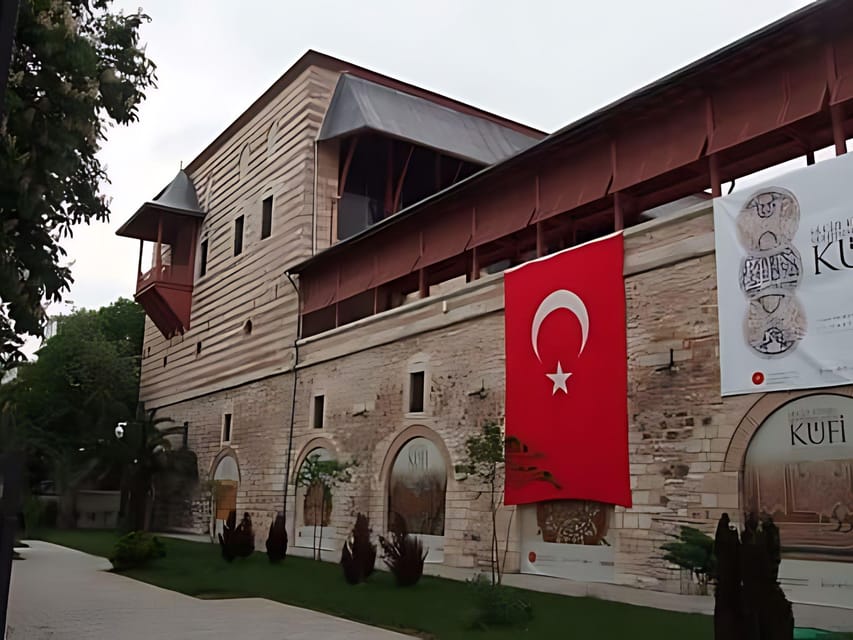
- Ibrahim Pasha Palace setting: A real landmark home for Islamic arts, not a generic exhibition hall.
- Carpets worth your time: Expect detailed examples from different eras and styles.
- More than textiles: Sections for calligraphy, ceramics, glasswork, and metalwork keep things varied.
- Religious relics section: Includes a fragment said to be the Prophet Muhammad’s beard and a footprint.
- Audio guide in 25 languages: Use it to turn “pretty objects” into clear stories.
Tickets and timing: what $28 really buys

This is a self-guided museum entry with an audio guide included, valid for 1 day. The price is listed as $28 per person, which is fairly reasonable here because you’re paying for two things: museum access inside a major historic site, and the convenience of not having to figure out labels on your own.
Do note the fine print feel of it. Even with the QR ticket, you cannot skip security lines. And yes, there can still be a line at the entrance, and it’s mandatory for all visitors. In other words: the QR helps with the ticket process, but it doesn’t turn the visit into a zero-wait operation.
Your best move is to treat this like a smart afternoon-to-evening option in Sultanahmet. You’re near the Blue Mosque, so you can stack sights on the same day without wasting time crossing Istanbul.
You can also read our reviews of more tours and experiences in Istanbul


Ibrahim Pasha Palace: the building matters as much as the exhibits
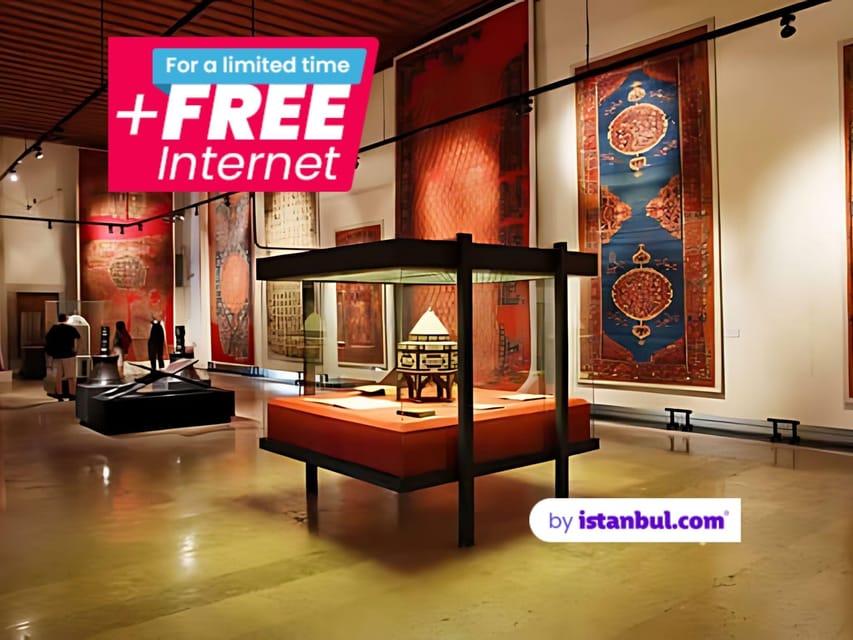
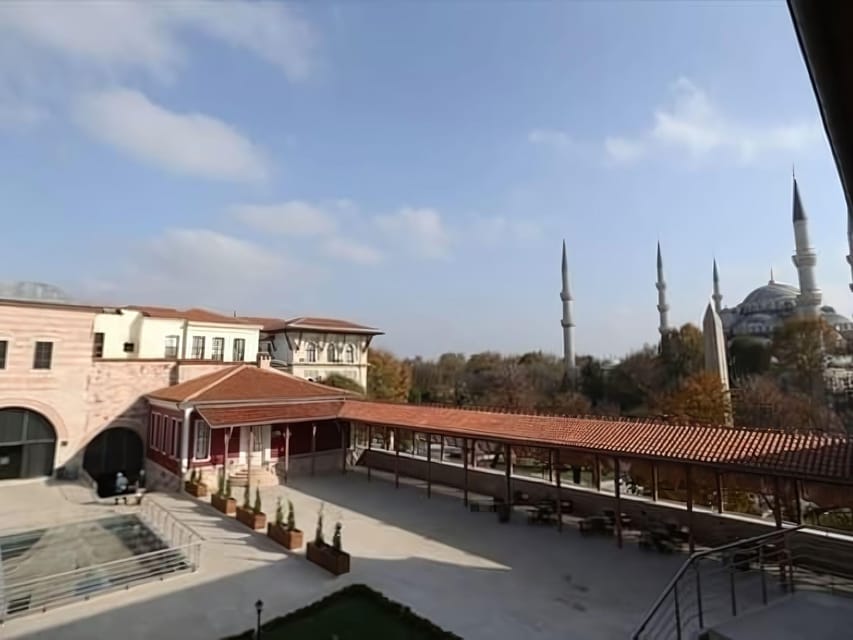
The museum is located inside the Ibrahim Pasha Palace, a 16th-century landmark. That matters because the building’s age changes how the collection lands. When you walk into rooms like this, the art doesn’t feel like it’s sitting behind glass in a modern space—it feels like it belongs to the period that made it.
You’ll likely find that the museum works best when you keep moving in small loops: start with the major categories, then return to anything that truly grabs you. With a palace setting, the space itself gives you natural “break points,” especially if you stop to read a label after a section gets introduced by the audio guide.
Getting there from Sultanahmet: fast tram access
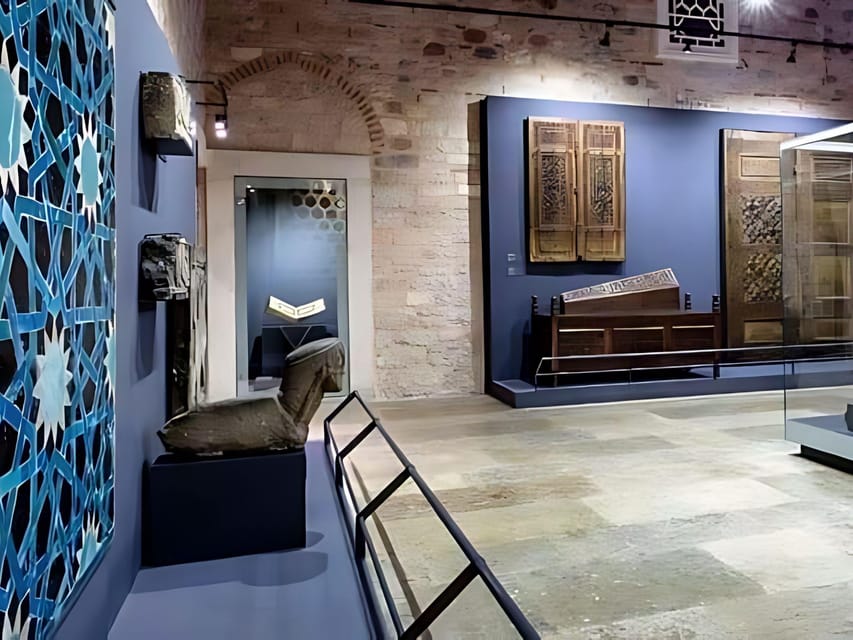
You’ll find the museum in Sultanahmet Square, very close to the Blue Mosque in the Fatih district. That’s good news because this is one of the easiest areas in Istanbul to navigate.
A common, simple route is:
- Take the Kabatas–Bagcilar tramway
- Get off at Sultanahmet station
- Walk about 5 minutes
If you’re coming from the Asian side, a suggested approach is to use ferries to Eminönü from Kadiköy or Üsküdar, then continue onward from there.
I like routes like this for one reason: you reduce the chance you’ll burn time figuring out transfers while you’re already tired from sightseeing. When a museum is this close to major landmarks, you want your transit to be boring and predictable.
What you’ll see: a clear path through Turkish and Islamic arts
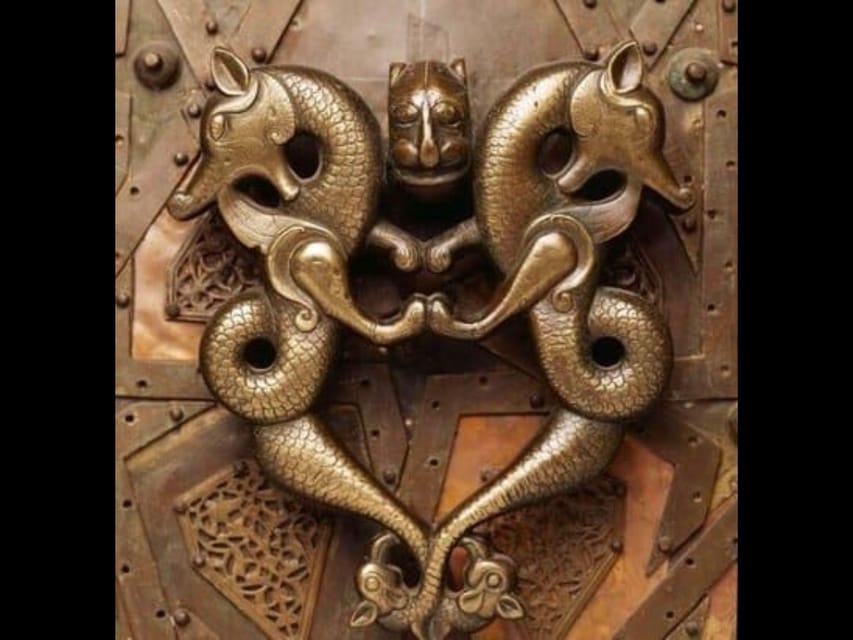
Even though this is self-guided, the museum’s collection naturally falls into themes. Here’s how to think about your visit so you don’t just float from room to room.
Carpets and textiles: the star section
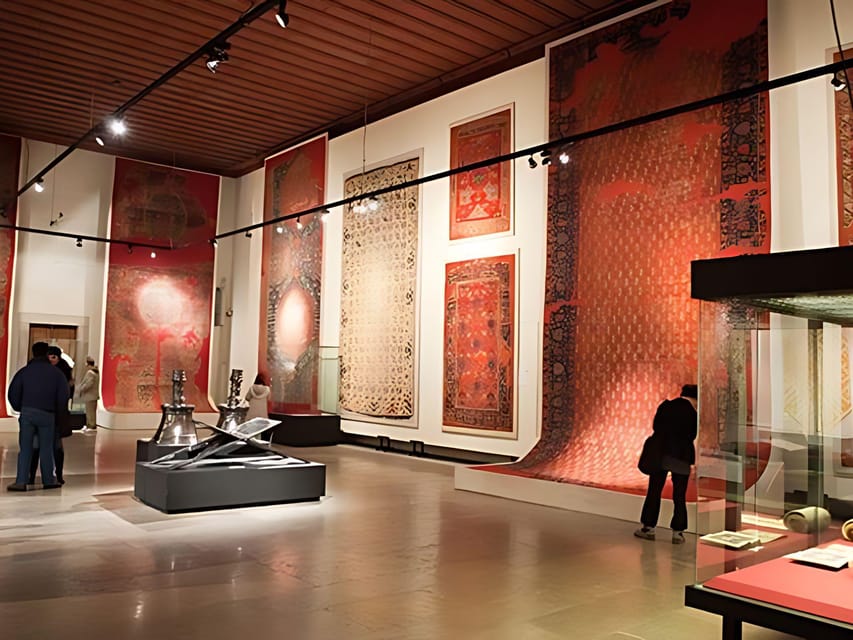
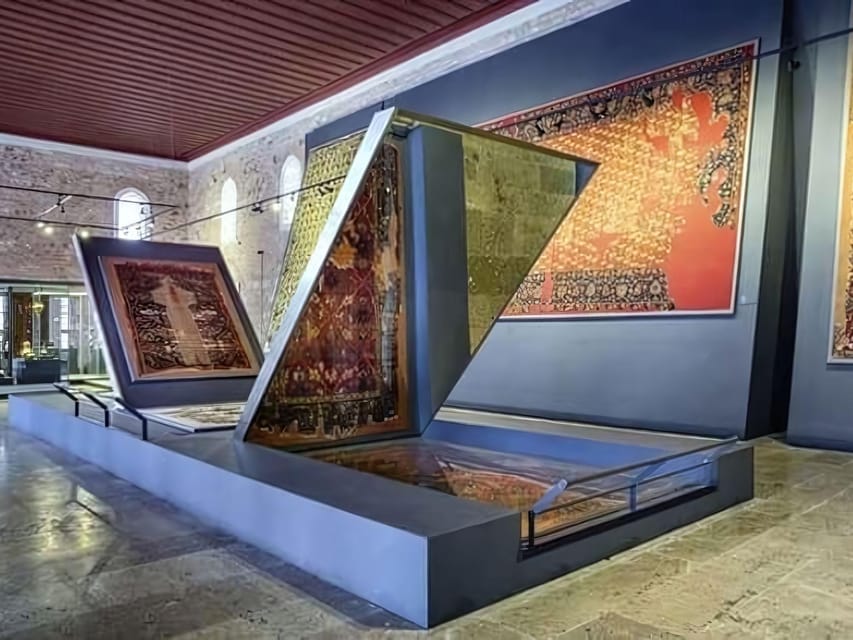
One of the biggest reasons to come is the museum’s extensive carpet collection. These aren’t generic souvenir patterns. You’re looking at intricate designs, with vibrant colors and complex geometry and motifs.
What makes it interesting is how the carpets help you read Islamic art beyond writing and decoration. Textiles were a major form of visual culture, and the patterns you see here reflect craftsmanship and regional influences over time. The museum highlights everything from Seljuk-style designs to Ottoman masterpieces, so you can start noticing how aesthetics shift while the underlying design language stays recognizable.
If you want to get more out of it, don’t just scan from far away. Pause for a full minute at one carpet. Then go back to the audio guide description for that same piece category. You’ll usually understand the theme faster when your eyes are already on the object.
You can also read our reviews of more guided tours in Istanbul




Manuscripts and written arts: meaning you can actually follow
The museum includes artifacts connected to ancient manuscripts and other written traditions. If you’ve ever looked at Islamic calligraphy and thought, I know it’s important, but I don’t know why, an audio guide helps a lot.
In your own pace, you can treat this area like a language lesson—without needing fluency. You’re mostly learning how scripts, styles, and materials communicate status, devotion, and scholarship.
Calligraphy, ceramics, glasswork, and metalwork: variety that stays coherent
After textiles, the museum expands into other media:
- Calligraphy
- Ceramics
- Glasswork
- Metalwork
This is where the visit can either feel random or feel like a unified story. The audio guide is what keeps it coherent. It ties the craft skills together: the same visual logic—pattern, proportion, ornament—shows up in different materials.
For example, ceramics often show how surface and glaze act like a canvas. Glasswork tends to show how light and color interact with design. Metalwork can make you appreciate technique, because surface engraving and inlay are hard to fake.
If you’re a “one museum per day” person, I’d still keep your expectations realistic: try to enjoy each section, not force yourself to read everything. Use the audio guide to pick what to focus on, then spend your attention where you feel a real connection.
Religious relics: powerful, sensitive, and worth context
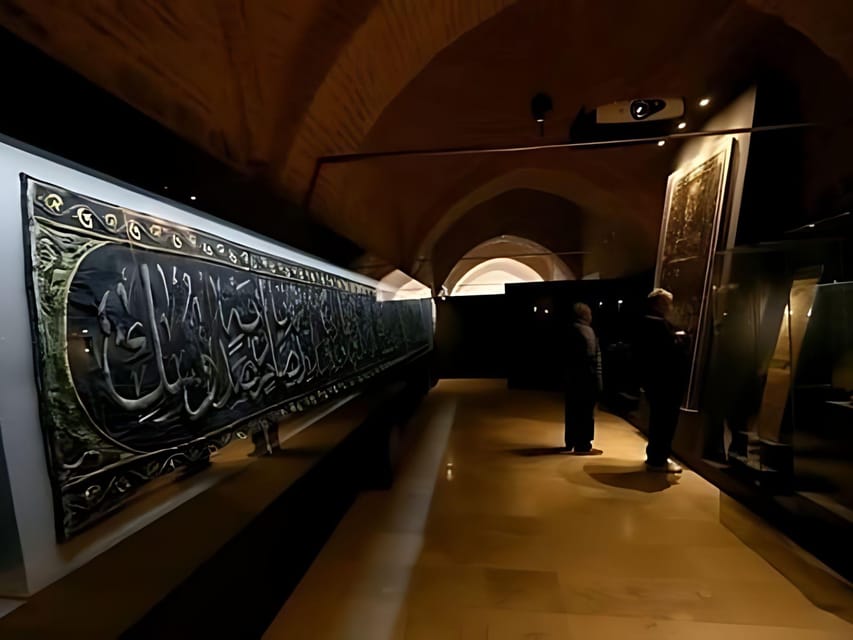
A standout feature is a collection of religious relics, including a fragment said to be the Prophet Muhammad’s beard and a footprint. Items like this pull visitors in for spiritual and historical reasons.
Because these are sensitive artifacts, I suggest slowing down. Give yourself a quiet moment before you read the audio guide section. You’ll usually get more out of it that way—more meaning, less rushing, fewer accidental head-bobs while other people are standing in front of the case.
Also, keep in mind that these objects don’t belong to everyone’s interests equally. If you’re more into architecture and everyday arts, you can still spend time here for context, but you don’t have to treat it like the whole trip depends on one case.
The audio guide in 25 languages: how to use it well
The audio guide is available in 25 languages, including English, German, Russian, Persian, Arabic, French, Italian, Chinese, Dutch, Spanish, Hindi, Romanian, Ukrainian, Korean, Turkish, Bulgarian, Polish, Swedish, Japanese, Indonesian, Greek, Hungarian, Portuguese, Urdu, and Croatian.
That range is great if you’re traveling with someone who wants a different language than you. Even if you’re solo, it helps you confirm you’re hearing the right level of detail.
Here’s the key practical lesson: don’t assume you can fix audio access inside the museum. One reported issue involved trying to download the guide the same day, then getting blocked by Apple security, and ending up with no usable audio in the museum due to missing Wi‑Fi.
So I strongly recommend this approach:
- Before you go, open the audio guide link sent to you and try downloading or accessing it once while you still have stable Wi‑Fi.
- If the download fails, solve it outside, not after you’re standing in front of the exhibits.
Bring headphones (you can’t enjoy 25-language storytelling in silence). And start the audio guide early so you can build context for the sections that are easy to overlook if you only skim.
QR entry and your emails: how to avoid last-minute stress
You’ll receive both entry ticket QR codes and an audio guide link via separate emails from the supplier tied to Istanbul Tourist Pass.
Two important implications:
- You need both the right QR code email and the audio guide link email ready.
- You can’t rely on one email to contain everything.
And remember: even if you’re skipping the ticket line, you still go through security, and there may be a mandatory entrance line for all visitors. That means the least fun part of your day is the moment you’re least patient. Plan to be calm then, because your best time comes inside.
Also, if you’re the type who waits until the last possible second to confirm details, don’t do that with the audio guide. The museum experience is only as good as your audio access.
How long to spend: your 1-day museum rhythm
This is listed as 1 day. In practice, you’ll want enough time to do three things:
1) Walk through the major categories at a comfortable pace
2) Stop longer on the carpet and calligraphy areas
3) Actually use the audio guide for context, not as a background track
If you’re short on time, prioritize based on your interests:
- If you love pattern and craft: carpets first, then metalwork or ceramics
- If you love writing and meaning: calligraphy and manuscripts first
- If you want spiritual/historical context: add the relics section, then circle back
If you have more time, you can do a second pass on one section you couldn’t fully process on the first loop. Self-guided works best when you let your favorites earn a return visit.
Price vs. value: when this ticket is a smart buy
At $28 per person, you’re paying for:
- entry to the museum’s Turkish and Islamic arts collection
- a multilingual audio guide (25 languages)
- the convenience of QR entry that helps you skip the ticket line
So the value depends on you. If you like museums where labels aren’t enough, the audio guide is the biggest reason to go. If you’re just trying to quickly “check a museum box,” then $28 may feel a bit steep compared to free sights around Sultanahmet.
But if you want a structured cultural experience without joining a group, this is a good fit. You control the pace, and you still get real context.
Should you book this Turkish and Islamic Arts Museum ticket?
Book it if you want a self-paced museum that clearly explains Islamic art across carpets, manuscripts, calligraphy, and decorative crafts—all inside a 16th-century palace. It’s especially worth it if you appreciate learning as you walk, and if having an audio guide in your language matters.
Skip it (or adjust expectations) if you need a guided tour with a human talking you through every object, because there’s no guided tour included here. Also, if you’re the kind of person who always plans tech things on the spot, you’ll want to be disciplined: test the audio guide access before you lose Wi‑Fi.
FAQ
Where is the Turkish and Islamic Arts Museum located?
It’s in Sultanahmet Square, very close to the Blue Mosque in Istanbul’s Fatih district.
How much does the entry ticket cost?
The price is listed as $28 per person.
How long is the experience?
It’s listed as 1 day, with the visit planned for that time span.
Is an audio guide included?
Yes. The ticket includes an audio guide in 25 different languages.
Can I skip the ticket line with the QR code?
Yes, the ticket includes a skip-the-line QR ticket. However, you cannot skip security lines.
Do I get a guided tour?
No. Guided Tour is not included.
Which languages are available on the audio guide?
The audio guide is available in English, German, Russian, Persian, Arabic, French, Italian, Chinese, Dutch, Spanish, Hindi, Romanian, Ukrainian, Korean, Turkish, Bulgarian, Polish, Swedish, Japanese, Indonesian, Greek, Hungarian, Portuguese, Urdu, and Croatian.
How will I receive the QR codes and audio guide link?
You receive both entry ticket QR codes and the audio guide link via separate emails from the supplier connected to Istanbul Tourist Pass.
How do I get there using public transport?
A common route is the Kabatas–Bagcilar tramway to Sultanahmet station, then about a 5-minute walk. From the Asian side, you can take ferries to Eminönü from Kadiköy or Üsküdar.
What is the cancellation policy?
There’s free cancellation up to 24 hours in advance for a full refund.