REVIEW · HAGIA SOPHIA TOURS & TICKETS
Skip-the-Line Hagia Sophia Digital Tickets w/Audio Guide
Book on GetYourGuide →Operated by City-Pass.Tr · Bookable on GetYourGuide
A world-famous building, with fewer hassles, is worth planning for. This Hagia Sophia skip-the-line digital ticket adds an English audio guide so you can walk, look, and understand the Byzantine and Ottoman layers without joining a long group tour.
I like that it’s truly self-guided. You get to set your own pace and focus on the dome, mosaics, and calligraphy instead of rushing with a crowd.
One thing to keep in mind: the ticket is skip-the-line for entry, but you may still wait at security, and access can be affected by renovations or temporary closures inside.
In This Review
- Key things to know before you go
- Skip-the-line, but security is still the real bottleneck
- Where to enter: the tourist entrance near Topkapi Palace
- Your one-hour self-guided plan (so you don’t feel rushed)
- What you’ll actually see: dome, mosaics, and calligraphy
- Using the English audio guide without wasting time
- Digital ticket reality: code-in-your-inbox versus QR entry
- Price and value: is $41 worth it?
- Who this works for best (and who should skip it)
- Should you book it?
- FAQ
- Is this a guided tour or self-guided?
- What does the skip-the-line ticket mean here?
- How long is the visit?
- Where do I go to enter?
- Is there an entrance for foreigners?
- Is the audio guide available in English?
- What should I bring?
- What are the rules inside regarding photos and food?
- Is this visit suitable for people with mobility impairments?
- What’s the cancellation policy?
- What is the activity price?
Key things to know before you go

- Skip-the-line entry ticket helps you bypass the ticket queue, but security checks can still slow you down
- Smartphone audio guide in English gives you context on the Byzantine and Ottoman story as you walk
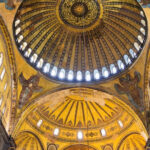
- Expect to focus on the dome, mosaics, and historic calligraphy, which are the main visual hits
- You enter on your own, and foreigners use a tourist entrance near Topkapi Palace
- The visit is set for about 1 hour, so plan how you want to spend that time
- Not for wheelchair users or people with mobility impairments; expect moderate walking
Skip-the-line, but security is still the real bottleneck
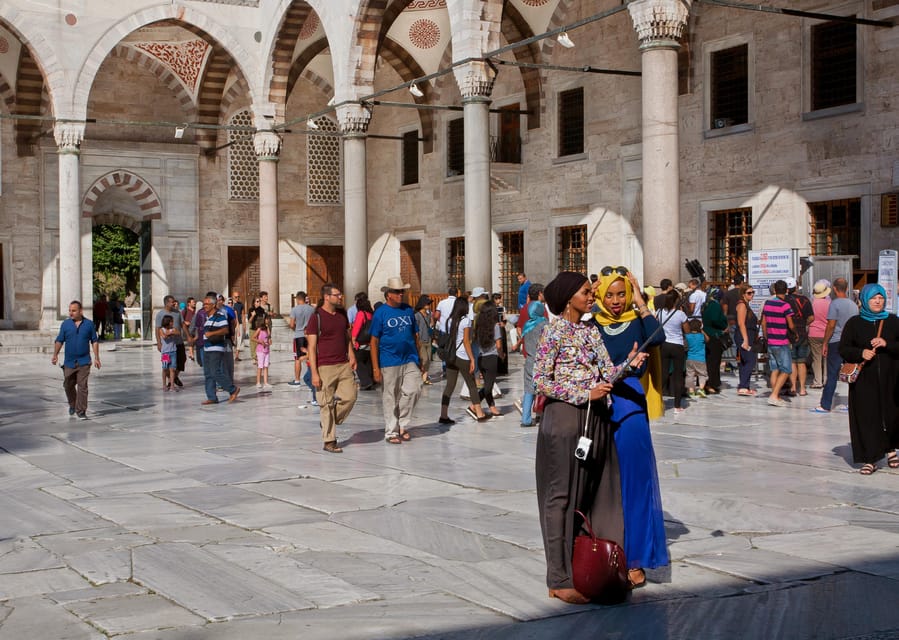
Let’s be practical: Hagia Sophia is popular, so you’re always dealing with lines somewhere. This ticket helps most with the ticket side, but it does not promise priority at security checkpoints.
You can still end up waiting, especially at peak times. One review experience noted that even with the skip-the-line concept, security lines can be the part that takes the longest. Another mentioned a situation where entry took longer than expected because of the usual on-the-ground flow.
If you’re timing a tight day (like lining up other nearby sights), give yourself breathing room. Even when the ticket works smoothly, security and crowd movement are the variables you can’t control.
You can also read our reviews of more tours and experiences in Istanbul


Where to enter: the tourist entrance near Topkapi Palace
The meeting instructions are simple: go to Hagia Sophia (Ayasofya) and enter on your own.
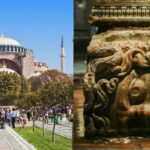
If you’re a foreigner, you can use the newly opened tourist entrance near Topkapi Palace. From there, you’ll have direct access to the upper floor galleries via a gentle ramp, which can help you get your bearings fast.
The flip side is that “new entrance” doesn’t always mean “instant.” Peak seasons can still bring security waiting, and the ramp/upper galleries route can feel busy as people funnel in.
Tip: treat the first 10 minutes as orientation time. Your goal is to get into the building calmly, find the main viewing areas, and then let the audio guide drive the order of your sightseeing.
Your one-hour self-guided plan (so you don’t feel rushed)
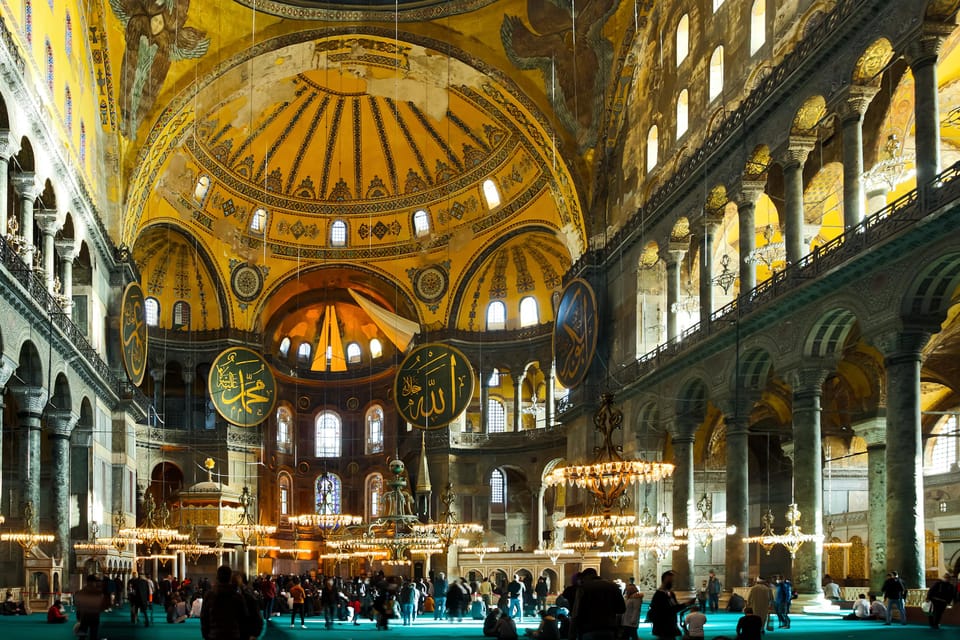
This ticket is designed around a 1-hour visit. Since there’s no group meeting, you’ll get the most value if you decide what “must-see” means for you before you start walking.
Here’s a sensible pace you can use:
First, aim for the upper galleries soon after entry. You’ll likely start your visit with wide interior views, which help you understand the dome’s scale before you start reading details. Then move to the main interior areas where the mosaics and calligraphy are easiest to spot.
Finally, use the audio guide to make your last 15–20 minutes purposeful. Don’t wait until the end to turn it on. Use it early enough that you’re translating what you’re seeing while you’re still close to it.
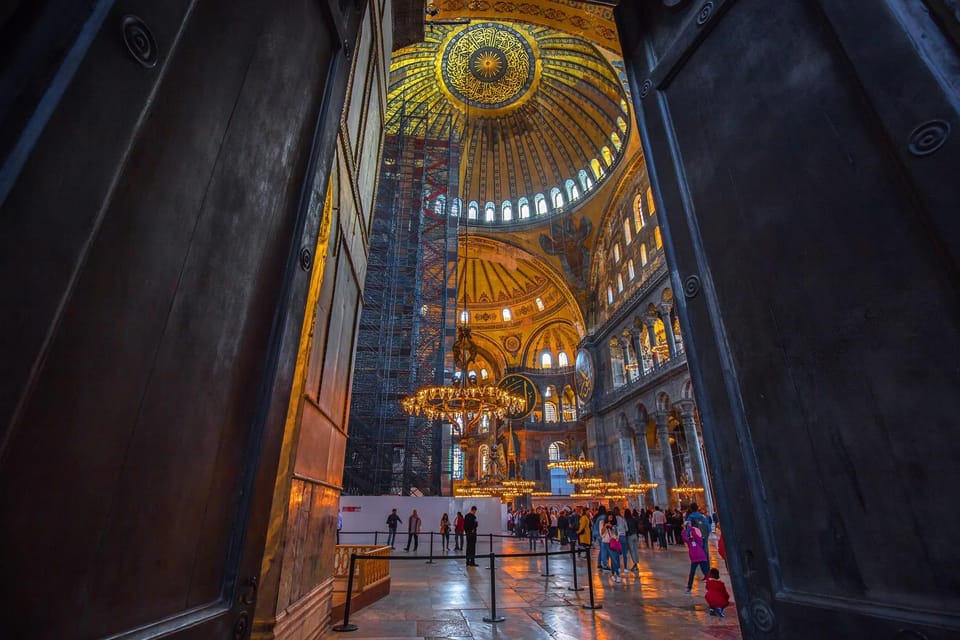
Two realities can affect your pace. One, you may notice scaffolding outside during renovation periods, which can make the exterior approach less photogenic. Two, sometimes certain levels or sections you expect to access may be temporarily unavailable, even if your audio guide mentions more than one level.
If that happens, don’t fight it. Re-route your attention to the dome and the mosaics you can reach now. Hagia Sophia is still a knockout even when one part is closed.
What you’ll actually see: dome, mosaics, and calligraphy
The highlights list is spot-on, and it’s the visual “why” behind the ticket.
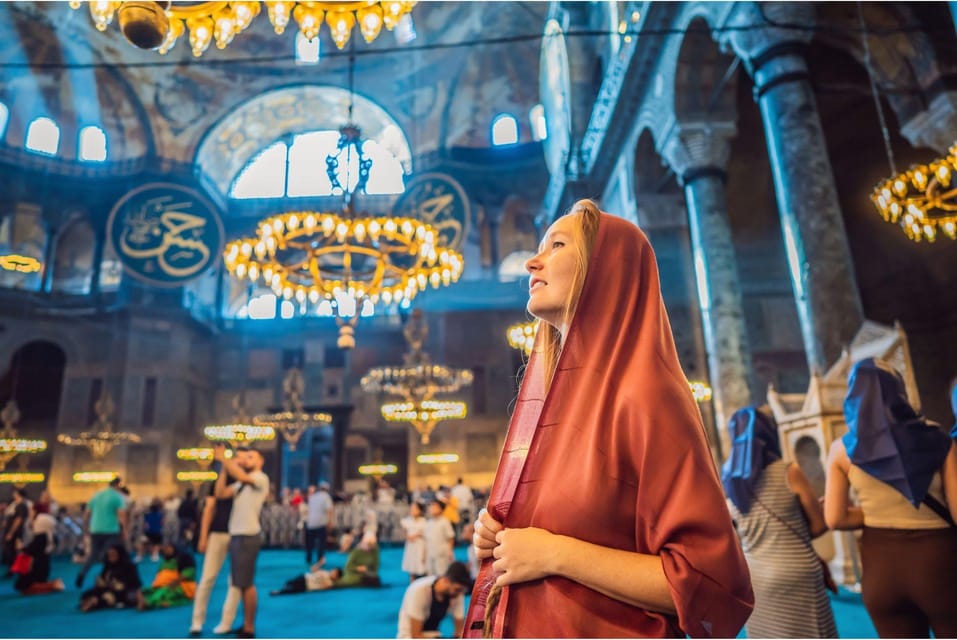
The dome is the big physics lesson. You get to see how the space swells overhead and how the architecture guides your gaze upward. Standing inside feels different than looking at photos, because the dome shapes your sense of scale and light.
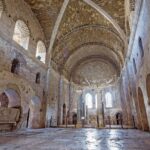
Then comes the mosaics. These are where the building’s layered identity becomes visible. You’ll see crafted surfaces that tell you this place has been used and reinterpreted across centuries.
The historic calligraphy is another anchor point. Even if you’re not reading the script, you’ll notice it’s placed with intention—part of how the building communicates power, devotion, and style.
Here’s a tip that makes the difference: slow down for the mosaics. People rush past because they think they’ve already seen pictures online. Hagia Sophia rewards close attention—especially at the junctions where art meets architecture.
Using the English audio guide without wasting time
The audio guide is the core “value add” here. It’s available in English, and it focuses on the history of Hagia Sophia plus the Byzantine and Ottoman empires.
If you usually skip audio guides because they feel generic, try this approach: listen in short bursts. Play 1–3 minutes while you’re standing in the right zone, then pause the narration and look with your own eyes.
This matters because Hagia Sophia is visually dense. The guide helps you connect the dots, but your best moments come from stopping to notice patterns: where decoration concentrates, how light hits surfaces, and how different areas feel designed for different kinds of attention.
One potential drawback: access can limit what you can see. A couple experiences shared that the audio guide referenced multiple levels, but access to a lower level wasn’t available at the time. If you’re hearing about a section you can’t enter, don’t waste time trying to force it—shift to what’s open and keep the audio running for context.
You can also read our reviews of more guided tours in Istanbul



Digital ticket reality: code-in-your-inbox versus QR entry
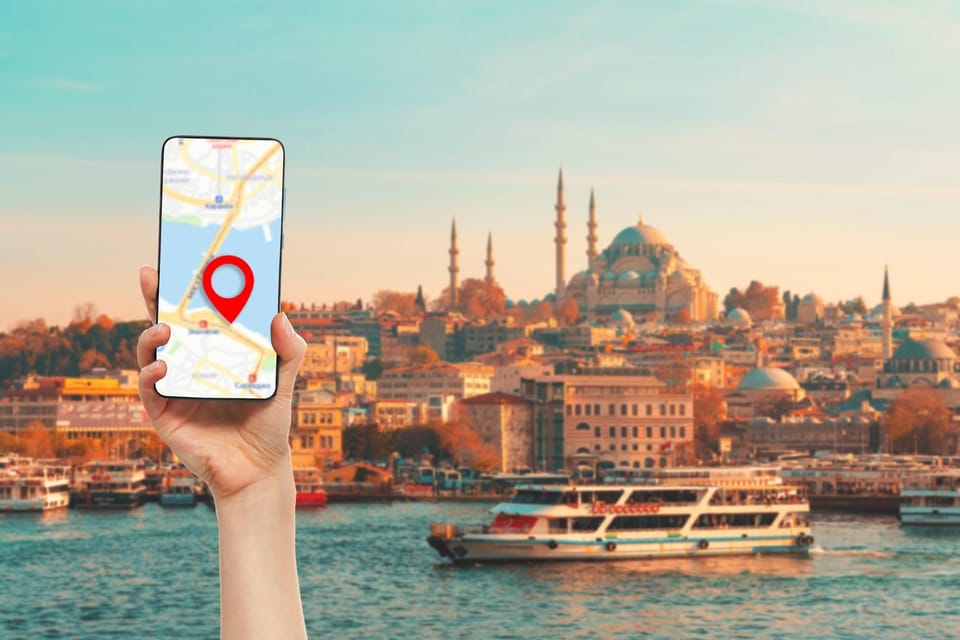
This is a digital ticket, and that means your experience depends on your phone—and on whether the QR entry step works as expected.
In a couple cases, there were snags with codes needing extra claiming steps, or a QR code not functioning immediately. Those are fixable situations when the operator responds quickly, but they can eat into your time. One account even mentioned losing time for a planned next activity because entry problems delayed the schedule.
So here’s the practical move: screenshot your confirmation and keep it ready offline. Bring a charged phone. Arrive early enough to handle a short technical hiccup without turning your entire day into an anxious sprint.
Also, remember the skip-the-line ticket doesn’t eliminate all queues. Even when everything works, you still need to clear security.
Price and value: is $41 worth it?
At $41 per person for skip-the-line entry plus an English audio guide, you’re paying for two things: time savings and interpretation.
If you hate queues, this is where value shows up. The biggest benefit is reducing time spent on the ticket line, which can be painfully long at busy hours.
If you don’t care about guided context, the price can feel high. One experience highlighted that the ticket process wasn’t as straightforward as expected and that the visit duration is about as long as it takes to complete the essentials. In other words, you’re not buying a long guided tour—you’re buying an easier entry and a learning tool while you walk.
My rule: if you’re visiting Hagia Sophia once and you want to understand what you’re seeing, the audio guide cost is easier to justify. If you’ve already done other guided Byzantine/Ottoman tours and you’re mostly here for the photos, you might decide to reduce cost elsewhere.
Who this works for best (and who should skip it)
This experience is best for you if:
- You like museums and churches at your own pace
- You want English context while you look at the dome, mosaics, and calligraphy
- You can comfortably walk through a busy interior for about 1 hour
It’s not suitable if you:
- Have mobility impairments or need wheelchair access
- Prefer a fully guided group flow (this is a self-guided visit)
Also, if you’re very sensitive to schedule changes, build a time buffer. Digital-code glitches can happen, and security lines can still be a wildcard.
Should you book it?
Book it if you want a smoother start and you’ll actually use the English audio guide while you’re inside. Hagia Sophia is one of those sites where understanding makes the visuals stick, and the audio guidance helps you avoid the common problem of staring at beauty while missing the story.
Skip it (or choose a different format) if you’re going at the busiest time and you have zero flexibility in your day. Security can still create delays, and if a QR code or entry step doesn’t go smoothly, your one-hour window can feel tight.
My final advice: come early, keep your phone charged, wear comfortable shoes, and plan to prioritize what you care about most—dome first, then mosaics and calligraphy.
FAQ
Is this a guided tour or self-guided?
It’s self-guided. You enter Hagia Sophia on your own and use the smartphone audio guide to explore at your pace.
What does the skip-the-line ticket mean here?
It’s described as skip-the-line entry. The ticket does not provide priority access through security, and you may still wait at security checkpoints during busy times.
How long is the visit?
The duration is listed as 1 hour.
Where do I go to enter?
Go to Hagia Sophia (Ayasofya) and enter on your own.
Is there an entrance for foreigners?
Yes. Foreigners can enter through the tourist entrance near Topkapi Palace, which provides direct access to the upper floor galleries via a gentle ramp.
Is the audio guide available in English?
Yes. The audio guide is available in English.
What should I bring?
Bring comfortable shoes, a camera, and water.
What are the rules inside regarding photos and food?
Flash photography is not allowed. Food and drinks are not allowed inside Hagia Sophia.
Is this visit suitable for people with mobility impairments?
No. It’s listed as not suitable for people with mobility impairments and wheelchair users.
What’s the cancellation policy?
You can cancel up to 24 hours in advance for a full refund.
What is the activity price?
The price is listed as $41 per person.