REVIEW · GUIDED
Skip Lines with Local Tour Guide Taha
Book on Viator →Operated by Taha Guide of Turkiye · Bookable on Viator
Istanbul queues can eat your whole day. This private Sultanahmet tour with Taha strings together the big-name sights with human, story-first guidance. I like that it’s built for efficiency: you get a clear plan across Hippodrome, Hagia Sophia, Blue Mosque, Topkapı Palace, Basilica Cistern, and the Grand Bazaar.
What I especially like is the skip-the-line advantage at major stops. In real-world terms, that means less standing around and more time looking closely once you’re inside, especially at Hagia Sophia and the Basilica Cistern.
One thing to consider: most entrances beyond the Hippodrome and Blue Mosque are not included, so you’ll want to budget for separate tickets. Also, it’s a walking tour with public transportation added, so moderate stamina helps.
In This Review
- Key things to know before you go
- A Sultanahmet hit list that actually makes sense
- Price and logistics: how to plan the real cost
- Meeting point and pickup: where to start without stress
- Stop 1: Sultanahmet Hippodrome (where politics met spectacle)
- Stop 2: Hagia Sophia Grand Mosque—engineering, power, and light
- Stop 3: Blue Mosque—handmade tiles and a whole lot of color
- Stop 4: Topkapı Palace and the Harem—power behind closed gates
- Stop 5: Basilica Cistern—mystery, myths, and 336 columns
- Stop 6: Grand Bazaar—why a maze is easier with a guide
- Getting the best day: smart tips you can use right away
- Who this tour fits best
- Should you book it?
Key things to know before you go
- Skip-the-line help where it matters at Hagia Sophia and the Basilica Cistern, so your morning doesn’t turn into queue time.
- A private format with only your group, so you can ask questions without the usual rush.
- Hagia Sophia tickets are extra (and Topkapı pricing is listed separately), while the Hippodrome and Blue Mosque include admission.
- Short, story-led stops that connect Byzantine and Ottoman Istanbul, not just photo ops.
- Public transport + walking (no private vehicle), which keeps the route flexible but expects you to move.
- Weather matters—the tour requires good weather.
A Sultanahmet hit list that actually makes sense
If you’ve only got part of a day in Istanbul, you need two things: a route that hits the classics and a guide who can connect the dots fast. This tour does that by focusing on the historic core around Sultanahmet—where Byzantine politics, Ottoman power, and everyday Istanbul all overlap.
I like the pacing because it’s not just a conveyor belt. The itinerary is built around places that explain each other. The Hippodrome sets the political stage; Hagia Sophia shows the engineering and ambition; the Blue Mosque responds with Ottoman artistry in the same neighborhood. Then Topkapı Palace shifts the story from public drama to private rule, and Basilica Cistern drops you into an underground world.
You can also read our reviews of more guided tours in Istanbul


Price and logistics: how to plan the real cost
The tour price is $99.15 per person, and it includes guiding. Entrance fees are mixed: some are included, others are not. Here’s what you’ll need to account for based on the tour details:
- Included admission: Sultanahmet Hippodrome and the Blue Mosque
- Not included: Hagia Sophia (listed as €25 per person), Basilica Cistern (listed as TRY 1,500 per person), and Topkapı Palace (listed as TRY 2,400 per person, with a note it’s closed all Tuesday)
That add-on structure can be good value if it means your guide saves time at the busiest places. You’re paying for two things: expert guidance and a smoother visit where lines can otherwise chew up your day. It’s also worth planning for food: lunch isn’t included, so build in time for a snack or a meal on your own.
One more logistics note that affects your day: even though hotel pickup is available, the tour is still described as a walking tour using public transportation together. That keeps costs down and keeps you close to neighborhoods, but it means you should wear shoes you can walk in for hours.
Meeting point and pickup: where to start without stress
The tour starts at 1207 Cafe & Restaurant, Sultanahmet (Örme Dikilitaş Önü, Binbirdirek, At Meydanı Cd No:72, 34122 Fatih/İstanbul). If you’re doing pickup, you’ll meet the guide at the port or hotel lobby, then you’ll head out together.
Because the tour is private (only your group participates) and you get a mobile ticket, you should expect a smooth start once you’re at the meeting point. If you’re traveling light, double-check your phone is charged before you leave your room.
Stop 1: Sultanahmet Hippodrome (where politics met spectacle)
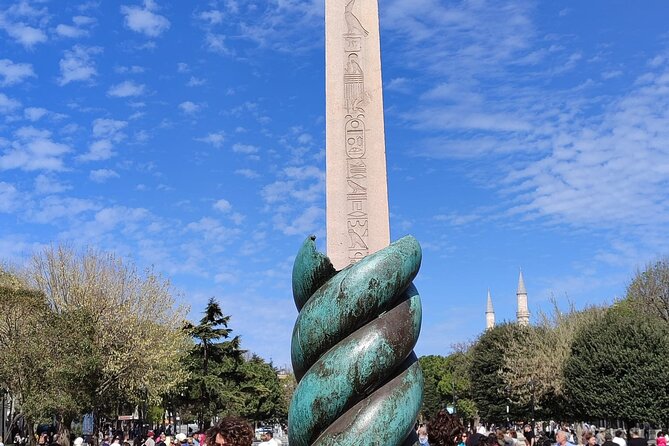
This tour begins at the Sultanahmet Hippodrome, also known today as Sultanahmet Square. It’s one of those places that looks simple until you understand what it once was.
The Hippodrome wasn’t just sports entertainment. For more than 1,000 years, it functioned as a political and social center for Constantinople. Your guide connects the physical space to the Byzantine story—especially the rivalry between the Blues and Greens. That conflict escalated into the Nika Riots, a rebellion so large it nearly toppled Emperor Justinian and changed world history.
What you should do here: don’t rush. Even if you only spend about 45 minutes, ask yourself what kind of crowd would fill this arena and how rulers used public events to manage public mood. It makes the rest of the day click.
Stop 2: Hagia Sophia Grand Mosque—engineering, power, and light
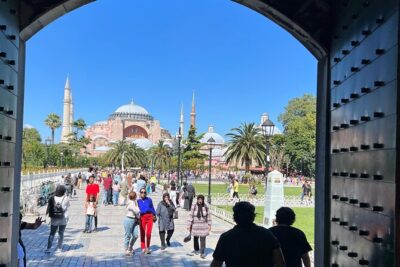
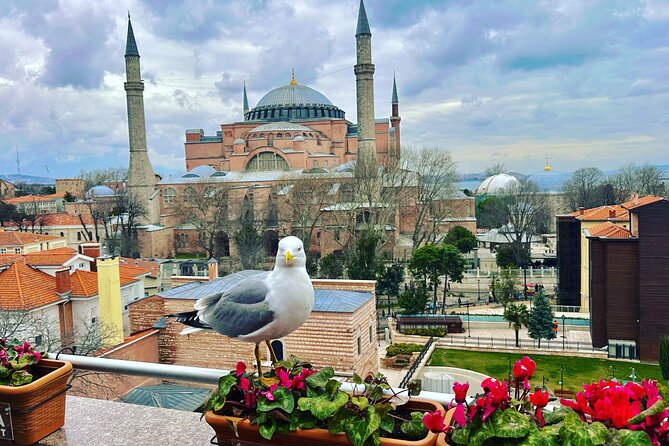
Next comes Hagia Sophia Grand Mosque, one of the most important buildings in the region. Expect about 1 hour 15 minutes.
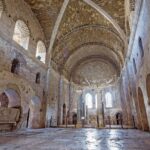
This stop is about more than the famous silhouette. Your guide explains why the dome feels like it floats. You’ll hear how Emperor Justinian’s architects used techniques that created an illusion of the dome being suspended by a kind of golden chain from heaven—an idea that helps you see the building’s design as storytelling, not just engineering.
Practical note: the tour lists Hagia Sophia admission as not included (listed as €25 per person). If you’re skipping tickets, you’ll want to pay attention to your schedule so nothing stalls at entry.
Also, this is a place where timing matters. The tour is marketed as skip-line with a local guide, and the value shows up most at high-demand sites like Hagia Sophia, where line time can quietly become your biggest cost.



Stop 3: Blue Mosque—handmade tiles and a whole lot of color
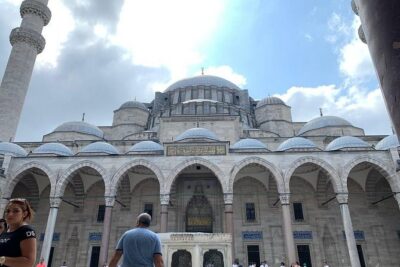
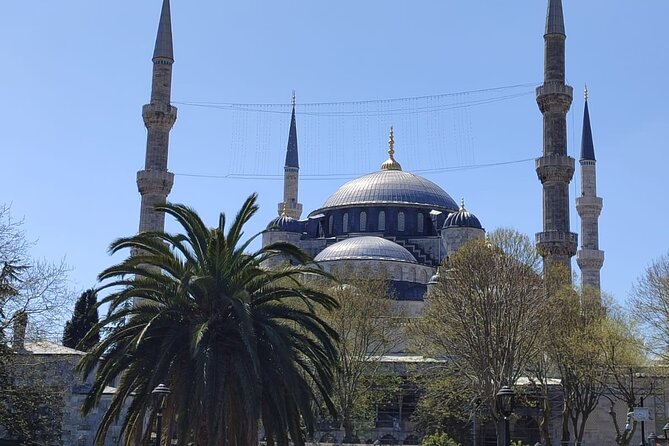
Then you’ll head to the Blue Mosque for about 40 minutes. This one is an Ottoman statement, built in the early 17th century by Sultan Ahmed I, and placed intentionally to contrast with Hagia Sophia nearby.
What makes the Blue Mosque special is its interior surface story. The common name comes from the 20,000+ handmade Iznik tiles. And instead of treating the tiles like background, your guide points out how light shifts through the mosque’s 260 stained-glass windows, creating the calm, dreamy atmosphere people remember.
Good drawback to know: the stop is relatively short compared to the depth at Hagia Sophia or Topkapı, so you may want to focus on what your guide emphasizes—tiles, layout, and design details—rather than trying to absorb everything through photos.
Admission for the Blue Mosque is listed as included, which helps keep your day’s extra costs down.
Stop 4: Topkapı Palace and the Harem—power behind closed gates
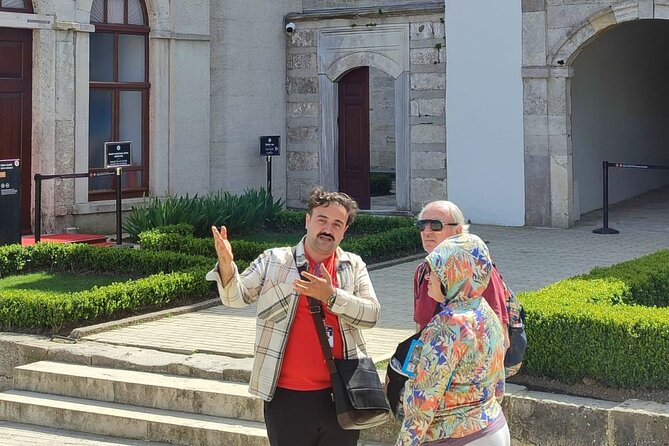
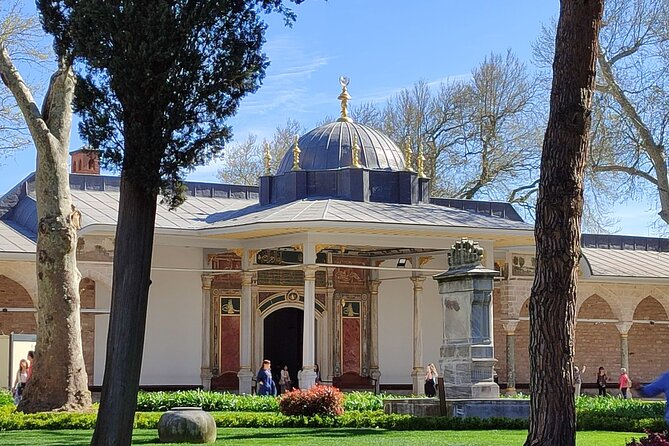
Topkapı Palace is the day’s big “administrative center” moment. The tour portion for this stop is about 2 hours, and it’s designed to move from courtyards to areas tied to restricted access.
The palace served as the administrative heart of the Ottoman Empire and the main residence of its sultans for centuries. It’s not just one museum room. You’ll explore the structure like a city-within-a-city, with a sense of how power worked from public-facing spaces to areas the Sultan controlled.
Important practical detail: the tour lists Topkapı Palace admission as not included, with pricing noted as TRY 2,400 per person and a note that it’s closed all Tuesday. If your trip lands on a Tuesday, your plan may change at the last minute—so it’s worth checking after booking and staying flexible.
Also, while Topkapı is often a must, it’s helpful to know the tour is set up so you can discuss priorities. One guest specifically chose the Basilica Cistern over Topkapı because it matched their interests more, which tells me the guide is open to preference when possible.
Stop 5: Basilica Cistern—mystery, myths, and 336 columns
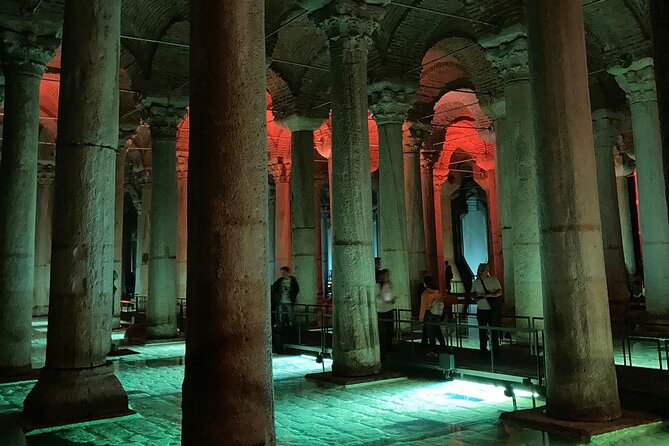
Then you go underground into the Basilica Cistern, for about 1 hour. Built by Emperor Justinian in 532 AD, it was a massive underground reservoir meant to hold around 80,000 tons of water for the Great Palace and surrounding areas.
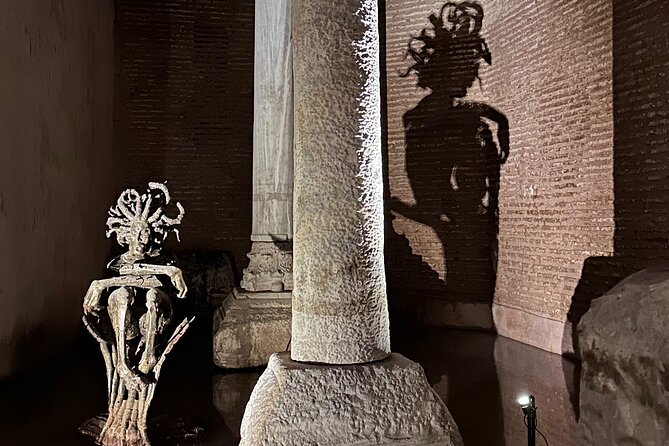
The most striking visual is the forest of columns: the cistern is supported by 336 marble columns, many recycled from older temples. That reuse matters. It’s a reminder that empires didn’t erase the past—they often repurposed it.
This is also where the “mystery below the city” idea becomes real. Your guide directs you toward the far corner to look for the Medusa Heads—two stone heads placed at an odd angle, upside down and sideways at the base of two columns. You’ll hear competing theories about their origin and whether they functioned as structural elements or as a superstition-based charm.
Practical note: Basilica Cistern admission is listed as not included (TRY 1,500 per person). This is also one of the most line-prone stops, and it’s exactly where the skip-the-line help becomes a noticeable quality upgrade.
Stop 6: Grand Bazaar—why a maze is easier with a guide
You’ll finish at the Grand Bazaar, for about 1 hour. This is where the day shifts from empire stories to everyday commerce.
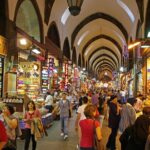
The Grand Bazaar (Kapalıçarşı) has operated since 1461 and is massive: 61 covered streets and over 4,000 shops. Left to your own devices, it can be hard to know what’s authentic and what’s just repeating the same souvenir setup. With a guide, the bazaar becomes a route—not a trap.
What I like about ending here is that you get a contrast in tempo. Earlier stops are about power and monumental design. Here you’re watching how people actually shop, browse, and trade.
Your guide navigates toward places that tend to feel more genuine—artisan workshops and the hans (covered courtyards) that many visitors miss. If you’re worried about being pressured to buy, this tour’s tone is more relaxed: you can enjoy the browsing without feeling pushed.
Getting the best day: smart tips you can use right away
This is a “move through time” tour, but it still needs practical prep.
- Wear comfortable shoes. You’re walking and moving between sites, plus public transport. Moderate fitness is recommended.
- Bring a snack plan. Lunch isn’t included, so you’ll want a flexible option nearby.
- Take your time at the big three. If you want the day to feel rewarding, spend your mental focus at Hagia Sophia, the Blue Mosque, and Topkapı.
- Ask questions where the guide pauses. The best explanations link one place to another (Byzantine politics to Ottoman architecture).
- Manage your Tuesday risk. If your trip day is Tuesday, Topkapı may be closed, so confirm options.
One more thought: Istanbul’s weather can be unpredictable. The tour requires good weather, so if rain or poor conditions hit, you may be offered a different date or a refund.
Who this tour fits best
This tour is a strong match if you:
- Want a private guide and a route that hits the key Sultanahmet sights
- Care about context—why buildings exist and what they meant politically and culturally
- Prefer saving time at crowded entry points rather than gambling on your own line strategy
- Can handle a day that mixes walking and transit, with some museum-level standing
It’s also ideal for first-timers who want a structured introduction without losing the human touch.
Should you book it?
I’d book this tour if your priority is smart time use plus story-driven guidance across Sultanahmet. The value isn’t only the itinerary. It’s the combination of skip-the-line help at major stops, a private group experience, and a guide who connects the dots between Byzantine drama, Ottoman artistry, and the underground engineering wonder of the cistern.
Only skip it if you already have firm plans to self-guide those sites and you don’t mind doing the line-and-ticket juggling yourself—or if you’re on a tight budget that can’t absorb separate entrance fees. If your schedule and stamina are solid, this is one of the more efficient ways to get a lot of Istanbul meaning in a single day.