REVIEW · BLUE MOSQUE TOURS
Istanbul Ottoman Tour: Topkapi Palace and Blue Mosque
Book on Viator →Operated by Neon Tours · Bookable on Viator
You can see Istanbul’s Ottoman power in just a few stops. This half-day tour strings together the Blue Mosque’s six minarets and 20,000 Iznik tiles, then moves straight to Topkapi Palace with its Golden Horn views and palace-state rooms. I especially like that it’s built for limited time, with an English guide and hotel pickup that cuts down on figuring out buses and lines.
Two big wins for me: the guide time is actually used well, and you get to hit several landmarks clustered in Sultanahmet without running on fumes. One thing to keep in mind: the schedule can feel tight at Topkapi Palace, and on some days closures affect access—Blue Mosque on Fridays (until 2:30pm) and Topkapi on Tuesdays.
In This Review
- Key Highlights You’ll Feel Right Away
- How This 4-Hour Ottoman Tour Works With Your Istanbul Time
- Entering the Blue Mosque: 6 Minarets, 260 Windows, and Tile Details
- Topkapi Palace in 90 Minutes: How to Make the Most of a Tight Visit
- Hippodrome at At Meydanı: Where Riots, Chariots, and Power Collided
- German Fountain and the Obelisks: Small Stops That Add Big Perspective
- Hagia Irene Museum: A Quiet Bonus Inside the Outer Courtyard
- Price and Value: Is $115 Worth It for This Route?
- Crowds, Lines, and the Best Way to Use This Morning
- Grand Bazaar Shopping: What to Count On and What Not to
- Should You Book This Tour? My Decision Guide
- FAQ
- How long is the tour?
- Is pickup included?
- Which sites are included?
- Are tickets included?
- What happens if I travel on a Friday or Tuesday?
- Is food included?
Key Highlights You’ll Feel Right Away
- Skip-the-line support for two major sights, so you’re not burning your precious morning in queues
- Small group size (max 14), which usually means less crowd-jostling while the guide explains what you’re looking at
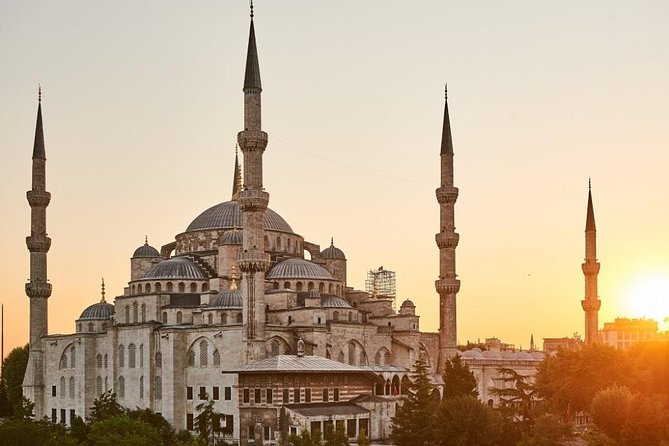
- Big visual impact fast at the Blue Mosque: 6 minarets, 260 windows, and walls of Iznik tile
- Hippodrome context that clicks, including At Meydanı and the Obelisk of Theodosius
- Bonus stops that add depth, like the Hagia Irene Museum and the German Fountain
- Morning logistics that work, with pickup, air-conditioned vehicle, and an organized return
How This 4-Hour Ottoman Tour Works With Your Istanbul Time
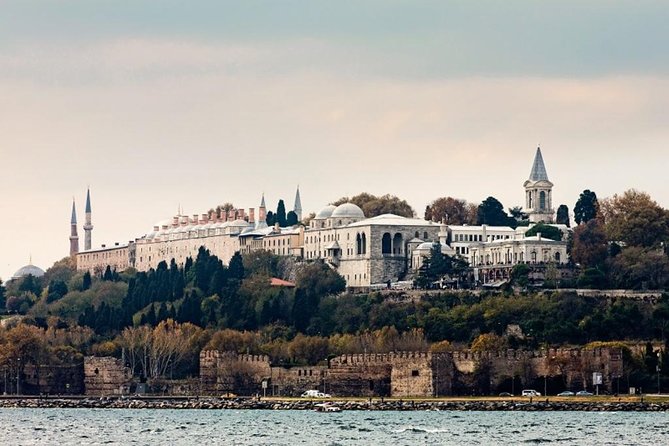
This tour is designed for people who have only a half day in Istanbul and want the Ottoman highlights without doing the frustrating first-day scramble. You start at 9:00am and spend about four hours total, using an air-conditioned vehicle plus a professional English-speaking guide.
The pacing is practical: you’re moving through Sultanahmet’s densest sights in an order that makes sense. You’re also not on your own with confusing ticket lines—one reason many people rate this tour highly is that the guide helps you get in and get oriented fast.
Group size matters here. With a maximum of 14 people, you’re less likely to feel like you’re trapped behind a sea of umbrellas. You might hear guide names like Ali or Sevilay come up in people’s praise, and it’s usually because the commentary stays on track and doesn’t turn into a random trivia lecture.
Still, you should expect some crowd pressure. Both the Blue Mosque and Topkapi are famous for a reason, and even with help, you’ll be sharing space.
You can also read our reviews of more tours and experiences in Istanbul.



Entering the Blue Mosque: 6 Minarets, 260 Windows, and Tile Details

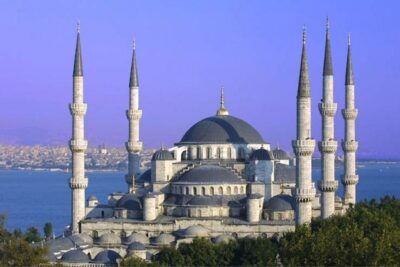
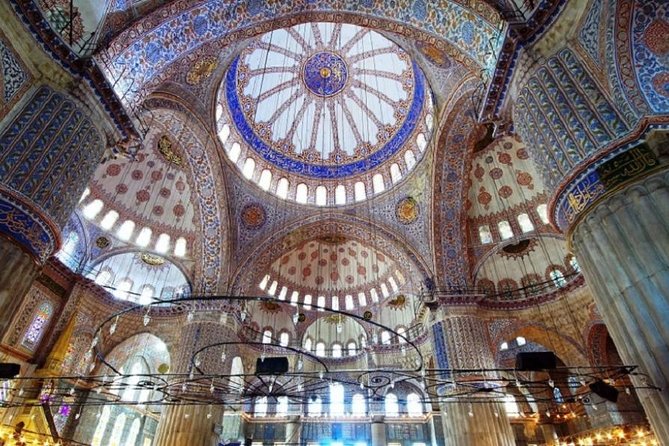
Your tour kicks off at the Sultan Ahmet Mosque, often called the Blue Mosque. This is one of those places where the outside gives you the shape, but the inside tells you the story. You’ll spend around 45 minutes here, including time to look at the main chamber’s famed decoration.
Here’s what makes the Blue Mosque unforgettable—and why this stop is worth leading with it. During Ottoman rule, Sultan Ahmet had it built in a classical Ottoman style. The mosque’s signature feature is its six minarets, plus a wall of Iznik tile work—more than 20,000 pieces—and light poured in through 260 windows.
What you should do with that time:
- Look up first, before the crowd pulls you down into side corridors.
- Spend a minute on the tile patterning and color, then shift to the scale of the chamber.
- Listen for the guide’s explanation of why the windows matter—light is part of the design, not just a nice extra.
Dress code matters. You’ll want something that covers shoulders and knees, and plan for a head covering if you don’t have one.
A key access warning: Fridays are different. The Blue Mosque closes until 2:30pm for prayer, and entry isn’t permitted during that window. If your tour date lands on a Friday morning, don’t expect the same inside experience. You’ll still get the Ottoman context, but your best-case scenario is tied to the day and timing.
Topkapi Palace in 90 Minutes: How to Make the Most of a Tight Visit
Next you head to Topkapi Palace, the Ottoman sultan’s home base and power symbol. You’ll get about 1 hour 30 minutes here, with admission included. This palace is huge—so your time will feel short unless you come with a clear focus.
The value of a guided half-day Topkapi visit is that the guide helps you choose what to pay attention to. In the palace you’re looking at elegant chambers, heirloom-style treasures, and the kinds of rooms that explain how the empire governed itself—ceremony, administration, and wealth in a single physical layout.
What you might notice first:
- The Golden Horn setting. Even before museum details, the location helps you understand why this mattered politically.
- The way the palace segments space. You can’t see everything, but you can see themes.
Important timing detail: Topkapi Palace is closed on Tuesdays. If your tour day is Tuesday, the visit is swapped for an alternative similar museum. That can be a solid fix, but it also means your experience won’t be identical to the standard Topkapi plan.
Also, be realistic about what you can see in 90 minutes. Some people loved the state rooms they did cover, but still wished for more time—especially if they were hoping to reach areas like the Harem or deeper garden/private rooms. If you know you want the Harem, treat this tour as a highlights approach, not a full palace day.
One practical advantage: top attractions move fast, and getting to the right rooms matters. A good guide will time your group so you’re not only standing in lines; you’re also getting told what you’re about to walk into.
Hippodrome at At Meydanı: Where Riots, Chariots, and Power Collided
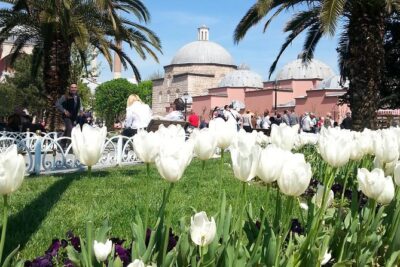
After the palace, you walk into the story-world behind the Hippodrome. Today it’s a city park called At Meydanı (Horse Grounds), but for centuries it was the political and sporting heart of Constantinople.
This stop is shorter—about 15 minutes—but it’s packed with meaning. The Hippodrome area hosted events and also riots, and it stayed important across Ottoman history for roughly 500 years. That long timeline is what makes the Hippodrome more than just an outdoor landmark.
Your stop includes a standout piece of ancient equipment: the Egyptian granite Obelisk. It was brought to Constantinople by Emperor Theodosius in the late 4th century (late Roman period).
How to get the most out of the short visit:
- Use the guide’s framing to place the monument within the old spina layout—think of it as a centerpiece, not a random statue.
- Take a quick photo, then look for how the monument’s position relates to the surrounding space.
This is also where you’ll hear how different rulers repurposed older Roman and Egyptian objects to project legitimacy. Istanbul is full of layers, and the Hippodrome is one of the places where that layering is physical.
German Fountain and the Obelisks: Small Stops That Add Big Perspective
Midway through the outdoor portion, you’ll make a brief stop at the German Fountain. The fun part here is the backstory: it was built in Germany, then moved by ships, and completed in Istanbul. For a 10-minute stop, it’s a nice reminder that Istanbul’s history didn’t stop at the Ottoman era.
You’ll also spend time at the Obelisk of Theodosius, another Hippodrome-era monument associated with the spina during Theodosius I’s reign in 390 AD. If the first obelisk stop felt like a headline, this one helps connect it to the broader arrangement.
These short pauses are easy to skip if you were wandering on your own—but in a guided tour they work like captions on a complicated photo. You leave with clearer mental pictures instead of just a list of monuments.



Hagia Irene Museum: A Quiet Bonus Inside the Outer Courtyard
The last named stop is the Hagia Irene Museum, located in the outer courtyard of Topkapi Palace. This is the oldest church of the Eastern Roman Empire (Byzantine), and it gives you a chance to step into a different layer of the story without needing a separate trip.
You’ll have about 30 minutes here, including time to look around. Even if you’re not a religious-architecture fanatic, the building’s age helps you appreciate how Ottoman Istanbul sat on top of older Byzantine foundations.
Because it’s included in this tour, it’s also a smart way to get variety. You’re not only looking at Ottoman power; you’re seeing the earlier empire that made the location important in the first place.
Price and Value: Is $115 Worth It for This Route?
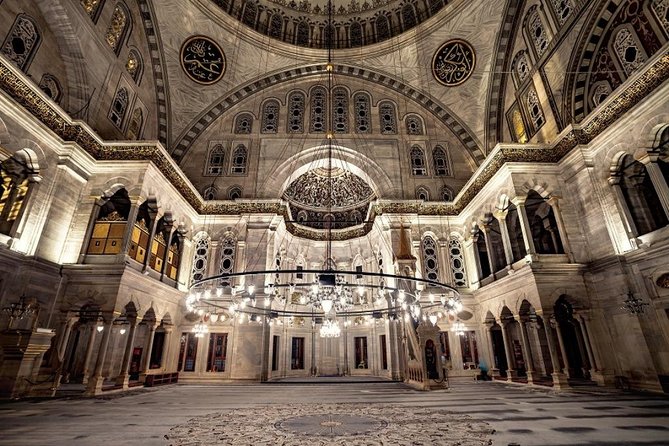
At $115 per person, you’re paying for four things that matter in Istanbul: convenience, a guide, transport, and tickets where needed.
Here’s what you’re effectively buying:
- Guided time at the two biggest draws: the Blue Mosque and Topkapi Palace.
- Topkapi admission included, while other stops are admission-free based on the tour setup.
- Hotel pickup and return (for central hotels), which can save you time and stress.
- A planned route through Sultanahmet so you’re not zigzagging across the city.
In plain terms: if you’d rather spend your morning looking at monuments than figuring out transit and line-ups, this price can feel fair.
Where value can wobble is when expectations are mismatched. If you want a slow, deep palace day, 1.5 hours at Topkapi may feel rushed. If you expect lots of bazaar shopping but your day’s timing tightens, your browsing time may be limited.
Crowds, Lines, and the Best Way to Use This Morning
Crowds are part of the deal here. The tour helps with flow, and many people specifically praise how their guide and tickets helped them avoid the worst lines. But you’re still in Istanbul’s most visited zone.
My practical advice:
- Wear comfortable shoes. You’ll be walking between major sites in a compact area.
- Bring water. Food isn’t included, and the morning can run long depending on entry conditions.
- Use the guide’s explanations as your priority list. When you know what you’re about to see, you’ll feel like you got more out of less time.
Also, be ready for day-to-day variation:
- Blue Mosque Fridays: no entry until 2:30pm for prayer.
- Topkapi Tuesdays: the palace is closed, and you’ll go to an alternative similar museum.
One more note from real-world experience in Istanbul tours: some visitors have had an extra shopping-style stop added later, such as a carpet demonstration or sales pitch. It wasn’t what everyone wanted. If shopping isn’t your thing, it’s worth being clear with your guide early and sticking to your no-purchase boundaries politely.
Grand Bazaar Shopping: What to Count On and What Not to
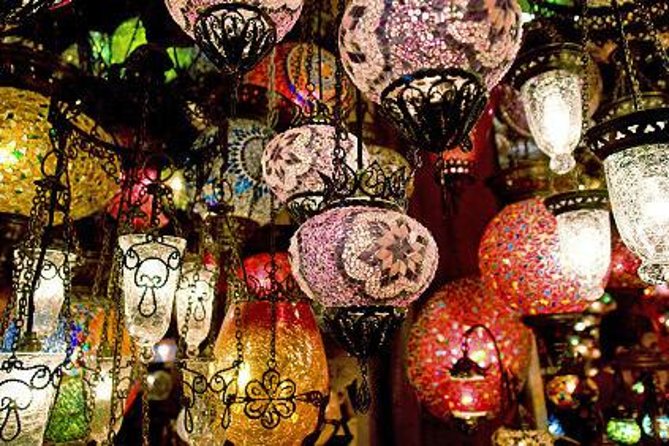
The tour highlights include bargain souvenir shopping in the Grand Bazaar idea. In practice, time allocation can vary. Some people ended up spending less or skipping bazaar browsing entirely because the priority stayed on the main monuments.
So here’s the smart approach: treat bazaar time as a possible bonus, not a guarantee. If you truly want the Grand Bazaar experience, plan your own separate window either before or after the tour.
This way you’re not rushing through stalls that might be fun—or missing because the tour timeline tightened.
Should You Book This Tour? My Decision Guide
Book it if:
- You have only a half day and want Ottoman highlights in a tight, sensible route.
- You like having someone else handle the logistics and timing.
- You care about seeing the Blue Mosque and Topkapi Palace without turning your trip into a transit and line marathon.
Skip or rethink it if:
- You’re the kind of traveler who wants to linger for hours inside Topkapi and explore everything, including the Harem and private areas.
- Your travel dates are Friday mornings (Blue Mosque may be closed for entry) or Tuesdays (Topkapi is closed), and you’re expecting the standard interior plan.
- You dislike any sales pressure. If you’re shopping-averse, plan to keep control of where you stop and how long you stay.
For most people, this is a strong value morning: big sights, a human guide, and a route that makes sense for first-timers.
FAQ
How long is the tour?
It runs for about 4 hours in total, starting at 9:00am.
Is pickup included?
Pickup is offered, and the tour also includes return to the meeting point. The tour notes central hotel pickup.
Which sites are included?
You visit the Blue Mosque, the Hippodrome area (At Meydanı) with the Obelisk of Theodosius, Topkapi Palace, the German Fountain, the Obelisk of Theodosius again as a listed stop, and the Hagia Irene Museum.
Are tickets included?
Topkapi Palace admission is included. The other listed stops show free admission on the tour plan.
What happens if I travel on a Friday or Tuesday?
On Fridays, the Blue Mosque closes until 2:30pm for prayer and entry isn’t permitted during that time window. On Tuesdays, Topkapi Palace is closed, and an alternative similar museum is visited.
Is food included?
No. Food and drinks aren’t included unless specified.
If you want, tell me your travel date (Friday or Tuesday?) and whether you care about the Harem. I can help you judge if this half-day plan fits your priorities.