REVIEW · BASILICA CISTERN TICKETS
Guided Hagia Sofia, Blue mosque, Basilica Cistern skip lines tour
Book on Viator →Operated by My Local Guide lstanbul · Bookable on Viator
Six big landmarks, one easy storyline. This guided route strings together Istanbul’s Ottoman and Roman eras with skip-line access to major sights, plus a licensed English-speaking guide who explains what you’re actually seeing. You also get a real break built in, with free coffee and/or tea, and the pace is designed to keep you moving without feeling herded.
Two things I’d especially plan around: the itinerary is tight enough to cover the top highlights in one day, and the group stays small (up to 15, often smaller), so you can ask questions and hear what matters. The one drawback to consider is practical, not historical: plan for plenty of walking and some serious stairs at the mosques and cistern, and if you’re sensitive to sound, know that at least one review asked for microphone/hearing support.
In This Review
- Why this Hagia Sofia–Blue Mosque–Cistern route works
- Key points to know before you go
- Meeting point at the German Fountain (and how to find it fast)
- The pacing: 4 to 5 hours without feeling rushed
- Stop 1: Blue Mosque (Sultanahmet Mosque) and the blue-tile story
- Stop 2: Hippodrome remnants and the race-track archaeology
- Stop 3: Basilica Cistern’s underground palace feeling
- Stop 4: Hagia Sophia Grand Mosque—mosaics, calligraphy, and symbols
- Stop 5: Çorlulu Ali Paşa Medresesi tea/coffee break (with local life)
- Stop 6: Grand Bazaar interior walk (and what changes on Sundays)
- Stop 7 (optional): Vezirhan Handmade Carpets & Klims in a caravanserai
- Value check: is $145.12 worth it?
- Who this tour fits best (and who might want a different plan)
- Should you book this skip-lines tour?
- FAQ
- How long is the guided tour?
- Is this tour offered in English?
- Which major sites have skip-line or priority entry?
- Are entrance tickets included?
- Is the Blue Mosque currently open?
- What happens on Sundays when the Grand Bazaar is closed?
- Do I need to bring a scarf?
- What should I wear?
- Is there coffee or tea included?
Why this Hagia Sofia–Blue Mosque–Cistern route works
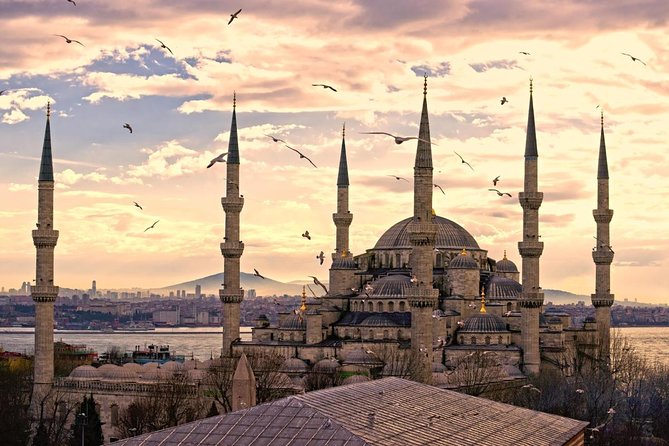
This is the kind of day trip that makes Istanbul feel understandable fast. You start with the grand Ottoman presence (Blue Mosque), step into a Roman-era landscape (Hippodrome), go underground into the city’s engineering brain (Basilica Cistern), then end at the big “two-religion” landmark (Hagia Sophia). By the time you reach the bazaars, you’re not just shopping in a maze—you’re moving through a neighborhood with layers you can name.
The tour also reduces the biggest frustration for first-timers: lines. With priority entry for key stops, you spend less time stuck and more time looking closely at tiles, mosaics, and stone details. And because the guide narrates symbols, names, and why the buildings were built the way they were, the day feels like a guided walk through meaning, not a checklist.
Key points to know before you go
- Skip-line entry for key sights so you lose less time to ticket lines.
- Free coffee and/or tea plus a real sit-down pause during the route.
- A Roman-to-Ottoman timeline linking Hippodrome, Basilica Cistern, Blue Mosque, and Hagia Sophia.
- Basilica Cistern’s Medusa heads are a must-see stop at the far end.
- Grand Bazaar guidance from the inside, with shopping tips and route help.
- Optional carpet stop at Vezirhan with a less pushy shopping approach.
You can also read our reviews of more guided tours in Istanbul

Meeting point at the German Fountain (and how to find it fast)
You’ll meet at the German Fountain at Binbirdirek, along At Meydanı Cd, in the Fatih district (34122). It’s a sensible start point for this area because you’re already in the historic core near major transit.
From a planning angle, this matters: if you arrive early, you can orient yourself before the walking really ramps up. If you’re using public transportation, being “near transit” helps because these sights are clustered, but streets and entry points can be a bit confusing when you’re trying to locate meeting cues.
The pacing: 4 to 5 hours without feeling rushed
This is a 4 to 5 hour walking experience, built to hit several heavy-hitters. That range depends on crowd flow, prayer times, and how much time you want at each stop (your guide will manage the rhythm). The small-group format (max 15) is part of the appeal: it keeps the day from turning into a train of people moving at one speed.
One practical tip: keep water handy and wear shoes you trust. Even with skip-line entry, you’re spending time going up and down inside historic sites. The tour includes a coffee/tea break, but that doesn’t replace the need for comfortable footwear.
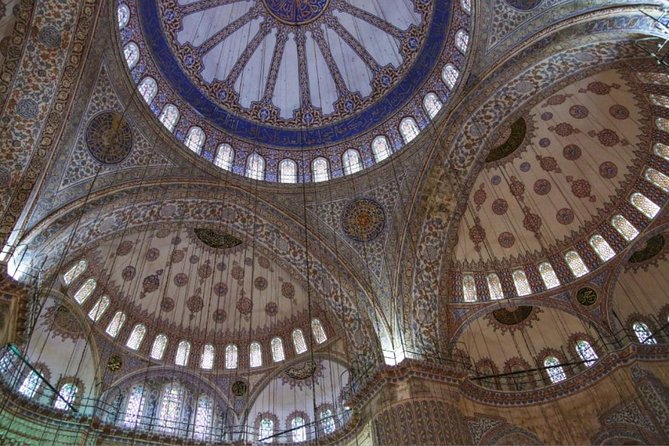
Stop 1: Blue Mosque (Sultanahmet Mosque) and the blue-tile story
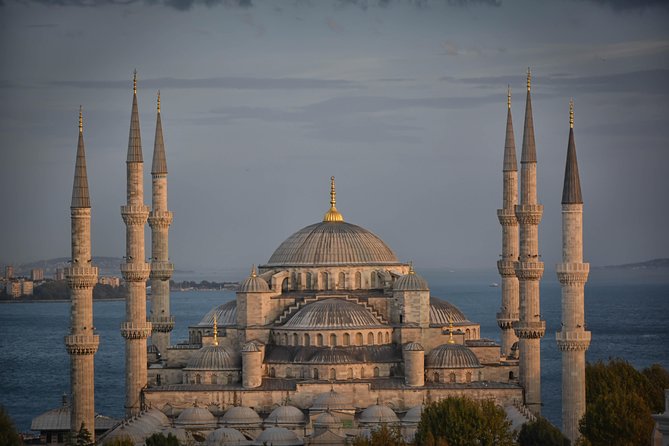
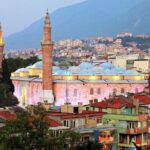
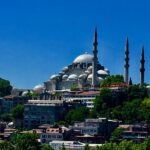
You’ll begin at the Blue Mosque, also known as the Sultanahmet Mosque. It’s an active mosque and one of Turkey’s most visited, so this is where the day’s atmosphere really sets in: people are praying, visitors are looking, and the building guides both moods.
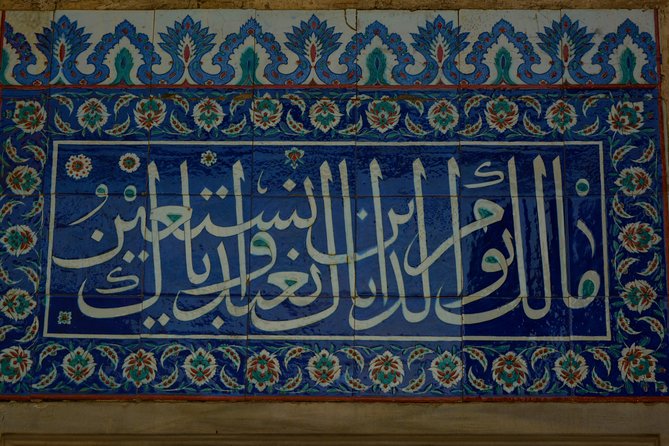
A big detail to appreciate is the “Blue” nickname. It comes from the blue İznik tiles inside. That means your attention shouldn’t just be on the exterior silhouette. Plan to look for the interior tile work and the layout that shapes light and movement.
Timing-wise, the mosque had a long closure for renovation (it reopened April 21 after years of being closed). That makes skip-line entry especially valuable now because demand rebounds when a landmark reopens.
What to do while you’re there
- Follow your guide’s prompts about where to look for tile details.
- Expect a mix of worship space and visitor areas, and be ready to pause when needed.
Stop 2: Hippodrome remnants and the race-track archaeology
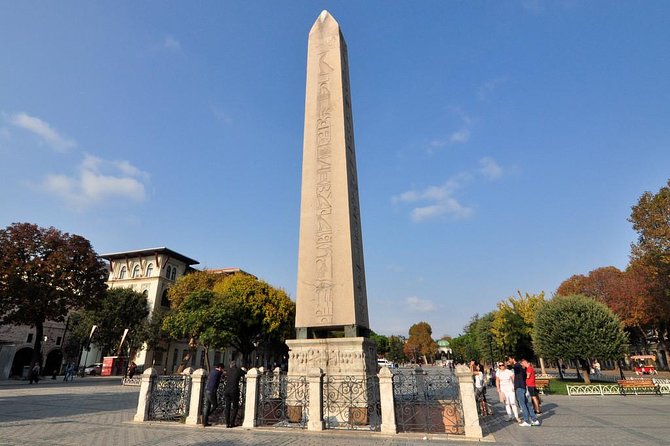
Next comes the Hippodrome, the base of a Roman chariot-racing venue built in the 4th century AD. If you’ve only seen Istanbul as “mosques and palaces,” this stop flips the story into sports, power, and public spectacle.
What’s left aren’t full stadium walls. Instead, you’ll spot surviving monuments that anchor the scene:
- An Egyptian obelisk (dated to around 1500 BC)
- A Serpent Column (linked to the 5th century BC)
- A Constantine Column (around 10th century AD)
You don’t need to be an archaeology expert to enjoy this. The point is to recognize how Istanbul reused objects, collected trophies, and layered histories in public spaces—long before “heritage tourism” became a thing.

Stop 3: Basilica Cistern’s underground palace feeling
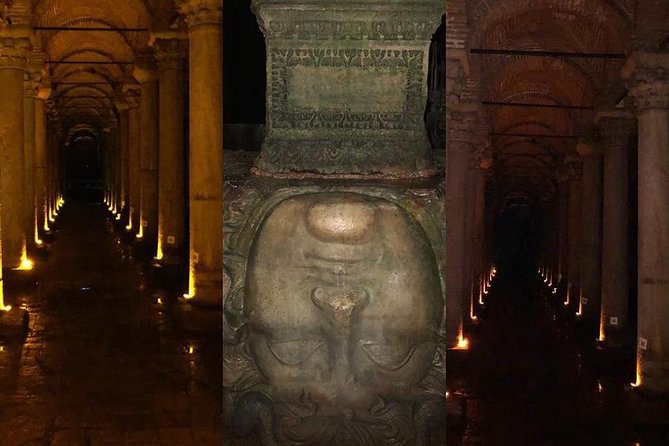
Then you’ll step into the Basilica Cistern, an underground water reservoir often described as an underground palace. It’s one of the strongest examples of Roman architecture in Istanbul, built to hold water, but it today feels like a stone dream.
Plan around this stop being visual and atmospheric. The space is built for water storage—columns, stone, shadow—but the vibe turns it into an art-gallery of echoes. And yes, there’s a specific detail you shouldn’t miss: walk toward the end to see the gigantic Medusa heads, turned upside down.
The time here is about 45 minutes, with admission included and priority skip-line entry. That’s enough to do a slow look without turning it into a marathon.
Practical note
If you’re not a fan of enclosed, echoing spaces, keep that in mind. It’s still worth it, but pace yourself.
Stop 4: Hagia Sophia Grand Mosque—mosaics, calligraphy, and symbols
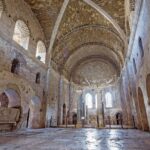
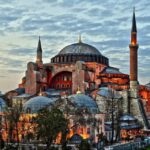
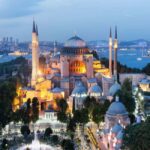
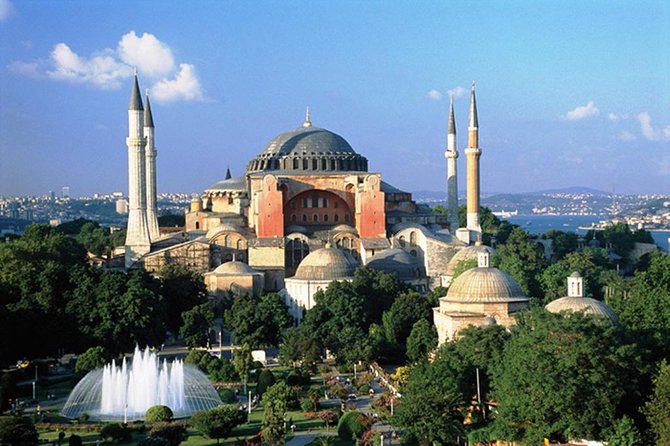
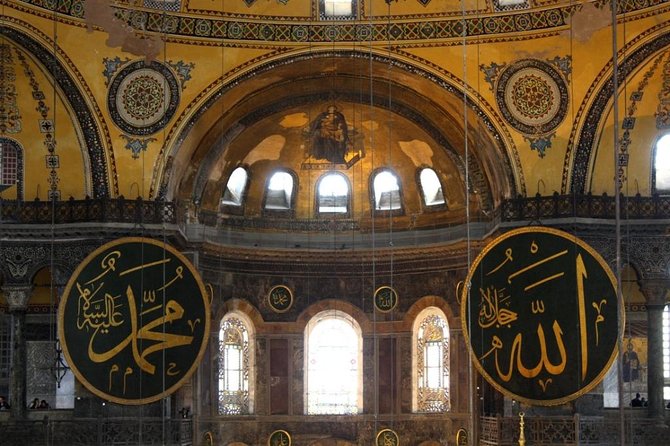
Hagia Sophia is where the tour earns its biggest title. You’ll visit the Hagia Sophia Grand Mosque from inside, with admission included. This building dates to the 6th century AD and is described as a world heritage site—one of those places where even first-time visitors sense they’re in a turning-point location.
The key idea is how the space represents more than one tradition. You’ll get help reading it as a structure that embraces both Islam and Christianity in its long history. Your guide points out the unusual architecture, plus details like:
- mosaics
- chirography/calligraphy-style artwork
- and the symbolic mix that evolved over roughly 1500 years
That history framing matters. Without context, Hagia Sophia can feel like “pretty rooms.” With context, it becomes a map of shifting authority, artistry, and meaning.
Dress and access reminder
Plan to cover your shoulders and knees. Women will also need a scarf to cover their hair inside. Men are also expected to follow the shoulder/knee requirement.
Stop 5: Çorlulu Ali Paşa Medresesi tea/coffee break (with local life)
Between major monuments, you’ll stop at the Corlulu Ali Paşa Medresesi, where you’ll take a tea/coffee break at a local cafe. Drinks are included.
This stop isn’t just for caffeine. The building was a former religious school until the 1930s, so you’re switching from sightseeing mode to “see how locals pause” mode. The description of the cafe atmosphere includes locals socializing over tea and coffee, with the occasional hookah/shisha smoking scene.
Expect about 30 minutes here. It’s a helpful buffer if you’ve been walking in summer heat or if your day needs a short reset.
Stop 6: Grand Bazaar interior walk (and what changes on Sundays)
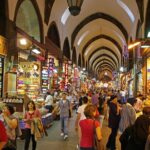
Next is the Grand Bazaar, approached from the inside rather than just a quick outside look. Your guide will share shopping tips and help you navigate what can feel like a puzzle if you’re walking in cold without a plan.
This is also where you’ll get that classic Istanbul experience: indoor streets, dense stall clusters, and constant motion around you.
One detail that directly affects your schedule: the Grand Bazaar is closed on Sundays. On those days, the tour ends at the Spice Bazaar instead. And the bazaars can close on religious festivals twice a year; on those dates, the tour swaps in the Arasta Bazaar.
So if you’re traveling on a Sunday or around a major festival, don’t assume you’ll “see the Grand Bazaar.” Use the tour’s swap logic as your guide.
Stop 7 (optional): Vezirhan Handmade Carpets & Klims in a caravanserai
If you like crafts and want to understand how carpets are made, you can add the optional visit to Vezirhan Handmade Carpets & Klims. It’s located in a 500-years-old caravanserai, which means you’re not just shopping—you’re stepping into a historic trading space.
The standout difference here, based on the tour description, is how it’s sold:
- they’re described as not pushy
- they’re framed as trustworthy about quality
- and they mention shipping for buyers
The group time is about 30 minutes, and it’s optional at the end, so you can skip it if your priorities are photos and bazaars only.
Value check: is $145.12 worth it?
At $145.12 per person, this isn’t a budget “walk around” tour. But it’s also not priced like a luxury private chauffeur day. What helps value here is the combination of:
- priority/skip-line access to major entrances (notably Hagia Sophia and Basilica Cistern, plus Blue Mosque entry)
- included entry tickets for Hagia Sophia and Basilica Cistern
- a licensed English-speaking guide
- and included drinks (coffee/tea), plus time at bazaars with navigation tips
When you compare this to paying for multiple attractions on your own while also losing time to ticket lines, the math starts to work in favor of a guided format. Add in a small group size (max 15, often smaller) and the fact that the day covers seven structured stops, and the price feels more like a “logistics and interpretation package” than a simple sightseeing ticket.
The optional carpet stop also gives you control. If you enjoy shopping, you get extra context. If you don’t, you’re not forced into a sales session.
Who this tour fits best (and who might want a different plan)
This tour is a strong match if:
- you’re short on time and want a focused route through top Istanbul landmarks
- you want help understanding the symbolism and history inside Hagia Sophia and the Blue Mosque
- you’d rather spend your energy looking than figuring out entrances and crowd timing
It’s also good for families with older kids, since the tour notes that kids 6 and up are charged as adults, while children 5 and under are free with ID or passport to verify age.
You might consider a different setup if:
- you have limited mobility or you know stairs are a deal-breaker. There are reviews mentioning lots of stairs, and the cistern plus mosque structures aren’t flat.
- you struggle in noisy environments and really need microphone support. One review requested it, so plan accordingly.
Should you book this skip-lines tour?
If you want a first-day Istanbul plan that hits the big names—Blue Mosque, Hippodrome, Basilica Cistern, Hagia Sophia—then hands you a guided narrative while also cutting down line stress, this is a smart booking.
My practical go/no-go advice:
- Book it if you’re visiting on a weekday or Saturday and you want to move efficiently.
- If you’re traveling Sunday, expect the itinerary to shift at the end toward the Spice Bazaar.
- Wear shoes built for stairs, and bring or plan for a scarf if you’re visiting as a woman.
- If you like shopping but hate being pressured, the optional Vezirhan stop is worth considering.
And since the tour includes skip-line entry plus most key admissions, it’s a good choice when you’d rather trade extra planning time for a smoother day.
FAQ
How long is the guided tour?
The tour runs about 4 to 5 hours.
Is this tour offered in English?
Yes, it’s offered in English.
Which major sites have skip-line or priority entry?
The tour includes skip-line or priority access for Hagia Sophia and the Basilica Cistern, and it includes Blue Mosque entry.
Are entrance tickets included?
Entrance tickets are included for Hagia Sofia and the Basilica Cistern, and Blue Mosque entry is also included.
Is the Blue Mosque currently open?
The itinerary notes that the Blue Mosque reopened on April 21 after being closed for renovation for the previous 6 years.
What happens on Sundays when the Grand Bazaar is closed?
On Sundays, the Grand Bazaar is closed and the tour ends at the Spice Bazaar instead.
Do I need to bring a scarf?
If you’re a woman, you need a scarf to cover your hair while inside the Blue Mosque and Hagia Sophia.
What should I wear?
You should wear clothes that cover shoulders and knees for both women and men.
Is there coffee or tea included?
Yes. The tour includes free coffee and/or tea, and there’s also a drinks-included tea/coffee break at Çorlulu Ali Paşa Medresesi.