REVIEW · ISTANBUL
Colors of Turkey – 8 Days
Book on Viator →Operated by Turkey Tours Company · Bookable on Viator
Turkey can feel big and confusing. This trip turns it into a clear path: Istanbul to Cappadocia, with Pamukkale and Ephesus in between. You’ll get a guide at the main stops, plus the practical perks that make long days easier, like a fully air-conditioned vehicle and arranged accommodation and transport.
I especially like the way the itinerary mixes top icons with places that explain how Turks lived before modern labels: the Ottoman stories around Hagia Sophia and Blue Mosque, then the Roman scale at Ephesus, then Cappadocia’s underground and cave-church setting. One consideration: it’s a fast, ticket-heavy circuit. A good chunk of the big sights have entrance fees you pay separately, and your schedule will move on flight days.
In This Review
- Key Things I’d Watch for in This Tour
- Why This 8-Day Turkey Circuit Feels Like a Real Route
- Istanbul Welcome: Hotel Transfer and a Morning-Ready Start
- Hippodrome to the Blue Mosque: Getting Oriented Fast in Sultanahmet
- Hagia Sophia, Topkapi, and the Bazaar: Tickets, Headcovering, and Timing
- Hagia Irene Museum: A Quiet Counterpoint in the Same Area
- Flying to Izmir and Heading Toward Pamukkale
- Pamukkale and Hierapolis: Cotton Castle Meets a UNESCO-Scale Ruin Field
- Ephesus and the Temple of Artemis: Seeing One Roman City’s Full Scale
- The House of the Virgin Mary: The Calm Stop Between Ruins
- The Flight Jump to Cappadocia: Why This Part Can Feel Tight
- Cappadocia Full Day: Fairies, Chimneys, and Real Craft Stops
- Kaymaklı Underground City, Caravanserai, and Goreme Panorama
- Bosphorus Cruise and Misir Çarşı: Your Istanbul Finale Smells Like Food
- Price and Value: What the $2,890.40 Includes (and What You’ll Still Pay)
- Who This Tour Suits Best (and Who Might Feel Frustrated)
- Should You Book Colors of Turkey 8 Days?
- FAQ
- What’s included in the tour price?
- What entrance fees should I expect to pay separately?
- Are there any days when Istanbul sights are closed?
- Do I need anything for Hagia Sophia?
- Is pickup included?
- Does the tour include flights?
- What language is the tour in?
- What’s the cancellation window?
Key Things I’d Watch for in This Tour
- Guided stops at major landmarks so you’re not just taking photos—you’re connecting the dots.
- Internal flights built into the plan, which saves time but means you’ll want to stay flexible with timing.
- Entrance fees are mostly extra, so budget for Hagia Sophia, Topkapi, Ephesus, Pamukkale, Goreme, Pasabag, and Kaymakli.
- Religious-site rules matter (head covering and modest dress), especially for Hagia Sophia.
- Closed days affect Istanbul sights: Grand Bazaar is closed Sunday, Topkapi is closed Tuesday, and Blue Mosque is closed Friday.
Why This 8-Day Turkey Circuit Feels Like a Real Route
What makes Colors of Turkey interesting is that it’s not “stay put and read plaques.” It’s built as a moving route: Istanbul, then Aegean Turkey for Pamukkale and Ephesus, then Cappadocia, then back to Istanbul for a finale on the Bosphorus and in the spice market.
At $2,890.40 per person, you’re paying for more than a guide. This includes accommodation, breakfast for 7 days, a fully air-conditioned vehicle, and internal flight tickets that connect the regions. That matters because Turkey’s distances are real. Without flights, you’d lose most of the trip to road time.
The flip side is that this is a “see a lot” style itinerary. You won’t have hours of slow wandering in every city. You’ll have planned stops, a walking focus in Istanbul, and day changes that are timed around transport. If you’re the type who hates being rushed, pick a slower version. If you want a clear route with the logistics handled, this one makes sense.
You can also read our reviews of more tours and experiences in Istanbul.

Istanbul Welcome: Hotel Transfer and a Morning-Ready Start
Day 1 is simple: you arrive at Istanbul Airport and get a transfer to your hotel, then you sleep in Istanbul. That first night is smart. Jet lag can ruin sightseeing if you land and immediately start marching.
On Day 2, the plan begins in the historic core with the Hippodrome and then moves through Ottoman and Byzantine heavyweight sites. You’ll also hit the Grand Bazaar, which is the kind of place that can overwhelm you on your own. With a guide guiding your flow, you get less “lost in a maze” and more “this is what you’re looking at.”
Also note this: the Istanbul portion is described as a walking tour, so bring comfortable shoes. Istanbul is famous for uneven pavement and sudden hills—your feet will handle it better if you’re not wearing flexible sneakers from 2016.
Hippodrome to the Blue Mosque: Getting Oriented Fast in Sultanahmet
The Hippodrome is where the tour starts to give you context. It was Constantinople’s sporting and public activity center, with four notable monuments tied to different eras: the German Fountain of Wilhelm II, the Egyptian Obelisk, the Serpentine Column, and the Column of Constantine. Even if you only know Istanbul as a modern city, this stop helps you understand why the old skyline matters.
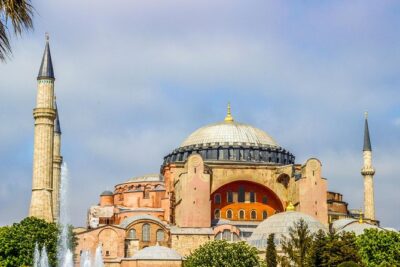
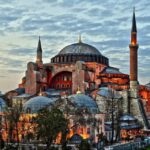
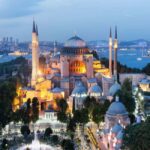
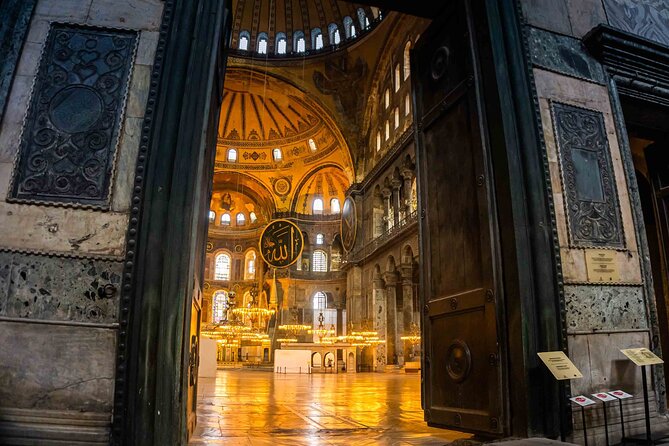
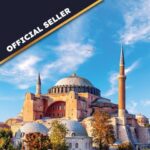
Next comes Hagia Sophia Grand Mosque (Haghia Sophia). You’ll be in the heart of one of the world’s most famous buildings—constructed in the 6th century as a church, converted into a mosque in 1453, and later used as a museum. Today it’s again operating as a mosque, so visits are subject to prayer-time restrictions.
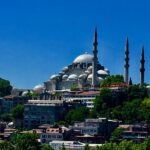
Then you’ll see the Blue Mosque (Sultanahmet Mosque). It’s built with six minarets and is one of the Ottoman era’s signature statements of power and design. One practical note: the Blue Mosque is closed on Friday, so your visit depends on the day you’re touring.
These are big stops with big expectations. The real value here is that a guide helps you read the building layers instead of treating them like a single snapshot.
Hagia Sophia, Topkapi, and the Bazaar: Tickets, Headcovering, and Timing
Hagia Sophia and Topkapi are where you should be ready for the “big ticket” experience. Entrance fees are not included for Hagia Sophia or Topkapi, and you’ll pay separately (with skip-the-line options mentioned for Topkapi). For Hagia Sophia, the tour lists a fee of 25 €, and it also flags a practical rule: you need a headset/scarf for covering your head. Even if you’re not religious, follow the requirement. It’s part of entering comfortably and avoiding delays.
Then Topkapi Palace brings you into the Ottoman dynasty’s administrative and artistic world. You’ll see the imperial treasury concept, sacred Islamic relics, palace kitchens, and weapons. Topkapi is closed on Tuesday, so this is one of the places that can swing depending on your exact day.
Finally, the Grand Bazaar is a shopping stop, but also a cultural one. You’ll be told what to look for—carpets, leather, jewelry, Turkish delight, gold items, and antique tile-style crafts. It’s also closed on Sunday, which is a big deal if your tour date lands near that.
My advice: treat the bazaar like a place to get your bearings and compare prices, not a place to impulse-buy. The maze is part of the experience. Going in with a plan stops it from becoming just sensory overload.
Hagia Irene Museum: A Quiet Counterpoint in the Same Area
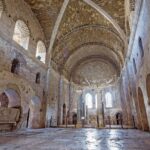
Hagia Irene sits in the same Istanbul zone as Hagia Sophia and the main Ottoman/Byzantine sights, but it tends to feel more like a pause than a headline. The tour describes it as one of the oldest Byzantium churches in Istanbul and the second-largest church of the Eastern Roman Empire after Hagia Sophia.
You’ll have a shorter time slot here, and the entrance fee is not included. It’s also closed on Tuesday. If your schedule allows, it’s a good choice for balance—after the crowded flagship sites, this gives you a slightly less intense look at early Christian architecture.
Flying to Izmir and Heading Toward Pamukkale
After the Istanbul sightseeing day, the trip moves quickly. You’re picked up from your hotel, taken to the airport, and flown to Izmir, where you meet the tour guide after landing.
This is one of the itinerary strengths: internal flights compress travel time. Instead of losing most of a day to roads, you lose a shorter amount to airport movement. The trade-off is obvious: you’re more exposed to flight timing and schedules. It’s also why the tour notes that itineraries might change depending on direct flights.
Once you’re on the Aegean side of Turkey, Day 3 begins with Pamukkale.
Pamukkale and Hierapolis: Cotton Castle Meets a UNESCO-Scale Ruin Field
Pamukkale is described as the Cotton Castle—white mineral-rich terraces that resemble cotton from a distance. It’s a spa town concept that has been known since Roman times. You’ll spend around four hours here, enough time to walk the terraces and take in why people treat this area like a natural wonder and a health stop at the same time.
Then you’ll visit Hierapolis, the “Holy City,” linked to evangelism by Paul and Epaphras. The key detail is that the site is built on limestone deposits above the mineral springs. That explains why ruins are so widespread. It’s also UNESCO-listed, and the necropolis includes sarcophagi of important ancient figures like Marcus Aurelius.
One practical reality: Pamukkale is visually stunning, but it also runs on walking. Wear shoes you can handle on uneven stone and watch your footing. Also, entrance fees for Pamukkale are not included.
After Hierapolis, the trip heads to Kusadasi for an overnight.
Ephesus and the Temple of Artemis: Seeing One Roman City’s Full Scale
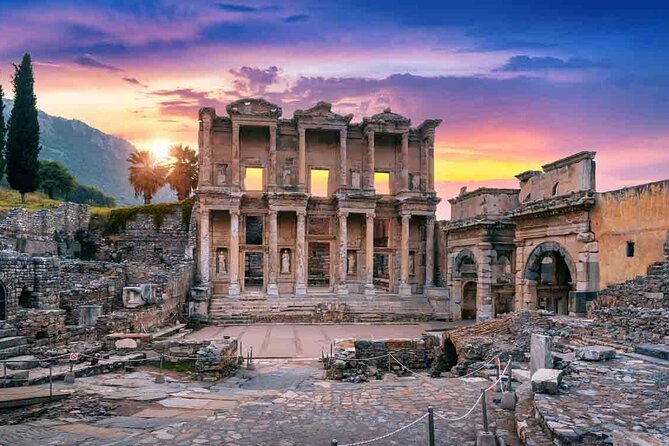
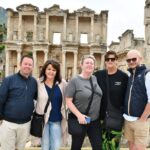
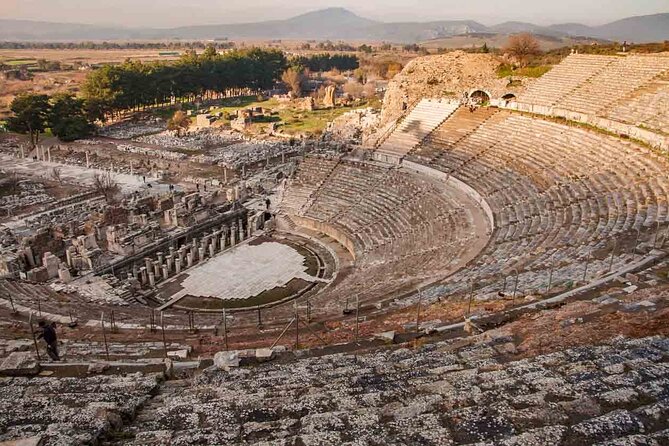
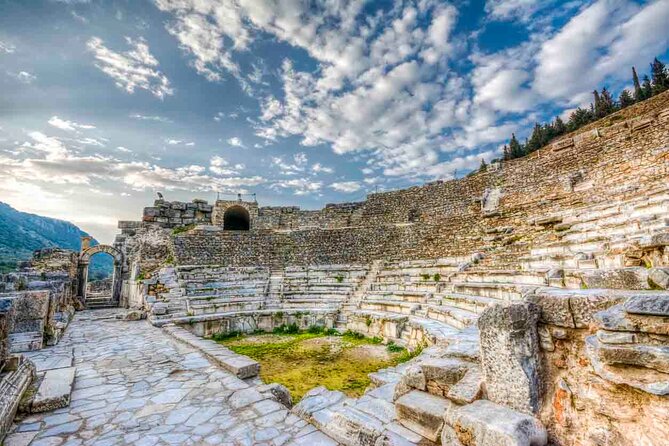
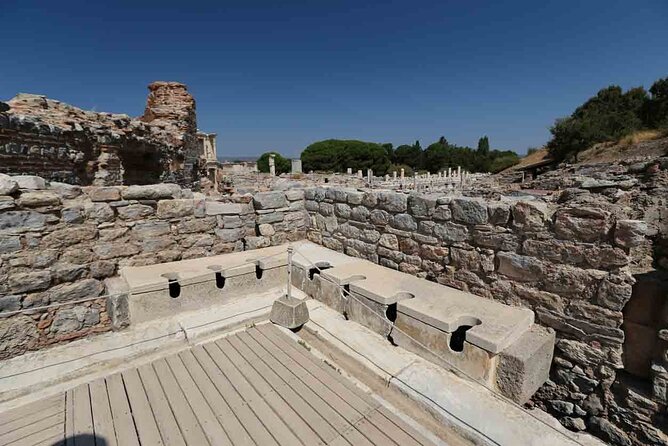
Ephesus is one of those places where “3 hours” can still feel like a whirlwind. The tour plan emphasizes its Roman-era size—at one point second only to Rome—with over 250,000 people in the 1st century BCE and a major amphitheater of more than 25,000 seats.
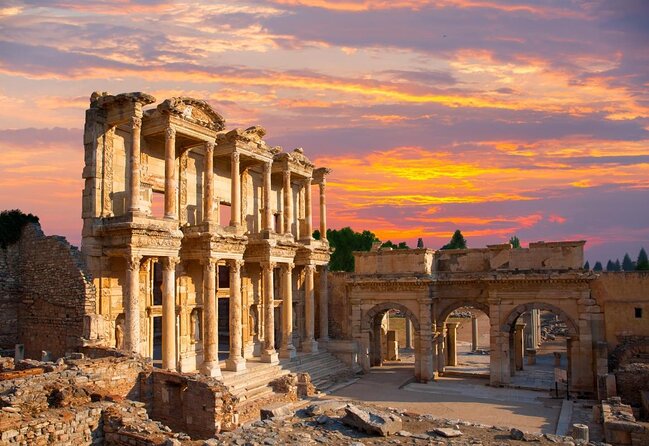
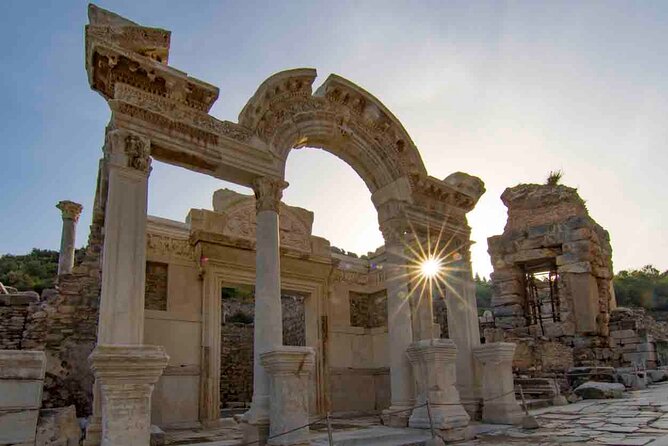
What makes this stop more than a checklist is the specific set of sights you’re likely to see: Goddess Nike, the Hadrian Gate, the Library of Celsus, Marble Street, and Harbour Street. You’ll also get a sense of it as a harbor city—important because Ephesus wasn’t isolated. It was connected to trade.
Next comes the Temple of Artemis near Ephesus. The tour calls it a 6th-century structure and one of the Seven Wonders of the ancient world. The visit time is short, so don’t expect it to replace the main Ephesus experience. Treat it like a “where the legend lives” add-on.
Entrance fees for Ephesus are not included, and there’s also a skip-the-line option through the guide. If you hate waiting, it’s worth paying attention to that.
The House of the Virgin Mary: The Calm Stop Between Ruins
The House of the Virgin Mary is placed on a hilltop near Ephesus. The tour notes it’s about 9 km away and frames it as a place associated with Mary’s last days and a shrine atmosphere.
Time here is shorter, and entrance fees are not included. But it’s a meaningful contrast to Ephesus. After the stone scale of ancient life, this offers a quieter environment—green surroundings and a different kind of spiritual and cultural experience.
From here, you return to Kusadasi and overnight again, before moving on to Cappadocia the following day.
The Flight Jump to Cappadocia: Why This Part Can Feel Tight
The itinerary shifts from the Aegean region toward central Turkey via flight. You’ll leave the Ephesus area, drive to the Izmir airport, fly to Kayseri, and then continue to Goreme for your overnight in Cappadocia.
This is one of the moments you’ll feel the itinerary’s pace. You are moving fast to protect your sightseeing time. It also means you’ll likely have a shorter window to settle at each base. Still, for many people, this is the best way to fit Istanbul, Ephesus, and Cappadocia in just 8 days.
Cappadocia Full Day: Fairies, Chimneys, and Real Craft Stops
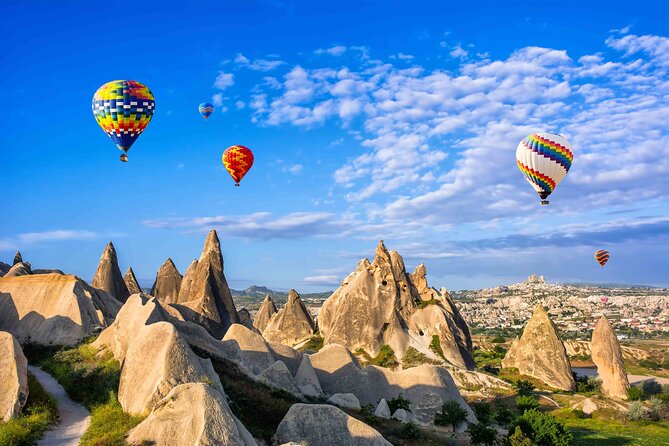
Cappadocia is where the “wow” factor gets physical. You’ll start with Devrent Valley, also called Imagination Valley, to see fairy chimney formations. The tour frames them as shaped over almost 30 million years. Even if you don’t care about deep timelines, seeing these shapes from the ground makes you understand why people mythologize the region.
Then you’ll visit Goreme National Park and Pasabag (also mentioned as the area with the most interesting fairy chimneys). This is the place you’ll hear compared to the Hobbit and Smurfs look, but the real reason it works is that you’re standing in landscape that reads like sculpture.
Avanos is a different kind of stop: pottery. The tour includes a local pottery shop and explains how people survived and made art dating back to the Hittite period. You get context through craft, not just through buildings.
Finally, you’ll end with Uchisar Castle and Pigeon Valley. Uchisar gives you a strong viewpoint, and Pigeon Valley is both scenic and practical for photography.
Entrance fees for key sights like Goreme Open-Air Museum are listed as extra, and the tour includes suggested payment to the guide for skip-the-line access.
Kaymaklı Underground City, Caravanserai, and Goreme Panorama
Day 6 starts with an underground defense idea: Kaymakli Underground City (listed as Kaymakli). The tour describes it as how Christians protected themselves and defended against persecutions and invasions. Even if you’re not focused on religious details, underground cities tell you how people adapted to danger and scarcity.
Entrance fees for Kaymakli are not included, and the additional info lists €13. You’ll go with a guide, which helps you understand the layout beyond “it’s a hole in the ground.”
Next you’ll visit a caravanserai stop at Sarihan. Caravanserais were resting places for merchants and their animals, and the tour frames it as a 13th-century residence for merchants and camels. It’s a useful pause because it shows the human side of trade routes.
Then comes Goreme Panorama, described as the best photo spot with churches and reminders of Christian history. The entrance ticket for this stop is included (as listed). It’s also where your day’s pacing matters: you’ll want to be present, not rushing photos just to keep moving.
Pigeon Valley wraps up the day before flying back toward Istanbul.
Bosphorus Cruise and Misir Çarşı: Your Istanbul Finale Smells Like Food
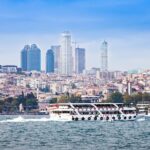
On Day 7, you return to Istanbul for a last full taste of the city. The highlight is a Bosphorus shared boat cruise between Europe and Asia. The tour notes you’ll pass by Dolmabahçe Palace and Beylerbeyi Palace as you go.
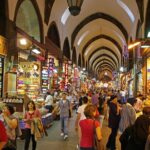
Then there’s Misir Carsisi, the spice market. The tour describes the scent impact: spices in huge quantities, plus treats like Turkish delight, dried fruit, nuts, honeycomb, and other food items. This stop is great if you like practical souvenirs you can actually use. It’s also one of the best places to understand Turkish food culture through smell rather than lectures.
Finally, you return to your hotel for your overnight.
Price and Value: What the $2,890.40 Includes (and What You’ll Still Pay)
At nearly $2,900 per person, the value comes from the big included pieces: accommodations, 7 breakfasts, a fully air-conditioned vehicle, and internal flights that connect regions. If you tried to plan flights, hotels, and guided tours yourself across Istanbul + Pamukkale/Ephesus + Cappadocia, you’d likely spend a lot more time and energy.
But the tour also makes it clear: most major entrance fees are not included. The add-on list is where your budget can jump. The tour states:
- Hagia Sophia entrance is 25 €
- Topkapi entrance is 2750 TRY
- Ephesus entrance is 40 €
- Pamukkale entrance is 30 €
- Goreme Open-Air Museum is 20 €
- Pasabag entrance is 12 €
- Kaymakli Underground City entrance is about €13
- House of the Virgin Mary entrance is 500 TRY
On top of that, the tour notes driver and guide tips are extra, plus beverages and personal expenses. If you like to snack and buy drinks often, plan for that too.
One more practical budgeting note: Istanbul’s major sights have closure rules. Grand Bazaar closes Sunday. Topkapi closes Tuesday. Blue Mosque closes Friday. If your tour timing lands on a closure day, your schedule could shift to stay functional.
Who This Tour Suits Best (and Who Might Feel Frustrated)
This tour fits you best if:
- you want a guided, structured route across multiple regions
- you’d rather pay for logistics than manage them yourself
- you like big landmark days and don’t mind paying entrance fees
It may frustrate you if:
- you have strict timing needs and hate airport-based routing
- you need very specific dietary accommodations (the itinerary includes breakfast, but meal flexibility isn’t listed)
- you expect a slow, lounge-style vacation instead of a full itinerary
The trip also includes store visits like a carpet weaving village, a leather factory, and onyx & pottery demonstrations. If you love craft, that’s useful context. If you dislike shopping stops, treat them as quick cultural windows, not shopping missions.
Should You Book Colors of Turkey 8 Days?
I’d book it if you want the “Istanbul + ruins + Cappadocia” combination with the hard parts handled: hotels, transport, and internal flights. The guiding and the variety are the point, and it’s priced like a real packaged circuit rather than a collection of random tickets.
I wouldn’t book it if you know you’ll be upset by entrance fees stacking up, closure-day changes, and a schedule that moves on flight days. For that type of traveler, the best strategy is to either choose fewer stops or go with a version that builds in more free time.
If you do book, bring head covering for Hagia Sophia, wear good shoes for Istanbul walking, and budget extra for the major sites. That’s the recipe for getting the best out of this 8-day route.
FAQ
What’s included in the tour price?
The tour includes accommodations, internal flight tickets, fully air-conditioned vehicle transport, and breakfast for 7 days.
What entrance fees should I expect to pay separately?
Entrance fees are listed as not included for several major sites, including Hagia Sophia, Topkapi Palace, Ephesus, Pamukkale, Goreme Open-Air Museum, Pasabag, Kaymakli Underground City, and the House of the Virgin Mary.
Are there any days when Istanbul sights are closed?
Yes. The tour notes Grand Bazaar is closed on Sunday, Topkapi Palace is closed on Tuesday, and Blue Mosque is closed on Friday.
Do I need anything for Hagia Sophia?
Yes. The tour states you need to bring your own headset/scarf for covering your head. Entrance may also be restricted during praying time.
Is pickup included?
Yes. Pickup is offered from central Istanbul hotels at the start of the tour, and you’re dropped off at the same hotel at the end.
Does the tour include flights?
Yes. The itinerary includes internal flights between regions (including Istanbul to Izmir, and Izmir to Kayseri, then Kayseri back to Istanbul).
What language is the tour in?
The tour is offered in English.
What’s the cancellation window?
You can cancel up to 6 days in advance of the experience for a full refund. If you cancel 2–6 days before, you may receive a 50% refund, and less than 2 days before generally isn’t refunded.